FIRs lodged against BJP leaders for making controversial remarks on women safety

Agencies
July 16, 2017

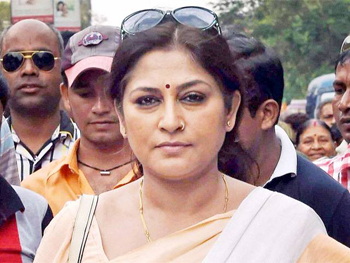
Kolkata, Jul 16: Police cases were lodged on Saturday against BJP Rajya Sabha member Roopa Ganguly and party's West Bengal unit chief Dilip Ghosh for making controversial remarks about women safety in the state and targeting Chief Minister Mamata Banerjee respectively.Roopa Ganguly

On Friday, actor-turned-politician Ganguly had said if people from outside send their wives and daughters to the state, they won't "survive" even 15 days without getting raped.

"I will tell people of India and politicians, everyone who supports Trinamool Congress including some Congress leaders... send their wives and daughters to Bengal without taking hospitality of Mamata Banerjee, if they are able to survive there for 15 days without getting raped, then tell me," she had said at a programme.

Reacting angrily, state Power Minister and senior Trinamool Congress leader Sovandeb Chatterjee said: "She calls herself a cultural personality, and makes such comments. Whatever she has said has damaged Bengal's image."

On Saturday, a police complaint was filed at Nimta police station in North 24 Parganas district against Ganguly for public mischief and criminal intimidation.

But she remained unperturbed.

"There is no question of withdrawing my comments. In fact, I displayed lenience when I talked of '15 days'," she said.

Meanwhile, addressing a public meeting in his constituency Kharagpur, Ghosh virtually challenged the Chief Minister to take action against him.

"If you have the guts, then try and touch Dilip Ghosh. I will bring Bengal to standstill... What have you seen in Darjeeling? Your house will be torched," he said.

On Saturday, a local Trinamool leader handed out a letter to the Kolkata police complaining against Ghosh.

Comments

Iqbal
 - 
Monday, 17 Jul 2017

Why this COASTAL DIGEST team is working as an agent of BJP/RSS ? They know what RSS ppl know for JIHADI word. Even though these CD team is very happy to qupte Shobhas words, Very sad and shame

Add new comment

  • Coastaldigest.com reserves the right to delete or block any comments.
  • Coastaldigset.com is not responsible for its readers’ comments.
  • Comments that are abusive, incendiary or irrelevant are strictly prohibited.
  • Please use a genuine email ID and provide your name to avoid reject.
News Network
May 29,2020

May 29: Over 45,000 stranded Indians were brought back home from abroad under the Vande Bharat mission and another 1,00,000 will be evacuated till June 13, the Ministry of External Affairs said on Thursday.

The mega evacuation mission was launched on May 7.

MEA Spokesperson Anurag Srivastava said the government is also assisting return of stranded Indians from remote locations in Latin America and Caribbean, Africa, and parts of Europe.

"This is being done by taking advantage of foreign carriers flying to India primarily for evacuation of their nationals," he said during an online media briefing.

He said a total of 45,216 Indians were brought back till Thursday afternoon and they include 8,069 migrant workers, 7,656 students and 5,107 professionals.

About 5,000 Indians have returned through land border from Nepal and Bangladesh.

In the first phase of the mission from May 7 to 15, the government evacuated around 15,000 people from 12 countries. The second phase of the evacuation mission was scheduled from May 17 to 22. However, the government has extended it till June 13.

Srivastava said a total of 3,08,200 people have registered their request with Indian missions abroad for repatriation to India on compelling grounds.

"During the phase two, a total of 429 Air India flights (311 international flights + 118 feeder flights) from 60 countries are scheduled to land in India. The Indian Navy will be making four more sorties to bring back returnees from Iran, Sri Lanka and the Maldives," Srivastava said.

The MEA spokesperson said the government is targeting to bring back 1,00,000 people from 60 countries by the end of phase two of the Vande Bharat mission.

"Preparations for third phase of Vande Bharat Mission are well underway," he said.

As per the government's policy for evacuation, Indians having "compelling reasons" to return like pregnant women, elderly people, students and those facing the prospect of deportation are being brought back home.

Comments

Add new comment

  • Coastaldigest.com reserves the right to delete or block any comments.
  • Coastaldigset.com is not responsible for its readers’ comments.
  • Comments that are abusive, incendiary or irrelevant are strictly prohibited.
  • Please use a genuine email ID and provide your name to avoid reject.
News Network
May 24,2020

New Delhi, May 24: New rules for domestic travel during the lockdown were released by the government today, including advising passengers to download the Aarogya Setu application on their mobile devices and asking states to ensure thermal screening at departure point of airports, railway stations and bus terminals. The guidelines were shared by Civil Aviation Minister Hardeep Singh Puri, who also shared new rules for international travel.

The minister had recently said that international flight operations may start by mid-June or end-July if the COVID-19 virus "behaves in a predictable manner".

"Prescribed clinical protocol will be followed in case any domestic or international traveller shows symptoms of COVID-19. States can also develop their own protocol for quarantine and isolation as per their own assessment," Mr Puri said.

The guidelines come a day before the resumption of air travel after nearly two-months hiatus following lockdown to prevent the spread of coronavirus.

The Indian Railways has also issued a list of 100 pairs of trains that it will operate from June 1, putting in operation popular trains such as Durontos, Sampark Krantis, Jan Shatabdis and Poorva Express.

Dos and Don'ts shall be provided along with tickets to travellers by agencies concerned, said the Health Ministry's guidelines for domestic travel (air/train/inter-state bus travel).

Latest guidelines on domestic & international travel have been issued by @MoHFW_INDIA.

I hope travellers strictly follow these self-regulatory norms & strengthen India's hands in this fight against COVID19. Remember, each one of us is a soldier against the pandemic.@MoCA_GoIpic.twitter.com/xVbTG1K44n

— Hardeep Singh Puri (@HardeepSPuri) May 24, 2020
Travellers shall give 14-day quarantine undertaking before boarding

The states and Union Territories shall ensure that all passengers undergo thermal screening at the point of departure and only asymptomatic passengers are allowed to board the flight, train or bus. Asymptomatic passengers, however, will be permitted to travel after they give an undertaking to self-monitor for 14 days, the ministry said.

Those having moderate or severe symptoms will be admitted to dedicated COVID health facilities and managed accordingly, the guidelines said.

Those having mild symptoms will be given the option of home isolation or isolated in the COVID Care Centre (both public and private facilities) as appropriate and tested as per ICMR protocol, they said.

"If positive, they will continue in COVID Care Centre and will be managed as per clinical protocol. If negative, the passenger may be allowed to go home, isolate himself/herself and self-monitor his/her health for further 7 days," the health ministry said.

In case, any symptoms develop they shall inform the district surveillance officer or the state or the national call centre (1075), it said.

Use of face covers, following respiratory hygine during travel

During boarding and travel, all passengers shall use face covers or masks and will also follow hand hygiene, respiratory hygiene and maintain environmental hygiene, the ministry said in its guidelines.

At airports, railway stations and bus terminals, required measures to ensure social distancing shall be taken, the guidelines said.

Airports, railway stations and bus terminals to be regularly sanitised

Airports, railway stations and bus terminals should be regularly sanitised or disinfected and the availability of soaps and sanitisers shall be ensured, the health ministry said.

The ministry said that states can also develop their own protocol with regards to quarantine and isolation as per their assessment.

Guidelines for International Travel

The guidelines for international travel include mandatory undertaking for quarrantine for 14 days. "Only for exceptional and compelling reasons such as cases of human distress, pregnancy, death in family, serious illness and parent(s) accompanied by children below 10 yrs, as assessed by the receiving states, home quarantine may be permitted for international travellers for 14 days," the Civil Aviation minister said.

Asymptomatic travelers will be allowed to board flight/ship

At the time of boarding the flight or ship, only asymptomatic travellers will be allowed to board after thermal screening, the health ministry said.. Passengers arriving through land borders will also have to undergo the same procedure, it said.

"Self-declaration form in duplicate shall be filled by the person in the flight/ship and a copy of the same will be given to Health and immigration officials present at the airport/seaport/landport. The form will be made available through the Aarogya Setu app," the new order said.

Passengers found to be symtomatic during screening shall be immediately isolated and taken to medical facility as per health protocol. "These passengers will be kept under institutional quarrantine for a minimum period of 7 days and should undergo necessary tests as per ICMR protocol," the guidelines said.

Sanitisation and disinfection must inside flights

Authorities must take adequate measures to such as environmental sanitation and disinfection at the airports as well as within the flights, the guideline said.Suitable announcement about COVID-19 including precautionary measures to be followed shall be made at airports/ports, it added.

While on board flight, ships, passengers and crew required precautions such as wearing of masks, environmental hygiene, respiratory hygiene, hand hygiene, the ministry said.

This morning, India registered the biggest-single day jump in the number of coronavirus cases as 6,767 new patients were reported in the last 24 hours. This is the third consecutive day that India has reported more than 6,000 COVID-19 cases with a record number of new patients each day. The county has officially logged 1,31,868 cases, 3,867 deaths linked to the highly infectious illness since the pandemic began. Of these, 147 patients died in the last 24 hours. The global number of novel coronavirus cases has passed 5.25 million with more than 339,000 deaths. Since the outbreak first emerged in China in December, 5,260,970 cases have been recorded across 196 countries and territories, with 339,758 deaths attributed to the virus.


Comments

Add new comment

  • Coastaldigest.com reserves the right to delete or block any comments.
  • Coastaldigset.com is not responsible for its readers’ comments.
  • Comments that are abusive, incendiary or irrelevant are strictly prohibited.
  • Please use a genuine email ID and provide your name to avoid reject.
News Network
June 9,2020

Jun 9: Prime Minister Narendra Modi wants all 1.3 billion Indians to be “vocal for local” — meaning, to not just use domestically made products but also to promote them. As an overseas citizen living in Hong Kong, I’m doing my bit by very vocally demanding Indian mangoes on every trip to the grocery. But half the summer is gone, and not a single slice so far.

My loss is due to India’s COVID-19 lockdown, which has severely pinched logistics, a perennial challenge in the huge, infrastructure-starved country. But more worrying than the disruption is the fruity political response to it. Rather than being a wake-up call for fixing supply chains, the pandemic seems to be putting India on an isolationist course. Why?

Granted that the liberal view that trade is good and autarky bad isn’t exactly fashionable anywhere right now. What makes India’s lurch troublesome is that the pace and direction of economic nationalism may be set by domestic business interests. The Indian liberals, many of whom are Western-trained academics, authors and — at least until a few years ago — policy makers, want a more competitive economy. They will be powerless to prevent the slide.

Modi’s call for a self-reliant India has been echoed by Home Minister Amit Shah, the cabinet’s unofficial No. 2, in a television interview. If Indians don’t buy foreign-made goods, the economy will see a jump, he said. The strategy — although it’s too nebulous yet to call it that — has a geopolitical element. A military standoff with China is under way, apparently triggered by India’s completion of a road and bridge near the common border in the tense Himalayan region of Ladakh. It’s very expensive to fight even a limited war there. With India’s economy flattened by COVID, New Delhi may be looking for ways to restore the status quo and send Beijing a signal.

Economic boycotts, such as Chinese consumers’ rejection of Japanese goods over territorial disputes in the East China Sea, are well understood as statecraft. In these times, it’s not even necessary to name an enemy. An undercurrent of popular anger against China, the source of both the virus and India’s biggest bilateral trade deficit, is supposed to do the job. But is it ever that easy?

A hastily introduced policy to stock only local goods in police and paramilitary canteens became a farcical exercise after the list of banned items ended up including products by the local units of Colgate-Palmolive Co., Nestle SA, and Unilever NV, which have had significant Indian operations for between 60 and 90 years, as well as Dabur India Ltd., a New Delhi-based maker of Ayurveda brands. The since-withdrawn list demonstrates the practical difficulty of bureaucrats trying to find things in a globalized world that are 100% indigenous.

Free-trade champions fret that the prime minister, whom they saw as being on their side six years ago, is acting against their advice to dismantle statist controls on land, labor and capital to help make the country more competitive. Engage with the world more, not less, they caution. But Modi also has to satisfy the Rashtriya Swayamsevak Sangh, the umbrella Hindu organisation that gets him votes. Its backbone of small traders, builders and businessmen — the RSS admits only men — was losing patience with the anemic economy even before the pandemic. Now, they’re in deep trouble, because India’s broken financial system won’t deliver even state-guaranteed loans to them.

The U.S.-China tensions — over trade, intellectual property, COVID responsibility and Hong Kong’s autonomy — offer a perfect backdrop. A dire domestic economy and trouble at the border provide the foreground. Big business will dial economic nationalism up and down to hit a trifecta of goals: Block competition from the People's Republic; make Western rivals fall in line and do joint ventures; and tap deep overseas capital markets. The first goal is being achieved with newly placed restrictions on investment from any country that shares a land border with India. The second aim is to be realized by corporate lobbying to influence India's whimsical economic policies. As for the third objective, with the regulatory environment becoming tougher for U.S.-listed Chinese companies like Alibaba Group Holding Ltd., an opportunity may open up for Indian firms.

All this may bring India Shenzhen-style enclaves of manufacturing and trade, but it will concentrate economic power in fewer hands, something that worries liberals. They’re moved by the suffering of India’s low-wage workers, who have borne the brunt of the COVID shutdown. But when their vision of a more just society and fairer income distribution prompts them to make common cause with the ideological Left, they’re quickly repelled by the Marxist voodoo that all cash, property, bonds and real estate held by citizens or within the nation “must be treated as national resources available during this crisis.” Who will invest in a country that does that instead of just printing money?

At the same time, when liberals look to the business class, they see a sudden swelling of support for ideas like a universal basic income. They wonder if this isn’t a ploy by industry to outsource part of the cost of labor to the taxpayer. Slogans like Modi’s vocal-for-local stir the pot and thicken the confusion. The value-conscious Indian consumer couldn’t give two hoots for calls to buy Indian, but large firms will know how to exploit economic nationalism. One day soon, I’ll get my mangoes — from them.

Comments

Add new comment

  • Coastaldigest.com reserves the right to delete or block any comments.
  • Coastaldigset.com is not responsible for its readers’ comments.
  • Comments that are abusive, incendiary or irrelevant are strictly prohibited.
  • Please use a genuine email ID and provide your name to avoid reject.