



First UN talks to save oceans kick off Monday

June 4, 2017

Miami, Jun 4: World leaders convene at UN headquarters next week for the first major bid to solve the toughest problems facing our oceans, from coral bleaching to plastic pollution, overfishing and rising seas due to climate change.
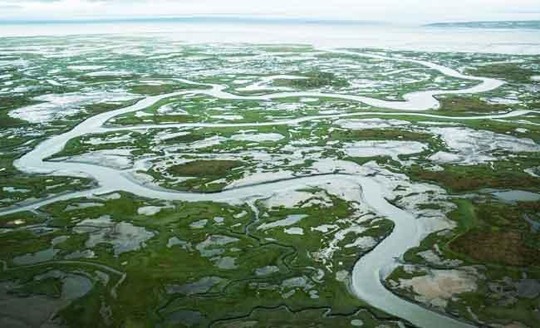
oceans

The Ocean Conference in New York June 5-9 attempts to rally nations big and small to make meaningful changes to preserve what is arguably the Earth's most important resource, experts say.

US President Donald Trump's recent decision to withdraw from the Paris climate accord is expected to be a hot topic at the talks, which no high-ranking US officials are expected to attend.

But despite Trump's decision Thursday to end US participation in the Paris deal, which drew worldwide condemnation, experts at the Pew Charitable Trust said the United States has been a part of crafting a broad “call to action,” and is expected to sign it.

“We are committed to halting and reversing the decline in the health and productivity of our ocean,” says the three-page document, which also expresses alarm at the impact of climate change on the ocean.

The call to action is expected to be signed and released some point during the week-long conference, which will bring government officials, ocean advocates and some heads of state to New York.

The US pullout from Paris means other nations will lead the way at the UN talks, particularly small island nations that have the most to lose.

“How can you worry about someone who is not in the room?” said Ambassador Ronny Jumeau, permanent representative to the United Nations for Seychelles.

“Look at who is here, who is sitting in the front row, and say, 'Now what are we going to do about this?'“

The world just marked its three hottest years in modern times. And the oceans have absorbed about one third of the carbon dioxide released by human activities, protecting the planet from the full brunt of climate change.

Melting glaciers and sea ice at the poles threatens swell sea level to the point of washing away entire islands and populated coastlines — home to 37 percent of the planet's population — in the coming decades.

Just 20 inches (half meter) of sea level rise could displace 1.2 million people from islands in the Caribbean Sea, Indian and Pacific Oceans.

Recent studies have shown the troubling extent of plastic pollution, even in the most remote parts of the world.

An uninhabited island in the south Pacific, Henderson Island, thousands of miles from civilization was recently shown to be piling up more than 3,500 pieces of plastic per day.

Even year, more than eight million ton of plastic washes into the oceans, costing at least $8 billion in damage to marine ecosystems and killing an estimated one million sea birds, 100,000 sea mammals and untold numbers of fish.

And famous coral reefs, such as Australia's Great Barrier Reef, are suffering from hot temperatures like never before in modern times, with mass bleaching and die-offs continuing unabated for the past two years.

“Small island states cannot afford to be dismayed or feel down or depressed about any of this,” said Jumeau during a UN press conference.

“We are reaching out to all the friends of the oceans that you can think of to meet the challenges that we face.”

Previous global meetings on problems facing the oceans have taken place, but the World Wildlife Fund's John Tanzer described this one as “historic” because the talks are under the auspices of the United Nations for the first time.

“The reality is that oceans have been in steep decline for at least the last 50 or 60 years,” Tanzer, global oceans lead at WWF, told AFP.

“Here we are in 2017, and it is impossible to talk of anywhere in the world's oceans as being pristine,” he said.

Specifically, nations will talk about how to meet the 2015 UN-adopted Sustainable Development Goal 14, to “conserve and sustainably use the oceans, seas, and marine resources.”

Targets include protecting at least 10 percent of coastal and marine environments by 2020, reducing ocean pollution and strengthening ways to fight illegal, unreported, and unregulated fishing.

A recent report found that illegal fishing in the Pacific has reached a “staggering” value of up to $740 million a year, with much of the problem blamed on fleets from the US, Asia and Europe which under-report their catches.

Individual nations and advocacy groups are already announcing voluntary steps they will take to conserve oceans and protect marine life.

Those pledges will be updated throughout the conference, and can be seen online at https://oceanconference.un.org/commitments.

Comments

Add new comment

  • Coastaldigest.com reserves the right to delete or block any comments.
  • Coastaldigset.com is not responsible for its readers’ comments.
  • Comments that are abusive, incendiary or irrelevant are strictly prohibited.
  • Please use a genuine email ID and provide your name to avoid reject.
Agencies
May 10,2020

Paris, May 10: The number of coronavirus cases worldwide topped four million as some of the hardest-hit countries readied Sunday to lift lockdown restrictions despite concern about a second wave of infections.

Governments around the world are trying to stop the spread of the deadly disease while scrambling for ways to relieve pressure on their economies, which are facing a historic downturn with millions pushed into unemployment.

Despite the intense political pressure to reopen, nations are also keen to avoid second waves of infections that could overwhelm healthcare systems, with reminders over the weekend of the threat posed by the virus.

In the United States, media reported Saturday that the nation's top infectious disease expert, Anthony Fauci, was among three members of the White House coronavirus task force who will self-isolate after potential exposure.

And in South Korea, the capital Seoul shut all bars and clubs on Saturday as more than 50 cases were linked to a man who tested positive after spending time in one of the city's busiest nightlife districts.

Despite the risks, some governments in hard-hit Europe have said are signs of progress that justify cautious steps towards normality.

Officials in France on Saturday said the day's death toll of 80 was the lowest since early April, while nursing home fatalities also fell sharply as the nation prepared to relax curbs on public movement imposed eight weeks ago.

The easing, to begin Monday, has brought mixed reactions.

"I've been scared to death" about the reopening, said Maya Flandin, a bookshop manager from Lyon. "It's a big responsibility to have to protect my staff and my customers."

French health officials have warned that social distancing must be kept up even as restrictions are eased.

In Spain, about half the population will be allowed out on Monday for limited socialisation, and restaurants will be able to offer some outdoor service as the country begins a phased transition set to last through June.

With lingering fears of a resurgence, authorities excluded Madrid and Barcelona -- two COVID-19 hotspots -- from the first phase.

Belgium is also easing some restrictions on Monday, and in some parts of Germany, bars and restaurants reopened on Saturday with further easing set for Monday.

In Britain, Prime Minister Boris Johnson is expected Sunday to lay out a plan for the nation to emerge out of its current lockdown.

Media reports have suggested that Britain may introduce a mandatory 14-day quarantine for international arrivals to stop the spread of the virus.

Global economic figures are pointing to the most acute downturn in nearly a century, with businesses forced to shut and supply lines badly disrupted, and pressure is growing on leaders around the world to find a way out as the worldwide death toll topped 277,000 and infections crossed four million.

In the United States, the country with the highest death toll and where more than 20 million people have lost their jobs, President Donald Trump has insisted that next year would be "phenomenal" for the economy, urging reopening despite the virus still claiming well over 1,000 lives daily in the country.

The scale of the challenge was brought in sharp focus over the weekend as US media reported that top disease expert Anthony Fauci, who has become the trusted face of the government response to the pandemic, is going to self-isolate after possible exposure to an infected White House staffer.

Fauci told CNN that he will undergo a "modified quarantine" as he had not been in close proximity to the staffer, the network reported. He will remain at home teleworking, and will wear a mask for two weeks.

Robert Redfield, the director of the Centers for Disease Control and Prevention, and Stephen Hahn, the commissioner of the Food and Drug Administration, will also self-isolate, CNN added.

All three will still testify at Tuesday's Senate coronavirus hearing, with Redfield and Hahn participating via video link, according to Senator Lamar Alexander, chairman of the chamber's health committee.

It is believed Fauci will attend wearing a mask, CNN reported.

President Trump has faced sharp criticism from his predecessor Barack Obama, who said on a leaked tape that Trump's handling of the crisis was an "absolute chaotic disaster".

With people wearying of being indoors and under economic pressure, anti-lockdown protests have been held in a number of countries in recent weeks, with some demonstrators arguing that such restrictions violate their rights and others promoting conspiracy theories about the pandemic.

Ten people were arrested and a police officer injured in Melbourne, Australia, on Sunday in the latest such protest, where around 150 people gathered to demand an end to the shutdown.

Participants were promoting a number of conspiracy theories, such as linking 5G cellular communications to the disease.

Australian chief medical officer Brendan Murphy said there was "a lot of very silly misinformation out there", including the 5G allegation.

"I have unfortunately received a lot of communication from these conspiracy theorists myself," he said.

"It is complete nonsense. 5G has got nothing at all to do with coronavirus."

Comments

Add new comment

  • Coastaldigest.com reserves the right to delete or block any comments.
  • Coastaldigset.com is not responsible for its readers’ comments.
  • Comments that are abusive, incendiary or irrelevant are strictly prohibited.
  • Please use a genuine email ID and provide your name to avoid reject.
News Network
May 7,2020

United Nations, May 7: An average of 80,000 COVID-19 cases were reported each day in April to the World Health Organization, the top UN health agency has said, noting that South Asian nations like India and Bangladesh are seeing a spike in the infections while the numbers are declining in regions such as Western Europe.

WHO Director-General Tedros Adhanom Ghebreyesus said on Wednesday that countries must also be able to manage any risk of the disease being imported into their territories, and communities should be fully educated to adjust to what will be a "new norm".

He said as the countries press forward in the common fight against COVID-19, they should also lay the groundwork for resilient health systems globally.

"More than 3.5 million cases of COVID-19 and almost 250,000 deaths have now been reported to the WHO. Since the beginning of April, an average of around 80,000 new cases have been reported to the WHO every day," Ghebreyesus said in Geneva yesterday.

Asserting that the virus cases were not just numbers, he said: "every single case is a mother, a father, a son, a daughter, a brother, sister or friend".

He said while the numbers are declining in Western Europe, more cases are being reported every day from Eastern Europe, Africa, South-East Asia, the Eastern Mediterranean and the Americas. Even within regions and within countries, there are divergent trends, the agency added.

While some countries are reporting an increase in COVID-19 cases over time, many have seen caseloads rise because they have ramped up testing, the WHO official said.

"We've also seen in Europe and Western Europe a fundamental decrease in the number of cases, but we have seen an associated increase in the number of cases reported in places like the Russian Federation. Southeast, the Western Pacific areas are relatively on the downward trend like Korea and others, but then we do see in South Asia, in places like Bangladesh, in India, some trends towards increase.

"So it's very difficult to say that any particular region is improving or (not improving). There are individual countries within each region that are having difficulties getting on top of this disease and I am particularly concerned about those countries that have (an) ongoing humanitarian crisis," WHO's Executive Director Michael Ryan said.

The death toll due to COVID-19 in India rose to 1,783 while the number of cases climbed to 52,952 on Thursday, registering an increase of 89 deaths and 3,561 cases in the last 24 hours, the Union Health Ministry said.

The number of active COVID-19 cases stood at 35,902 while 15,266 people have recovered, it said.

Noting that while seeing an increase in the number of cases is not good in terms of transmission, WHO's Emerging Diseases and Zoonoses Unit head Maria Van Kerkhove said: "but I don't want to equate that with something (being) wrong".

"I want to equate that with countries are working very hard to increase their ability to find the virus, to find people with the virus, to have testing in place to identify who has COVID-19, and putting into place what they need to do to care for those patients," Kerkhove said.

With more countries considering easing restrictions implemented to curb the spread of the coronavirus, the WHO has again reminded the authorities of the need to maintain vigilance.

"The risk of returning to lockdown remains very real if countries do not manage the transition extremely carefully, and in a phased approach," Ghebreyesus said.

He urged countries to consider the UN agency's six criteria for lifting stay-at-home measures.

That advice includes ensuring surveillance is strong, cases are declining and transmission is controlled. Health systems also must be able to detect, isolate, test and treat cases, and to trace all contacts.

Additionally, the risk of outbreak in settings such as health facilities and nursing homes needs to be minimised, while schools, workplaces and other public locations should have preventive measures in place.

"The COVID-19 pandemic will eventually recede, but there can be no going back to business as usual. We cannot continue to rush to fund panic but let preparedness go by the wayside," he said.

He said the crisis has highlighted the importance of strong national health systems as the foundation of global health security: not only against pandemics but also against the multitude of health threats that people across the world face every day.

"If we learn anything from COVID-19, it must be that investing in health now will save lives later," Ghebreyesus said.

While the world currently spends around USD 7.5 trillion on health annually, the WHO believes the best investments are in promoting health and preventing disease.

"Prevention is not only better than cure, it's cheaper, and the smartest thing to do," he said.

The deadly coronavirus, which originated from the Chinese city of Wuhan in December last year, has infected over 3.7 million people and killed 263,831 people globally, according to a tally by Johns Hopkins University.

Comments

Add new comment

  • Coastaldigest.com reserves the right to delete or block any comments.
  • Coastaldigset.com is not responsible for its readers’ comments.
  • Comments that are abusive, incendiary or irrelevant are strictly prohibited.
  • Please use a genuine email ID and provide your name to avoid reject.
News Network
April 9,2020

Paris, Apr 9: More than 1.5 million cases of the novel coronavirus have been registered worldwide, according to a tally compiled by AFP at 0530 GMT Thursday from official sources.

Of the 1,502,478 infections, 87,320 people have died across 192 countries and territories since the epidemic first emerged in China late last year.

The tallies, using data collected by AFP from national authorities and information from the World Health Organization (WHO), probably reflect only a fraction of the actual number of infections. Many countries are only testing the most serious cases.

Comments

Add new comment

  • Coastaldigest.com reserves the right to delete or block any comments.
  • Coastaldigset.com is not responsible for its readers’ comments.
  • Comments that are abusive, incendiary or irrelevant are strictly prohibited.
  • Please use a genuine email ID and provide your name to avoid reject.