Fishermen call off protest as Bharathi Shipyard promises to take up dredging

[email protected] (CD Network, Photos by Ahmed Anwar )
April 8, 2012

Fisher_1

Mangalore, April 8: Following the assurance by Bharathi Shipyard Limited fulfill the demands of local fisherman community, the latter decided to withdraw their planned protest against the company on Saturday.

In a letter submitted to the Deputy Commissioner Dr N S Channappa Gowda, the company promised that it would take up the work on dredging, from Old Port to Gurpura river at an estimated cost of Rs 10 crore.

The officials from Shipyard had promised to complete the work within two years.


Bharathi Shipyard Company had started functioning since 2009.

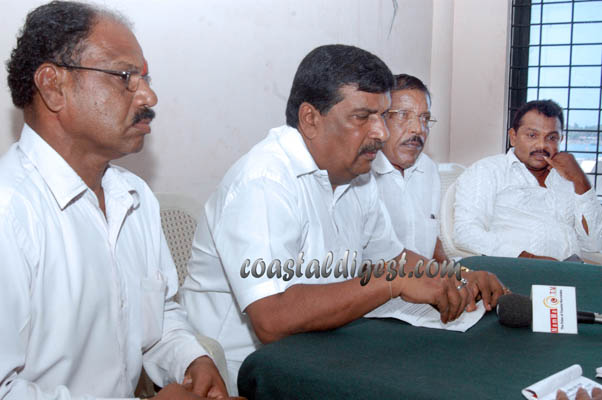
Karnataka Fisheries Development Corporation President Nithin Kumar said that the fishermen had submitted a memorandum to the district administration urging to take up dredging in the region as the sand had accumulated following the company started functioning in the region. Though the company had promised to take up dredging, it was not materialised so far.

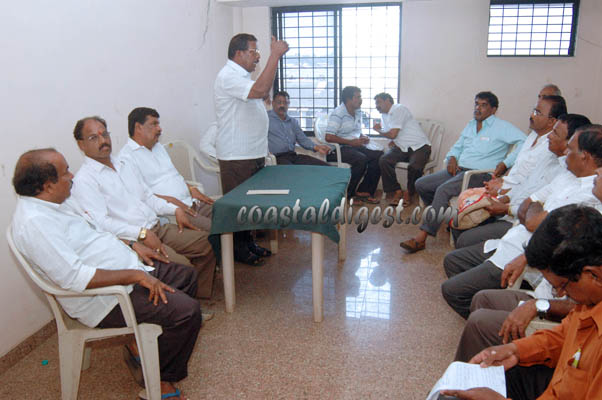
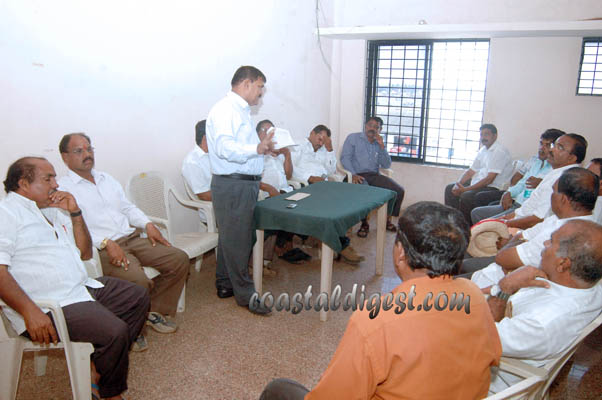
He said “We had a meeting on April 5 which was attended by Fisheries department Deputy Director and officials from Bharathi Shipyard and fishermen leaders.

The company had agreed to take up the work on dredging. However, the company had submitted a memorandum to the Deputy Commissioner on April 6, stating that their first ship would enter the sea on April 7 and the fishermen are coming in the way of the Bharathi shipyard.

They had demanded protection from the district administration.

Enraged over the incident, the Trawl Boat and pursein boat fishermen association decided to gherao the ship when it enters the water.

However, as the shipping company had given in writing to the DC that they would take up the work on dredging, the protest was withdrawn, he said.

Fisher_2

Fisher_3


Comments

Add new comment

  • Coastaldigest.com reserves the right to delete or block any comments.
  • Coastaldigset.com is not responsible for its readers’ comments.
  • Comments that are abusive, incendiary or irrelevant are strictly prohibited.
  • Please use a genuine email ID and provide your name to avoid reject.
News Network
May 2,2020

Bengalur, May 2: Two people died of COVID-19 in Karnataka on Saturday taking the toll in the state to 25, whereas nine more tested positive for the virus, pushing the tally to 598, the health department said. Two deaths were reported in Bidar and Bengaluru urban, the health department said in a statement.

An 82-year-old person with a history of Severe Acute Respiratory Illness died in Bidar. While the second fatality was a 62-year-old man with a history of diabetes, hyper-tension, renal failture and was on multiple myeloma on chemotherapy, in Bengaluru. He too had complained of breathlessness on April 30 and died on Saturday at the designated hospital.

Among the nine new cases, two each are from Tumakuru, Vijayapura, one each from Bidar, Chikkaballapura, Belagavi, Bagalkot and Bengaluru urban. Cumulatively, 598 COVID-19 positive cases have been confirmed in the state and it includes 25 deaths.

Comments

Add new comment

  • Coastaldigest.com reserves the right to delete or block any comments.
  • Coastaldigset.com is not responsible for its readers’ comments.
  • Comments that are abusive, incendiary or irrelevant are strictly prohibited.
  • Please use a genuine email ID and provide your name to avoid reject.
Ram Puniyani
February 10,2020

Noam Chomsky is one of the leading peace workers in the world. In the wake of America’s attack on Vietnam, he brought out his classic formulation, ‘manufacturing consent’. The phrase explains the state manipulating public opinion to have the public approve of it policies—in this case, the attack of the American state on Vietnam, which was then struggling to free itself from French colonial rule.

In India, we are witness to manufactured hate against religious minorities. This hatred serves to enhance polarisation in society, which undermines India’s democracy and Constitution and promotes support for a Hindu nation. Hate is being manufactured through multiple mechanisms. For example, it manifests in violence against religious minorities. Some recent ghastly expressions of this manufactured hate was the massive communal violence witnessed in Mumbai (1992-93), Gujarat (2002), Kandhamal (2008) and Muzaffarnagar (2013). Its other manifestation was in the form of lynching of those accused of having killed a cow or consumed beef. A parallel phenomenon is the brutal flogging, often to death, of Dalits who deal with animal carcasses or leather.

Yet another form of this was seen when Shambhulal Regar, indoctrinated by the propaganda of Hindu nationalists, burned alive Afrazul Khan and shot the video of the heinous act. For his brutality, he was praised by many. Regar was incited into the act by the propaganda around love jihad. Lately, we have the same phenomenon of manufactured hate taking on even more dastardly proportions as youth related to Hindu nationalist organisations have been caught using pistols, while police authorities look on.

Anurag Thakur, a BJP minster in the central government recently incited a crowd in Delhi to complete his chant of what should happen to ‘traitors of the country...” with a “they should be shot”. Just two days later, a youth brought a pistol to the site of a protest at Jamia Millia Islamia university and shouted “take Azaadi!” and fired it. One bullet hit a student of Jamia. This happened on 30 January, the day Nathuram Godse had shot Mahatma Gandhi in 1948. A few days later, another youth fired near the site of protests against the CAA and NRC at Shaheen Bagh. Soon after, he said that in India, “only Hindus will rule”.

What is very obvious is that the shootings by those associated with Hindu nationalist organisations are the culmination of a long campaign of spreading hate against religious minorities in India in general and against Muslims in particular. The present phase is the outcome of a long and sustained hate campaign, the beginning of which lies in nationalism in the name of religion; Muslim nationalism and Hindu nationalism. This sectarian nationalism picked up the communal view of history and the communal historiography which the British introduced in order to pursue their ‘divide and rule’ policy.

In India what became part of “social common sense” was that Muslim kings had destroyed Hindu temples, that Islam was spread by force, and that it is a foreign religion, and so on. Campaigns, such as the one for a temple dedicated to the Hindu god Rama to be built at the site where the Babri masjid once stood, further deepened the idea of a Muslim as a “temple-destroyer”. Aurangzeb, Tipu Sultan and other Muslim kings were tarnished as the ones who spread Islam by force in the subcontinent. The tragic Partition, which was primarily due to British policies, and was well-supported by communal streams also, was entirely attributed to Muslims. The Kashmir conflict, which is the outcome of regional, ethnic and other historical issues, coupled with the American policy of supporting Pakistan’s ambitions of regional hegemony, (which also fostered the birth of Al-Qaeda), was also attributed to the Muslims.

With recurring incidents of communal violence, these falsehoods went on going deeper into the social thinking. Violence itself led to ghettoisation of Muslims and further broke inter-community social bonds. On the one hand, a ghettoised community is cut off from others and on the other hand the victims come to be presented as culprits. The percolation of this hate through word-of-mouth propaganda, media and re-writing of school curricula, had a strong impact on social attitudes towards the minorities.

In the last couple of decades, the process of manufacturing hate has been intensified by the social media platforms which are being cleverly used by the communal forces. Swati Chaturvedi’s book, I Am a Troll: Inside the Secret World of the BJP’s Digital Army, tells us how the BJP used social media to spread hate. Whatapp University became the source of understanding for large sections of society and hate for the ‘Other’, went up by leaps and bounds. To add on to this process, the phenomenon of fake news was shrewdly deployed to intensify divisiveness.

Currently, the Shaheen Bagh movement is a big uniting force for the country; but it is being demonised as a gathering of ‘anti-nationals’. Another BJP leader has said that these protesters will indulge in crimes like rape. This has intensified the prevalent hate.

While there is a general dominance of hate, the likes of Shambhulal Regar and the Jamia shooter do get taken in by the incitement and act out the violence that is constantly hinted at. The deeper issue involved is the prevalence of hate, misconceptions and biases, which have become the part of social thinking.

These misconceptions are undoing the amity between different religious communities which was built during the freedom movement. They are undoing the fraternity which emerged with the process of India as a nation in the making. The processes which brought these communities together broadly drew from Gandhi, Bhagat Singh and Ambedkar. It is these values which need to be rooted again in the society. The communal forces have resorted to false propaganda against the minorities, and that needs to be undone with sincerity.

Combating those foundational misconceptions which create hatred is a massive task which needs to be taken up by the social organisations and political parties which have faith in the Indian Constitution and values of freedom movement. It needs to be done right away as a priority issue in with a focus on cultivating Indian fraternity yet again.


Comments

Add new comment

  • Coastaldigest.com reserves the right to delete or block any comments.
  • Coastaldigset.com is not responsible for its readers’ comments.
  • Comments that are abusive, incendiary or irrelevant are strictly prohibited.
  • Please use a genuine email ID and provide your name to avoid reject.
News Network
August 4,2020

Bengaluru, Aug 4: Police barricades, yellow banners, walls with a fresh coat of paint and the sounds of bhajan mark parts of Ayodhya as the city awaits its big day Wednesday, when the first brick will be laid for the Ram temple.

Ayodhya is decked up for the bhoomi pujan that will be attended at the Ram Janmabhoomi by 175 people, who figure in a select guest list of seers and politicians topped by Prime Minister Narendra Modi.

Concerned over the spread of coronavirus, the authorities are encouraging others not to come to the temple town, asking them to mark the occasion by celebrating at their homes. The groundbreaking ceremony will be telecast live.

Roads leading to Ayodhya display hoardings with the picture of the proposed Ram temple and of Ram Lalla, the infant Ram, the deity now housed in a makeshift temple.

Around the town’s Hanumangarhi area – named after a well-known temple which Modi will visit on Wednesday – both police sirens and ‘bhajans’ in praise of Ram are heard.

Most of the shops in the locality wear a new look, with their fronts painted in bright yellow. A large number of policemen were deployed there on Tuesday. Some sat in the sweet shops, waiting for their next instructions.

Roads leading into the area are barricaded. Yards of yellow cloth and marigold garlands were being hung on poles.

Even on the day before the event, security checks on vehicles heading to Ayodhya begin from adjoining Barabanki district itself on the Lucknow-Ayodhya road. Policemen take down details, including mobile numbers of the travellers.

Senior Superintendent of Police Deepak Kumar said the focus of the force is on maintaining the Covid-19 protocol.

“So we are not going to allow any outsider to enter Ayodhya city,” he said. Prohibitory orders are also in force and not more than four people will be allowed to gather.

“The markets and shops will remain open but with strict adherence to the Covid protocol,” he said. Outsiders will be stopped from entering the city, but Ayodhya residents will be allowed in if they produce any identification document.

“We are also carrying out random checks on people living in Ayodhya to ensure that no outsiders are staying here,” he said.

The city’s temples and mosques will remain open, but no other religious event – except for the bhoomi pujan – will take place on Wednesday.

Pickets have been set up at sensitive points in the city.

Sub-inspector Ram Chandra Yadav and constables Avnish Kumar and Ankit Chaudhary man the Terhi Bazar Chauraha picket near the Ram Janmabhoomi site.

"We are here for the past some days, and were on duty on the Rakshabandhan day. Duty comes first and only after that come other things in life, like festivals," Yadav said.

Mayank Gupta, who runs a restaurant, was handing out food packets to policemen, his customers.

"For the last two months, I have been providing tiffin to them twice a day. There are around 100 policemen to whom I supply tiffin," Gupta said.

Comments

Add new comment

  • Coastaldigest.com reserves the right to delete or block any comments.
  • Coastaldigset.com is not responsible for its readers’ comments.
  • Comments that are abusive, incendiary or irrelevant are strictly prohibited.
  • Please use a genuine email ID and provide your name to avoid reject.