


Former Chief Justice Nasirul Mulk Named Pakistan's Caretaker PM

Agencies
May 29, 2018

Islamabad, May 29: Pakistan's former chief justice Nasirul Mulk named as the country's caretaker prime minister for a two-month period, ending the political wrangling between ruling PML-N and the Opposition ahead of the general elections on July 25.

The announcement was made by Leader of the Opposition Khursheed Shah at a press conference here which was also attended by incumbent Prime Minister Shahid Khaqan Abbasi and National Assembly Speaker Ayaz Sadiq.

Mulk, 67, is likely to be sworn in on Friday, June 1. The present government will complete the tenure on May 31 and the caretaker government will remain in office until a new government is set up through elections.

Shah expressed hope that Mulk will successfully conduct free, fair and impartial elections in Pakistan on July 25.

The announcement came after weeks of deadlock between the PML-N and the Opposition over the name of the caretaker prime minister.

It took the government and the opposition six meetings to decide on a name for the position.

Though, Abbasi spoke first but he let Shah announce the name of the caretaker leader.

Abbasi described the agreed-upon candidate for the caretaker prime minister as someone "who no one can object to".

"His role as a caretaker PM will be in favour of the country and the democratic process," he said.

Announcing the name, Shah said the NA speaker had played a major role in both parties reaching an agreement.

"We have made a democratic decision. I am thankful to the PM, to the speaker, for making this decision with patience, setting aside emotion. The name of the person I would like to present is very respectable," the veteran PPP leader said.

"The name is Nasirul Mulk, who has remained a chief justice. He has played a historic role... in the judiciary and when he was a lawyer," he said.

The job of the caretaker prime minister is to keep the country running between the dissolution of parliament and the new government being sworn in.

Earlier, several names including retired Justice Tassaduq Hussain Jillani, former State Bank governor Ishrat Hussian, former foreign secretary Jalil Abbas Jillani and former Pakistan Cricket Board chairman Zaka Ashraf were reportedly discusse by the two sides.

Mulk was born on August 17, 1950 in Mingora, Swat, in Khyber Pakhtunkhwa province. He worked as lawyer and judge for several years before his appointment as the 22nd Chief Justice of Pakistan in 2014.

President Mamnoon Hussain on Saturday approved July 25 as the polling date for general and provincial elections.

Cricketer-turned-politician Imran Khan's Pakistan Tehrik-e-Insaf is expected to be the main challenger to the ruling party in the general elections.

In its 70-year-long history, the country experienced its first democratic transition of power in 2013, when Pakistan Peoples Party handed over the power to Pakistan Muslim League-Nawaz (PML-N), which had won the general elections.

Comments

Add new comment

  • Coastaldigest.com reserves the right to delete or block any comments.
  • Coastaldigset.com is not responsible for its readers’ comments.
  • Comments that are abusive, incendiary or irrelevant are strictly prohibited.
  • Please use a genuine email ID and provide your name to avoid reject.
Agencies
May 28,2020

More than one in six youths were jobless since the onset of the COVID-19 pandemic while those who remain employed have seen their working hours cut by 23 per cent, according to a report by the International Labour Organisation (ILO).

According to the 'ILO Monitor: COVID-19 and the world of work: 4th edition' published on Wednesday, youths are being disproportionately affected by the pandemic, and the substantial and rapid increase in youth unemployment seen since February is affecting young women more than young men, reports Xinhua news agency.

The pandemic is inflicting a triple shock on young people.

Not only is it destroying their employment, but it is also disrupting education and training, and placing major obstacles in the way of those seeking to enter the labour market or to move between jobs, said the report.

At 13.6 per cent, the youth unemployment rate in 2019 was already higher than any other group.

There were around 267 million young people not in employment, education or training worldwide.

"If we do not take significant and immediate action to improve their situation, the legacy of the virus could be with us for decades," said ILO Director-General Guy Ryder.

"If their talent and energy is sidelined by a lack of opportunity or skills, it will damage all our futures and make it much more difficult to re-build a better, post-COVID economy."

The report called for urgent, large-scale and targeted policy responses to support youth, including broad-based employment/training guarantee programs in developed countries, and employment-intensive programs and guarantees in low- and middle-income economies.

Comments

Add new comment

  • Coastaldigest.com reserves the right to delete or block any comments.
  • Coastaldigset.com is not responsible for its readers’ comments.
  • Comments that are abusive, incendiary or irrelevant are strictly prohibited.
  • Please use a genuine email ID and provide your name to avoid reject.
Agencies
July 29,2020

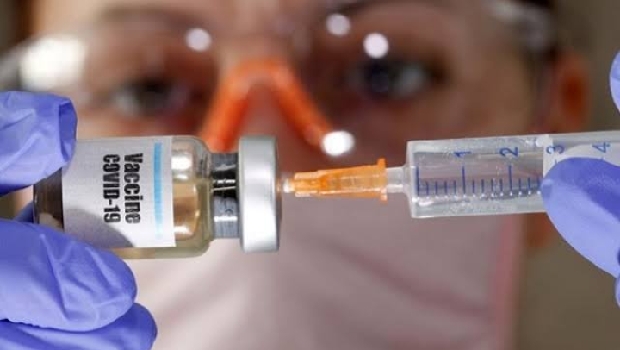
If everything goes as Russia’s expectation, it will be world’s first country to approve a coronavirus vaccine for widespread in the second week of August despite safety and efficacy concerns, according to a report. The adenoviral vector-based vaccine developed by Russian military and government researchers is currently in phase 2 trials.

According to a report from CNN, Russian officials are hoping to get approval for the COVID-19 vaccine developed by the Moscow-based Gamaleya Institute on Agust 10 or even before that. The officials told the outlet that the vaccine will be approved for public use with frontline healthcare workers receiving it first.

“It’s a Sputnik moment,” said Kirill Dmitriev, head of Russia’s sovereign wealth fund, which is financing Russian vaccine research, referring to the successful 1957 launch of the world’s first satellite by the Soviet Union, according to CNN.

“Americans were surprised when they heard Sputnik’s beeping. It’s the same with this vaccine. Russia will have got there first,” he was quoted as saying.

However, Russia is yet to release the scientific data on its coronavirus vaccine trials, hence, questions remain about the safety and efficacy of the vaccine, said the report. The vaccine is in the second phase of testing with developers planning to launch the phase 3 trials sometime after August 3.

Earlier, Interfax reported, citing Health Minister Mikhail Murashko, that the vaccine will be widely used in parallel with phase 3 trials. He said the country plans to vaccinate medics who are at high-risk for COVID-19 next month before clinical trials are completed.

Murashko added that individuals at higher risk of getting infected with the coronavirus such as older people or those with health conditions will also be prioritised for the vaccine, although he did not estimate or reveal when that would happen. The minister added 800 people will be recruited for the phase 3 trials.

Meanwhile, health officials were more cautious considering the fact that human testing of the vaccine is incomplete, and the state registration is expected to begin after August 3, reported The Moscow Times.

On Monday, Moderna and Pfizer announced the commencement of the final phase 3 trials of their candidate vaccines against the SARS-CoV-2 virus, which has so far claimed at least 654,477 lives and infected 16,514,500 people worldwide. 

Researchers will recruit up to 30,000 volunteers in separate trials both backed by the US government. India's first indigenous coronavirus vaccine, COVAXIN, is undergoing phase 1 human clinical trials across the country. More than 150 COVID-19 vaccines are being developed all over the world with at least six candidates already in late-stage clinical trials.

Comments

Add new comment

  • Coastaldigest.com reserves the right to delete or block any comments.
  • Coastaldigset.com is not responsible for its readers’ comments.
  • Comments that are abusive, incendiary or irrelevant are strictly prohibited.
  • Please use a genuine email ID and provide your name to avoid reject.
News Network
February 2,2020

Feb 2: Prime Minister Narendra Modi’s second budget in seven months disappointed investors who were hoping for big-bang stimulus to revive growth in Asia’s third-largest economy.

The fiscal plan -- delivered by Finance Minister Nirmala Sitharaman on Saturday -- proposed tax cuts for individuals and wider deficit targets but failed to provide specific steps to fix a struggling financial sector, improve infrastructure and create jobs. Stocks slumped as a proposal to scrap the dividend distribution tax for companies failed to impress investors.

"Far from being a game changer, the budget provides little in terms of short-term growth stimulus,” said Priyanka Kishore, head of India and South East Asia economics at Oxford Economics Ltd. in Singapore. “While income tax cuts will provide some relief on the consumption front, the multiplier effect is low and the overall stance of the budget is not expansionary."

India has gone from being the world’s fastest-growing major economy three years ago, expanding at 8%, to posting its weakest performance in more than a decade this fiscal year, estimated at 5%.

While the government has taken a number of steps in recent months to spur growth, they’ve fallen short of spurring demand in the consumption-driven economy. Saturday’s budget just added to the glum sentiment.

Okay Budget

“It’s an okay budget but not firing on all cylinders that the market was hoping for,” said Andrew Holland, chief executive officer at Avendus Capital Alternate Strategies in Mumbai.

The government had limited scope for a large stimulus given a huge shortfall in revenues in the current year. The slippage induced Sitharaman to invoke a never-used provision in fiscal laws, allowing the government to exceed the budget gap by 0.5 percentage points. The result: the deficit for the year ending March was widened to 3.8% of gross domestic product from a planned 3.3%.

On Friday, India’s chief economic adviser Krishnamurthy Subramanian said reviving economic growth was an “urgent priority” and deficit goals could be relaxed to achieve that. The adviser’s Economic Survey estimated growth will rebound to 6%-6.5% in the year starting April.

The fiscal gap will narrow to 3.5% next year, as the government budgeted for gross market borrowing to rise marginally to 7.8 trillion rupees from 7.1 trillion rupees in the current year. A plan to earn 2.1 trillion rupees by selling state-owned assets in the year starting April will also help plug the deficit.

Total spending in the coming fiscal year will increase to 30.4 trillion rupees, representing a 13% increase from the current year’s budget, according to latest data.

Key highlights from the budget:

* Tax on annual income up to 1.25 million rupees pared, with riders

* Dividend distribution tax to be levied on investors, instead of companies

* Farm sector budget raised 28%, transport infrastructure gets 7% more

* Spending on education raised 5%

* Fertilizer subsidy cut 10%

Analysts said the muted spending plan to keep the deficit in check will lead to more downside risks to growth in the coming months.

“It is very doubtful that the increase in expenditure will push demand much,” Chakravarthy Rangarajan, former governor at the Reserve Bank of India told BloombergQuint, adding that achieving next year’s budget deficit goal of 3.5% of GDP was doubtful.

With the government sticking to a conservative fiscal path, the focus will now turn to central bank, which is set to review monetary policy on Feb. 6. Given inflation has surged to a five-year high of 7.35%, the RBI is unlikely to lower interest rates.

What Bloomberg’s Economists Say:

The burden of recovery now falls solely on the Reserve Bank of India. With inflation breaching RBI’s target at present, any rate cuts by the central bank are likely to be delayed and contingent upon inflation falling below the upper end of its 2%-6% target range.

-- Abhishek Gupta, India economist

Governor Shaktikanta Das may instead focus on unconventional policy tools such as the Federal Reserve-style Operation Twist -- buying long-end debt while selling short-tenor bonds -- to keep borrowing costs down.

Comments

Add new comment

  • Coastaldigest.com reserves the right to delete or block any comments.
  • Coastaldigset.com is not responsible for its readers’ comments.
  • Comments that are abusive, incendiary or irrelevant are strictly prohibited.
  • Please use a genuine email ID and provide your name to avoid reject.