Former supermodel wins 53m pounds in divorce from Saudi billionaire

July 9, 2016

London, Jul 9: A British court has awarded a 53 million pounds( USD 69 million) divorce settlement to a former model who had demanded 196 million pounds from her Saudi billionaire husband -- including 1 million pounds a year just for clothes.

modelLawyers for US national Christina Estrada, 54, said the total settlement amounted to 75 million pounds, including the value of her existing assets.

She had asked for 196 million pounds from 61-year-old husband Sheikh Walid Juffali but thanked the court after the ruling.

"I am fully aware that the spectacular life Walid and I led was immensely fortunate and rarefied. And I fully understand how this can be perceived in the wider world," she said in a statement.

In hearings during which she was cross-examined on her material needs she told the court: "I was a top international model. I have lived this life. This is what I am accustomed to".

She said she needed 60 million pounds for a home in London, 4.4 million pounds for a country house in Henley-on-Thames as well as 495,000 poumds for five cars.

Her clothing budget included an annual 40,000 pounds for fur coats, 109,000 pounds for haute couture dresses and 21,000 pounds for shoes.

Juffali is terminally ill with cancer and undergoing treatment in Switzerland. He divorced Estrada under Islamic law without her knowledge and married a 25-year-old Lebanese model in 2012.

London is known as the divorce capital of the world and is particularly attractive for wives because awards are higher than in other parts of the world.

Thousands of wealthy Chinese, Russians, Americans and Europeans, many of whom work in the City of London financial district or own property in Britain, now end their marriages before English judges.

Late Russian oligarch Boris Berezovsky reportedly paid up to 220 million pounds to his ex-wife Galina Besharova in 2011.

Jamie Cooper-Hohn, the estranged wife of a London financier, was awarded 337 million pounds in 2014.

Comments

suleman beary
 - 
Saturday, 9 Jul 2016

Honey is so sweet and precious.

Add new comment

  • Coastaldigest.com reserves the right to delete or block any comments.
  • Coastaldigset.com is not responsible for its readers’ comments.
  • Comments that are abusive, incendiary or irrelevant are strictly prohibited.
  • Please use a genuine email ID and provide your name to avoid reject.
Agencies
August 2,2020

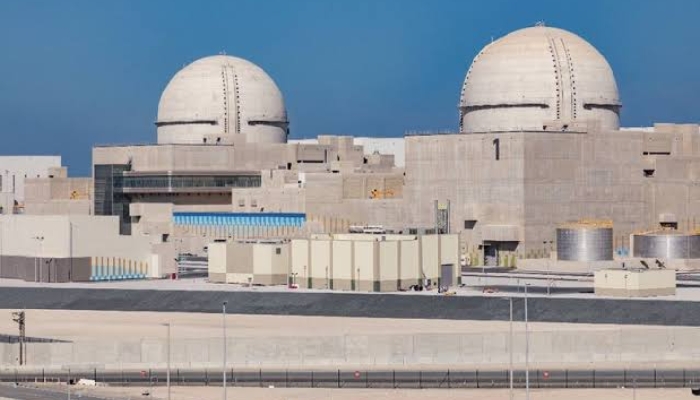
Dubai, Aug 2: The United Arab Emirates (UAE) announced on Saturday that it has started operations in the first of four reactors at the Barakah nuclear power station - the first nuclear power plant in the Arab world.

Emirates Nuclear Energy Corporation (ENEC), which is building and operating the plant with Korea Electric Power Corporation (KEPCO) said in a press release that its subsidiary Nawah Energy Company "has successfully started up Unit 1 of the Barakah Nuclear Energy Plant, located in the Al Dhafrah Region of Abu Dhabi".

That signals that Unit 1, which had fuel rods loaded in March, has achieved "criticality" - a sustained fission chain reaction.

"The start-up of Unit 1 marks the first time that the reactor safely produces heat, which is used to create steam, turning a turbine to generate electricity," said ENEC.

Barakah, which was originally scheduled to open in 2017, has been dogged by delays and is billions of dollars over budget. It has also raised myriad concerns among nuclear energy veterans who are concerned about the potential risks Barakah could visit upon the Arabian Peninsula, from an environmental catastrophe to a nuclear arms race.

Paul Dorfman, an honorary senior research fellow at the Energy Institute, University College London and founder and chair of the Nuclear Consulting Group, has criticised the Barakah reactors' "cheap and cheerful" design that he says cuts corners on safety.

Dorfman authored a report (PDF) last year detailing key safety features Barakah's reactors lack, such as a "core catcher" to literally stop the core of a reactor from breaching the containment building in the event of a meltdown. The reactors are also missing so-called Generation III Defence-In-Depth reinforcements to the containment building to shield against a radiological release resulting from a missile or fighter jet attack.

Both of these engineering features are standard on new reactors built in Europe, says Dorfman.

There have been at least 13 aerial attacks on nuclear facilities in the Middle East - more than any other region on earth.

The vulnerability of critical infrastructure in the Arabian Peninsula was further laid bare last year after Saudi Arabia's oil facilities at Abqaiq and Khurais were attacked by 18 drones and seven cruise missiles - an assault that temporarily knocked out more than half of the kingdom's oil production.

On Saturday, Dorfman reiterated his concern that there is no regional protocol in place to determine liability should an accident or incident at Barakah result in radioactive contamination spreading from the UAE to its neighbours. 

"Given Barakah has started up, because of all the well-rehearsed nuclear safety and security problems, it may be critically important that the Gulf states collectively evolve a Nuclear Accident Liability Convention, so that if anything does go wrong, victim states may have some sort of redress," Dorfman told Al Jazeera. 

The UAE has substantial oil and gas reserves, but it has made huge investments in developing alternative energy sources, including nuclear and solar.

Experts though have questioned why the UAE - which is bathed in sunlight and wind - has pushed ahead with nuclear energy - a far more expensive and riskier option than renewable energy sources.

When the UAE first announced Barakah in 2009, nuclear power was cheaper than solar and wind. But by 2012 - when the Emirates started breaking ground to build the reactors - solar and wind costs had plummeted dramatically.

Between 2009 and 2019, utility-scale average solar photovoltaic costs fell 89 percent and wind fell 43 percent, while nuclear jumped 26 percent, according to an analysis by the financial advisory and asset manager Lazard.

There are also concerns about the potential for Barakah to foment nuclear proliferation in the Middle East - a region rife with geopolitical fault lines and well-documented history of nuclear secrecy.

The UAE has sought to distance itself from the region's bad behaviour by agreeing not to enrich its own uranium or reprocess spent fuel. It has also signed up to the United Nation's nuclear watchdog's Additional Protocol, significantly enhancing inspection capabilities, and secured a 123 Agreement with the United States that allows bilateral civilian nuclear cooperation.


Comments

Add new comment

  • Coastaldigest.com reserves the right to delete or block any comments.
  • Coastaldigset.com is not responsible for its readers’ comments.
  • Comments that are abusive, incendiary or irrelevant are strictly prohibited.
  • Please use a genuine email ID and provide your name to avoid reject.
coastaldigest.com news network
June 16,2020

Dubai, Jun 16: In a humanitarian gesture, a UAE-based Pakistani businessman has come forward to offer free interim accommodation options to covid lockdown hit expatriates. 

The men benefitted from Ali Rao's housing initiative include Indians, Pakistanis and Africans. 

Inspired by the ongoing efforts taken by the UAE leadership to take care of all UAE residents, Ali Rao, CEO of Rao Holdings LLC in Dubai is offering free shared accommodation to unemployed male bachelors and workers, especially expatriates who do not have a place to stay.

Ali Rao currently has a capacity of 100 accommodation options that he wishes to offer to those who cannot afford house rent. 

"We have already placed 25 such men in these housing options spread across Al Quoz, Jebel Ali and Muhaisnah areas of Dubai," Ali Rao told local media. He works in collaboration with major charities in Dubai, who refer the cases to Rao.

"One of our companies - the property management division - deals with industrial housing accommodation. We decided to put this space to good use when I came across media articles that highlighted the plight of these homeless men," he said. 

Rao has already sheltered 25 homeless workers in the Al Quoz area. "We have received applications for 35 more, however, many of these men are due to return to their home countries, so we are awaiting confirmation from the charities," he explained. He has provided them with free Wi-Fi, bedding, blankets, bedsheets, and pillows.

"In one unit, we provide them with food and the other unit, social workers and the associated charities deliver food," he added. The housing is exclusively for men and not for women and families. "Many are seeking jobs, so they needed Wi-Fi. I went to the camps today and set up a Wi-Fi connection. Someone wanted to eat eggs, so we got him some eggs and rice. These are simple things most of us take for granted, but to many people this is vital," he added.

Since most of the residents are looking to return to their home countries, Rao is also in the process of providing them with air tickets.

"If the need arises, we will add more units," he explained. Rao said, "The ongoing pandemic has hit everyone hard, especially those with no security to fall back on. The economic and income disparities have only increased in this time, with those dependent on daily wages being rendered homeless in massive numbers across the globe."

He added, "I felt heartbroken and if I would stand by and watch, I would feel very small as a human being, I won't be able to stand in front of the creator I thought to myself. These are some very difficult times for all of us."

A beneficiary of the programme said, "I am very happy with this initiative as living outside in the summer is very difficult. It's very hot. I want to thank God and this company for providing me with a roof over my head."

Comments

Add new comment

  • Coastaldigest.com reserves the right to delete or block any comments.
  • Coastaldigset.com is not responsible for its readers’ comments.
  • Comments that are abusive, incendiary or irrelevant are strictly prohibited.
  • Please use a genuine email ID and provide your name to avoid reject.
News Network
May 13,2020

Riyadh, May 13: Saudi Arabia’s cabinet on Tuesday urged oil-producing nations not only to adhere to agreed cuts to production, but further reduce output to help restore balance in global oil markets, state news agency SPA reported.

In issuing the call to OPEC+, which includes members of the Organization of the Petroleum Exporting Countries plus Russia and other nations, ministers said the Kingdom is committed to supporting the stability of global oil markets.

After the meeting, acting Minister of Media Majed Al-Qasabi said that in addition to its commitment to the OPEC+ agreement, the Kingdom will voluntarily reduce output by an additional 1 million barrels a day in June. It will also try to implement additional cuts this month, with the consent of its customers, he added.

The cabinet said the Saudi initiatives aim to encourage other countries, whether they have signed up to the OPEC+ agreement or not, to adhere to its reduced rates and to cut output even further to help stabilize global oil markets.

During the cabinet meeting, which was conducted using video conferencing, King Salman also briefed ministers on his recent telephone conversation with US President Donald Trump. He said they affirmed the historical and strategic relationship between the two countries and their commitment to the continuation of joint efforts to enhance security and stability in the region.

Ministers were then updated on the latest developments in the corona virus crisis, including the steps being taken locally and internationally to control it and safeguard public health, the number of cases in the Kingdom and the care being provided to those who are infected. They also reviewed details of the active screening and testing programs in all parts of the country, which have helped to keep the number of deaths relatively low compared to global rates.

The cabinet praised the efforts being made by government officials to combat the pandemic, and stressed that citizens and expatriates must abide by the precautionary and preventive measures introduced to prevent the spread of the virus.

Ministers described the decision by Saudi Arabia to host the Pledging Event for the Humanitarian Crisis in Yemen 2020 on June 2 as an extension of the Kingdom’s humanitarian and development contribution, which reflects its pioneering role in supporting its neighbor.

The cabinet also welcomed the formation of the new government in Iraq and reiterated Saudi Arabia’s support for the nation and its readiness to work with the new administration to strengthen relations and enhance security and stability in the region.

Comments

Add new comment

  • Coastaldigest.com reserves the right to delete or block any comments.
  • Coastaldigset.com is not responsible for its readers’ comments.
  • Comments that are abusive, incendiary or irrelevant are strictly prohibited.
  • Please use a genuine email ID and provide your name to avoid reject.

