Former supermodel wins 53m pounds in divorce from Saudi billionaire

July 9, 2016

London, Jul 9: A British court has awarded a 53 million pounds( USD 69 million) divorce settlement to a former model who had demanded 196 million pounds from her Saudi billionaire husband -- including 1 million pounds a year just for clothes.

modelLawyers for US national Christina Estrada, 54, said the total settlement amounted to 75 million pounds, including the value of her existing assets.

She had asked for 196 million pounds from 61-year-old husband Sheikh Walid Juffali but thanked the court after the ruling.

"I am fully aware that the spectacular life Walid and I led was immensely fortunate and rarefied. And I fully understand how this can be perceived in the wider world," she said in a statement.

In hearings during which she was cross-examined on her material needs she told the court: "I was a top international model. I have lived this life. This is what I am accustomed to".

She said she needed 60 million pounds for a home in London, 4.4 million pounds for a country house in Henley-on-Thames as well as 495,000 poumds for five cars.

Her clothing budget included an annual 40,000 pounds for fur coats, 109,000 pounds for haute couture dresses and 21,000 pounds for shoes.

Juffali is terminally ill with cancer and undergoing treatment in Switzerland. He divorced Estrada under Islamic law without her knowledge and married a 25-year-old Lebanese model in 2012.

London is known as the divorce capital of the world and is particularly attractive for wives because awards are higher than in other parts of the world.

Thousands of wealthy Chinese, Russians, Americans and Europeans, many of whom work in the City of London financial district or own property in Britain, now end their marriages before English judges.

Late Russian oligarch Boris Berezovsky reportedly paid up to 220 million pounds to his ex-wife Galina Besharova in 2011.

Jamie Cooper-Hohn, the estranged wife of a London financier, was awarded 337 million pounds in 2014.

Comments

suleman beary
 - 
Saturday, 9 Jul 2016

Honey is so sweet and precious.

Add new comment

  • Coastaldigest.com reserves the right to delete or block any comments.
  • Coastaldigset.com is not responsible for its readers’ comments.
  • Comments that are abusive, incendiary or irrelevant are strictly prohibited.
  • Please use a genuine email ID and provide your name to avoid reject.
Agencies
August 2,2020

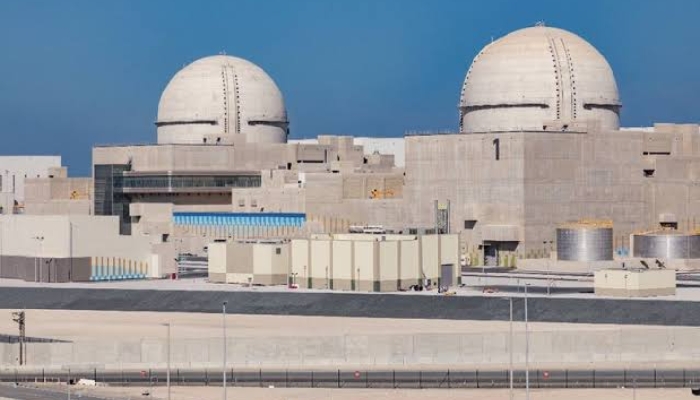
Dubai, Aug 2: The United Arab Emirates (UAE) announced on Saturday that it has started operations in the first of four reactors at the Barakah nuclear power station - the first nuclear power plant in the Arab world.

Emirates Nuclear Energy Corporation (ENEC), which is building and operating the plant with Korea Electric Power Corporation (KEPCO) said in a press release that its subsidiary Nawah Energy Company "has successfully started up Unit 1 of the Barakah Nuclear Energy Plant, located in the Al Dhafrah Region of Abu Dhabi".

That signals that Unit 1, which had fuel rods loaded in March, has achieved "criticality" - a sustained fission chain reaction.

"The start-up of Unit 1 marks the first time that the reactor safely produces heat, which is used to create steam, turning a turbine to generate electricity," said ENEC.

Barakah, which was originally scheduled to open in 2017, has been dogged by delays and is billions of dollars over budget. It has also raised myriad concerns among nuclear energy veterans who are concerned about the potential risks Barakah could visit upon the Arabian Peninsula, from an environmental catastrophe to a nuclear arms race.

Paul Dorfman, an honorary senior research fellow at the Energy Institute, University College London and founder and chair of the Nuclear Consulting Group, has criticised the Barakah reactors' "cheap and cheerful" design that he says cuts corners on safety.

Dorfman authored a report (PDF) last year detailing key safety features Barakah's reactors lack, such as a "core catcher" to literally stop the core of a reactor from breaching the containment building in the event of a meltdown. The reactors are also missing so-called Generation III Defence-In-Depth reinforcements to the containment building to shield against a radiological release resulting from a missile or fighter jet attack.

Both of these engineering features are standard on new reactors built in Europe, says Dorfman.

There have been at least 13 aerial attacks on nuclear facilities in the Middle East - more than any other region on earth.

The vulnerability of critical infrastructure in the Arabian Peninsula was further laid bare last year after Saudi Arabia's oil facilities at Abqaiq and Khurais were attacked by 18 drones and seven cruise missiles - an assault that temporarily knocked out more than half of the kingdom's oil production.

On Saturday, Dorfman reiterated his concern that there is no regional protocol in place to determine liability should an accident or incident at Barakah result in radioactive contamination spreading from the UAE to its neighbours. 

"Given Barakah has started up, because of all the well-rehearsed nuclear safety and security problems, it may be critically important that the Gulf states collectively evolve a Nuclear Accident Liability Convention, so that if anything does go wrong, victim states may have some sort of redress," Dorfman told Al Jazeera. 

The UAE has substantial oil and gas reserves, but it has made huge investments in developing alternative energy sources, including nuclear and solar.

Experts though have questioned why the UAE - which is bathed in sunlight and wind - has pushed ahead with nuclear energy - a far more expensive and riskier option than renewable energy sources.

When the UAE first announced Barakah in 2009, nuclear power was cheaper than solar and wind. But by 2012 - when the Emirates started breaking ground to build the reactors - solar and wind costs had plummeted dramatically.

Between 2009 and 2019, utility-scale average solar photovoltaic costs fell 89 percent and wind fell 43 percent, while nuclear jumped 26 percent, according to an analysis by the financial advisory and asset manager Lazard.

There are also concerns about the potential for Barakah to foment nuclear proliferation in the Middle East - a region rife with geopolitical fault lines and well-documented history of nuclear secrecy.

The UAE has sought to distance itself from the region's bad behaviour by agreeing not to enrich its own uranium or reprocess spent fuel. It has also signed up to the United Nation's nuclear watchdog's Additional Protocol, significantly enhancing inspection capabilities, and secured a 123 Agreement with the United States that allows bilateral civilian nuclear cooperation.


Comments

Add new comment

  • Coastaldigest.com reserves the right to delete or block any comments.
  • Coastaldigset.com is not responsible for its readers’ comments.
  • Comments that are abusive, incendiary or irrelevant are strictly prohibited.
  • Please use a genuine email ID and provide your name to avoid reject.
Agencies
June 24,2020

New Delhi, June 24: The United Arab Emirates (UAE) has asked Air India to not carry any passengers aboard the repatriation flights to UAE being operated under the Vande Bharat Mission.

As per the Guidelines issued by the General Civil Aviation Authority of United Arab Emirates (UAE)- Safety Decision 2020-01 (Issue 17) Q and A Guidance For Foreign Operators, on June 23, 2020 - transportation of passengers ( UAE Nationals and Non - UAE Nationals) to the United Arab Emirates on the repatriation flights is not allowed.

In view of the foregoing, all passengers including the Indian Nationals who are holding valid Residency Permit / Work Permit of United Arab Emirates and have procured approval of the UAEs Federal Authority for Identity and Citizenship- UAE (ICA) of United Arab Emirates or an approval from the General Directorate of Residency and Foreigners Affairs (GDRFA) applicable to Dubai would need to have specific approval from the Embassy of the United Arab Emirates in New Delhi and their UAE Ministry of Foreign Affairs and International Cooperation (MOFAIC) to travel from India to United Arab Emirates (UAE) on these repatriation flights.

All passengers need to comply with the quarantine and COVID-19 test requirements as per the preventive and the precautionary measures required by the appropriate health authorities, as notified from time to time.

Comments

Add new comment

  • Coastaldigest.com reserves the right to delete or block any comments.
  • Coastaldigset.com is not responsible for its readers’ comments.
  • Comments that are abusive, incendiary or irrelevant are strictly prohibited.
  • Please use a genuine email ID and provide your name to avoid reject.
Agencies
July 22,2020

Riyadh, Jul 22: Saudi King Salman held a cabinet meeting via video call from hospital in the capital Riyadh on Tuesday, a day after the 84-year-old monarch was admitted with inflammation of the gall bladder.

Three Saudi sources said the king was in stable condition.

A video of the king chairing the meeting was broadcast on Saudi state TV on Tuesday evening. In the video, which has no sound, King Salman can be seen behind a desk, wordlessly reading and leafing through documents.

The king, who has ruled the world’s largest oil exporter and close US ally since 2015, was undergoing medical checks, state media on Monday cited a Royal Court statement as saying.

Three well-connnected Saudi sources who declined to be identified, two of whom were speaking late on Monday and one on Tuesday, said the king was “fine”.

An official in the region, who requested anonymity, said he spoke to one of King Salman’s sons on Monday who seemed “calm” and that there was no sense of panic about the monarch’s health.

Comments

Add new comment

  • Coastaldigest.com reserves the right to delete or block any comments.
  • Coastaldigset.com is not responsible for its readers’ comments.
  • Comments that are abusive, incendiary or irrelevant are strictly prohibited.
  • Please use a genuine email ID and provide your name to avoid reject.

