



Fraud charges against Barclays over Qatar deals

Arab News
June 21, 2017

Dubai, Jun 21: Qatar’s 2008 bailout of Barclays has come back to haunt the British banking giant, with the leveling of fraud charges against it and four former senior executives over multibillion-pound deals nine years ago.
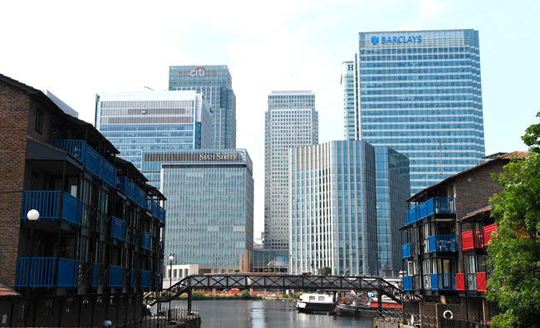
Barclays

The Serious Fraud Office (SFO), the UK’s top financial prosecutor, announced charges as Qatar’s financial sector showed signs of further strain under the weight of sanctions brought to bear by a coalition of neighboring countries including Saudi Arabia and the UAE.

It has for months been considering action over the undisclosed terms of £6.1 billion ($7.7 billion) worth of deals that saw Qatari investors buy shares to prop up the bank at the height of the global financial crisis, after an investigation that began in 2012.

The SFO on Tuesday announced charges of conspiracy to commit fraud and provision of unlawful financial assistance against the Barclays parent company and four executives who were at the heart of the deals.

The highest profile is John Varley, former group chief executive, who becomes the first boss of any global bank to face criminal charges as a result of the 2008 crisis, which sparked a global crash and recession.

The others were well-known deal-doers at the bank: Roger Jenkins, former chairman of investment banking in the Middle East; Thomas Kalaris, former head of wealth and investment management; and Richard Boath, former head of financial institutions in Europe.

The SFO charges named Qatar Holding, one of the troubled country’s investment vehicles and Challenger Universal, an investment unit set up by former Qatari Prime Minister Hamad bin Jassim Al-Thani, as counterparties to the deals but no British criminal actions have been brought against any Qatari citizens.

Separately, Qatari bankers on Tuesday reported that the Qatar Investment Authority (QIA), its main sovereign wealth fund, made billions of dollars worth of deposits in local banks in an effort to head off any liquidity crisis as fears grew in the country that the current blockade by its neighbors might spark a run on financial institutions there.

In 2008, Barclays was facing its own liquidity crisis as the strains of the global financial crisis weighed on all the big British banks. Some were forced to swap their independence for government bailout funds to avoid bankruptcy.

Barclays, under Varley, chose instead to seek assistance from the Arabian Gulf in a set of transactions that brought in billions of pounds of capital. The first tranche involved investors in Qatar and in Abu Dhabi, the second just Doha investors.

Barclays agreed to pay Qatari investors £322 million in return for the capital injections in side deals that were not disclosed at the time and which the SFO alleges amounted to fraud. There are no allegations against the Abu Dhabi investor.

A third transaction in 2008 involved Barclays making available a loan of $3 billion to Qatar, which the SFO alleges amounted to unlawful financial assistance.

Barclays said it was considering its position in relation to the charges. “Barclays awaits further details of the charges from the SFO,” it said.

The former executives either declined to comment or professed their determination to fight the charges. Jenkins’ lawyer said he intended to vigorously defend against the charges. “As one might expect in the challenging circumstances of 2008, Mr. Jenkins sought and received both internal and external legal advice on each and every aspect of the accusations leveled today by the SFO,” he told the Financial Times.

Boath is involved in a separate action against the bank in a claim for wrongful dismissal over information he provided the SFO in the course of their investigation.

Barclays is also fighting a £720 million claim from financier Amanda Staveley, who was involved in the 2008 transactions.

The charges come at a politically sensitive time for both Qatar and the UK. The former is resisting pressure from its neighbors in the Gulf to halt alleged support for terrorist organizations, which has led to the cutting of economic ties with its two biggest neighbors, Saudi Arabia and the UAE.

On the liquidity measures taken recently, the Qatar Central Bank (QCB) told Reuters: “QIA regularly places deposits in local banks, this is normal.”

Qatar is also a big investor in Britain, with extensive real estate interests and ownership of high-profile assets like the Harrods department store.

Britain, seeking to make up lost investment in the wake of the impending withdrawal from the EU, has made no secret of its need for stronger investment links with the Gulf.

Comments

Add new comment

  • Coastaldigest.com reserves the right to delete or block any comments.
  • Coastaldigset.com is not responsible for its readers’ comments.
  • Comments that are abusive, incendiary or irrelevant are strictly prohibited.
  • Please use a genuine email ID and provide your name to avoid reject.
Arab News
March 21,2020

Jeddah, Mar 21: Saudi government ministers on Friday announced a war chest of more than SR120 billion ($32 billion) to fight the “unprecedented” health and economic challenges facing the country as a result of the killer coronavirus pandemic.

During a press conference in Riyadh, finance minister and acting minister of economy and planning, Mohammed Al-Jadaan, unveiled a SR70 billion stimulus package to support the private sector, especially small- and medium-sized enterprises (SMEs) and businesses worst-hit by the virus outbreak.

And the Saudi Arabian Monetary Authority (SAMA) has also sidelined SR50 billion to help the Kingdom’s banking sector, financial institutions and SMEs.

Al-Jadaan said the government had introduced tough measures to protect the country’s citizens while immediately putting in place a financial safety net. He added that the Kingdom was moving decisively to address the global COVID-19 disease crisis and cushion the financial and economic impact of the outbreak on the country.

The SR70 billion package of initiatives revealed by the minister will include exemptions and postponement of some government dues to help provide liquidity for private-sector companies.

Minister of Health Dr. Tawfig Al-Rabiah noted the raft of precautionary measures that had been introduced by the Kingdom in cooperation with the private sector and government agencies to combat the spread of the coronavirus, highlighting the important contribution of the data communication services sector.

He reassured the Saudi public that the Kingdom would continue to do whatever was required to tackle the crisis.

“This pandemic has a lot of challenges. It’s difficult to make presumptions at this moment as we’ve seen; many developed countries did not expect the rate of transmission of this virus.

“We see that the reality of the situation is different from what many expected. The virus is still being studied and though we know the means of transmission, it is transmitted at a very fast rate, having spread to many countries faster than expected.

“We see that many countries have not taken the strong precautionary measures from the beginning of the crisis which led to the vast spread of the virus in these countries,” Al-Rabiah said.

He pointed out that social distancing would help slow the spread.

Al-Jadaan said the Saudi government had the financial and economic capacity to deal with the situation. “We have large reserves and large investments, but we do not want to withdraw from the reserves more than what was already announced in the budget. We do not want to liquidate any of the government’s investments so we will borrow.

“We have approval from the government after the finance committee raised its recommendations to increase the proportion of the domestic product borrowing from 30 percent to 50 percent. We do not expect to exceed 50 percent from now until the end of 2022,” he added.

The government would use all the tools available to it to finance the private sector, especially SMEs, and ensure its ongoing stability.

The finance minister said that at this stage it was difficult to predict the economic impact of the pandemic on the private sector, but he emphasized that international coordination, most notably through G20 countries and health organizations, was ongoing.

On recorded cases of the COVID-19 disease in the Kingdom, Al-Rabiah said: “Many of the confirmed cases are without symptoms, this is due to the precautionary measures being considered.

“As soon as a case is confirmed, we contact and examine anyone who was in direct contact with the patient. This epidemiological investigation, is conducted on a large scale to investigate any case that was in contact with the patient.”

Al-Jadaan also announced the formation of a committee made up of the ministers of finance, economy and planning, commerce, and industry and mineral resources, along with the vice chairman of the board of the Saudi National Development Fund, and its governor.

The committee will be responsible for identifying and reviewing incentives, facilities, and other initiatives led by the fund.

Committees had also been established, said Al-Jadaan, to study the impact and repercussions of the coronavirus crisis on all sectors and regions, and look at ways of overcoming them through subsidies or stimulus packages.

Comments

Add new comment

  • Coastaldigest.com reserves the right to delete or block any comments.
  • Coastaldigset.com is not responsible for its readers’ comments.
  • Comments that are abusive, incendiary or irrelevant are strictly prohibited.
  • Please use a genuine email ID and provide your name to avoid reject.
News Network
January 8,2020

Dubai, Jan 8: Iranian state television said on Wednesday that at least 80 "American terrorists" were killed in attacks involving 15 missiles Tehran launched on US targets in Iraq, adding that none of the missiles were intercepted.

State TV, citing a senior Revolutionary Guards source, also said Iran had 100 other targets in the region in its sights if Washington took any retaliatory measures. It also said US helicopters and military equipment were "severely damaged".

Iran launched missile attacks on US-led forces in Iraq in the early hours of Wednesday in retaliation for the US drone strike on an Iranian commander whose killing has raised fears of a wider war in the Middle East.

Comments

Add new comment

  • Coastaldigest.com reserves the right to delete or block any comments.
  • Coastaldigset.com is not responsible for its readers’ comments.
  • Comments that are abusive, incendiary or irrelevant are strictly prohibited.
  • Please use a genuine email ID and provide your name to avoid reject.
News Network
March 18,2020

Riyadh, Mar 18: Private-sector businesses in Saudi Arabia on Wednesday were ordered to introduce enforced remote working for all employees for 15 days in an attempt to prevent the spread of the coronavirus.

Businesses that require staff to be physically present to ensure they continue to operate — including those in vital or sensitive sectors such as electricity, water and communications — must reduce the number of workers in their offices to the bare minimum. This can be no more than 40 percent of the total number of staff.

In such cases precautionary measures set by the Ministry of Health must be followed. At offices, and staff accommodation, with more than 50 workers, an area at the entrance must be provided where temperatures can be taken and symptoms checked.

Employers must also set up a mechanism for workers to report any symptoms, such as high temperature, coughing or shortness of breath, or contact they have had with infected individuals or people who recently returned from other countries without following proper Ministry of Health quarantine procedures.

Inside offices, a safe amount of space between employees must be maintained at all times. In addition, all health clubs and nurseries provided by employers must close.

Pregnant women and new mothers, people suffering from respiratory diseases, those with immune-system problems or chronic conditions, cancer patients and employees above the age of 55 are to be given 14 days compulsory paid leave, which will not be deducted from their annual entitlement.

Businesses that are excluded from the new measures include pharmacies and supermarkets, and their suppliers. Private-sector organizations that provide services to government agencies must contact them before suspending workplace attendance. Any other business that considers it impossible to operate with only 40 percent of staff in the workplace must submit an exemption request to the authority that supervises it.

Comments

Add new comment

  • Coastaldigest.com reserves the right to delete or block any comments.
  • Coastaldigset.com is not responsible for its readers’ comments.
  • Comments that are abusive, incendiary or irrelevant are strictly prohibited.
  • Please use a genuine email ID and provide your name to avoid reject.