


Gandhi ashram's Muslim head dead; prefers cremation over burial

October 9, 2016

Ahmedabad, Oct 9: "My life is my message", said Mahatma Gandhi. And one of Bapu's original disciples, Abdul Hamid Kureshi, 89 -the chair man of the Sabarmati Ashram - has enclosed a message in his death. Kureshi, who was also an eminent lawyer, chose to be cremated and not buried.gandhi
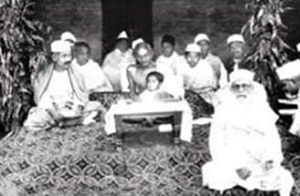
Kureshi breathed his last at the breakfast table in his residence in Swastik Society, Navrangpura, on Saturday morning. Sabarmati Ashram was the cradle of Bapu's revolutionary ideas to win freedom from the British.

It was a rare sight at the Mukti Dham crematorium in Paldi where Kureshi's illustrious family gathered for his final rites. Senior members of the higher judiciary and distinguished lawyers stood alongside the grieving family . Kureshi was the grandson of Imam Saheb Abdul Kadir Bawazir, a close associate of Bapu in South Africa.Bapu referred to Imam Bawazir as his "sahodar", brother born from the same mother.

"Kureshi saheb wished to be cremated because he did not want to waste land with his burial," said Bharat Naik, the sonin-law of Kureshi's brother, Wahid Kureshi. "In fact, he made me a witness to the decision in the presence of other family members." Over the past four years, Kureshi had been reminding his son, Justice Akil Kureshi, and Naik that they should ensure he is cremated. He asserted that if anyone objected, the person should be told of his last wish.Kureshi was cremated after 7 pm.

Kureshi was born in the Sabarmati Ashram in Ahmedabad where Imam Bawazir had settled with Bapu in 1915. Born in 1927, Kureshi grew up on Bapu's lap till Bapu embarked on the Dandi March in 1930. Kureshi was one of the few kids who ate tomato slices from Bapu's lunch. Bapu wrote letters to a young Kureshi, which were later donated to the National Archives of India.

"Kureshi's father, Ghulam Rasool, was part of `Arun Tukdi' that walked ahead of the Dandi March procession," said Sabarmati Ashram director Tridip Suhrud. "The team had to ensure that arrangements for meetings and halts were in place."

After Ghulam Rasool and his wife were arrested during the Dandi March, Abdul Hamid, his brother Wahid, and sister Sultana were brought up for a few years by Anasuya Sarabhai, said the secretary of the ashram, Amrut Modi. "Sarabhai was a Gandhian and pioneer of women's labour movement in India," he said. Rizwan Kadri, an Ahmedabad-based historian, said that in September1942 Kureshi was arrested in Detroj during the Quit India movement.

Kureshi became the chairman of the Sabarmati Ashram trust three years ago. A peace activist at heart, Kureshi worked to build bridges between Hindus and Muslims and penned a book titled " Agnipariksha" after the 1969 communal riots in Gujarat.

Comments

shaji
 - 
Monday, 10 Oct 2016

None can stop if any one wants to follow Sataan and enter Hell. I think this idiot deserves it. He did not agree to waste land but agree to pollute atmosphere thereby creating pollution. I am sure he was a follower of Satan and he will meet his Guru in the Hell.

Onte Moothra, …
 - 
Monday, 10 Oct 2016

Good muslim, doesn't want to meet 72 houris.

Add new comment

  • Coastaldigest.com reserves the right to delete or block any comments.
  • Coastaldigset.com is not responsible for its readers’ comments.
  • Comments that are abusive, incendiary or irrelevant are strictly prohibited.
  • Please use a genuine email ID and provide your name to avoid reject.
News Network
July 19,2020

Bengaluru, Jul 19: The Karnataka Deputy Chief Minister C N Ashwathnarayan on Saturday inspected the country's first modular Intensive Care Unit (ICU) containers.

A notice from the Chief Minister's Office (CMO) said that the new mobile modular container ICUs, which will be used in the fight against the ongoing COVID-19 pandemic, have been created by Rinac India Limited, known for setting up sanitised operation theatres and clean rooms in hospitals.

On a pilot basis, the Deputy CM, who is also in charge of setting up COVID-care centres, said that 10 modular container ICUs will be deployed at the KC General Hospital in Malleshwaram. Each of the containers will have five beds.

Deputy CM Ashwathnarayan also said, "These mobile ICUs donated by Rinac will be useful, particularly in times of a crisis like COVID 19 or any natural calamity."

"The entry of health officials will be through an airlock, and entry of patients will be through a different door. There will be two doors for patients and can be increased if need. ICUs are fitted with cameras to monitor online from a centralized monitoring station, thereby limiting the exposure of the health personnel," the CMO informed.

The CMO further added, "the advantages of this new system are that the prefabricated modules of 5 can be shifted to any location by trailers and it is easy to deploy multiple containers to create a common facility. They are easy to clean and the airtight functionality ensures that no moisture or heat ingression happens, hence, it is easy to air-condition or ventilate."

Comments

Add new comment

  • Coastaldigest.com reserves the right to delete or block any comments.
  • Coastaldigset.com is not responsible for its readers’ comments.
  • Comments that are abusive, incendiary or irrelevant are strictly prohibited.
  • Please use a genuine email ID and provide your name to avoid reject.
News Network
March 8,2020

Bengaluru, Mar 8: The Indian Council of Medical Research (ICMR) has identified three more locations to open Viral Research Diagnostic Laboratories (VRDL) including in Mysuru, Hassan, and Shivamogga in Karnataka.

According to a statement issued here on Sunday, these laboratories will start functioning shortly in Mysuru Medical College and Research Institute, Hassan Institute of Medical Sciences, and Shivamogga Institute of Medical Sciences. Besides, the ICMR has also identified sample collection centres in Vijayanagar Institute of Medical Science in Ballari and Kalaburgi Institute of Medical Sciences.

B G Prakash, State Joint Director (Communicable Diseases), said that the new Laboratories will help to ease the load on the two designated laboratories in Bengaluru. Currently, the virology laboratory in Bangalore Medical College and Research Institute and the NIV branch in Rajiv Gandhi Institute of Chest Diseases are doing COVID-19 tests in Karnataka.

Comments

Add new comment

  • Coastaldigest.com reserves the right to delete or block any comments.
  • Coastaldigset.com is not responsible for its readers’ comments.
  • Comments that are abusive, incendiary or irrelevant are strictly prohibited.
  • Please use a genuine email ID and provide your name to avoid reject.
Agencies
July 5,2020

The deadly coronavirus that entered India while there was still nip in the air has beaten rising mercury, humid conditions, unique Indian genome and has entered monsoon season with more potency as fresh cases are only breaking all records in the country.

India recorded a single-day spike of record 24,850 new coronavirus cases on Sunday, taking its total tally to 6.73 lakh corona-positive cases.

Top Indian microbiologists were hopeful in March that after the 21-day lockdown, as summer approaches, the rise in temperature would play an important role in preventing the drastic spread of COVID-19 virus in India.

Several virologists hinted that by June this year, the impact of COVID-19 would be less than what it appeared in March-April.

The claims have fallen flat as the virus is mutating fast, becoming more potent than ever.

According to experts, the novel coronavirus is a new virus whose seasonality and response to hot humid weather was never fully understood.

"The theory was based on the fact that high temperatures can kill the virus as in sterilisation techniques used in healthcare. But these are controlled environment conditions. There are many other factors besides temperature, humidity which influence the transmission rate among humans," Dr Anu Gupta, Head, Microbiologist and Infection Control, Fortis Escorts Heart Institute, told IANS.

There is no built-up immunity to COVID-19 in humans.

"Also, asymptomatic people might be passing it to many others unknowingly. New viruses tend not to follow the seasonal trend in their first year," Gupta emphasized.

Globally, as several countries are now experiencing hot weather, the World Health Organization (WHO) reported a record hike in the number of coronavirus cases, with the total rising by 2,12,326 in 24 hours in the highest single-day increase since COVID-19 broke out.

So far over 11 million people worldwide have tested positive for the disease which has led to over 5,25,000 deaths, according to data from Johns Hopkins University. The US remained the worst-hit country with over 28 lakh cases, followed by Brazil with 15.8 lakh.

According to Sandeep Nayar, Senior Consultant and HOD, Respiratory Medicine, Allergy & Sleep Disorders, BLK Super Speciality Hospital in New Delhi, whether temperature plays a role in COVID-19 infection is highly debated.

One school of thought said in the tropical regions of South Asia, the virus might not thrive longer.

"On the other hand, another school of thought has found that novel Coronavirus can survive in a hot and humid environment and tropical climate does not make a difference to the virus. According to them, this is what distinguishes the novel coronavirus from other common viruses, which usually wane in hot weather," stressed Nayar.

Not much has been studied in the past and no definite treatment or vaccine is available to date.

"Every day, new properties and manifestation of the disease come up. As of now, the only way to prevent this monster is by taking appropriate precautions. Hand hygiene, social distancing, cough etiquette and face masks definitely reduce spread of COVID-19 infection," Nayar told IANS.

Not just top Indian health experts, even Indian-American scientists had this theory in mind that sunshine and summer may ebb the spread of the coronavirus.

Ravi Godse, Director of Discharge Planning, UPMC Shadyside Pennsylvania in the US told IANS in April: "In the summer, the humidity can go up as well, meaning more water drops in the air. If the air is saturated with water and somebody sneezes virus droplets into such air, it is likely that the droplets will fall to the ground quicker, making them less infectious. So the short answer is yes, summer/sunshine could be bettera.

According to Dr Puneet Khanna, Head of Respiratory Medicine and Pulmonology, Manipal Hospital, Delhi, COVID-19 death rates are not too different in tropical countries but since the disease affected them late it was yet to show its peak in these areas.

"The virus can survive well in hot and humid countries and this is proven now," he stressed.

Comments

Add new comment

  • Coastaldigest.com reserves the right to delete or block any comments.
  • Coastaldigset.com is not responsible for its readers’ comments.
  • Comments that are abusive, incendiary or irrelevant are strictly prohibited.
  • Please use a genuine email ID and provide your name to avoid reject.