Germany’s anti-Islam political party’s leader embraces Islam

News Network
January 25, 2018

In a curious development, a prominent leader of the Alternative for Germany (AfD), a political party known for its racist and islamophobic tendencies, has converted to Islam and resigned from his position with the party.

Arthur Wagner, a leading member of the far-right party in Germany's eastern German state of Brandenburg, stepped down for "personal reasons", a party spokesperson confirmed, according to state broadcaster Deutsche Welle.

Wagner, who has been a member of the party since 2015, refused to comment to Tagesspiegel, the daily newspaper that first broke the news of his conversion. "That's my private business," he told the daily.

On the party's Brandenburg state committee, Wagner's work focused on churches and faith communities, according to Deutsche Welle.

The AfD has campaigned against refugees and migrants and made history when it won 12.6 percent of the vote in federal elections in September 2017, entering the Bundestag for the first time.

The party became the third largest party in the Bundestag.

The news sparked derision on social media, with many Twitter users pointing to the irony of Wagner converting to Islam after being a high-ranking member of a party that has railed against the presence of Muslims in Germany.

Emily Dische-Becker said: "Creeping Sharia picks up speed as politician from Germany's islamophobic AfD converts to Islam." Mark Berry said: "I really don't understand Nazis."

Originally founded in 2013 as a Eurosceptic party, the AfD took the lead as the most aggressive anti-refugee voice in the country while nearly a million asylum seekers arrived in Germany in 2015.

In the party's first bill since its electoral success in September, the AfD proposed amending Germany's Residence Act by barring refugees from bringing their relatives from the war-ravaged countries they fled.

Earlier this month, Beatrix von Storch, the deputy leader of the AfD's parliamentary group, was blocked from Facebook and Twitter after publishing Islamophobic posts criticising police for posting Arabic-language updates on New Year's Eve.

She had written: "What the hell is happening in this country? Why is an official police site tweeting in Arabic? Do you think it is to appease the barbaric, gang-raping hordes of Muslim men?"

The party has also sought to ban the construction of mosques in Germany. 

In March 2016, the party's Bavaria branch published a policy statement calling for an end to the "construction and operation" of mosques in the region, Deutsche Welle reported at the time. 

In February of that year, then party leader Petry Frauke sparked outrage when she proclaimed that German border guards should "use fire arms if necessary" in order to prevent "illegal border crossings" by refugees and migrants. 

In April 2016, the AfD's Alexander Gauland proclaimed that Germany must remain "a Christian country" and "Islam is a foreign entity". 

The rise in anti-Muslim rhetoric has also coincided with a spike in violence against asylum seekers. The German interior ministry documented 3,533 attacks on refugees and their accommodations - nearly 10 a day - in 2016.

Comments

TomCat
 - 
Wednesday, 21 Feb 2018

Many men want to embrace Islam cause want to marry again, and can marry up to four wives. Criminality made legal. 

ABDUL AZIZ S.A
 - 
Thursday, 15 Feb 2018

Alhamdulillah


this is the example and truth of Islam , the more  someone hate Islam ,Islam will grow faster ,and people will understand the islam religion,

THINKERS
 - 
Thursday, 25 Jan 2018

Alhamdullillah... Thanks to Allah...

Many people try to demonize ISLAM without knowledge. When they learn ISLAM is the means of this life. They want to follow the religion of ONE GOD who is worthy of Worship... When we are honest in searching for God, Just says The one who put soul in me Please Guide me to TRUTH. Have trust and U will definetely SEE The truth and understand the world clearly.

Abu Muhammad
 - 
Thursday, 25 Jan 2018

For us Muslims this is neither new nor surprising news as we have example of Hazrat Umar (RA) who was a different man before (fierce enemy of Islam) and after (supreme leader of Islam) he revert to Islam.


Surah MUMTAHANA (60) Ayat (7) Allah says - ..Allah will establish Friendship between you and those whom Ye hold as enemies. For Allah has power (over all things); and Allah is oft-forgiving, most merciful".


Here is a great lesson for enemies of God and Islam

سيد
 - 
Thursday, 25 Jan 2018

الحمد لله...................

Add new comment

  • Coastaldigest.com reserves the right to delete or block any comments.
  • Coastaldigset.com is not responsible for its readers’ comments.
  • Comments that are abusive, incendiary or irrelevant are strictly prohibited.
  • Please use a genuine email ID and provide your name to avoid reject.
Agencies
July 29,2020

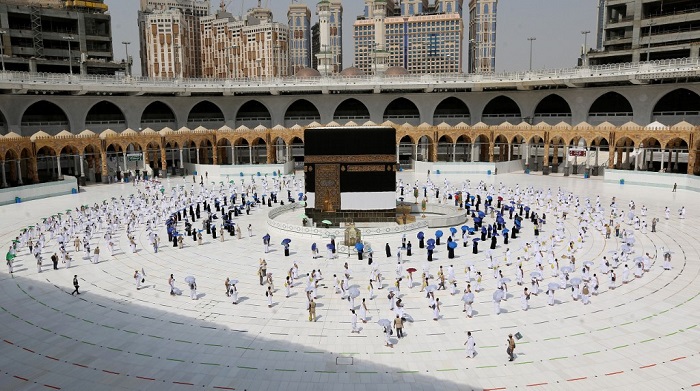
Dubai, Jul 29: Muslim pilgrims on Wednesday begin the annual Haj, downsized this year as the Saudi hosts strive to prevent a coronavirus outbreak during the five-day pilgrimage.

The Haj, one of the five pillars of Islam and a must for able-bodied Muslims at least once in their lifetime, is usually one of the world's largest religious gatherings.

But this year only up to 10,000 people already residing in the Kingdom will participate in the ritual, a tiny fraction of the 2.5 million pilgrims from around the world that attended last year.

"There are no security-related concerns in this pilgrimage, but (downsizing) is to protect pilgrims from the danger of the pandemic," said Khalid bin Qarar Al Harbi, Saudi Arabia's director of public security.

Pilgrims will be required to wear masks and observe social distancing during a series of religious rites that are completed over five days in the holy city of Makkah and its surroundings in western Saudi Arabia.

Those selected to take part in the Haj were subject to temperature checks and placed in quarantine as they began trickling into Makkah at the weekend.

State media showed health workers sanitising their luggage, and some pilgrims reported being given electronic wristbands to allow authorities to monitor their whereabouts.

Workers, clutching brooms and disinfectant, were seen cleaning the area around the Kaaba, the structure at the centre of the Grand Mosque draped in gold-embroidered cloth towards which Muslims around the world pray.

Haj authorities have cordoned off the Holy Kaaba this year, saying pilgrims will not be allowed to touch it, to limit the chances of infection.

They also reported setting up multiple health facilities, mobile clinics and ambulances to cater to the pilgrims.

Saudi authorities said only around 1,000 pilgrims residing in the Kingdom would be permitted for the Haj. Some 70 per cent of the pilgrims are foreigners residing in the Kingdom, while the rest will be Saudi citizens, authorities said.

All worshippers were required to be tested for coronavirus before arriving in the holy city of Makkah and will also have to quarantine after the pilgrimage as the number of cases in the Kingdom nears 270,000.

They were given elaborate amenity kits that include sterilised pebbles for a stoning ritual, disinfectants, masks, a prayer rug and the Ihram, a seamless white garment worn by pilgrims, according to a Haj ministry programme document.

"I did not expect, among millions of Muslims, to be blessed with approval," Emirati pilgrim Abdullah Al Kathiri said in a video released by the Saudi media ministry.

"It is an indescribable feeling... especially since it is my first pilgrimage."

The Haj ministry said non-Saudi residents of the Kingdom from around 160 countries competed in the online selection process but it did not say how many people applied.

Despite the pandemic, many pilgrims consider it safer to participate in this year's ritual without the usual colossal crowds cramming into tiny religious sites, which make it a logistical nightmare and a health hazard.

Comments

Add new comment

  • Coastaldigest.com reserves the right to delete or block any comments.
  • Coastaldigset.com is not responsible for its readers’ comments.
  • Comments that are abusive, incendiary or irrelevant are strictly prohibited.
  • Please use a genuine email ID and provide your name to avoid reject.
News Network
January 21,2020

Beijing, Jan 21: The Chinese official investigating a pneumonia outbreak stemming from a new coronavirus said the disease can spread from person to person but can be halted with increased vigilance, as authorities on Tuesday confirmed a fourth death.

Zhong Nanshan said there was no danger of a repeat of the Severe Acute Respiratory Syndrome (SARS) epidemic that killed nearly 800 people globally during a 2002-2003 outbreak, which started in China, as long as precautions were taken.

"It took only two weeks to identify the novel coronavirus," state news agency Xinhua quoted Zhong as saying late on Monday.

The outbreak was still in its early stages and China had good surveillance and quarantine systems to help control it, he added.

The outbreak has spread from the central city of Wuhan to cities including Beijing and Shanghai, with more than 200 cases reported so far. Four cases have been reported outside China - in South Korea, Thailand and Japan.

Australia on Tuesday said it would screen passengers on flights from Wuhan amid rising concerns that the virus will spread globally as Chinese travellers take flights abroad for the Lunar New Year holiday starting this week.

Authorities around the globe, including in the United States and many Asian countries, have stepped up screening of travellers from Wuhan.

Chinese authorities confirmed a total of 217 cases of the virus in China as of 6 p.m. (1000 GMT) on Monday, state television reported, 198 of which were in Wuhan.

A fourth person died on Jan. 19, the Wuhan Municipal Health Commission said. The 89-year-old man, who had underlying health diseases including coronary heart disease, developed symptoms on Jan. 13 and was admitted to hospital five days later, it added.

Zhong, who is renowned in China for his work fighting SARS in 2003, confirmed that the virus can pass from person-to-person.

Fifteen medical workers in Wuhan had been diagnosed with pneumonia, with one other suspected case, the Wuhan Municipal Health Commission said. Of the infected staff, one was in critical condition.

In Shanghai, officials on Tuesday confirmed a second case involving a 35-year-man who had visited Wuhan in early January, and said they were monitoring four other suspected cases.

The virus causes a type of pneumonia and belongs to the same family of coronaviruses as SARS. Symptoms include fever and difficulty in breathing, which are similar to many other respiratory diseases and pose complications for screening efforts.

The World Health Organisation (WHO) said on Monday an animal source appeared most likely to be the primary origin of the outbreak and that some "limited human-to-human transmission" occurred between close contacts.

The Geneva-based U.N. agency convened an emergency committee for Wednesday to assess whether the outbreak constitutes an international health emergency and what measures should be taken to manage it.

So far, the WHO has not recommended trade or travel restrictions, but a panel of independent experts could do so or make other recommendations to limit spread.

Comments

Add new comment

  • Coastaldigest.com reserves the right to delete or block any comments.
  • Coastaldigset.com is not responsible for its readers’ comments.
  • Comments that are abusive, incendiary or irrelevant are strictly prohibited.
  • Please use a genuine email ID and provide your name to avoid reject.
News Network
February 26,2020

Feb 26: China’s massive travel restrictions, house-to-house checks, huge isolation wards and lockdowns of entire cities bought the world valuable time to prepare for the global spread of the new virus.

But with troubling outbreaks now emerging in Italy, South Korea and Iran, and U.S. health officials warning Tuesday it’s inevitable it will spread more widely in America, the question is: Did the world use that time wisely and is it ready for a potential pandemic?

“It’s not so much a question of if this will happen anymore, but rather more a question of exactly when this will happen — and how many people in this country will have severe illness,” said Dr. Nancy Messonnier of the U.S. Centers for Disease Control and Prevention.

Some countries are putting price caps on face masks to combat price gouging, while others are using loudspeakers on trucks to keep residents informed. In the United States and many other nations, public health officials are turning to guidelines written for pandemic flu and discussing the possibility of school closures, telecommuting and canceling events.

Countries could be doing even more: training hundreds of workers to trace the virus’ spread from person to person and planning to commandeer entire hospital wards or even entire hospitals, said Dr. Bruce Aylward, the World Health Organization’s envoy to China, briefing reporters Tuesday about lessons learned by the recently returned team of international scientists he led.

“Time is everything in this disease,” Aylward said. “Days make a difference with a disease like this.”

The U.S. National Institutes of Health’s infectious disease chief, Dr. Anthony Fauci, said the world is “teetering very, very close” to a pandemic. He credits China’s response for giving other nations some breathing room.

China locked down tens of millions of its citizens and other nations imposed travel restrictions, reducing the number of people who needed health checks or quarantines outside the Asian country.

It “gave us time to really brush off our pandemic preparedness plans and get ready for the kinds of things we have to do,” Fauci said. “And we’ve actually been quite successful because the travel-related cases, we’ve been able to identify, to isolate” and to track down those they came in contact with.

With no vaccine or medicine available yet, preparations are focused on what’s called “social distancing” — limiting opportunities for people to gather and spread the virus.

That played out in Italy this week. With cases climbing, authorities cut short the popular Venice Carnival and closed down Milan’s La Scala opera house. In Japan, Prime Minister Shinzo Abe called on companies to allow employees to work from home, while the Tokyo Marathon has been restricted to elite runners and other public events have been canceled.

Is the rest of the world ready?

In Africa, three-quarters of countries have a flu pandemic plan, but most are outdated, according to authors of a modeling study published last week in The Lancet medical journal. The slightly better news is that the African nations most connected to China by air travel — Egypt, Algeria and South Africa — also have the most prepared health systems on the continent.

Elsewhere, Thailand said it would establish special clinics to examine people with flu-like symptoms to detect infections early. Sri Lanka and Laos imposed price ceilings for face masks, while India restricted the export of personal protective equipment.

India’s health ministry has been framing step-by-step instructions to deal with sustained transmissions that will be circulated to the 250,000 village councils that are the most basic unit of the country’s sprawling administration.

Vietnam is using music videos on social media to reach the public. In Malaysia, loudspeakers on trucks blare information through the streets.

In Europe, portable pods set up at United Kingdom hospitals will be used to assess people suspected of infection while keeping them apart from others. France developed a quick test for the virus and has shared it with poorer nations. German authorities are stressing “sneezing etiquette” and Russia is screening people at airports, railway stations and those riding public transportation.

In the U.S., hospitals and emergency workers for years have practiced for a possible deadly, fast-spreading flu. Those drills helped the first hospitals to treat U.S. patients suffering from COVID-19, the disease caused by the virus.

Other hospitals are paying attention. The CDC has been talking to the American Hospital Association, which in turn communicates coronavirus news daily to its nearly 5,000 member hospitals. Hospitals are reviewing infection control measures, considering using telemedicine to keep potentially infectious patients from making unnecessary trips to the hospital and conserving dwindling supplies of masks and gloves.

What’s more, the CDC has held 17 different calls reaching more than 11,000 companies and organizations, including stadiums, universities, faith leaders, retailers and large corporations. U.S. health authorities are talking to city, county and state health departments about being ready to cancel mass gathering events, close schools and take other steps.

The CDC’s Messonnier said Tuesday she had contacted her children’s school district to ask about plans for using internet-based education should schools need to close temporarily, as some did in 2009 during an outbreak of H1N1 flu. She encouraged American parents to do the same, and to ask their employers whether they’ll be able to work from home.

“We want to make sure the American public is prepared,” Messonnier said.

How prepared are U.S. hospitals?

“It depends on caseload and location. I would suspect most hospitals are prepared to handle one to two cases, but if there is ongoing local transmission with many cases, most are likely not prepared just yet for a surge of patients and the ‘worried well,’” Dr. Jennifer Lighter, a pediatric infectious diseases specialist at NYU Langone in New York, said in an email.

In the U.S., a vaccine candidate is inching closer to first-step safety studies in people, as Moderna Inc. has delivered test doses to Fauci’s NIH institute. Some other companies say they have candidates that could begin testing in a few months. Still, even if those first safety studies show no red flags, specialists believe it would take at least a year to have something ready for widespread use. That’s longer than it took in 2009, during the H1N1 flu pandemic — because that time around, scientists only had to adjust regular flu vaccines, not start from scratch.

The head of the World Health Organization, Tedros Adhanom Ghebreyesus, said the U.N. health agency’s team in China found the fatality rate between 2% and 4% in the hard-hit city of Wuhan, the virus’ epicenter, and 0.7% elsewhere.

The world is “simply not ready,” said the WHO’s Aylward. “It can get ready very fast, but the big shift has to be in the mindset.”

Aylward advised other countries to do “really practical things” now to get ready.

Among them: Do you have hundreds of workers lined up and trained to trace the contacts of infected patients, or will you be training them after a cluster pops up?

Can you take over entire hospital wards, or even entire hospitals, to isolate patients?

Are hospitals buying ventilators and checking oxygen supplies?

Countries must improve testing capacity — and instructions so health workers know which travelers should be tested as the number of affected countries rises, said Johns Hopkins University emergency response specialist Lauren Sauer. She pointed to how Canada diagnosed the first traveler from Iran arriving there with COVID-19, before many other countries even considered adding Iran to the at-risk list.

If the disease does spread globally, everyone is likely to feel it, said Nancy Foster, a vice president of the American Hospital Association. Even those who aren’t ill may need to help friends and family in isolation or have their own health appointments delayed.

“There will be a lot of people affected even if they never become ill themselves,” she said.

Comments

Add new comment

  • Coastaldigest.com reserves the right to delete or block any comments.
  • Coastaldigset.com is not responsible for its readers’ comments.
  • Comments that are abusive, incendiary or irrelevant are strictly prohibited.
  • Please use a genuine email ID and provide your name to avoid reject.