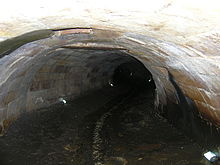
Girl's death in drain: Court acquits four BBMP officials

DHNS
June 28, 2017

Bengaluru, Jun 28: A city court has acquitted four Bruhat Bengaluru Mahanagara Palike (BBMP) officials, who were charged with being responsible for the death of Geetha Lakshmi (9) who was washed away after she fell into an uncovered drain on Bannerghatta Road on October 6, 2014.drainage

The officials who have been acquitted are Shivaprakash K M (53), the then jurisdictional assistant executive engineer, S L K Swamy (45), the then jurisdictional joint engineer, S G Shivakumar (56) and Renukananda V (50).

The girl fell into an uncovered drain during the rain around 8.10 pm in front of Janaka Group office, Pai International Showroom, Bannerghatta Road. Her body was recovered on October 8, 2014.

The victim’s aunt Lakshmi in her complaint to the police had stated that the BBMP officials carried out works in the day, but did not cover the drainage which led to the girl’s death.

Of the 23 witnesses named in the charge sheet, 21 including eye-witnesses, mahazar witnesses and the J P Nagar police, under whose jurisdiction the incident had occurred, did not appear before the court.

Considering the absence of these witnesses, Mala N D, the 44th Additional Chief Metropolitan Magistrate stated in her order that the investigating officer did not secure and produce before the court any of the eye-witnesses, which meant the investigation by the investigating officer remained unproved.

“As a result, the prosecution has failed to prove charges against the accused with convincing and corroborative evidences,” the magistrate noted. Only two witnesses were examined in the case, Lakshmi, the victim’s aunt and Prince Vicky, a worker in a store located near the place of the incident.

Lakshmi told the court that she was holding the hands of Geetha Lakshmi when the girl suddenly fell into the drainage and was washed away. Vicky denied giving any statement to the police and turned partially hostile. He told the court that there was some repair work on that day and the drainage was left uncovered.

Comments

binumuhammedhaneefa
 - 
Thursday, 29 Jun 2017

I can't share this page through Facebook.
photo note matching.

Add new comment

  • Coastaldigest.com reserves the right to delete or block any comments.
  • Coastaldigset.com is not responsible for its readers’ comments.
  • Comments that are abusive, incendiary or irrelevant are strictly prohibited.
  • Please use a genuine email ID and provide your name to avoid reject.
News Network
May 5,2020

Dubai, May 5: Tickets on repatriation flights from UAE to India, which start on May 7, could be costlier than regular airfare, and adding to the financial woes of those flying back. Nearly 200,000 Indians in the UAE have registered on the website seeking to return home.

“A one-way repatriation ticket to Delhi will cost approximately Dh1,400-Dh1,650 - this would earlier have cost between Dh600-Dh700 [during these months],” said Jamal Abdulnazar, CEO of Cozmo Travel. “A one-way repatriation flight ticket to Kerala would cost approximately Dh1,900-Dh2,300.”

This can be quite a burden, as a majority of those taking these flights have either lost their jobs or are sending back their families because of uncertainty on the work front. To now have to pay airfare that is nearly on par with those during peak summer months is quite a blow.

Sources said that officials in Indian diplomatic missions have already initiated calls to some expats, telling them about likely ticket fares and enquiring about their willingness to travel.

Although many believed repatriation would be government-sponsored, Indian authorities have clarified that customers would have to pay for the tickets themselves. Those who thought they were entitled to free repatriation might back out of travel plans for now.

Fact of life

But aviation and travel industry sources say higher rates cannot be escaped since social distancing norms have to be strictly enforced at all times. That would limit the number of passengers on each of these flights.

“One airline can carry only limited passengers - therefore, multiple airlines are likely to get the approval to operate repatriation flights,” said Abdulnazar. “Also, airports will have to maintain safe distance for passengers to queue up at immigration and security counters.

“Therefore, it is recommended that multiple carriers fly into multiple Indian airports for repatriation to be expedited.”

The Indian authorities, so far, have not taken the easy decision to get its private domestic airlines into the rescue act. Gulf News tried speaking to the leading players, but they declined to provide any official statements. So far, only Air India, the national airline, has been commissioned to operate the flights.

Air India finds itself in the driver's seat when it comes to operating India's repatriation flights. To date, there is no confirmation India's private airlines will be allowed to join in.

UAE carriers ready to help out

UAE’s Emirates airline, Etihad, flydubai and Air Arabia are likely to also operate repatriation flights to India after Air India implements the first phase of services.

“We are fully supporting governments and authorities across the flydubai network with their repatriation efforts, helping them to make arrangements for their citizens to return home,” said a flydubai spokesperson.

“We will announce repatriation flights as and when they are confirmed, recognising this is an evolving situation whilst the flight restrictions remain in place.”

An AirArabia spokesperson said the airline is ready to operate repatriation flights when the government tells them to.

Travel agencies likely to benefit

Apart from operating non-scheduled commercial flights, the Indian government is also deploying naval ships to bring expat Indians back. Sources claim the ships are to ferry passengers who cannot afford the repatriation airfares.

Even then, considering the sheer numbers who will want to get on the flights, travel agencies are likely to see a surge in bookings since airline websites alone may not cope with the demand set off in such a short span.

Learn from Gulf governments

In instances when they carried out their own repatriation flights, some GCC governments paid the ticket fares to fly in their citizens. Those citizens who did not have the ready funds could approach their diplomatic mission and aid would be given on a case-to-case basis.

Should Indians wait for normal services to resume?

Industry sources say that those Indians wanting to fly back and cannot afford the repatriation flights should wait for full services to resume once the COVID-19 pandemic settles.

But can those who lost their jobs or seen steep salary cuts stay on without adding to their costs? And is there any guarantee that when flight services resume, ticket rates would be lower than on the repatriation trips.

As such, normal travel is expected to pick up only after the repatriation exercise to several countries is completed. UAE-based travel agencies are not seeing any bookings for summer, which is traditionally the peak holiday season.

“Majority want to stay put unless full confidence is restored,” said Abdulnazar. “I expect full normalcy to be restored not until March 2021.

“People have also taken a hit to their income. Without disposable income, you will curtail your travel.”

What constitutes normalcy?

Airfares are expected to remain high, given the need to keep the middle seats empty to practise safe distance onboard.

“We expect holiday travel to resume by October or November - but, the travel sentiment will not go back to pre-COVID-19 levels anytime soon,” said Manvendra Roy, Vice-President – Commercial at holidayme, an online travel agency. “The need to keep the middle seat vacant will add 30-40 per cent pricing pressure per seat from an airline perspective.

“This will make holidays more expensive.”

As for business travel, it will take some time to recover. Corporate staff are now used to getting work done via conference calls. “Companies will also curtail their travel expenditure since their income has taken a hit,” said Abdulnazar.


Comments

Add new comment

  • Coastaldigest.com reserves the right to delete or block any comments.
  • Coastaldigset.com is not responsible for its readers’ comments.
  • Comments that are abusive, incendiary or irrelevant are strictly prohibited.
  • Please use a genuine email ID and provide your name to avoid reject.
News Network
May 19,2020

Mysuru, May 19: Union Housing and Urban Affairs Minister Hardeep Singh Puri on Tuesday announced the results of garbage free-star rating for Indian cities.

He said that Ambikapur in Chhattisgarh, Rajkot in Gujarat, Mysuru in Karnataka, Indore in Madhya Pradesh and Navi Mumbai in Maharashtra have got a five-star rating.

Puri extended the wishes to the cities who got a five-star rating and said it came at a time when the entire world, including India, are reeling under the impact of COVID-19 pandemic.

"It was the intention of my senior colleagues and others to declare the result of star rating of garbage-free cities much earlier but we decided to postpone because we wanted at least some degree of opening to take place and we thought the timing is correct," Puri said.

The minister said that of all the flagship programmes Prime Minister Narendra Modi has announced, Swachta Mission is the most important programme for him.

"I have often shared with you my assessment that of all the flagship programmes that the Prime Minister had announced after the 2014 election results. But my personal view, a view I have had a citizen and certainly a view that is fortified by my experience as Minister for Housing and Urban Affairs, that the Swachta Mission by far is the most important programme of all the missions," Puri said

Comments

Add new comment

  • Coastaldigest.com reserves the right to delete or block any comments.
  • Coastaldigset.com is not responsible for its readers’ comments.
  • Comments that are abusive, incendiary or irrelevant are strictly prohibited.
  • Please use a genuine email ID and provide your name to avoid reject.
News Network
March 28,2020

Bengaluru, Mar 28: Sun Tsu, in 'The Art of War' speaks of a skilful general who can subdue his enemy without any fighting. This constitutes the ultimate triumph which is referred to as stratagem. Today, we would need one such when we are faced with the '21-day corona challenge' for India.
Nearly four weeks back, Dr Jyothsna Rao, Dr Gururaj Rao and I sat across the OPD in the afternoon at HCG Bengaluru discussing our ongoing cancer immunology research. While on this topic, we drifted into the discussion on the coronavirus. During this engaging discussion, we wondered the similarity of the enigma between the virus and cancer. I paused to ask Dr Jyothsna and Dr Guru - how we wish we could do something against this virus.
Dr Jyothsna is a PhD from NCBS and had worked under Dr Ralph Steinman, physician and researcher from Rockefeller University, who won the Nobel Prize for his discovery of the dendritic cell and its role in adaptive immunity in 2011. Dr Gururaj is a molecular and cell biologist who did his PhD at the Chapel Hill, University of North Carolina and is the Director of iCrest.
Jyothsna while hearing our perplexing conversation on the covid intervened, "Yes, surely. I think we should take a break from cancer and focus on the innate and adaptive immunity role in COVID-19."
Thus began this sincere attempt to relook the human immune system from the eyes of the COVID-19.
We have 10 types of immune cells at the least which are widely dispersed in millions across the body. When our body is invaded by a foreign organism (bacteria, fungi or virus), these cells work with each other to destroy the invader.
Now, the question is - how do the immune cells talk to each other? They use small-molecule substances called cytokines (cyto means cells; kine means movement). There are many cytokines that are involved in work on the immune system. The most relevant for viruses are interferons.
Interferons (IFN) as the name reflects have an ability to interfere with the viral activity and stop their multiplication. These specialised signal proteins are released by our cells in response to a viral attack to forewarn other cells. They help build the antiviral proteins within the cells to kill the virus as it tries to invade the new cells.
Historically, interferons are a group of cytokines known to be potent antiviral agents against viruses and a hallmark cytokine induced by the host upon viral infections. Interferons possess unique immunoregulatory activities and are signature cytokines released by (TH1) T immune cells, which are crucial in viral infections.
As the outbreak of COVID-19 grapples us, an urgent need for finding strategies to combat the virus is growing. Coronaviruses (CoVs) are a group of RNA viruses. In patients infected with coronavirus, it was indicated that the activation of the IFN does not occur until 48 hours post-infection. Thus the delayed IFN-related antiviral response by the healthy cells leads to coronavirus evade the immune response.
Numerous studies have presented the success in defeating CoVs by the direct administration of IFNs. In a combination as a concoction, it was shown to synergistically inhibit the virus replication in vitro.
Moreover, it is understood that the earlier induction of IFNs in children although they have a less developed immune system could be the reason behind the children being least affected.
The key to success in reducing the disease fatality might be the stimulation of the immune responses to trigger IFN production at the very early stages of the disease, which might be done through the administration of IFN. Despite the evidence for the efficacy of IFNs in treating CoV-induced infections, the proper dosing and ideal timing for such interventions needs to be verified in clinical trials.
For the later stages of the diseases in advance stages where patients are on ventilator and have developed respiratory distress, we propose to utilise the mesenchymal cells derived from donor bone marrow that have been known to treat acute respiratory syndrome. Mesenchymal cells are known to possess anti-inflammatory activity and thus used often in autoimmune diseases.
With this scientific background, we have activated T cells from healthy donors, in a cGMP facility at iCrest - HCG hospital with an enriched cocktail of cytokines rich in Interferons. Injections of this cocktail we believe will result in a surge of cytokines in the body of the infected person and will boost his ability to fight the virus in the early phases. We are in the initial phases of this study and hope to be ready in the coming weeks with meaningful data on its potential utility.
Currently, it awaits government approvals (Union and state) and we have applied to central drugs authority for their initial evaluation and further directions.
As my Guru often expounded the philosophy of 'Seva' - the goal of education is knowledge, the end goal of knowledge is service. In this attempt to serve our fellow humans at this brink of unprecedented crisis, medical fraternity stands with you and promises to do our best for your safety.
We assure to exhaust every bit of our spirit in this fight against coronavirus. We have lost the sight of shores and travelled thus far, but that is the mandatory first step to cross the ocean. Are we going to succeed in this battle, is something only time will answer. 

Comments

Add new comment

  • Coastaldigest.com reserves the right to delete or block any comments.
  • Coastaldigset.com is not responsible for its readers’ comments.
  • Comments that are abusive, incendiary or irrelevant are strictly prohibited.
  • Please use a genuine email ID and provide your name to avoid reject.