


Global oil prices surge after suspected attacks on two tankers in Gulf of Oman

Agencies
June 14, 2019

New York, Jun 14: World oil prices have risen following suspected attacks on two tankers in the Gulf of Oman, worsening frayed tensions in the crude-rich Middle East region.

The rise in oil prices - jumping as much as 4.5 per cent before pulling back somewhat - boosted share prices of energy companies, while global stock markets also won some support from the prospect of US interest rate cuts this year. The Gulf of Oman lies at the other end of the strategic Strait of Hormuz from the Gulf, part of a vital shipping lane through which at least 15 million barrels of crude oil and hundreds of millions of dollars of non-oil imports pass each day.

US Secretary of State Mike Pompeo accused Iran of responsibility for the incidents and said the United States would raise the attacks at a UN Security Council meeting scheduled for later Thursday. Iran labelled the attacks "suspicious." US oil benchmark West Texas Intermediate for July delivery finished up 2.2 per cent at USD 52.28.

The advance marked a reversal from a sharp fall on Wednesday following a bearish US oil inventory report. "Tension across the Middle East is high - and the attacks on two tankers has further exacerbated the situation, even though there does not appear to have been any damage to the cargos," said John Hall, chairman of British-based consultancy Alfa Energy.

A note from Eurasia Group said the "incidents appear aimed at demonstrating the vulnerability of Gulf shipping while damaging confidence in the US ability to protect freedom of navigation." Gains in oil prices have been "constrained by high inventories and concerns about the global economy," it added. In equity markets, gains by petroleum-linked shares lifted Wall Street shares.

The S&P 500 finished up 0.4 percent, snapping a two-day losing streak. "From a broader perspective, the stock market has traded sideways over the last four sessions as it waits for further policy guidance from the Fed and for any updates on the US-China trade front," said Briefing.com Stocks elsewhere were mixed, with Frankfurt gaining, Tokyo retreating and London and Paris flat.

Comments

Add new comment

  • Coastaldigest.com reserves the right to delete or block any comments.
  • Coastaldigset.com is not responsible for its readers’ comments.
  • Comments that are abusive, incendiary or irrelevant are strictly prohibited.
  • Please use a genuine email ID and provide your name to avoid reject.
News Network
June 23,2020

New Delhi, Jun 23: In an unexpected development, the pump price of diesel is all set to surpass the petrol price in the capital, making it the most expensive transport fuel for the first time in a long time.

Globally, diesel is priced slightly above petrol prices due to the very nature of the product that has a higher cost of production. But in India, due to the lopsided taxation structure, diesel attracts lesser of the tax between the two auto fuels keeping its prices lower than petrol for last several years.

Diesel is currently priced at Rs 79.40 a litre in the Capital, just 36 paise short of petrol price that is being retailed at Rs 79.76 a litre. Going by the trend of price movement in the two products for the last few days where diesel prices have consistently increased by 50-60 paise per litre while the daily increase in petrol prices have fallen to just 20 paise on Tuesday, it is set to surpass petrol prices in next few days.

"Diesel price movement is sharper in international market and if oil companies follow the global price trend, diesel prices will surpass that of petrol later this week. It will be after many years that this would happen and is expected to sustain for some time unless government changes the tax structure of the petroleum products again," said an oil sector expert from one of the big four audit and advisory firms asking not to be named.

Interestingly, even in India the base price of diesel is expensive than petrol. According to the Indian Oil Corporation (IOC), while the base price of petrol in Delhi currently comes to Rs 22.11 per litre, the same for diesel is higher at Rs 22.93 per litre (effective from June 16, 2020). This has been the case for a long time, but retail price of petrol can be higher than diesel due to central and state taxes.

What has now brought diesel prices to a whisker of petrol prices in the capital is the Delhi government's decision early May to increase the Value Added Tax on diesel from 16.75 per cent to 30 per cent and on petrol from 27 per cent to 30 per cent. This increased the retail price of diesel and petrol in Delhi by Rs 7.10 and Rs 1.67 a litre respectively. With Central taxes on the two products already reaching identical levels, the Delhi governments move hastened price parity between petrol and diesel.

Currently, the Central excise on petrol is Rs 32.98 a litre while that on diesel it is Rs 31.83 a litre. The VAT on petrol in Delhi is Rs 17.71 a litre and that on diesel is Rs 17.60 a litre.

While the movement of retail pricing is being seen with a sigh of relief by vehicle owners whose cars run on petrol, those buying the relatively expensive diesel cars are now repenting on their decision. The development is also being seen with caution by automobile companies who have spent millions to ramp up their facilities for diesel run vehicles. The expectation is that demand for such cars will now fall, causing more damage to companies where sales are already impacted due to persistent economic slowdown and now the spread of COVID-19 pandemic.

"The pricing development would push automobile companies to strategies being followed by companies in the western markets where diesel run cars are not sold on fuel pricing differential, but on overall make and quality that puts them ahead of petrol run cars," the expert quoted earlier.

Yes, but for commercial vehicle sector the rising price of diesel had not been welcomed. In fact, the commercial transport sector had time an again threatened strike against the move to raise fuel prices.

With petrol and diesel retail prices closing, the case for adultering fuel has also gone down much to the relief of vehicle owners.

Comments

Add new comment

  • Coastaldigest.com reserves the right to delete or block any comments.
  • Coastaldigset.com is not responsible for its readers’ comments.
  • Comments that are abusive, incendiary or irrelevant are strictly prohibited.
  • Please use a genuine email ID and provide your name to avoid reject.
Agencies
March 15,2020

Jakarta, Mar 15: Indonesia's transport minister is in intensive care after testing positive for the novel coronavirus, an official has said, as schools and tourist attractions were ordered to close over the health threat.

Transportation Minister Budi Karya Sumadi was receiving treatment at an army hospital in Jakarta, State Secretary Pratikno said on Saturday.

A hospital spokesman said Sumadi was encountering difficulty breathing but that his condition was improving.

Pratikno said Sumadi was involved in virus mitigation efforts, particularly the evacuation of Indonesians from epicenters of the outbreak, and that President Joko Widodo had called for tests to be carried out on other ministers.

Cases of the virus in Indonesia, the world's fourth most populous country, have jumped from zero two weeks ago to 96, with five deaths, according to government spokesperson Achmad Yurianto.

He also said the virus has spread outside Greater Jakarta to Bandung in West Java, Solo in Central Java, Manado in North Sulawesi, Pontianak in West Kalimantan, as well as holiday havens Yogyakarta and Bali.

Following the increase, the government on Saturday established a task force on COVID-19 mitigation.

Jakarta's Governor Anies Baswedan announced that schools would close for two weeks starting Monday, and ordered the closure of city-owned tourist attractions, such as Ragunan Zoo and Ancol beach.

He emphasized that Jakarta would not be locked down but urged people "to be responsible" and called for social distancing when possible.

Similarly, the administration of Solo, Central Java, Friday announced that schools and tourist attractions would close after a coronavirus patient died in the region.

The World Health Organization has said it is particularly concerned about high-risk nations with weaker health systems, which who may lack the facilities to identify cases.

A day after declaring the coronavirus outbreak to be pandemic this week, WHO chief Tedros Adhanom Ghebreyesus called Indonesia's president Widodo and both agreed to "scale up cooperation."

Comments

Add new comment

  • Coastaldigest.com reserves the right to delete or block any comments.
  • Coastaldigset.com is not responsible for its readers’ comments.
  • Comments that are abusive, incendiary or irrelevant are strictly prohibited.
  • Please use a genuine email ID and provide your name to avoid reject.
News Network
July 27,2020

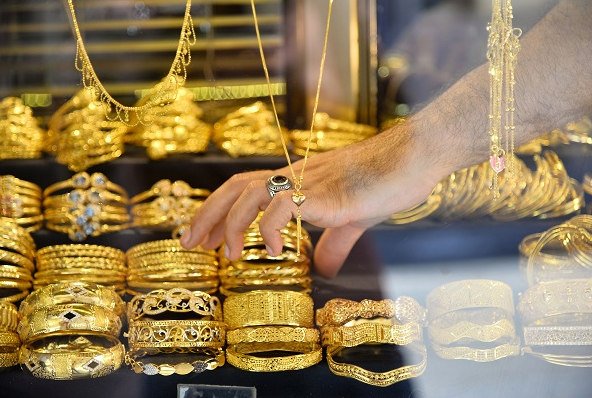
Tokyo, Jul 27: Gold hit an all-time high on Monday as tit-for-tat consulate closures in China and the United States rattled investors, boosting the allure of safe-haven assets, although sentiment was mixed with tech gains supporting some Asian stocks.

MSCI's ex-Japan Asia-Pacific index rose 1.3 percent as Taiwan's TSMC, Asia's third-largest company by market capitalisation, rose almost 10 percent.

The chipmaker's gains boosted other tech stocks in the region and came after rival Intel signalled it may give up manufacturing its own components due to delays in new 7-nanometer chip technology.

Also soothing sentiment, Chinese shares eked out gains after big falls late last week, with CSI300 index rising 0.5 percent.

S&P500 futures were last up 0.4 percent in choppy trade while Japan's Nikkei fell 0.5 percent, resuming trade after a long weekend and catching up with falls in global shares late last week.

Global shares had lost steam last week after Washington ordered China's consulate in Houston to close, prompting Beijing to react in kind by closing the US consulate in Chengdu.

US Secretary of State Mike Pompeo took fresh aim at China last week, saying Washington and its allies must use "more creative and assertive ways" to press the Chinese Communist Party to change its ways.

"US President (Donald) Trump used to say China's President Xi Jinping is a great leader. But now Pompeo's wording is becoming so aggressive that markets are starting to worry about further escalation," said Norihiro Fujito, chief investment strategist at Mitsubishi Securities.

Gold rose 1.0 percent to a record high of $1,920.9 per ounce, surpassing a peak touched in September 2011, as Sino-US tensions boosted the allure of safe-haven assets, especially those not tied to any specific country.

The yellow metal is also helped by aggressive monetary easing adopted by many central banks around the world since the pandemic plunged the global economy into a recession.

Some investors fret such an unprecedented level of money-printing could eventually lead to inflation.

MORE STIMULUS

Hopes of a quick US economic recovery are fading as coronavirus infections showed few signs of slowing.

That means the economy could capitulate without fresh support from the government, with some of earlier steps such as enhanced jobless benefits due to expire this month.

Investors hope US Congress will agree on a deal before its summer recess but there are some sticking points including the size of the stimulus and enhanced unemployment benefits.

US Treasury Secretary Steve Mnuchin said the package will contain extended unemployment benefits with 70 percent "wage replacement".

Democrats, who control the House of Representatives, want enhanced benefits of $600 per week to be extended and look to much bigger stimulus compared with the Republicans' $1 trillion plan.

Investors are looking to corporate earnings from around the world for hints on the pace of recovery in the global economy.

"It looks like rising coronavirus cases are starting to slow down recovery in many countries," said Masahiro Ichikawa, senior strategist at Sumitomo Mitsui DS Asset Management.

Concerns about the US economic outlook started to weigh on the dollar, reversing its inverse correlation with the economic well-being over the past few months.

The dollar index dropped 0.3 percent to its lowest level in nearly two years.

The euro gained 0.3 percent to $1.1693, hitting a 22-month high of $1.16590 as sentiment on the common currency improved after European leaders reached a deal on a recovery fund in a major step towards more fiscal co-operation.

Against the yen, the dollar slipped 0.5 percent to 105.605 yen, a four-month low while the British pound hit a 4 1/2-month high of $1.2832.

Oil prices dipped on worries about the worsening Sino-US relations.

Brent futures fell 0.46 percent to $43.14 per barrel while US crude futures lost 0.44 percent to $41.11.

Comments

Add new comment

  • Coastaldigest.com reserves the right to delete or block any comments.
  • Coastaldigset.com is not responsible for its readers’ comments.
  • Comments that are abusive, incendiary or irrelevant are strictly prohibited.
  • Please use a genuine email ID and provide your name to avoid reject.