GoAir accused of denying ticket for speaking Kannada

News Network
September 29, 2017

Bengaluru, Sept 29: The Kannada Development Authority has issued a notice to GoAir, accusing it of denying a ticket to a passenger, who has charged the airline with harassing him for speaking in Kannada at the Kempegowda International Airport.

Balaji Narayana Murthy was among 14 passengers who arrived at the check-in counter of GoAir for their 5.45 am flight to Mumbai on Wednesday. “We were five minutes late to the airport as overnight rain had resulted in slow-moving traffic. In fact, it took us more than 30 minutes from the Trumpet Flyover to the KIA. We explained the delay to a staff and sought help to board the next flight,” Murthy said.

As the staff was not forthcoming even after half an hour, the 14 passengers decided to speak to the manager, who assured them alternative tickets. “When we were at the manager’s counter, I was speaking in Kannada to another passenger. A staffer with GoAir shouted that I can’t speak in Kannada at the airport,” Murthy said.

Murthy said the staffer named Sandeep later issued tickets to 13 passengers but left him out.

“When I asked for my ticket, Sandeep told me I won’t get the ticket as I was speaking in my language. Despite repeated pleas, he refused to help. It was a refundable ticket. Finally, I asked him for a refund which he declined stating that I came beyond the stipulated time. I asked him for a written explanation but it was not given. I felt humiliated but couldn’t do anything,” he added.

‘Swift action must’

Murthy spent Rs 9,000 to buy another ticket for Mumbai. “I sent a mail to GoAir customer care at 7 pm explaining my plight in detail. Till now, I have not received even a reply,” he said.

KDA chief S G Siddaramaiah has written to GoAir seeking action against the staff and an explanation before October 10. 

“I urge you to remove your staff and provide an explanation for the incident. On October 10, I will visit Kempegowda International Airport to review implementation of Kannada. I request you to submit a report explaining the action taken against the staffer concerned,” the letter says.

Noting that no person or organisation has the authority to ask a passenger to stop speaking in their local language, the letter states that it is objectionable to know that a staffer of a responsible organisation has behaved in such a way.

“It is the primary responsibility of all organisations working in Karnataka to respect the language and culture of the land. We need to see whether organisations like GoAir that forget the responsibility can be allowed to function in Karnataka. We need to communicate that Karnataka does not need organisations that do not respect its language,” S G Siddaramaiah has said.

Comments

prakash
 - 
Sunday, 1 Oct 2017

Sandeep looks like a third class person  he should be sacked from the duty immediately before he hurt anybody else, a proper leagal action should be taken against him for the insult he did.

Add new comment

  • Coastaldigest.com reserves the right to delete or block any comments.
  • Coastaldigset.com is not responsible for its readers’ comments.
  • Comments that are abusive, incendiary or irrelevant are strictly prohibited.
  • Please use a genuine email ID and provide your name to avoid reject.
News Network
July 29,2020

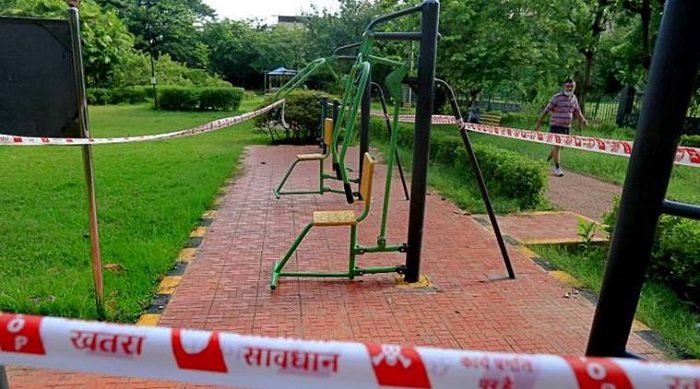
New Delhi, July 29: The government of India today announced Unlock 3.0, lifting of night curfew from August 1 and opening of yoga institutes and gymnasiums from August 5 while educational institutes will remain closed throughout August.

According to the Unlock 3.0 guidelines issued by the Ministry of Home Affairs (MHA), the lockdown in containment zones will be extended until August 30. The new guidelines will be in effect from August 1.

The operation of Metro rail and international flights will remain suspended. Cinema halls, swimming pools, entertainment parks, theatres, bars, auditoriums, assembly halls and similar places will remain shut. Large gatherings are also prohibited.

Yoga institutes and gymnasiums will start operating from August 5 for which the Ministry of Health and Family Welfare will be issuing Standard Operating Procedures. 

Independence Day celebrations will be held with social distancing norms in place.

Restrictions on the movement of individuals during the night (Night curfew between 10 PM and 5 AM) have been removed.

According to the order, states have been given powers to prohibit certain activities outside containment zones or impose such restrictions as deemed necessary based on their assessment of the situation.

"However, there shall be no restriction on inter-state and intra-state movement of persons and goods. No separate permission/approval/e-permit will be required for such movements," the order said. 

In the previous two Unlock guidelines, the government had substantially opened various activities.

Comments

Add new comment

  • Coastaldigest.com reserves the right to delete or block any comments.
  • Coastaldigset.com is not responsible for its readers’ comments.
  • Comments that are abusive, incendiary or irrelevant are strictly prohibited.
  • Please use a genuine email ID and provide your name to avoid reject.
Ram Puniyani
January 14,2020

In the beginning of January 2020 two very disturbing events were reported from Pakistan. One was the attack on Nankana Sahib, the holy shrine where Sant Guru Nanak was born. While one report said that the place has been desecrated, the other stated that it was a fight between two Muslim groups. Prime Minister of Pakistan Imran Khan condemned the incident and the main accused Imran Chisti was arrested. The matter related to abduction and conversion of a Sikh girl Jagjit Kaur, daughter of Pathi (One who reads Holy Guru Granth Sahib in Gurudwara) of the Gurudwara. In another incident one Sikh youth Ravinder Singh, who was out on shopping for his marriage, was shot dead in Peshawar.

While these condemnable attacks took place on the Sikh minority in Pakistan, BJP was quick enough to jump to state that it is events like this which justify the Citizenship Amendment Act (CAA). Incidentally CAA is the Act which is discriminatory and relates to citizenship with Religion, which is not as per the norms of Indian constitution. There are constant debates and propaganda that population of Hindus has come down drastically in Pakistan and Bangla Desh. Amit Shah, the Home minister stated that in Pakistan the population of Hindus has come down from 23% at the time of partition to 3.7% at present. And in Bangla Desh it has come down from 22% to present 8%.

While not denying the fact that the religious minorities are getting a rough deal in both these countries, the figures which are presented are totally off the mark. These figures don’t take into consideration the painful migrations, which took place at the time of partition and formation of Bangla Desh later. Pakistan census figures tell a different tale. Their first census was held in 1951. As per this census the overall percentage of Non Muslim in Pakistan (East and West together) was 14.2%, of this in West Pakistan (Now Pakistan) it was 3.44 and in Eat Pakistan it was 23.2. In the census held in Pakistan 1998 it became 3.72%. As far as Bangla Desh is concerned the share of Non Muslims has gone down from 23.2 (1951) to 9.6% in 2011.

The largest minority of Pakistan is Ahmadis, (https://minorityrights.org/country/pakistan/) who are close to 4 Million and are not recognised as Muslims in Pakistan. In Bangla Desh the major migrations of Hindus from Bangla Desh took place in the backdrop of Pakistan army’s atrocities in the then East Pakistan.

As far as UN data on refugees in India it went up by 17% between 2016-2019 and largest numbers were from Tibet and Sri Lanka.  (https://www.un.org/en/development/desa/population/migration/publication…)

The state of minorities is in a way the index of strength of democracy. Most South Asian Countries have not been able to sustain democratic values properly. In Pakistan, the Republic began with Jinnah’s classic speech where secularism was to be central credo of Pakistan. This 11th August speech was in a way what the state policy should be, as per which people of all faiths are free to practice their religion. Soon enough the logic of ‘Two Nation theory” and formation of Pakistan, a separate state for Muslim took over. Army stepped in and dictatorship was to reign there intermittently. Democratic elements were suppressed and the worst came when Zia Ul Haq Islamized the state in collusion with Maulanas. The army was already a strong presence in Pakistan. The popular formulation for Pakistan was that it is ruled by three A’s, Army, America and Allah (Mullah).

Bangla Desh had a different trajectory. Its very formation was a nail in the coffin of ‘two nation theory’; that religion can be the basis of a state. Bangla Desh did begin as a secular republic but communal forces and secular forces kept struggling for their dominance and in 1988 it also became Islamic republic. At another level Myanmar, in the grip of military dictatorship, with democratic elements trying to retain their presence is also seeing a hard battle. Democracy or not, the army and Sanghas (Buddhist Sang has) are strong, in Myanmar as well. The most visible result is persecution of Rohingya Muslims.

Similar phenomenon is dominating in Sri Lanka also where Budhhist Sanghas and army have strong say in the political affairs, irrespective of which Government is ruling. Muslim and Christian minorities are a big victim there, while Tamils (Hindus, Christians etc.) suffered the biggest damage as ethnic and religious minorities. India had the best prospect of democracy, pluralism and secularism flourishing here. The secular constitution, the outcome of India’s freedom struggle, the leadership of Gandhi and Nehru did ensure the rooting of democracy and secularism in a strong way.

India so far had best democratic credentials amongst all the south Asian countries. Despite that though the population of minorities rose mainly due to poverty and illiteracy, their overall marginalisation was order of the day, it went on worsening with the rise of communal forces, with communal forces resorting to identity issues, and indulging in propaganda against minorities.

While other South Asian countries should had followed India to focus more on infrastructure and political culture of liberalism, today India is following the footsteps of Pakistan. The retrograde march of India is most visible in the issues which have dominated the political space during last few years. Issues like Ram Temple, Ghar Wapasi, Love Jihad, Beef-Cow are now finding their peak in CAA.

India’s reversal towards a polity with religion’s identity dominating the political scene was nicely presented by the late Pakistani poetess Fahmida Riaz in her poem, Tum bhi Hum Jaise Nikle (You also turned out to be like us). While trying to resist communal forces has been an arduous task, it is becoming more difficult by the day. This phenomenon has been variously called, Fundamentalism, Communalism or religious nationalism among others. Surely it has nothing to do with the religion as practiced by the great Saint and Sufi traditions of India; it resorts mainly to political mobilization by using religion as a tool.


Comments

Ashi
 - 
Tuesday, 14 Jan 2020

If Malaysia implement similar NRC/CAA, India and China are the loser.

Add new comment

  • Coastaldigest.com reserves the right to delete or block any comments.
  • Coastaldigset.com is not responsible for its readers’ comments.
  • Comments that are abusive, incendiary or irrelevant are strictly prohibited.
  • Please use a genuine email ID and provide your name to avoid reject.
coastaldigest.com news network
June 1,2020

Mangaluru, June 1: The private bus services resumed services in Dakshina Kannada and Udupi districts today with 15 per cent hike in the fares. For 70 days these buses were stayed off the roads as lockdown was imposed in the region on March 22 in the wake of covid-19 outbreak.

Buses were sanitised in the morning. The bus operators have decided to operate only a few of the buses initially.

Of the about 2,000 service buses (inter-district buses and long-route buses within the district) of private operators in Dakshina Kannada and Udupi, only 25% resumed services. Only 135 out of 320 city buses in Mangaluru resumed services.

The number of passengers on board the buses were also very less in the morning. A few buses had arranged sanitisers for passengers, drivers and conductors.

Comments

Add new comment

  • Coastaldigest.com reserves the right to delete or block any comments.
  • Coastaldigset.com is not responsible for its readers’ comments.
  • Comments that are abusive, incendiary or irrelevant are strictly prohibited.
  • Please use a genuine email ID and provide your name to avoid reject.