



God can't survive science, says 'Da Vinci Code' author

Agencies
October 13, 2017

Frankfurt am Main, Oct 13: God cannot survive science, "The Da Vinci Code" author Dan Brown said today, putting his faith in technological advances to connect people in new ways that would eventually scrap the need for religion.

"Historically, no god has survived science. Gods evolved," the best-selling American novelist said at the Frankfurt Book Fair, where he unveiled his newest book, "Origin".

The fifth instalment in the wildly popular series that started with "The Da Vinci Code" tracks Harvard professor Robert Langdon's latest code-cracking adventure to uncover the mysteries of the universe, this time exploring the battle between religion and science.

"I happen to believe in looking at advances through technology," Brown told reporters.

"Over the next decade our species will become enormously interconnected at a level we are not used to, and we will start to find our spiritual experiences through our interconnections with each other.

"Our need for the exterior God that sits up there and judges us... will diminish and eventually disappear."

Brown, whose books have sold over 200 million copies, famously drew the ire of the Vatican when "The Da Vinci Code" was published in 2003.

One of the top-selling books of all time, it tells the story of a conspiracy by the Catholic Church to hide the fact that Jesus had a child with Mary Magdalene.

But Brown, 53, insisted that he was not against religion, and that said he just wanted to "start a dialogue".

"I think religion does a lot of good in the world. I also think that the world has changed such that it is no longer a requirement," he said.

He praised Pope Francis for trying to bring the Church into the modern era.

"I think the Church needs to evolve or it will go extinct, and I think that Pope Francis feels that also and is trying very, very hard to make Catholicism relevant in the modern world," he said.

He said his latest novel, released last week and already topping book charts around the world, also delves into current concerns about fake news.

"Now more than ever we need to look at why we believe what we believe, look at our information sources and be very discerning," he said.

In a wide-ranging press conference, Brown also revealed that the intrepid Langdon -- portrayed by Tom Hanks in the Hollywood adaptations of the book series -- was "the man I wish I could be".

Asked whether the professor would have been a Donald Trump voter, Brown replied: "I doubt it. I don't think so."

Comments

Add new comment

  • Coastaldigest.com reserves the right to delete or block any comments.
  • Coastaldigset.com is not responsible for its readers’ comments.
  • Comments that are abusive, incendiary or irrelevant are strictly prohibited.
  • Please use a genuine email ID and provide your name to avoid reject.
Agencies
July 29,2020

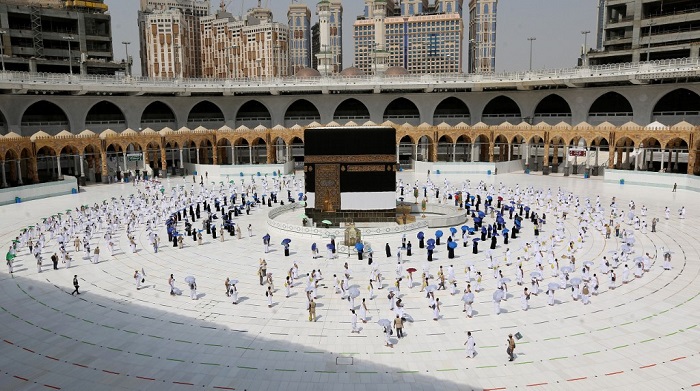
Dubai, Jul 29: Muslim pilgrims on Wednesday begin the annual Haj, downsized this year as the Saudi hosts strive to prevent a coronavirus outbreak during the five-day pilgrimage.

The Haj, one of the five pillars of Islam and a must for able-bodied Muslims at least once in their lifetime, is usually one of the world's largest religious gatherings.

But this year only up to 10,000 people already residing in the Kingdom will participate in the ritual, a tiny fraction of the 2.5 million pilgrims from around the world that attended last year.

"There are no security-related concerns in this pilgrimage, but (downsizing) is to protect pilgrims from the danger of the pandemic," said Khalid bin Qarar Al Harbi, Saudi Arabia's director of public security.

Pilgrims will be required to wear masks and observe social distancing during a series of religious rites that are completed over five days in the holy city of Makkah and its surroundings in western Saudi Arabia.

Those selected to take part in the Haj were subject to temperature checks and placed in quarantine as they began trickling into Makkah at the weekend.

State media showed health workers sanitising their luggage, and some pilgrims reported being given electronic wristbands to allow authorities to monitor their whereabouts.

Workers, clutching brooms and disinfectant, were seen cleaning the area around the Kaaba, the structure at the centre of the Grand Mosque draped in gold-embroidered cloth towards which Muslims around the world pray.

Haj authorities have cordoned off the Holy Kaaba this year, saying pilgrims will not be allowed to touch it, to limit the chances of infection.

They also reported setting up multiple health facilities, mobile clinics and ambulances to cater to the pilgrims.

Saudi authorities said only around 1,000 pilgrims residing in the Kingdom would be permitted for the Haj. Some 70 per cent of the pilgrims are foreigners residing in the Kingdom, while the rest will be Saudi citizens, authorities said.

All worshippers were required to be tested for coronavirus before arriving in the holy city of Makkah and will also have to quarantine after the pilgrimage as the number of cases in the Kingdom nears 270,000.

They were given elaborate amenity kits that include sterilised pebbles for a stoning ritual, disinfectants, masks, a prayer rug and the Ihram, a seamless white garment worn by pilgrims, according to a Haj ministry programme document.

"I did not expect, among millions of Muslims, to be blessed with approval," Emirati pilgrim Abdullah Al Kathiri said in a video released by the Saudi media ministry.

"It is an indescribable feeling... especially since it is my first pilgrimage."

The Haj ministry said non-Saudi residents of the Kingdom from around 160 countries competed in the online selection process but it did not say how many people applied.

Despite the pandemic, many pilgrims consider it safer to participate in this year's ritual without the usual colossal crowds cramming into tiny religious sites, which make it a logistical nightmare and a health hazard.

Comments

Add new comment

  • Coastaldigest.com reserves the right to delete or block any comments.
  • Coastaldigset.com is not responsible for its readers’ comments.
  • Comments that are abusive, incendiary or irrelevant are strictly prohibited.
  • Please use a genuine email ID and provide your name to avoid reject.
Agencies
March 10,2020

New Delhi, Mar 10: Crisis-hit Yes Bank on Tuesday said that it has enabled inward IMPS and NEFT services.

The move allows people to send money from other bank accounts to their Yes Bank account through IMPS (Immediate Payment Service) and NEFT (National Electronic Funds Transfer) mode.

In a tweet, the bank also said that Yes Bank customers can pay their credit card dues and loan obligations from other bank accounts.

"Inward IMPS/NEFT services have now been enabled. You can make payments towards YES BANK Credit Card dues and loan obligations from other bank accounts. Thank you for your co-operation. @RBIA @FinMinIndia," said tweet.

Last week Yes Bank was placed under moratorium and a withdrawal cap of Rs 50,000 was imposed till April 3.

The administrator of Yes Bank, Prashant Kumar and Rajnish Kumar, the Chairman of the State Bank of India are hopeful that moratorium would be lifted within a week.

As per the Reserve Bank of India (RBI) draft reconstruction scheme for the crisis-hit private lender, the SBI will take up 49 per cent in the bank by investing Rs 2,450 crore.

The new board of directors will stand constituted from the appointed date. It will comprise a CEO and MD, non-executive chairman and non-executive directors. The SBI will have nominee directors appointed on the board of the reconstructed bank.

The RBI may appoint additional directors to the board, who shall continue in office for one year, or until an alternate board is constituted by Yes Bank.

The SBI will not reduce its holding below 26 per cent before completion of three years from the date of infusion of the capital.

Comments

Add new comment

  • Coastaldigest.com reserves the right to delete or block any comments.
  • Coastaldigset.com is not responsible for its readers’ comments.
  • Comments that are abusive, incendiary or irrelevant are strictly prohibited.
  • Please use a genuine email ID and provide your name to avoid reject.
Agencies
June 19,2020

Denser places, assumed by many to be more conducive to the spread of the coronavirus that causes COVID-19, are not linked to higher infection rates, say researchers.

The study, led by Johns Hopkins University, published in the Journal of the American Planning Association, also found that dense areas were associated with lower COVID-19 death rates.

"These findings suggest that urban planners should continue to practice and advocate for compact places rather than sprawling ones, due to the myriad well-established benefits of the former, including health benefits," says study lead author Shima Hamidi from Johns Hopkins Bloomberg School of Public Health in the US.

For their analysis, the researchers examined SARS-CoV-2 infection rates and COVID-19 death rates in 913 metropolitan counties in the US.

When other factors such as race and education were taken into account, the authors found that county density was not significantly associated with county infection rate.

The findings also showed that denser counties, as compared to more sprawling ones, tended to have lower death rates--possibly because they enjoyed a higher level of development including better health care systems.

On the other hand, the research found that higher coronavirus infection and COVID-19 mortality rates in counties are more related to the larger context of metropolitan size in which counties are located.

Large metropolitan areas with a higher number of counties tightly linked together through economic, social, and commuting relationships are the most vulnerable to the pandemic outbreaks.

According to the researchers, recent polls suggest that many US citizens now consider an exodus from big cities likely, possibly due to the belief that more density equals more infection risk.

Some government officials have posited that urban density is linked to the transmissibility of the virus.

"The fact that density is unrelated to confirmed virus infection rates and inversely related to confirmed COVID-19 death rates is important, unexpected, and profound," said Hamidi.

"It counters a narrative that, absent data and analysis, would challenge the foundation of modern cities and could lead to a population shift from urban centres to suburban and exurban areas," Hamidi added.

The analysis found that after controlling for factors such as metropolitan size, education, race, and age, doubling the activity density was associated with an 11.3 per cent lower death rate.

The authors said that this is possibly due to faster and more widespread adoption of social distancing practices and better quality of health care in areas of denser population.

The researchers concluded that a higher county population, a higher proportion of people age 60 and up, a lower proportion of college-educated people, and a higher proportion of African Americans were all associated with a greater infection rate and mortality rate.

Comments

Add new comment

  • Coastaldigest.com reserves the right to delete or block any comments.
  • Coastaldigset.com is not responsible for its readers’ comments.
  • Comments that are abusive, incendiary or irrelevant are strictly prohibited.
  • Please use a genuine email ID and provide your name to avoid reject.