UP govt planning to ban PFI: Report

Agencies
December 28, 2019

Lucknow, Dec 28: The Uttar Pradesh government is planning to ban Popular Front of India (PFI) here as allegations were made that the organisation had instigated violence in the name of protests against the Citizenship (Amendment) Act, 2019, government sources said.

The state police had earlier arrested three members of PFI in connection with the violent protests in Lucknow on December 19 against the CAA and National Register of Citizens (NRC).

Among those arrested were PFI state president Waseem Ahmad, Nadeem and Ashfaq.

The Act grants citizenship to Hindus, Sikhs, Jains, Parsis, Buddhists and Christians from Pakistan, Afghanistan, and Bangladesh who came to India on or before December 31, 2014.

Comments

Najeeb
 - 
Sunday, 29 Dec 2019

Banning PFI is illogic and unconstitutional.   The organisation whch should be banned is RSS which is involved in alsmost all the arson + looting incidents in UP.   UP Police are seen supporting these RSS goondas in looting.   Many RSS goondas in the dress of UP Police took part in looting and putting fire to public + govt property .  But UP Govt is very kind to them and appreciating their goondaism and targetting innocents.   BJP govt is trying to crush the movement of peaceful people by force.    

Add new comment

  • Coastaldigest.com reserves the right to delete or block any comments.
  • Coastaldigset.com is not responsible for its readers’ comments.
  • Comments that are abusive, incendiary or irrelevant are strictly prohibited.
  • Please use a genuine email ID and provide your name to avoid reject.
News Network
May 9,2020

Lucknow, May 9: The first patient to receive plasma therapy as an experimental treatment for coronavirus infection in Uttar Pradesh died following a heart attack on Saturday.

The patient, a 58-year-old doctor, was admitted at the King George’s Medical University (KGMU) here.

The doctor, who was on ventilator since the last 14 days, died on Saturday evening following a heart attack, KGMU Vice-Chancellor M L B Bhatt said.

Since he had high blood pressure and diabetes, he was under the continuous observation of doctors in the isolation ward, Bhatt said.

“The patient was in a stable condition. His lungs had improved, but he later developed urinary tract infection. Two reports of his samples came out as negative (for COVID-19) today,” the vice-chancellor said.

“He, however, suffered a heart attack around 5 pm. Despite all efforts, he could not be saved,” he said.

The doctor from Orai in Uttar Pradesh was administered plasma therapy at the state-run KGMU on April 26. He was administered the plasma donated by a doctor from Canada who was the first COVID-19 patient admitted at the hospital and later recovered.

Tulika Chandra of Blood Transfusion Department, KGMU said, "When the patient was given plasma therapy, his condition was very bad. His lungs, however, improved. But as he was an old patient with diabetes, he was kept on the ventilator.”

Convalescent Plasma Therapy is an experimental procedure for treating COVID-19 patients. In this treatment, plasma, a blood component, from a cured patient is transfused to a critically ill coronavirus patient.

The blood of a person who has recovered from COVID-19 develops antibodies to fight the virus. This therapy uses the antibodies from the blood of a cured patient to treat another critical patient.

The Union health ministry, however, had advised against considering the therapy to be a regular treatment for coronavirus, adding it should be used for research and trial purposes till there is a piece of robust scientific evidence to support its efficacy.

Comments

Add new comment

  • Coastaldigest.com reserves the right to delete or block any comments.
  • Coastaldigset.com is not responsible for its readers’ comments.
  • Comments that are abusive, incendiary or irrelevant are strictly prohibited.
  • Please use a genuine email ID and provide your name to avoid reject.
Agencies
June 22,2020

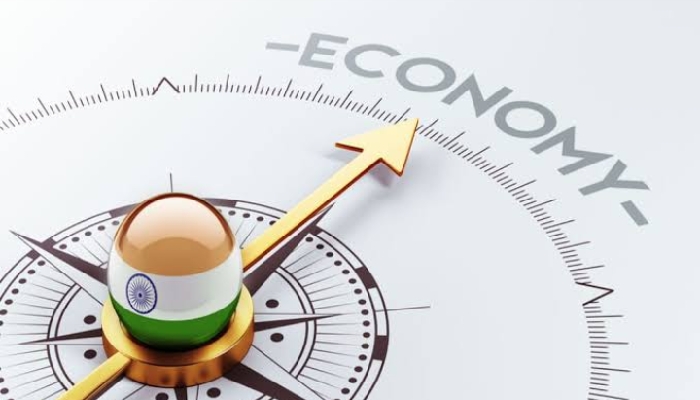
Mumbai, Jun 22: After downgrading India's outlook to negative from stable, Fitch Ratings on Monday revised the outlook on nine Indian banks to negative.

The outlook on the Long-Term Issuer Default Ratings (IDR) was revised to negative from stable due to the banks' high dependence on the Centre to re-capitalise them.

Accordingly, the IDR outlook of the Export-Import Bank of India, the State Bank of India, the Bank of Baroda, the Bank of Baroda (New Zealand), the Bank of India, the Canara Bank, the Punjab National Bank, ICICI Bank and Axis Bank Ltd have been downgraded to negative.

"At the same time, Fitch has affirmed IDBI Bank Limited's (IDBI) IDR while maintaining the outlook at negative," Fitch said in a statement.

The rating actions follow Fitch's revision of the outlook on the 'BBB-' rating on India to negative from stable on June 18, due to the impact of the escalating coronavirus pandemic on India's economy.

"The IDRs for all the above Indian banks are support-driven and anchored to their respective SRFs," the statement said.

"They are based on Fitch's assessment of high to moderate probability of extraordinary state support for these banks, which takes into account our assessment of the sovereign's ability and propensity to provide extraordinary support."

According to the statement, the negative outlook on India's sovereign rating reflects an increasing strain on the state's ability to provide extraordinary support, due to the sovereign's limited fiscal space and the significant deterioration in fiscal metrics due to challenges from the COVID-19 pandemic.

"The rating action does not affect the banks' Viability Rating (VR). EXIM does not have a VR as its role as a policy bank makes an assessment of its standalone credit profile less meaningful."

Comments

Add new comment

  • Coastaldigest.com reserves the right to delete or block any comments.
  • Coastaldigset.com is not responsible for its readers’ comments.
  • Comments that are abusive, incendiary or irrelevant are strictly prohibited.
  • Please use a genuine email ID and provide your name to avoid reject.
Agencies
July 30,2020

Mumbai, Jul 30: Counterfeiting incidents have increased 24 per cent in the country in 2019 over the previous year, creating an over Rs 1 lakh crore hole in the economy, according to a report.

The report also said counterfeiters are having a free run due to the pandemic-driven disruptions to organised supply chains and the resultant spike in consumer demand.

According to the report by ASPA, a self-regulated industry body of anti-counterfeiting and traceability solutions providers, counterfeiting has risen steadily in the last few years, and exploiting the pandemic as a cover for their activities.

Between February and April 2020, over 150 incidents of counterfeiting cases were reported, mostly about fake PPE kits, sanitisers and masks taking advantage of the high demand for these products, it noted.

"There was a 24 per cent increase in counterfeiting in 2019 over 2018, leading to the loss of more than Rs 1 lakh crore to the overall economy," said Nakul Pasricha, president of Authentication Solution Providers Association.

The association works with global authorities like the International Hologram Manufacturers Association, Counterfeit Intelligence Bureau of the Interpol, and domestic industry lobbies like Ficci, he said.

Counterfeiting is a universal issue and is 3.3 per cent of global trade, according to the OECD data, impacting social and economic development across the world.

The report lists the currency, FMCG, alcohol, pharma, documents, agriculture, infrastructure, automotive, tobacco, lifestyle and apparel, as the 10 sectors impacted most by counterfeiting.

Among these, currency, alcohol and FMCG continue to be the top three sectors with the highest counterfeiting in the last two years. The FMCG sector is most vulnerable, as counterfeit incidents rose 63 per cent between 2018 (79) and 2019 when the reported cases jumped to 129.

Within the states, the fakers have a free run in Uttar Pradesh, Bihar, Rajasthan, Madhya Pradesh, Bengal, Punjab, Jharkhand, Delhi, Gujarat, and Uttarakhand, calling for urgent actions to frame anti-counterfeiting policy measures.

According to the report, UP continues to be on top followed by Bihar, Rajasthan, and together these three states represent almost 45 per cent of all counterfeiting reported in the last two years.

What is more alarming is that counterfeiting is not limited to high-end luxury items today, as common everyday items as fake cumin seeds, mustard cooking oil, ghee, hair oils, soaps, baby care vaccines and medicines are aplenty in the markets.

"There is an urgent need for building and nurturing authentication ecosystems in the country with the active involvement and active participation of all stakeholders," said Pasricha.


Comments

Add new comment

  • Coastaldigest.com reserves the right to delete or block any comments.
  • Coastaldigset.com is not responsible for its readers’ comments.
  • Comments that are abusive, incendiary or irrelevant are strictly prohibited.
  • Please use a genuine email ID and provide your name to avoid reject.

