Govt urged to set up dept for non-resident Kannadigas' affairs, earmark Rs 50 cr

February 9, 2017

Bengaluru, Feb 9: A?legislature committee has recommended that the state government constitute an agency on the lines of Department of Non-Resident Keralites Affairs to redress the grievances of non-resident Kannadigas in India and abroad.

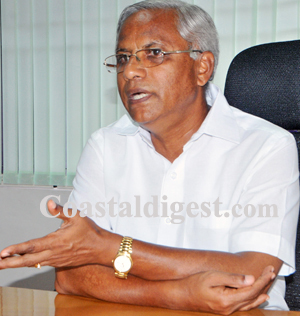
jrlobo3The committee on Welfare of Backward Classes and Minorities headed by the Congress MLA?J?R?Lobo has pointed in its report that Department of Non-Resident Keralites Affairs (NORKA) set up in 1996 is successfully functioning as an interface between the non-resident Keralites and the Kerala government.

A similar department should be set up by the Karnataka government for addressing the problems of non-resident Kannadigas (NRKs) besides safeguarding their rights.

The panel has suggested that the proposed department should open centres in major cities across the country, providing attestation facilities of educational qualification documents, certificates of birth and death, residence, marriage certificates of NRKs among others.

The committee has suggested that a job portal be set up providing details of employment opportunities abroad. Other suggestions include setting up of a relief fund for rendering immediate assistance to NRKs in need, issue of photo ID cards to NRKs and promotion of regional development with their participation.

The panel has recommended that the government set aside Rs 50 crore in the forthcoming budget for the proposed department.

Comments

Shahul
 - 
Thursday, 9 Feb 2017

At last it is a good move and good news by Karnataka government forming NORKA for the welfare and addressing the problems of Non-resident kannadigas of GCC countries. It is the long waiting demand of kannadigas residing in GCC countries. Same type of NORKA (Kerala affairs) is successfully running in Kerala and GCC countries as its branches.

NORKA branches should be opened in GCC country also with a chairman and some prominent members of Kannadigas as the members of NORKA forum.

Add new comment

  • Coastaldigest.com reserves the right to delete or block any comments.
  • Coastaldigset.com is not responsible for its readers’ comments.
  • Comments that are abusive, incendiary or irrelevant are strictly prohibited.
  • Please use a genuine email ID and provide your name to avoid reject.
Agencies
June 26,2020

Mumbai, Jun 26: In a humanitarian gesture, a mosque in Bhiwandi town of adjoining Thane district has been converted by its administrators into a temporary COVID-19 facility, where oxygen is provided free of cost to patients.

The facility at Makkah Masjid in the Shanti Nagar area of the powerloom town has been set up by the local chapter of Jamaat-e-Islami Hind (JIH), Movement for Peace and Justice and the Shanti Nagar Trust, which runs the mosque.

Apart from putting up five beds equipped with oxygen cylinders, the JIH also delivers them for free to patients homes if required, an office-bearer of the JIH said, adding the makeshift facility is open to all communities.

So far, the Bhiwandi-Nizampur municipality has recorded over 1,332 COVID-19 cases and 88 casualties. It has a mortality rate of 5.26 per cent, a release stated.

"Bhiwandi-Nizampur has been hit hard by the pandemic as it is a congested city. It doesn't even have proper health infrastructure.

"The situation has only worsened during the pandemic as general medical practitioners have shut their clinics fearing the virus spread," said Ausaf Ahmed Falahi, president of the JIH's Bhiwandi chapter.

As a majority of people here lack awareness about the viral disease and are unable to afford treatment, a facility like this one was the need of the hour, he said.

Over 70 persons have benefited from this facility, which has two doctors, while 15 oxygen cylinders have been delivered to the homes of eight COVID-19 patients, Falahi said.

People irrespective of their religion have been availing treatment at the mosque, he added.

"Makkah Masjid has been shut for prayers since the lockdown. So, we decided to use a part of the premises to help those who can't avail treatment elsewhere," said Qaiser Mirza of the Shanti Nagar Trust. 

Comments

Add new comment

  • Coastaldigest.com reserves the right to delete or block any comments.
  • Coastaldigset.com is not responsible for its readers’ comments.
  • Comments that are abusive, incendiary or irrelevant are strictly prohibited.
  • Please use a genuine email ID and provide your name to avoid reject.
News Network
July 18,2020

Bengaluru, Jul 18: Vendors in Bengaluru are finding it hard to earn a livelihood as the state government has allowed the sale of products only for a few hours each day. The lockdown imposed by the Karnataka government on July 14 will continue till July 22.

Speaking to ANI, Vanajakshi, a local vendor said, "We took loans from banks and small financiers to run our business. But we are finding it tough to pay back as our livelihoods have been hit."
"Because of the lockdown, no one comes to buy and markets remain vacant. There was a time when the Gandhi Nagar market was filled with customers, but now it looks like a vacant playground," she added.

Mythri, an advocate, said, "Look at the conditions of vendors. It's precarious. They do not have any business at all. Even now they have been allowed to sell products till 12 noon, which is not sufficient. It's time for the government to step in and provide assistance. If the Central government can reduce corporate taxes, why can't it help them? At least it will help them pass off these difficult times. "

"They are earning through daily wages. The government imposed lockdown suddenly. Where will they go? The city market in Bengaluru is famous. At least 8,000 people come from slum areas. People here are poor. The lockdown was done suddenly and led to problems for these people," said Congress MLA Zamil Ahmed Khan.

Referring to a recent meeting with the chief minister BS Yediyurappa, he said, "During the meeting called by the CM, I suggested that food kits must be arranged for vendors. The CM said the government is providing rice and wheat but that's not enough."

Comments

Add new comment

  • Coastaldigest.com reserves the right to delete or block any comments.
  • Coastaldigset.com is not responsible for its readers’ comments.
  • Comments that are abusive, incendiary or irrelevant are strictly prohibited.
  • Please use a genuine email ID and provide your name to avoid reject.
Agencies
June 17,2020

Riyadh, Jun 17: Saudi Arabia is expected to scale back or call off this year's hajj pilgrimage for the first time in its modern history, observers say, a perilous decision as coronavirus cases spike.

Muslim nations are pressing Riyadh to give its much-delayed decision on whether the annual ritual will go ahead as scheduled in late July.

But as the kingdom negotiates a call fraught with political and economic risks in a tinderbox region, time is running out to organise logistics for one of the world's largest mass gatherings.

A full-scale hajj, which last year drew about 2.5 million pilgrims, appears increasingly unlikely after authorities advised Muslims in late March to defer preparations due to the fast-spreading disease.

"It's a toss-up between holding a nominal hajj and scrapping it entirely," a South Asian official in contact with Saudi hajj authorities said.

A Saudi official said: "The decision will soon be made and announced."

Indonesia, the world's most populous Muslim nation, withdrew from the pilgrimage this month after pressing Riyadh for clarity, with a minister calling it a "very bitter and difficult decision".

Malaysia, Senegal and Singapore followed suit with similar announcements.

Many other countries with Muslim populations -- from Egypt and Morocco to Turkey, Lebanon and Bulgaria -- have said they are still awaiting Riyadh's decision.

In countries like France, faith leaders have urged Muslims to "postpone" their pilgrimage plans until next year due to the prevailing risks.

The hajj, a must for able-bodied Muslims at least once in their lifetime, represents a major potential source of contagion as it packs millions of pilgrims into congested religious sites.

But any decision to limit or cancel the event risks annoying Muslim hardliners for whom religion trumps health concerns.

It could also trigger renewed scrutiny of the Saudi custodianship of Islam's holiest sites -- the kingdom's most powerful source of political legitimacy.

A series of deadly disasters over the years, including a 2015 stampede that killed up to 2,300 worshippers, has prompted criticism of the kingdom's management of the hajj.

"Saudi Arabia is caught between the devil and the deep blue sea," Umar Karim, a visiting fellow at the Royal United Services Institute in London, told AFP.

"The delay in announcing its decision shows it understands the political consequences of cancelling the hajj or reducing its scale."

"Buying time"

The kingdom is "buying time" as it treads cautiously, the South Asian official said.

"At the last minute if Saudi says 'we are ready to do a full hajj', (logistically) many countries will not be in a position" to participate, he said.

Amid an ongoing suspension of international flights, a reduced hajj with only local residents is a likely scenario, the official added.

A decision to cancel the hajj would be a first since the kingdom was founded in 1932.

Saudi Arabia managed to hold the pilgrimage during previous outbreaks of Ebola and MERS.

But it is struggling to contain the virus amid a serious spike in daily cases and deaths since authorities began easing a nationwide lockdown in late May.

In Saudi hospitals, sources say intensive care beds are fast filling up and a growing number of health workers are contracting the virus as the total number of cases has topped 130,000. Deaths surpassed 1,000 on Monday.

To counter the spike, authorities this month tightened lockdown restrictions in the city of Jeddah, gateway to the pilgrimage city of Mecca.

"Heartbroken"

"The hajj is the most important spiritual journey in the life of any Muslim, but if Saudi Arabia proceeds in this scenario it will not only exert pressure on its own health system," said Yasmine Farouk from the Carnegie Endowment for International Peace.

"It could also be widely held responsible for fanning the pandemic."

A cancelled or watered-down hajj would represent a major loss of revenue for the kingdom, which is already reeling from the twin shocks of the virus-induced slowdown and a plunge in oil prices.

The smaller year-round umrah pilgrimage was already suspended in March.

Together, they add $12 billion to the Saudi economy every year, according to government figures.

A negative decision would likely disappoint millions of Muslim pilgrims around the world who often invest their life savings and endure long waiting lists to make the trip.

"I can't help but be heartbroken -- I've been waiting for years," Indonesian civil servant Ria Taurisnawati, 37, told AFP as she sobbed.

"All my preparations were done, the clothes were ready and I got the necessary vaccination. But God has another plan."


Comments

Add new comment

  • Coastaldigest.com reserves the right to delete or block any comments.
  • Coastaldigset.com is not responsible for its readers’ comments.
  • Comments that are abusive, incendiary or irrelevant are strictly prohibited.
  • Please use a genuine email ID and provide your name to avoid reject.