Govt urged to set up dept for non-resident Kannadigas' affairs, earmark Rs 50 cr

February 9, 2017

Bengaluru, Feb 9: A?legislature committee has recommended that the state government constitute an agency on the lines of Department of Non-Resident Keralites Affairs to redress the grievances of non-resident Kannadigas in India and abroad.

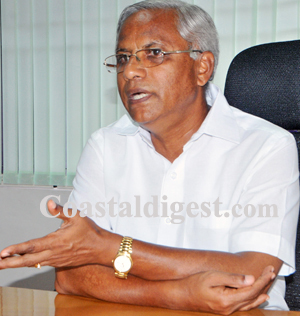
jrlobo3The committee on Welfare of Backward Classes and Minorities headed by the Congress MLA?J?R?Lobo has pointed in its report that Department of Non-Resident Keralites Affairs (NORKA) set up in 1996 is successfully functioning as an interface between the non-resident Keralites and the Kerala government.

A similar department should be set up by the Karnataka government for addressing the problems of non-resident Kannadigas (NRKs) besides safeguarding their rights.

The panel has suggested that the proposed department should open centres in major cities across the country, providing attestation facilities of educational qualification documents, certificates of birth and death, residence, marriage certificates of NRKs among others.

The committee has suggested that a job portal be set up providing details of employment opportunities abroad. Other suggestions include setting up of a relief fund for rendering immediate assistance to NRKs in need, issue of photo ID cards to NRKs and promotion of regional development with their participation.

The panel has recommended that the government set aside Rs 50 crore in the forthcoming budget for the proposed department.

Comments

Shahul
 - 
Thursday, 9 Feb 2017

At last it is a good move and good news by Karnataka government forming NORKA for the welfare and addressing the problems of Non-resident kannadigas of GCC countries. It is the long waiting demand of kannadigas residing in GCC countries. Same type of NORKA (Kerala affairs) is successfully running in Kerala and GCC countries as its branches.

NORKA branches should be opened in GCC country also with a chairman and some prominent members of Kannadigas as the members of NORKA forum.

Add new comment

  • Coastaldigest.com reserves the right to delete or block any comments.
  • Coastaldigset.com is not responsible for its readers’ comments.
  • Comments that are abusive, incendiary or irrelevant are strictly prohibited.
  • Please use a genuine email ID and provide your name to avoid reject.
Agencies
May 8,2020

Washington D.C., May 8: The prime time for brain development in a child's life is the first year, where the infant spends most of the time asleep. It is the time when neural connections form and sensory memories are encoded.

However, when sleep is disrupted, as occurs more often among children with autism, brain development may be affected, too.

New research led by the University of Washington finds that sleep problems in a baby's first 12 months may not only precede an autism diagnosis but also may be associated with altered growth trajectory in a key part of the brain, the hippocampus.

The study, which was published in the American Journal of Psychiatry, researchers report that in a sample of more than 400 taken of 6- to 12-month-old infants, those who were later diagnosed with autism were more likely to have had difficulty falling asleep.

It also states that this sleep difficulty was associated with altered growth trajectories in the hippocampus.

"The hippocampus is critical for learning and memory, and changes in the size of the hippocampus have been associated with poor sleep in adults and older children.

As many as 80 per cent of the children with autism spectrum disorder have sleep problems," said Annette Estes, director of the UW Autism Center and senior author of the study.

"In our clinical experience, parents have a lot of concerns about their children's sleep, and in our work on early autism intervention, we observed that sleep problems were holding children and families back," added Estes, who is also a UW professor of speech and hearing sciences.

"It could be that altered sleep is part-and-parcel of autism for some children. One clue is that behavioural interventions to improve sleep don't work for all children with autism, even when their parents are doing everything just right. This suggests that there may be a biological component to sleep problems for some children with autism," said Estes.

To consider links among sleep, brain development, and autism, researchers at the IBIS Network looked at MRI scans of 432 infants, surveyed parents about sleep patterns, and measured cognitive functioning using a standardized assessment.

At the outset of the study, infants were classified according to their risk for developing autism: Those who were at higher risk of developing autism -- about two-thirds of the study sample -- had an older sibling who had already been diagnosed.

Infant siblings of children with autism have a 20 per cent chance of developing autism spectrum disorder -- a much higher risk than children in the general population.

In the current study, 127 of the 432 infants were identified as "low risk" at the time the MRI scans were taken because they had no family history of autism.

They later evaluated all the participants at 24 months of age to determine whether they had developed autism. Of the roughly 300 children originally considered "high familial risk," 71 were diagnosed with autism spectrum disorder at that age.

Problems with sleep were more common among the infants later diagnosed with an autism spectrum disorder, as were larger hippocampi. No other subcortical brain structures were affected, including the amygdala, which is responsible for certain emotions and aspects of memory, or the thalamus, a signal transmitter from the spinal cord to the cerebral cortex.

The authors note that while parents reported more sleep difficulties among infants who developed autism compared to those who did not, the differences were very subtle and only observed when looking at group averages across hundreds of infants.

Sleep patterns in the first years of life change rapidly as infants transition from sleeping around the clock to a more adult-like sleep/wake cycle. Until further research is completed, Estes said, it is not possible to interpret challenges with sleep as an early sign of increased risk for autism.


Comments

Add new comment

  • Coastaldigest.com reserves the right to delete or block any comments.
  • Coastaldigset.com is not responsible for its readers’ comments.
  • Comments that are abusive, incendiary or irrelevant are strictly prohibited.
  • Please use a genuine email ID and provide your name to avoid reject.
News Network
April 18,2020

Bengaluru, Apr 18: Karnataka Congress president DK Shivakumar on Saturday appealed to Prime Minister Narendra Modi to deposit at least Rs 10,000 in bank accounts of people belonging to the unorganised sector.

"The unorganised sector comprises barbers, dhobi, cooks, carpenters, sweepers, drivers and autorickshaw drivers. Prime Minister Narendra Modi did not mention anything about giving subsistence to these people," Shivakumar, told ANI, referring to the Prime Minister's address earlier this week.

Modi had announced the extension of the ongoing nationwide lockdown till May 3 in order to curb the spread of coronavirus.

"I appeal to Prime Minister Modi to register the members of the unregistered sector under the National Rural Employment Guarantee Act (NREGA) or deposit at least Rs 10,000 to the bank accounts of each of the members of unorganised sector to help them survive the lockdown," he added.

Though the Congress party will continue the central government and state government's fight against coronavirus, he said, both the governments need to help people who are part of the unorganised sector.

"The farmers have told me that due to the lockdown they are ready to sell the vegetables, which once used to be sold at Rs 100 per kg, at even Rs 5 per kg," he said.

Speaking on the suggestions he made to Chief Minister BS Yediyurappa, Shivakumar said, "I requested the Chief Minister to send a team to do a videograph and make an assessment of the on-ground situation. However, till now, no one has gone."

Comments

Add new comment

  • Coastaldigest.com reserves the right to delete or block any comments.
  • Coastaldigset.com is not responsible for its readers’ comments.
  • Comments that are abusive, incendiary or irrelevant are strictly prohibited.
  • Please use a genuine email ID and provide your name to avoid reject.
News Network
January 2,2020

Tumakuru, Jan 2: Prime Minister Narendra Modi on Thursday paid respects to the 'Gadduge' (final resting place) of Shivakumara Swamiji at Siddaganga Math, a prominent Lingayat seminary here, and said the Swamiji's work would continue to inspire everyone.

The Swamiji, who was known as the 'Walking God' among his countless followers, had passed away last year at the age of 111. The Prime Minister, who arrived at the Yelahanka Airbase in Bengaluru, went directly to Tumakuru, where the Math is located, by a chopper along with Chief Minister B S Yediyurappa, Union Minister Pralhad Joshi and former Chief Minister D V Sadananda Gowda among others. Modi, after offering respects to the 'Gadduge', planted Bilva plant (Aegle marmelos) on the premises of the Math and also laid the foundation for the construction of a museum dedicated to Swamiji here before addressing the gathering, largely comprising students. Speaking on the occasion, Modi said he was feeling blessed to begin 2020 from the sacred land of Siddaganga, but at the same time was feeling the "vacuum" in the absence of Shivakumara Swamiji. "It is rare see the number of people swamiji had inspired during his life time. I'm really fortunate to lay the foundation for the museum in swamiji's memory. Through this museum, his works will continue to inspire generations," he said. Also, Prime Minister remembered Vishwesha Theertha of Udupi's Pejawar Math who passed away recently. Yediyurappa and the present pontiff of the Math Siddalinga Swamiji were among the others present. Known as "trivida dasohi" for his triple sacraments - food, shelter and education - among his followers, Shivakumara swamiji was considered as the incarnation of Basavanna, the 12th-century social reformer, as he accepted all irrespective of their religion or caste. There has been a growing clamour from people of different walks of life, including politicians, for conferring "Bharat Ratna" on the late Swamiji.

After the Swamiji's demise, the then Chief Minister H D Kumaraswamy had written to Modi urging him to confer the country's highest civilian order on the late seer.

Opposition Congress on Thursday questioned the Prime Minister about not conferring the"Bharat Ratna" on Shivakumara Swamiji.

Questioning Modi as to why he did not visit Tumakuru when Shivakumara Swamiji of Siddaganga Math passed away, the principal opposition party in the state assembly in a tweet also sought to know why the seer was not conferred with the Bharat Ratna yet, while pointing out that former Chief Minister Siddaramaiah had written a letter in this regard in January 2018.

The present seer of the seminary Siddalinga Swamiji presented Modi a silver statue of Shivakumara Swamiji as a memento.

Comments

Add new comment

  • Coastaldigest.com reserves the right to delete or block any comments.
  • Coastaldigset.com is not responsible for its readers’ comments.
  • Comments that are abusive, incendiary or irrelevant are strictly prohibited.
  • Please use a genuine email ID and provide your name to avoid reject.