



Greenpeace India claims its registration cancelled by TN RoS

November 6, 2015

New Delhi, Nov 6: Greenpeace India today claimed that its registration as a society has been cancelled by Registrar of Societies in Tamil Nadu and said the government's "clumsy" tactics to suppress free speech was turning into a national and international embarrassment.green
The NGO said the fresh notice of cancellation of its registration was an extension of the "deep intolerance" for differing viewpoints which the government was "harbouring" and asserted that it would again seek legal "redress".

"Greenpeace India Society has just received notice from the Tamil Nadu Registrar of Societies, summarily announcing cancellation of its registration as a society," the NGO said in a statement.

It said while several international leaders, including the United Nations Secretary General have recently upheld the importance of civil society in healthy democracies, this notice is the "latest assault" on free speech in India.

"The RoS is clearly acting under directions of the Home Ministry in Delhi, which has been trying to shut Greenpeace India down for over a year now.

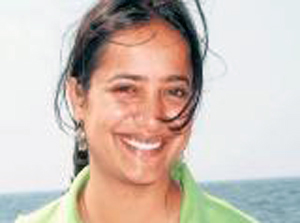
"The MHA's clumsy tactics to suppress free speech and dissenting voices are turning into a major national and international embarrassment for this government," said Vinuta Gopal, Interim Executive Director of Greenpeace India.

It said for the last 18 months, Greenpeace India has endured repeated attempts at suppression through different government authorities.

"This is an extension of the deep intolerance for differing viewpoints that sections of this government seem to harbour," Gopal said.

She said the Registrar has passed this order without granting Greenpeace a hearing and without complying with the Madras High Court order to address each of our points and queries.

"This is a blatant attempt to circumvent the legal process and shows no respect for the law. We are confident that we are on strong legal ground. We have faith in the legal process and are confident of overcoming this order," she said.

It can be mentioned here that the Union home ministry had recently told Delhi high court that it cancelled the foreign contribution registration of the NGO as it was continuing to use its Foreign Contribution Registration Act (FCRA) accounts despite the suspension of the same.

Comments

Add new comment

  • Coastaldigest.com reserves the right to delete or block any comments.
  • Coastaldigset.com is not responsible for its readers’ comments.
  • Comments that are abusive, incendiary or irrelevant are strictly prohibited.
  • Please use a genuine email ID and provide your name to avoid reject.
Agencies
June 19,2020

Srinagar, Jun 19: Suspended Jammu and Kashmir DSP Davinder Singh, arrested while ferrying two Hizb-ul-Mujahideen terrorists in a vehicle on the Srinagar-Jammu Highway earlier this year, was granted bail by a Delhi court on Friday, his lawyer said.

Singh and another accused in the case - Irfan Shafi Mir - were granted the relief by the court in a case filed by special cell of Delhi Police, noting that the probe agency failed to file charge sheet within 90 days from his arrest, as prescribed under law, their lawyer M S Khan said.

The bail was granted on a personal bond of Rs 1 lakh and two sureties of like amount.

Comments

Add new comment

  • Coastaldigest.com reserves the right to delete or block any comments.
  • Coastaldigset.com is not responsible for its readers’ comments.
  • Comments that are abusive, incendiary or irrelevant are strictly prohibited.
  • Please use a genuine email ID and provide your name to avoid reject.
Agencies
May 27,2020

New Delhi, May 27: India’s fourth recession since Independence, first since liberalisation, and perhaps the worst to date is here, according to rating agency, Crisil.

CRISIL sees the Indian economy shrinking 5 per cent in fiscal 2021 (on-year), because of the Covid-19 pandemic. The first quarter will suffer a staggering 25 per cent contraction.

About 10 per cent of gross domestic product (GDP) in real terms could be permanently lost. "So going back to the growth rates seen before the pandemic is unlikely in the next three fiscals", Crisil said.

Crisil has revised its earlier forecast downwards. "Earlier, on April 28, we had slashed our prediction to 1.8 per cent growth from 3.5 per cent growth. Things have only gone downhill since", it said.

While we expect non-agricultural GDP to contract 6 per cent, agriculture could cushion the blow by growing at 2.5 per cent.

In the past 69 years, India has seen a recession only thrice as per available data in fiscals 1958, 1966 and 1980. The reason was the same each time a monsoon shock that hit agriculture, then a sizeable part of the economy.

"The recession staring at us today is different," it added. For one, agriculture could soften the blow this time by growing near its trend rate, assuming a normal monsoon. Two, the pandemic-induced lockdowns have affected most non-agriculture sectors. And three, the global disruption has upended whatever opportunities India had on the exports front.

Economic conditions have slid precipitously since the April-end forecast of 1.8 per cent GDP growth for fiscal 2021 (baseline), Crisil said.

On the lockdown extension, it said that the government has extended the lockdown four times to deal with the rising number of cases, curtailing economic activity severely (lockdown 4.0 is ending on May 31).

The first quarter of this fiscal will be the worst affected. June is unlikely to see major relaxations as the Covid-19 affliction curve is yet to flatten in India.

"Not only will the first quarter be a washout for the non-agricultural economy, services such as education, and travel and tourism among others, could continue to see a big hit in the quarters to come. Jobs and incomes will see extended losses as these sectors are large employers," Crisil said.

CRISIL also foresees economic activity in states with high Covid-19 cases to suffer prolonged disruption as restrictions could continue longer.

A rough estimate based on a sample of eight states, which contribute over half of India's GDP, shows that their 'red zones' (as per lockdown 3.0) contributed 42 per cent to the state GDP on average regardless of the share of such red zones.

On average, the orange zones contribute 46 per cent, while the green zones where activity is allowed to be close to normal contribute only 12 per cent to state GDP.

The economic costs are higher than earlier expectations, according to Crisil. The economic costs now beginning to show up in the hard numbers are far worse than initial expectations.

Industrial production for March fell by over 16%. The purchasing managers indices for the manufacturing and services sectors were at 27.4 and 5.4, respectively, in April, implying extraordinary contraction. That compares with 51.8 and 49.3, respectively, in March.

Exports contracted 60.3 per cent in April, and new telecom subscribers declined 35 per cent, while railway freight movement plunged 35 per cent on-year.

"Indeed, given one of the most stringent lockdowns in the world, April could well be the worst performing month for India this fiscal," it said.

Added to that is the economic package without enough muscle. The government recently announced a Rs 20.9 lakh crore economic relief package to support the economy. The package has some short-term measures to cushion the economy, but sets its sights majorly on reforms, most of which will have payoffs only over the medium term.

"We estimate the fiscal cost of this package at 1.2 per cent of GDP, which is lower than what we had assumed in our earlier estimate (when we foresaw a growth in GDP)," it said.

"We believe a catch-up to the pre-crisis trend level of GDP growth will not be possible in the next three fiscals despite policy support. Under the base case, we estimate a 10 per cent permanent loss to real GDP (from the decadal-trend level), assuming average growth of about 7 per cent between fiscals 2022 and 2024," Crisil said.

Interestingly, after the Global Financial Crisis (GFC), a sharp growth spurt helped catch up with the trend within two years. GDP grew 8.2 per cent on average in the two fiscals following the GFC. Massive fiscal spending, monetary easing and swift global recovery played a role in a V-shaped recovery.

To catch-up would require average GDP growth to surge to 11 per cent over the next three fiscals, something that has never happened before.

The research said that successive lockdowns have a non-linear and multiplicative effect on the economy a two-month lockdown will be more than twice as debilitating as a one-month imposition, as buffers keep eroding.

Partial relaxations continue to be a hindrance to supply chains, transportation and logistics. Hence, unless the entire supply chain is unlocked, the impact of improved economic activity will be subdued.

Therefore, despite the stringency of lockdown easing a tad in the third and the fourth phases, their negative impact on GDP is expected to massively outweigh the benefits from mild fiscal support and low crude oil prices, especially in the April-June quarter. "Consequently, we expect the current quarter's GDP to shrink 25 per cent on-year," it said.

Counting lockdown 4.0, Indians have had 68 days of confinement. S&P Global estimates that one month of lockdown shaves 3 per cent off annual GDP on average across Asia-Pacific.

Since India's lockdown has been the most stringent in Asia, the impact on economic growth will be correspondingly larger.

Google's Community Mobility Reports show a sharp fall in movement of people to places of recreation, retail shops, public transport and workplace travel. While data for May shows some improvement in India, mobility trends are much below the average or baseline, and lower compared with countries such as the US, South Korea, Brazil and Indonesia.

Comments

Add new comment

  • Coastaldigest.com reserves the right to delete or block any comments.
  • Coastaldigset.com is not responsible for its readers’ comments.
  • Comments that are abusive, incendiary or irrelevant are strictly prohibited.
  • Please use a genuine email ID and provide your name to avoid reject.
News Network
June 12,2020

Jun 12: There have been complaints of non-availability of beds or denial of treatment to coronavirus patients in the national capital despite nearly 70 per cent of beds in five designated hospitals run by the Delhi government lying vacant, with experts attributing it to people''s aversion towards state-run facilities.

As per the latest information shared on the Delhi Corona app on Thursday afternoon, more than 3,000 beds are lying vacant in these five dedicated COVID-19 hospitals that have a total capacity of 4,344 beds.

However, almost all beds at several big private hospitals are shown to be occupied.

Families of many COVID-19 patients, confirmed or suspected, have alleged in the past few weeks that they have been denied admission at many facilities or have not been able to get a bed for their kin.

Medical and public health experts feel it may be because of the image associated with government hospitals, related to infrastructure and hygiene conditions, and perhaps shortage of staff.

According to the latest data available on Delhi Corona app on Thursday afternoon, a total of 9,444 beds are available in private facilities and hospitals run by the central and Delhi governments. Out of these, 4,371 are vacant.

The app shows that beds are available at Delhi government-run hospitals dedicated for COVID-19 treatment such as LNJP Hospital (1,219), GTB Hospital (1,314), Rajiv Gandhi Super Speciality Hospital or RGSSH (242).

However, almost all beds at several big private hospitals are shown to be occupied.

At LNJP Hospital, there are a total of 2,000 beds, out of these 781 are occupied. GTB Hospital has total 1,500 beds, only 186 of which are occupied. Even at RGSSH, 258 of the 500 beds are occupied.

Beds are available at other dedicated COVID-19 facilities in the national capital too, according to the app. Deep Chand Bandhu Hospital has 94 unoccupied beds out of a total 176 and Satyawadi Raja Harishchandra Hospital has 145 vacant beds out of a total 168.

This makes a total of 4,344 COVID-19 beds at these five dedicated Delhi government hospitals, out of which 3,014 or 69.38 per cent are vacant.

A senior doctor at the RGSSH said, "We are only admitting very serious COVID-19 patients in the hospital. Those with mild symptoms, or asymptomatic ones, are either being home quarantined or being sent to COVID Care Centres. Our beds are on stand-by also to accommodate serious patients in case there is a sudden rush."

Delhi Heath Minster Satyendar Jain had recently said that some private hospitals could have been denying admission, but the Delhi government-run hospitals have not denied beds to any needy COVID-19 patient.

He had also said that main private hospitals are almost full to their capacity in terms of number of COVID-19 beds.

According to the app, at prominent private hospitals like Indraprastha Apollo, Max Hospital in Shalimar Bagh, Fortis Hospital in Shalimar Bagh, BL Kapur Hospital are fully occupied.

Max Hospital in Saket has a total of 200 beds for COVID-19 patients, and only one is vacant.

On June 9, the Delhi government had directed 22 private hospitals in the national capital to dedicate a total of 2,015 extra beds for treatment of coronavirus patients, revising its earlier allocation limit of 20 per cent.

Lawyer and public heath activist Ashok Agarwal said infrastructure and hygiene are two main factors, and people still want to "avoid government facilities".

"I know of cases, where people were willing to be on waiting list of private hospitals but did not go to a government hospital, even though beds were available," he said.

Even those who went to a government hospital for COVID-19 treatment, complained of "dirty toilets, and these being used by multiple patients", Agarwal said.

"Also, as the cases erupted successively over the months, many people got scared and were in two minds to go to a government hospital, as admitted patients were making allegations in videos and on social media about lack of proper services. Besides, there is shortage of medical staff at various facilities, and each patient needs to be attended to," he argued.

Delhi government hospitals and private facilities were directed to prominently display information about the availability of beds on a flex board at their main gates.

Delhi Lt Governor Anil Baijal on Wednesday ordered Delhi hospitals to display the availability of COVID and non-COVID beds, charges for rooms or beds along with contact details on a LED board outside the hospital.

Max Hospital sources said they were already displaying the status of beds on LED screens near their reception area even before the government order.

A spokesperson from Fortis Hospital said, "We are in the process of arranging to put up the displays as per the prescribed format."

Delhi recorded 1,501 fresh coronavirus cases on Wednesday, taking the COVID-19 tally in the city to over 32,000, and the death toll due to the disease mounted to 984, authorities said.

Comments

Add new comment

  • Coastaldigest.com reserves the right to delete or block any comments.
  • Coastaldigset.com is not responsible for its readers’ comments.
  • Comments that are abusive, incendiary or irrelevant are strictly prohibited.
  • Please use a genuine email ID and provide your name to avoid reject.