


GST done, govt to now take up income tax laws overhaul

DHNS
July 2, 2017

New Delhi, Jul 2: After the historic GST, the government may soon take up an overhaul of income tax laws. Prime Minister Narendra Modi has hinted at a revisit to the Direct Taxes Code (DTC).it
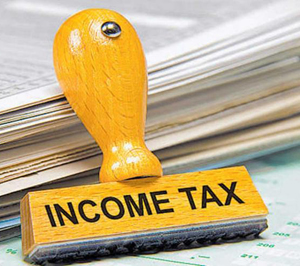
The finance ministry mandarins said the Prime Minister’s comment that Albert Einstein too found it difficult to understand India's income tax laws is being taken as the beginning of an overhaul of complex income tax laws.

“Once Albert Einstein, an eminent scientist had said that the most complex thing to understand in this world is Income tax. I was wondering if he was present here then how he would have reacted looking at the plethora of taxes,” Modi had said addressing a huge gathering of lawmakers, industry and prominent citizens from social sector soon after launching GST from the Central Hall of Parliament on late Friday night.

His remark came close on the heels of a come Parliamentary Committee on Finance urging the government to implement DTC within a stipulated deadline along the lines of the goods and services tax (GST) regime.

The report of the Standing Committee on Finance which was tabled in Parliament recently went on to say that without implementation of DTC, the intended gains of GST will not be felt.

The Committee headed by senior Congress leader Veerappa Moily said the purpose of a direct tax reform will be defeated that if the government kept on doing piecemeal amendments in income tax laws.

Soon after Modi’s reference, reforms in direct taxation and giving benefits of revenues generated through GST also figured in Finance Minister Arun Jaitley’s comments late on Saturday.

Currently, the government is busy with implementation of GST. Only 48 hours before the launch of independent India’s biggest tax reform, deregistered and ordered closure of more than 1 lakh companies which were found tampering with their accounts after November 8 demonetisation.

Over 3 lakh companies have been identified for action and the government has been collating data on transactions of more such firms post the note ban as part of a broader strategy to clamp down on corruption and black money.

Comments

Keshavamurthy
 - 
Friday, 7 Jul 2017

i dont know why people are supporting this vote bank protest.

Abdul
 - 
Thursday, 6 Jul 2017

Rightly said, huge respect sir

Add new comment

  • Coastaldigest.com reserves the right to delete or block any comments.
  • Coastaldigset.com is not responsible for its readers’ comments.
  • Comments that are abusive, incendiary or irrelevant are strictly prohibited.
  • Please use a genuine email ID and provide your name to avoid reject.
Ram Puniyani
January 14,2020

In the beginning of January 2020 two very disturbing events were reported from Pakistan. One was the attack on Nankana Sahib, the holy shrine where Sant Guru Nanak was born. While one report said that the place has been desecrated, the other stated that it was a fight between two Muslim groups. Prime Minister of Pakistan Imran Khan condemned the incident and the main accused Imran Chisti was arrested. The matter related to abduction and conversion of a Sikh girl Jagjit Kaur, daughter of Pathi (One who reads Holy Guru Granth Sahib in Gurudwara) of the Gurudwara. In another incident one Sikh youth Ravinder Singh, who was out on shopping for his marriage, was shot dead in Peshawar.

While these condemnable attacks took place on the Sikh minority in Pakistan, BJP was quick enough to jump to state that it is events like this which justify the Citizenship Amendment Act (CAA). Incidentally CAA is the Act which is discriminatory and relates to citizenship with Religion, which is not as per the norms of Indian constitution. There are constant debates and propaganda that population of Hindus has come down drastically in Pakistan and Bangla Desh. Amit Shah, the Home minister stated that in Pakistan the population of Hindus has come down from 23% at the time of partition to 3.7% at present. And in Bangla Desh it has come down from 22% to present 8%.

While not denying the fact that the religious minorities are getting a rough deal in both these countries, the figures which are presented are totally off the mark. These figures don’t take into consideration the painful migrations, which took place at the time of partition and formation of Bangla Desh later. Pakistan census figures tell a different tale. Their first census was held in 1951. As per this census the overall percentage of Non Muslim in Pakistan (East and West together) was 14.2%, of this in West Pakistan (Now Pakistan) it was 3.44 and in Eat Pakistan it was 23.2. In the census held in Pakistan 1998 it became 3.72%. As far as Bangla Desh is concerned the share of Non Muslims has gone down from 23.2 (1951) to 9.6% in 2011.

The largest minority of Pakistan is Ahmadis, (https://minorityrights.org/country/pakistan/) who are close to 4 Million and are not recognised as Muslims in Pakistan. In Bangla Desh the major migrations of Hindus from Bangla Desh took place in the backdrop of Pakistan army’s atrocities in the then East Pakistan.

As far as UN data on refugees in India it went up by 17% between 2016-2019 and largest numbers were from Tibet and Sri Lanka.  (https://www.un.org/en/development/desa/population/migration/publication…)

The state of minorities is in a way the index of strength of democracy. Most South Asian Countries have not been able to sustain democratic values properly. In Pakistan, the Republic began with Jinnah’s classic speech where secularism was to be central credo of Pakistan. This 11th August speech was in a way what the state policy should be, as per which people of all faiths are free to practice their religion. Soon enough the logic of ‘Two Nation theory” and formation of Pakistan, a separate state for Muslim took over. Army stepped in and dictatorship was to reign there intermittently. Democratic elements were suppressed and the worst came when Zia Ul Haq Islamized the state in collusion with Maulanas. The army was already a strong presence in Pakistan. The popular formulation for Pakistan was that it is ruled by three A’s, Army, America and Allah (Mullah).

Bangla Desh had a different trajectory. Its very formation was a nail in the coffin of ‘two nation theory’; that religion can be the basis of a state. Bangla Desh did begin as a secular republic but communal forces and secular forces kept struggling for their dominance and in 1988 it also became Islamic republic. At another level Myanmar, in the grip of military dictatorship, with democratic elements trying to retain their presence is also seeing a hard battle. Democracy or not, the army and Sanghas (Buddhist Sang has) are strong, in Myanmar as well. The most visible result is persecution of Rohingya Muslims.

Similar phenomenon is dominating in Sri Lanka also where Budhhist Sanghas and army have strong say in the political affairs, irrespective of which Government is ruling. Muslim and Christian minorities are a big victim there, while Tamils (Hindus, Christians etc.) suffered the biggest damage as ethnic and religious minorities. India had the best prospect of democracy, pluralism and secularism flourishing here. The secular constitution, the outcome of India’s freedom struggle, the leadership of Gandhi and Nehru did ensure the rooting of democracy and secularism in a strong way.

India so far had best democratic credentials amongst all the south Asian countries. Despite that though the population of minorities rose mainly due to poverty and illiteracy, their overall marginalisation was order of the day, it went on worsening with the rise of communal forces, with communal forces resorting to identity issues, and indulging in propaganda against minorities.

While other South Asian countries should had followed India to focus more on infrastructure and political culture of liberalism, today India is following the footsteps of Pakistan. The retrograde march of India is most visible in the issues which have dominated the political space during last few years. Issues like Ram Temple, Ghar Wapasi, Love Jihad, Beef-Cow are now finding their peak in CAA.

India’s reversal towards a polity with religion’s identity dominating the political scene was nicely presented by the late Pakistani poetess Fahmida Riaz in her poem, Tum bhi Hum Jaise Nikle (You also turned out to be like us). While trying to resist communal forces has been an arduous task, it is becoming more difficult by the day. This phenomenon has been variously called, Fundamentalism, Communalism or religious nationalism among others. Surely it has nothing to do with the religion as practiced by the great Saint and Sufi traditions of India; it resorts mainly to political mobilization by using religion as a tool.

Comments

Ashi
 - 
Tuesday, 14 Jan 2020

If Malaysia implement similar NRC/CAA, India and China are the loser.

Add new comment

  • Coastaldigest.com reserves the right to delete or block any comments.
  • Coastaldigset.com is not responsible for its readers’ comments.
  • Comments that are abusive, incendiary or irrelevant are strictly prohibited.
  • Please use a genuine email ID and provide your name to avoid reject.
News Network
March 25,2020

Chithradurga, Mar 25: COVID-19-positive cases in Karnataka jumped to 42 from 33 on Tuesday, with nine cases added to the list overnight. The daughter of G M Siddeshwara, Davanagere MP, is the latest case.

Sources from the Siddeshwara family said that the MP’s daughter, along with her two children, who started from Guyana, first landed at New York airport and from there, she took a flight to New Delhi.

From Delhi, she flew to Bengaluru. And then, she and her children travelled with her father in a chaffeur-driven car on March 21 to their house in Bheemasamudra.


Siddeshwara said that protocol for COVID-19 had been followed and all who returned were under self-quarantine at his house. However, the administration was not informed of her travel history till the samples were given for test, Chitradurga Deputy Commissioner Vinoth Priya R told TNIE. The DC said the test results of the MP’s daughter were collected by district health authorities and sent to Shivamogga Institute of Medical Sciences on March 22.

The test turned out to be positive for COVID-19 and she was shifted to the isolation ward at Chigateri district hospital in Davanagere. This is the first positive case in Chitradurga.The patient, who is the wife of an Indian Diplomat in Guyana, complained of flu-like symptoms and remained self-quarantined at her house at Bheemasamudra. Her condition was informed to the health department, which collected her samples and forwarded it to the SIMS for tests, results of which arrived on Tuesday evening.

The DC said that samples of family members including the two children, and those working at the MP’s house would be collected and sent for testing to ensure proper protocol is followed. The administration has declared a ‘red zone of a 5km radius around Siddeshwara’s house at Bheemasamudra. DHO Dr Palaksha said that the patient is not suffering any serious problems and is normal. However, we have put her in the isolation ward of Chigateri District Hospital in Davangere, he said.

Comments

Add new comment

  • Coastaldigest.com reserves the right to delete or block any comments.
  • Coastaldigset.com is not responsible for its readers’ comments.
  • Comments that are abusive, incendiary or irrelevant are strictly prohibited.
  • Please use a genuine email ID and provide your name to avoid reject.
News Network
July 11,2020

Bengaluru, Jul 11: The Bharatiya Janata Party led government of Karnataka is planning to ban cow slaughter as well as the sale and consumption of beef in the state by bringing Prevention of Cow Slaughter and Preservation Bill, 2012.

"Many states have passed the Anti-Cow Slaughter Bill. We are preparing to implement it in Karnataka as well. The state government will soon implement a ban on cow slaughter, sale and consumption of beef on the lines of many other states," said Prabhu Chauhan, the state's Animal Husbandry Minister.

The Anti-Cow Slaughter Act is already in place in several states like Gujarat, Delhi, Haryana, Maharashtra, Madhya Pradesh among others.

Last month, the Yogi Adityanath-led Uttar Pradesh government passed a draft ordinance to prevent cow slaughter, providing maximum rigorous imprisonment of 10 years and a fine up to Rs 5 lakh.
The Uttar Pradesh Cabinet Cow Slaughter Prevention (Amendment) Ordinance, 2020 aims at making the existing Uttar Pradesh Prevention of Cow Slaughter Act, 1955 more effective towards cow safety.

In Karnataka, the BJP-led government had promised to ban cow slaughter in its manifesto for 2018 state assembly election.

"The government will form a team of experts to look into once the current pandemic situation eases," Chauhan stated, adding that if necessary, the team of experts will visit states like Uttar Pradesh, Gujarat.

The then BS Yediyurappa-led BJP government had passed the Karnataka Prevention of Cow Slaughter and Protection Bill in 2010 but it failed to get presidential approval. Three years later, the Bill was withdrawn by the Siddaramaiah-led Congress government.

"I will discuss this matter with Chief Minister and if this pandemic situation eases, by next session, if not by upcoming assembly session, we will try to bring Karnataka Prevention of Slaughter and Preservation of Cattle Bill," Chauhan added.

Comments

Go-pitha maha
 - 
Sunday, 12 Jul 2020

now india is ruled by most unfit people in the world...

one yogi become CM after dumping his family, another became PM after dumping his family and mother, now they teach that COW is mother and need protection...

the main point is here is the business, they know very well muslims make profit in meat business and now they want to steal from them...gomata, protection all these are bullshit...only gobar bakth will belive...

Add new comment

  • Coastaldigest.com reserves the right to delete or block any comments.
  • Coastaldigset.com is not responsible for its readers’ comments.
  • Comments that are abusive, incendiary or irrelevant are strictly prohibited.
  • Please use a genuine email ID and provide your name to avoid reject.