



GST launch on midnight of June 30, confirms Jaitley

Agencies
June 18, 2017

New Delhi, Jun 18: The official launch of Goods and Services Tax will take place on the midnight of June 30, Finance Minister Arun Jaitley confirmed Sunday as the all powerful GST Council cleared all GST rules, decided the tax rates for contentious lotteries and revisited tariffs for AC hotels revising them downwards.jaitly
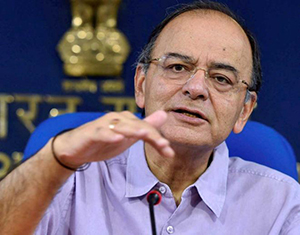
“We don't have the luxury of time to defer implementation of GST. Council decided categorically it will be implemented from 1st of July onwards,” Jaitley told the media setting at rest all speculation and consultations with the government for a possible delay.

The GST Council fixed 12% rate of tax for state-run lotteries while that of the private ones will be taxed at 28%. The Council also decided that the 28% tax rate will apply to AC hotels with tariffs above Rs 7,500. Earlier the limit was Rs 5,000. Hotels with tariffs between Rs 2,500 and Rs 7,500 will now attract a GST rate of 18%.

The Council cleared rules relating to anti-profiteering, advance ruling, appeals and revision, assessment and audit and funds settlement but on e-waybills Jaitley said there would be further deliberations. Till then states would continue with existing systems.

The GST Council also relaxed time lines for the filing of returns for July and August. As per the revised return filing schedule, for the month of July, the sales returns will have to be filed by September 5 instead of August 10. Companies will have to file sale invoice for August with the GST Network by September 20 instead of September 10 earlier.

“The government is ready to allow late return filing in the first two months,” Jaitley said. Kerala Finance Minister Thomas Issac, however, said the IT network for GST was not fully prepared but the Council decided to take the risk rather than to delay the roll out.

“It is something like building a bridge while walking over the bridge,” he said interacting with reporters after the meeting.

Industry body Assocham had raised the same fears in its letter to finance minister on Saturday and sought postponement of its implementation. Its counterpart CII, however, urged the government to stick to the timeline of July 1.

Twenty-four states have already passed their state GST laws. Rest of them are expected to pass in the next 10 days. The Jammu and Kashmir Assembly was recently adjourned without passing the SGST but it is expected to clear after an all-party panel gives its report.

The biggest indirect tax reform since independence, the GST is expected to give a leg up to more than 2% of India's GDP and create jobs in almost all the sectors, according to analysts.

Comments

Add new comment

  • Coastaldigest.com reserves the right to delete or block any comments.
  • Coastaldigset.com is not responsible for its readers’ comments.
  • Comments that are abusive, incendiary or irrelevant are strictly prohibited.
  • Please use a genuine email ID and provide your name to avoid reject.
News Network
May 26,2020

New Delhi, May 26: With India now in the bracket of top 10 nations worst hit by the novel coronavirus, experts have attributed the surge in cases to easing of travel restrictions and movement of migrants besides enhanced testing capacity.

According to AIIMS Director, Randeep Guleria, the present rise in cases has been reported predominantly from hotspot areas but there is a possibility of further rise in the number of COVID-19 cases in the coming few days due to increased travel.

"Those who are asymptomatic or are in presymptomatic stage will pass through screening mechanisms and may reach areas where there have been minimal or less cases," Guleria said.

He said there was a need for more intense surveillance and monitoring in areas where migrants have returned to contain the spread of the disease.

If proper social distancing and hand hygiene is not maintained at a time when people are out on roads, the coronavirus infection will transmit much faster, he said.

Guleria also noted that testing capacity has been significantly ramped up which is reflecting in the increasing number of cases being detected.

Commenting on the partial resumption of rail and road transport services and migrants returning to their native places, Dr Chandrakant S Pandav, former president of the Indian Public Health Association and Indian Association of Preventive and social medicine, said the floodgates have been opened.

"This is a classic case of creating an enabling environment for coronavirus to spread like wildfire. In the coming few days, the number will rise dramatically. While it is true that lockdown cannot go on forever, the opening up should have been in a measured, calibrated and informed manner," he said.

"Travelling leads to spread of the infection. Now, the government will have to ensure even stronger surveillance to curb the infection but if that will be done is something to be observed," he said.

The death toll due to COVID-19 rose to 4,167 and the number of cases climbed to 1, 45,380 in the country, registering an increase of 146 deaths and 6,535 cases since Monday 8 am, according to the Union Health Ministry.

Dr K K Aggarwal, President of the Confederation of Medical Association of Asia and Oceania (CMAAO), and former IMA President, said there will be a further surge in cases in the coming days if migration continues without any proper social distancing.

"Within the next ten days, the cases will cross two lakh. The very fact that number of cases was rising before the end of the third lockdown and continuing during the fourth lockdown means that people are not following physical distancing as required," he said.

"Even in the last week of May when the temperature is very high, the rising number of cases would mean that human-to-human transmission is more important than surface-to-human transmission. Normally in heat the surface-to-human transmission should have reduced the new cases by half which has not happened," Aggarwal said.

However, Professor K Srinath Reddy, president of the Public Health Foundation of India, said an increase in the number of cases reflects both an increase in testing rates and an increase in spread.

"What we need to see is the number of new tests performed per day and the number of new cases that were identified from them. That gives a better idea of the rate of spread than the total number of new cases alone.

"We also have to see if the testing criteria has remained the same between the two periods of comparison.We may open up gradually but will have to continue case detection, contact tracing and follow personal protection measures as vigorously as possible," he added.

A total of 31,26,119 samples have been tested as on May 26, 9 am and 92,528 samples have been tested in the last 24 hours, ICMR officials said.

India is the tenth most affected nation by the pandemic after the US, Russia, UK, Spain, Italy, Brazil, Germany, Turkey and France, as per the John Hopkins University data.

The country has recorded 6,088, 6,654, 6,767 and 6977 cases on May 22, 23, 24 and 25 respectively. Also, the number of RT-PCR tests for detection of COVID-19 in the country crossed the 30-lakh mark on Monday.

The first two phases of the lockdown led to 14-29 lakh COVID-19 cases being averted, while the number of lives saved in that period was between 37,000 and 78,000, the government said last Friday, citing various studies, and asserted that the unprecedented shutdown has paid "rich dividends" in the fight against the pandemic.

Comments

Add new comment

  • Coastaldigest.com reserves the right to delete or block any comments.
  • Coastaldigset.com is not responsible for its readers’ comments.
  • Comments that are abusive, incendiary or irrelevant are strictly prohibited.
  • Please use a genuine email ID and provide your name to avoid reject.
Agencies
June 15,2020

Nuapada, Jun 15: In a shocking incident, a 70-year-old elderly woman had to drag her 100-year-old bedridden mother on a cot to the nearby bank to withdraw pension money of Rs 1,500.

The incident came to light after a video of the woman dragging her bedridden mother on a cot to a bank in Odisha's Nuapada district went viral on social media.

The woman from Bargaon village dragged her mother on the cot after the bank official allegedly asked for physical verification. The incident took place on June 9.

"I went to the bank several times in last three months and requested the bank official to release the pension amount. However, the official informed that they would release the pension if I bring my mother to the branch," said Punjimati Dei.

Bank manager Ajit Pradhan allegedly asked Dei to bring her bedridden mother Labhe Baghel to the bank.

Her mother is an account holder under Jan Dhan Yojana of the Central government.

The Centre had announced Rs 500 monthly assistance for women Jan Dhan bank account holders from April to June in view of the COVID-19 situation.

A district administration official informed that the woman reached the bank with her mother before the manager could visit her home for the verification.

Comments

Add new comment

  • Coastaldigest.com reserves the right to delete or block any comments.
  • Coastaldigset.com is not responsible for its readers’ comments.
  • Comments that are abusive, incendiary or irrelevant are strictly prohibited.
  • Please use a genuine email ID and provide your name to avoid reject.
News Network
January 20,2020

New Delhi, Jan 20: Surging inflation and slowing growth are raising serious concerns about the future growth prospects of the economy and as a remedial measure the government should resolve supply-side hurdles and ensure more stringent governance norms, a report said on Monday.

According to the Dun and Bradstreet Economy forecast, even though the Index of Industrial Production (IIP) turned positive in November 2019, it is likely to remain subdued.

"Slowdown in consumption and investment along with high inflationary pressures, geopolitical issues and uncertainty over the recovery of the economic growth are likely to keep IIP subdued," the report noted.

Dun and Bradstreet expect IIP to remain around 1.5-2.0 percent during December 2019.

As per government data, industrial output grew 1.8 percent in November, turning positive after three months of contraction, on account of growth in the manufacturing sector.

On the price front, uneven rainfall along with floods in many states and geopolitical issues have led to a surge in headline inflation even as demand remains muted.

The Consumer Price Index (CPI) in December rose to about five-and-half year high of 7.35 percent from 5.54 percent in November, mainly driven by high vegetable prices.

"The sharp rise in inflation has constrained monetary policy stimulus while revenue shortfall has placed limits on the government expenditure," Dun & Bradstreet India Chief Economist Arun Singh said.

According to Singh, growth-supporting measures and deceleration in growth are likely to cause slippage in fiscal deficit target by a wider margin.

"The government should focus on taking small steps to address the slowdown; in particular, resolve the supply-side hurdles and ensure more stringent governance norms," Singh said.

Unless these concerns are addressed through a comprehensive policy framework, it will not be easy for India to clock a sustainable growth rate to become a USD 5 trillion economy, he added.

Comments

Add new comment

  • Coastaldigest.com reserves the right to delete or block any comments.
  • Coastaldigset.com is not responsible for its readers’ comments.
  • Comments that are abusive, incendiary or irrelevant are strictly prohibited.
  • Please use a genuine email ID and provide your name to avoid reject.