GTTC offers free short-term courses for SC/ST students

[email protected] (CD Network)
July 2, 2014

GTTC 7

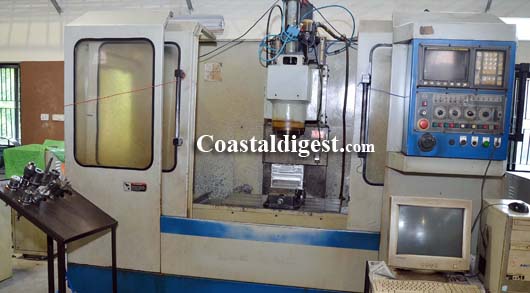
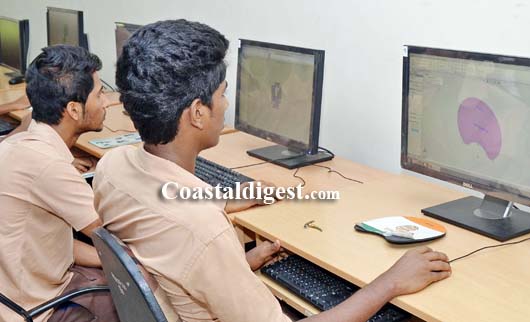
Mangalore, Jul 2: Government Tool Room and Training Centre, Mangalore announces free training courses and short-term skill development programmes for underprivileged SC/ST students such as Tool Room Machinist, CNC Technologist and CAD/CAM.

Speaking at a press conference here on Wednesday, training manager at the institute Muthukumar said that eligible students from poor families could enroll themselves in three short-term skill development courses such as Tool Room Machinist – 12 months duration, CNC Technologist (CNC Turning and CNC Milling) - 6 months duration and CAD/CAM – 4 months duration.

Those who have completed their SSLC are eligible to enroll for the Tool Room Machinist course and those who have completed their ITI/Diploma can enroll themselves for CNC Technologist and CAD/CAM, he said.

There are 10 seats each for courses of Tool Room Technologist and CAD/CAM, while there 70 seats for the course of CNC Technologist – 30 reserved for students from Scheduled Castes and 40 reserved for those from Scheduled Tribes, he said.

The institute also offers regular long-term courses such as Diploma in Tool and Die Making and Diploma in Precision Manufacturing at the Mangalore centre.

GTTC 1

GTTC 1

GTTC 1

GTTC 1

GTTC 1

GTTC 1

GTTC 1

Comments

ashish kumar kori
 - 
Tuesday, 11 Sep 2018

sir sc/st categories wale student ke liye kya kya benifit milta h

 plz sir contact me 7566793916

Kimavathbalajinaik
 - 
Saturday, 30 Sep 2017

Respected sir my self balaji naik sir i am interested to join in this  course 


Sir what about hostel facility sir 

Add new comment

  • Coastaldigest.com reserves the right to delete or block any comments.
  • Coastaldigset.com is not responsible for its readers’ comments.
  • Comments that are abusive, incendiary or irrelevant are strictly prohibited.
  • Please use a genuine email ID and provide your name to avoid reject.
News Network
March 30,2020

Belgaum, Mar 30: As many as 2442 labourers hailing from Karnataka have been brought back in 62 buses by the State government from Maharashtra on Sunday, in the backdrop of nation-wide lockdown following COVID-19 outbreak.

Maharashtra Chief Minister Uddhav Thackeray on Saturday urged migrant labourers not to leave the State owing to the nationwide lockdown and assured that the Maharashtra government will look after their interests.

Hundreds of migrants, a majority of whom are daily wage workers started rushing to their native places from different states amid uncertainty over their livelihood following the announcement of a 21-day nationwide lockdown by Prime Minister Narendra Modi last week in order to contain the spread of novel coronavirus.

Comments

Add new comment

  • Coastaldigest.com reserves the right to delete or block any comments.
  • Coastaldigset.com is not responsible for its readers’ comments.
  • Comments that are abusive, incendiary or irrelevant are strictly prohibited.
  • Please use a genuine email ID and provide your name to avoid reject.
coastaldigest.com web desk
June 9,2020

With the steep hike in excise duty in the past couple of months, an average consumer of petrol now pays over 275% in taxes to centre and states on a litre of the fuel.  The base price of petrol is just about Rs 18. The taxes are close to Rs 50 and the pump price is over Rs 72.

India imports 85% of all its crude oil demand.  After a steep hike in excise duty in the past two months despite a hold on daily price revisions by the oil public sector undertakings (PSUs), Indian consumers now pay 275% collectively in excise duty to state and centre. 

The central government hiked excise on petrol and diesel by Rs 10 and Rs 13 respectively last month. The excise duty on petrol is taxed around Rs 33-a-litre while the same on diesel it is Rs 32.

The Value-Added Tax (VAT) on both petrol and diesel is Rs 16.44 and Rs 16.26 respectively. Both the taxes together are around Rs 49 while it is sold at petrol pumps at 73-per-litre.

These two taxes cumulatively account for 69% of tax which is higher than anywhere else in the world. The same is taxed at 19% in the US, 47% in Japan, UK 62% and 63% in France. The government does not pass on the benefit of lower crude oil prices to the customer.

It is to be noted that Indian consumers continued to pay Rs 70-a-litre even when crude oil prices hit a paltry US $ 20-a-barrel on April 12.

Former finance minister and Congress leader recently took a jab at the Centre over rising prices stating, “Fuel selling prices raised twice in two days, following tax hikes two weeks ago. This time to benefit oil companies. Government is poor, it needs more taxes. Oil companies are poor, they need better prices. Only the poor and middle class are not poor, so they will pay”.

Comments

Lovely indian
 - 
Wednesday, 10 Jun 2020

Acche din for modi bakth....lets enjoy


you need only ram mandir and NRC

Add new comment

  • Coastaldigest.com reserves the right to delete or block any comments.
  • Coastaldigset.com is not responsible for its readers’ comments.
  • Comments that are abusive, incendiary or irrelevant are strictly prohibited.
  • Please use a genuine email ID and provide your name to avoid reject.
Agencies
May 8,2020

Washington D.C., May 8: The prime time for brain development in a child's life is the first year, where the infant spends most of the time asleep. It is the time when neural connections form and sensory memories are encoded.

However, when sleep is disrupted, as occurs more often among children with autism, brain development may be affected, too.

New research led by the University of Washington finds that sleep problems in a baby's first 12 months may not only precede an autism diagnosis but also may be associated with altered growth trajectory in a key part of the brain, the hippocampus.

The study, which was published in the American Journal of Psychiatry, researchers report that in a sample of more than 400 taken of 6- to 12-month-old infants, those who were later diagnosed with autism were more likely to have had difficulty falling asleep.

It also states that this sleep difficulty was associated with altered growth trajectories in the hippocampus.

"The hippocampus is critical for learning and memory, and changes in the size of the hippocampus have been associated with poor sleep in adults and older children.

As many as 80 per cent of the children with autism spectrum disorder have sleep problems," said Annette Estes, director of the UW Autism Center and senior author of the study.

"In our clinical experience, parents have a lot of concerns about their children's sleep, and in our work on early autism intervention, we observed that sleep problems were holding children and families back," added Estes, who is also a UW professor of speech and hearing sciences.

"It could be that altered sleep is part-and-parcel of autism for some children. One clue is that behavioural interventions to improve sleep don't work for all children with autism, even when their parents are doing everything just right. This suggests that there may be a biological component to sleep problems for some children with autism," said Estes.

To consider links among sleep, brain development, and autism, researchers at the IBIS Network looked at MRI scans of 432 infants, surveyed parents about sleep patterns, and measured cognitive functioning using a standardized assessment.

At the outset of the study, infants were classified according to their risk for developing autism: Those who were at higher risk of developing autism -- about two-thirds of the study sample -- had an older sibling who had already been diagnosed.

Infant siblings of children with autism have a 20 per cent chance of developing autism spectrum disorder -- a much higher risk than children in the general population.

In the current study, 127 of the 432 infants were identified as "low risk" at the time the MRI scans were taken because they had no family history of autism.

They later evaluated all the participants at 24 months of age to determine whether they had developed autism. Of the roughly 300 children originally considered "high familial risk," 71 were diagnosed with autism spectrum disorder at that age.

Problems with sleep were more common among the infants later diagnosed with an autism spectrum disorder, as were larger hippocampi. No other subcortical brain structures were affected, including the amygdala, which is responsible for certain emotions and aspects of memory, or the thalamus, a signal transmitter from the spinal cord to the cerebral cortex.

The authors note that while parents reported more sleep difficulties among infants who developed autism compared to those who did not, the differences were very subtle and only observed when looking at group averages across hundreds of infants.

Sleep patterns in the first years of life change rapidly as infants transition from sleeping around the clock to a more adult-like sleep/wake cycle. Until further research is completed, Estes said, it is not possible to interpret challenges with sleep as an early sign of increased risk for autism.


Comments

Add new comment

  • Coastaldigest.com reserves the right to delete or block any comments.
  • Coastaldigset.com is not responsible for its readers’ comments.
  • Comments that are abusive, incendiary or irrelevant are strictly prohibited.
  • Please use a genuine email ID and provide your name to avoid reject.