Gujarat HC rejects Zakia Jafri's plea against SIT's clean chit to Modi

Agencies
October 5, 2017

Ahmedabad, Oct 5: The Gujarat High Court today rejected Zakia Jafri's plea challenging a lower court order upholding SIT's clean chit to then chief minister Narendra Modi and others on allegations of larger conspiracy in connection with the 2002 post-Godhra riots.

The high court, however, allowed Zakia to approach higher forums for further investigation in the case.

Zakia, the wife of slain former MP Ehsan Jafri, and activist Teesta Setalvad's NGO Citizen for Justice and Peace had moved the criminal review petition against a magistrate's order upholding the clean chit given by the special investigation team (SIT) to Modi and others regarding the allegations of a "larger criminal conspiracy" behind the riots.

The petition demanded that Modi and 59 others -- including senior police officers and bureaucrats -- be made accused for allegedly being part of a conspiracy which facilitated the riots.

It had also sought the high court's direction for a fresh investigation into the matter.

Ehsan Jafri, a Congress leader, was among 68 people who were killed at the Gulberg Society here when a mob attacked it on February 28, 2002, a day after the Godhra train burning incident which set off riots in the state.

The SIT's closure report, filed on February 8, 2012, gave a clean chit to Modi and others.

In December 2013, the metropolitan magistrate's court here rejected Jafri's petition against the report, after which she moved the high court in 2014.

Comments

Althaf
 - 
Thursday, 5 Oct 2017

When the judges belong to sangh parivar then how can we expect justice?? 

Add new comment

  • Coastaldigest.com reserves the right to delete or block any comments.
  • Coastaldigset.com is not responsible for its readers’ comments.
  • Comments that are abusive, incendiary or irrelevant are strictly prohibited.
  • Please use a genuine email ID and provide your name to avoid reject.
News Network
January 24,2020

Davos, Jan 24: Pakistan Prime Minister Imran Khan claimed that he met with a “brick wall” when he approached Indian Prime Minister Narendra Modi with a peace proposal, soon after assuming office.

In an interview to Foreign Policy magazine on the sidelines of WEF 2020 here, Khan also said he told Modi that Pakistan will act firmly if it was given evidence of any involvement in the Pulwama terror attack, but India instead “bombed” Pakistan.

Tensions have escalated between the two countries, following India withdrawing the special status of Jammu and Kashmir in August 2019. Even since, Khan has been trying to seek global intervention to de-escalate the tensions between the two countries.

On Thursday, India's External Affairs Ministry spokesperson Raveesh Kumar categorically ruled out any third party role on the Kashmir issue, asserting that any issue between the two countries should be resolved bilaterally.

In the interview, Khan said that he is a firm believer that military means are not a solution to ending conflicts. “After assuming office, I immediately reached out to Prime Minister Modi. I was amazed by the reaction I got, which was quite weird.

The subcontinent hosts the greatest number of poor people in the world, and the best way to fight poverty is to have a trading relationship between the two countries rather than spending money on arms. This is what I said to the Indian Prime Minister. But I was met by brick wall,” Khan said.

Khan took charge as Prime Minister in August 2018. Referring to the suicide attack in Pulwama, Khan said he immediately told Modi ,“if you can give us any actionable intelligence (that Pakistanis were involved), we will act on it. But rather than do so, they bombed us.”

Noting that the both countries are not close to conflict right now, Khan said that it is important that the UN and the US act.

When asked about US President Donald Trump’s close relationship with Modi, Khan said the relationship is understandable because India is a huge market. “My concern is not about the US-India relationship. My concern is the direction in which India is going,” Khan said.

Khan also sought to compare the events in India to what happened in Nazi Germany.

“Between 1930 and 1934, Germany went from a liberal democracy to a fascist, totalitarian, racist state. If you look at what is happening in India under the BJP in the last five years, look where it's heading, you'll see the danger. And you're talking about a huge country of 1.3 billion people that is nuclear-armed,” he said.

Comments

Add new comment

  • Coastaldigest.com reserves the right to delete or block any comments.
  • Coastaldigset.com is not responsible for its readers’ comments.
  • Comments that are abusive, incendiary or irrelevant are strictly prohibited.
  • Please use a genuine email ID and provide your name to avoid reject.
News Network
March 4,2020

New Delhi, Mar 4: The Supreme Court on Wednesday revoked the ban of cryptocurrency imposed by the Reserve Bank of India (RBI) in 2018.

Pronouncing the verdict, the three-judge bench of the apex court said the ban was 'disproportionate'.

The bench included Justice Rohinton Fali Nariman, Justice S Ravindra Bhat and Justice V Ramasubramanian.

The Internet and Mobile Association of India (IAMAI), whose members include cryptocurrency exchanges, and others had approached the top court objecting to a 2018 RBI circular directing regulated entities to not deal with cryptocurrencies.

Advocate Ashim Sood, appearing for IAMI, submitted that Reserve Bank of India lacked jurisdiction to forbid dealings in cryptocurrencies. The blanket ban was based on an erroneous understanding that it was impossible to regulate cryptocurrencies, Sood submitted.

The petitioners had argued that the RBI's circular taking cryptocurrencies out of the banking channels would deplete the ability of law enforcement agencies to regulate illegal activities in the industry.

IAMAI had claimed the move of RBI had effectively banned legitimate business activity via the virtual currencies (VCs).

The RBI on April 6, 2018, had issued the circular that barred RBI-regulated entities from "providing any service in relation to virtual currencies, including those of transfer or receipt of money in accounts relating to the purchase or sale of virtual currencies".

Comments

Add new comment

  • Coastaldigest.com reserves the right to delete or block any comments.
  • Coastaldigset.com is not responsible for its readers’ comments.
  • Comments that are abusive, incendiary or irrelevant are strictly prohibited.
  • Please use a genuine email ID and provide your name to avoid reject.
coastaldigest.com news network
August 8,2020

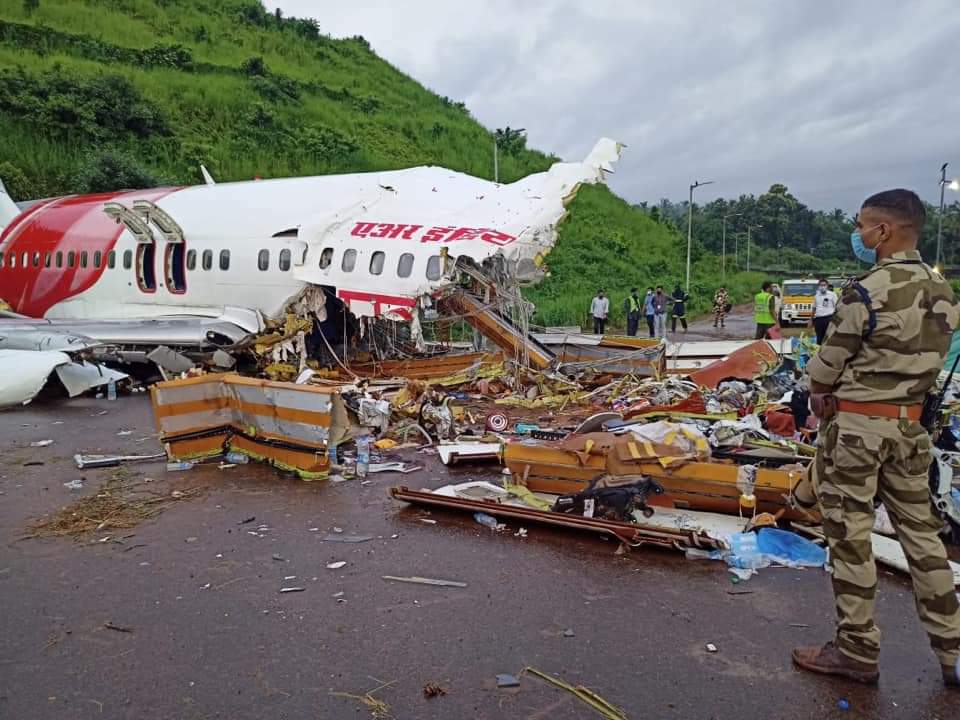
Kozhikode, Aug 8: A tailwind or crosswind could be the reason for the Air India Express flight mishap at Kozhikode international airport in Kerala, according to some aviation experts. 

Team of DGCA and AIE already reached the spot. With the death of the captain and co-pilot in the mishap, the investigation would be focusing mainly on the voice recorders and other technical aspects.

It is learnt that the ill-fated aircraft, IX 1344 with 190 onboard including crew, was initially planning to land on runway-28 of the airport. But later the pilot opted runway-10 which is toward the other direction. Pilots would be taking the decisions on the basis of inputs from ATC.

The questions now doing the rounds are what made the pilot opt runway-10 and whether the tabletop runway lacked adequate safety parameters.

An aviation expert, who didn't want to be quoted, said that Capt Deepak Sathe, who was commandeering the aircraft, was a well-experienced pilot and was also familiar with the terrains. Hence the chances of any error from his part was very unlikely. Hence a fair in-depth probe was required to find the exact cause.

Though the Kozhikode airport has an Instrument Landing System, it was of category-I for which pilot's visibility is very crucial toward a touchdown. Since it is a tabletop airport and rough weather prevailing in the region, the chances of tailwind was also high, said sources.

There had been safety concerns about the airport over quite some time. In 2011 aviation safety consultant captain Mohan Ranganathan reportedly gave a report citing the safety issues, especially the buffer zones at the end of the runway.

However, an AAI officer said that rectification steps were already done by last year by widening the Runway End Safety Area (RESA) from 90 metre to 240 metre. However, the length of the runway had to be reduced to 2,700 metre from 2,850. The AAI was also constantly pressing for increasing the runway length to 3,150 metres. But that was getting delayed due to land acquisition issues pending with the state government.

stm88 info live rtp slot

slot auto scatter hitam

Comments

Add new comment

  • Coastaldigest.com reserves the right to delete or block any comments.
  • Coastaldigset.com is not responsible for its readers’ comments.
  • Comments that are abusive, incendiary or irrelevant are strictly prohibited.
  • Please use a genuine email ID and provide your name to avoid reject.