



Gurgaon schoolboy not sexually assaulted: Autopsy report

Agencies
September 13, 2017

Gurgaon, Sep 12: The seven-year-old boy, found murdered inside his school, was not sexually assaulted and died of excessive bleeding, the doctor who conducted the post-mortem said today.

In a related development, the Bombay High Court granted interim protection from arrest to Ryan International Group's founding chairman Augustine Pinto and his wife and managing director Grace till tomorrow in connection with the murder.

The school, where the boy studied, is run by the group in Gurgaon.

Group CEO Ryan Pinto filed an anticipatory bail application in the high court this evening, their lawyer said.

Dr Deepak Mathur, who conducted the post mortem, also said there were two cuts on the boy's body and a nerve was slashed due to which he could not cry for help when he was attacked.

"The second point that came out in the report is that the child died due to excessive bleeding. There was no sexual assault on the minor and no semen marks were found on his school dress," he said.

A fact-finding three member committee, constituted by the Gurgaon district administration, submitted its report to District Commissioner Vinay Pratap Singh.

"The committee has detected lapses on the part of the school such as broken window, ill-equipped fire extinguishers, common toilets, no police verification of conductors and drivers and other ground staff, broken boundary wall and low quality CCTV without having wide-angle facilities, students' toilets without guard," Singh said.

Meanwhile, police recorded statements of two students in connection with the murder of their schoolmate.

"The SIT recorded statements of two students who went to change their Taekwondo dress inside the toilet at the time of the crime. The team is also questioning the suspended school principal Neerja Batra and two other female teachers," a senior police officer said.

Schoolbus conductor Ashok Kumar, who allegedly tried to sexually assault the class II student in a toilet and slit his throat with a knife when he resisted last Friday last, was sent to judicial custody till September 17.

As police are working to crack the case, Subhash Garg, a businessman, claimed the conductor carried the injured boy to a car to be shifted to a hospital on the orders of two teachers.

Garg said he had gone to deposit his son's fees on Friday and was standing at the main reception in the school when he heard some commotion.

"I saw two female teachers and two students were following an injured student who was being carried by Ashok Kumar. One of the teachers was weeping at that moment. She ordered Kumar to place him at the rear seat of the car," Garg said.

"There were also blood stains spread all over the place in a small toilet at the ground floor of the school building. There were blood stains on Kumar's shirt which may be due to the fact that he was carrying the boy," he claimed.

He further claimed that Kumar was behaving normally which is a rare thing for someone who has committed a crime, adding he recorded 1.14 minute video.

The school bus' driver Saurabh Raghav claimed Kumar was made a scapegoat by the school teachers.

The matter of safety of children in schools was also taken up in the Supreme Court which agreed to hear a plea of two women lawyers seeking framing of "non-negotiable" child safety conditions and implementation of existing guidelines to protect school-going children from offences like sexual abuse and murder across the country.

The plea which also sought cancellation of licences and forfeiture of state grants of erring schools will be heard by the court along with the petition filed yesterday by the father of boy.

Union ministers Maneka Gandhi and Prakash Javadekar will hold a high-level meeting tomorrow to develop a protocol for educational institutions to ensure safety of students following incidents of child sexual abuse in schools.

Officials of the ministries of women and child development and human resource development as well as representative of the National Commission of Protection of Child Rights (NCPCR), CBSE, NCERT, Kendriya Vidyalaya Sangathan will be a part of this meeting.

Comments

Add new comment

  • Coastaldigest.com reserves the right to delete or block any comments.
  • Coastaldigset.com is not responsible for its readers’ comments.
  • Comments that are abusive, incendiary or irrelevant are strictly prohibited.
  • Please use a genuine email ID and provide your name to avoid reject.
Agencies
August 1,2020

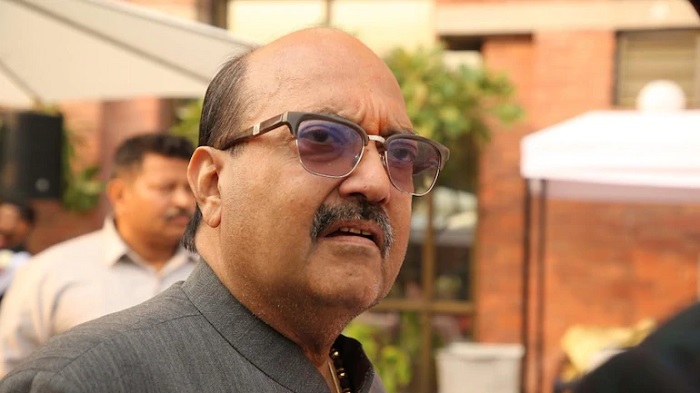
New Delhi, Aug 1: Rajya Sabha MP and former Samajwadi Party leader Amar Singh has died in Singapore where he was undergoing treatment.

Amar Singh, 64, had undergone kidney transplant in 2011 and was not keeping well for a long time.

“Saddened to know about the death of senior leader and parliamentarian Amar Singh,” Defence Minister Rajnath Singh tweeted.

Earlier in the day, the former Samajwadi leader had posted messages on Twitter, paying tributes to Bal Gangadhar Tilak on his 100th death anniversary and also wishing people on Eid.

Comments

Add new comment

  • Coastaldigest.com reserves the right to delete or block any comments.
  • Coastaldigset.com is not responsible for its readers’ comments.
  • Comments that are abusive, incendiary or irrelevant are strictly prohibited.
  • Please use a genuine email ID and provide your name to avoid reject.
News Network
May 20,2020

United Nations, May 20: Highlighting India's long-standing history of promoting inclusive and peaceful societies, a top UN official on Tuesday voiced concern over incidents of "increased hate speech and discrimination" against minority communities in the country following the adoption of the Citizenship Amendment Act.

Under-Secretary-General and UN Special Adviser on the Prevention of Genocide Adama Dieng, however, welcomed Prime Minister Narendra Modi’s call for unity and brotherhood in the wake of the COVID19 pandemic.

Dieng said in a note to the media on Tuesday that he is "concerned over reports of increased hate speech and discrimination against minority communities in India" since the adoption of the Citizenship Amendment Act (CAA) in December 2019.

The Indian government has maintained that the CAA is an internal matter of the country and stressed that the goal is to protect the oppressed minorities of neighbouring countries.

The CAA, which was notified on January 10, grants Indian citizenship to non-Muslim minorities migrated to India from Afghanistan, Pakistan and Bangladesh till December 31, 2014, following persecution over their faith.

"While the objective of the act, to provide protection to minority communities is commendable, it is concerning that this protection is not extended to all groups, including Muslims. This is contrary to India’s obligations under international human rights law, in particular on non-discrimination,” Dieng said.

The Special Adviser recognised "India’s long standing and well recognised history of promoting inclusive and peaceful societies, with respect for equality and principles of non-discrimination.”

He also welcomed recent statements by Prime Minister Modi that the COVID-19 pandemic “does not see race, religion, colour, caste, creed, language or border before striking and that our response and conduct...should attach primacy to unity and brotherhood.”

Dieng encouraged the Government of India to "continue to abide by this guidance by ensuring that national laws and policies follow international standards related to non-discrimination and to address and counter the rise of hate speech through messages of inclusion, respect for diversity and unity.”

He further reiterated that he would continue to follow developments and expressed his readiness to support initiatives to counter and address hate speech.

The hate speech and the dehumanisation of others goes against international human rights norms and values, he added.

“In these extraordinary times brought about by the COVID-19 crisis it is more important than ever that we stand united as one humanity, demonstrating unity and solidarity rather than division and hate,” he said.

Dieng also expressed concern over reports of violence during demonstrations against CAA in some regions of India.

Comments

Add new comment

  • Coastaldigest.com reserves the right to delete or block any comments.
  • Coastaldigset.com is not responsible for its readers’ comments.
  • Comments that are abusive, incendiary or irrelevant are strictly prohibited.
  • Please use a genuine email ID and provide your name to avoid reject.
News Network
February 2,2020

Feb 2: Prime Minister Narendra Modi’s second budget in seven months disappointed investors who were hoping for big-bang stimulus to revive growth in Asia’s third-largest economy.

The fiscal plan -- delivered by Finance Minister Nirmala Sitharaman on Saturday -- proposed tax cuts for individuals and wider deficit targets but failed to provide specific steps to fix a struggling financial sector, improve infrastructure and create jobs. Stocks slumped as a proposal to scrap the dividend distribution tax for companies failed to impress investors.

"Far from being a game changer, the budget provides little in terms of short-term growth stimulus,” said Priyanka Kishore, head of India and South East Asia economics at Oxford Economics Ltd. in Singapore. “While income tax cuts will provide some relief on the consumption front, the multiplier effect is low and the overall stance of the budget is not expansionary."

India has gone from being the world’s fastest-growing major economy three years ago, expanding at 8%, to posting its weakest performance in more than a decade this fiscal year, estimated at 5%.

While the government has taken a number of steps in recent months to spur growth, they’ve fallen short of spurring demand in the consumption-driven economy. Saturday’s budget just added to the glum sentiment.

Okay Budget

“It’s an okay budget but not firing on all cylinders that the market was hoping for,” said Andrew Holland, chief executive officer at Avendus Capital Alternate Strategies in Mumbai.

The government had limited scope for a large stimulus given a huge shortfall in revenues in the current year. The slippage induced Sitharaman to invoke a never-used provision in fiscal laws, allowing the government to exceed the budget gap by 0.5 percentage points. The result: the deficit for the year ending March was widened to 3.8% of gross domestic product from a planned 3.3%.

On Friday, India’s chief economic adviser Krishnamurthy Subramanian said reviving economic growth was an “urgent priority” and deficit goals could be relaxed to achieve that. The adviser’s Economic Survey estimated growth will rebound to 6%-6.5% in the year starting April.

The fiscal gap will narrow to 3.5% next year, as the government budgeted for gross market borrowing to rise marginally to 7.8 trillion rupees from 7.1 trillion rupees in the current year. A plan to earn 2.1 trillion rupees by selling state-owned assets in the year starting April will also help plug the deficit.

Total spending in the coming fiscal year will increase to 30.4 trillion rupees, representing a 13% increase from the current year’s budget, according to latest data.

Key highlights from the budget:

* Tax on annual income up to 1.25 million rupees pared, with riders

* Dividend distribution tax to be levied on investors, instead of companies

* Farm sector budget raised 28%, transport infrastructure gets 7% more

* Spending on education raised 5%

* Fertilizer subsidy cut 10%

Analysts said the muted spending plan to keep the deficit in check will lead to more downside risks to growth in the coming months.

“It is very doubtful that the increase in expenditure will push demand much,” Chakravarthy Rangarajan, former governor at the Reserve Bank of India told BloombergQuint, adding that achieving next year’s budget deficit goal of 3.5% of GDP was doubtful.

With the government sticking to a conservative fiscal path, the focus will now turn to central bank, which is set to review monetary policy on Feb. 6. Given inflation has surged to a five-year high of 7.35%, the RBI is unlikely to lower interest rates.

What Bloomberg’s Economists Say:

The burden of recovery now falls solely on the Reserve Bank of India. With inflation breaching RBI’s target at present, any rate cuts by the central bank are likely to be delayed and contingent upon inflation falling below the upper end of its 2%-6% target range.

-- Abhishek Gupta, India economist

Governor Shaktikanta Das may instead focus on unconventional policy tools such as the Federal Reserve-style Operation Twist -- buying long-end debt while selling short-tenor bonds -- to keep borrowing costs down.

Comments

Add new comment

  • Coastaldigest.com reserves the right to delete or block any comments.
  • Coastaldigset.com is not responsible for its readers’ comments.
  • Comments that are abusive, incendiary or irrelevant are strictly prohibited.
  • Please use a genuine email ID and provide your name to avoid reject.