Haj 2017 season begins with first pilgrim arrivals

Arab News
July 25, 2017

Madinah, Jul 25: The Haj 2017 season has begun, with the first flights arriving from Pakistan on Monday.

The first group of 329 pilgrims from Islamabad arrived at Prince Mohammed bin Abdul Aziz Airport in Madinah.

The group was received by Sajid Yousafani, director general of the Pakistan Haj Mission; Asif Memon, deputy consul general; and Ashraf Lanja, joint secretary at the Ministry of Religious Affairs.

The second flight from Pakistan, carrying 253 pilgrims, arrived in Jeddah. It was the first Haj flight to land at King Abdul Aziz International Airport.

Abdul Hakeem Al-Tamimi, chairman of the General Authority of Civil Aviation (GACA), and other Saudi officials were present at the airport to receive the pilgrims.

Al-Tamimi greeted the pilgrims with gifts and flowers. Elaborate measures have been made at both airports to receive pilgrims.

Some 1,954 pilgrims arrived in Saudi Arabia on Monday under the government’s Haj program. The number of flights arriving at both airports is expected to increase in the coming days.

Comments

Fairman
 - 
Tuesday, 25 Jul 2017

Patriotism is not by singing any song, nor saluting the flag.
it is by respecting the people and their rights.

Even the constitution can be wrong, it is not from the God.
It can have errors,
Nothing should be by force, including
Praying,
following religion
food habit,

it is the choice of the people.
The court does not what it says, what the verdict is.

Add new comment

  • Coastaldigest.com reserves the right to delete or block any comments.
  • Coastaldigset.com is not responsible for its readers’ comments.
  • Comments that are abusive, incendiary or irrelevant are strictly prohibited.
  • Please use a genuine email ID and provide your name to avoid reject.
Agencies
August 2,2020

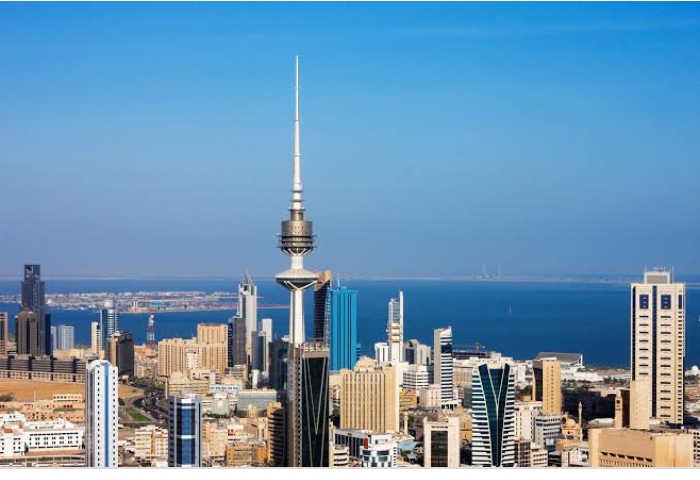
Kuwait, Aug 2: Kuwait has barred entry of foreign passengers from over 30 countries including India and China.

A circular from the Director General Civil Aviation, State of Kuwait directed all airlines operating at Kuwait International Airport to adhere to the instructions in this regard.

"Based on the decision of the Health Authority in State of Kuwait, no foreign passenger coming from the down listed countries will be allowed to enter the State of Kuwait," the circular read.

These include- India, Iran, China, Brazil, Colombia, Armenia, Bangladesh, Philippines, Syria, Spain, Singapore, Bosnia and Herzegovina, Sri Lanka, Nepal, Iraq, Mexico, Indonesia, Chile, Pakistan, Egypt, Lebanon, Hong Kong, Italy, North Macedonia, Moldova, Panama, Beirut ,Serbia Montenegro, Dominican Republic and Kosovo.

The circular stated that such restriction will also include the passengers were present 14 days before the date of travel until further notice.

The ban was announced the same day Kuwait began a partial resumption of commercial flights according to Khaleej Times, which quoted authorities stating that Kuwait International Airport would run at about 30 per cent capacity from Saturday, gradually increasing in coming months.

According to the latest data from Johns Hopkins University, Kuwait has reported 67,448 cases of coronavirus while the fatalities related to the virus stand at 453.

Comments

Add new comment

  • Coastaldigest.com reserves the right to delete or block any comments.
  • Coastaldigset.com is not responsible for its readers’ comments.
  • Comments that are abusive, incendiary or irrelevant are strictly prohibited.
  • Please use a genuine email ID and provide your name to avoid reject.
News Network
July 23,2020

Beirut, Jul 23: The pandemic will exact a heavy toll on Arab countries, causing an economic contraction of 5.7% this year, pushing millions into poverty and compounding the suffering of those affected by armed conflict, a U.N. report said Thursday.

The U.N.'s Economic and Social Commission for Western Asia expects some Arab economies to shrink by up to 13%, amounting to an overall loss for the region of $152 billion.

Another 14.3 million people are expected to be pushed into poverty, raising the total number to 115 million — a quarter of the total Arab population, it said. More than 55 million people in the region relied on humanitarian aid before the COVID-19 crisis, including 26 million who were forcibly displaced.

Arab countries moved quickly to contain the virus in March by imposing stay-at-home orders, restricting travel and banning large gatherings, including religious pilgrimages.

Arab countries as a whole have reported more than 830,000 cases and at least 14,717 deaths. That equates to an infection rate of 1.9 per 1,000 people and 17.6 deaths per 1,000 cases, less than half the global average of 42.6 deaths, according to the U.N.

But the restrictions exacted a heavy economic toll, and authorities have been forced to ease them in recent weeks. That has led to a surge in cases in some countries, including Lebanon, Iraq and the Palestinian territories.

Wealthy Gulf countries were hit by the pandemic at a time of low oil prices, putting added strain on already overstretched budgets. Middle-income countries like Jordan and Egypt have seen tourism vanish overnight and a drop in remittances from citizens working abroad.

War-torn Libya and Syria have thus far reported relatively small outbreaks. But in Yemen, where five years of civil war had already generated the world's worst humanitarian crisis, the virus is running rampant in the government-controlled south while rebels in the north conceal its toll.

Rola Dashti, the head of the U.N. commission, said Arab countries need to “turn this crisis into an opportunity” and address longstanding issues, including weak public institutions, economic inequality and over-reliance on fossil fuels.

“We need to invest in survival, survival of people and survival of businesses,” she said.

Comments

Add new comment

  • Coastaldigest.com reserves the right to delete or block any comments.
  • Coastaldigset.com is not responsible for its readers’ comments.
  • Comments that are abusive, incendiary or irrelevant are strictly prohibited.
  • Please use a genuine email ID and provide your name to avoid reject.
Agencies
July 31,2020

Mount Arafat, July 30: Muslim pilgrims converged Thursday on Saudi Arabia's Mount Arafat for the climax of this year's hajj, the smallest in modern times and a sharp contrast to the massive crowds of previous years.

A tight security cordon has been erected all around the foot of the rocky hill outside Mecca, also known as Jabal al-Rahma or Mount of Mercy.

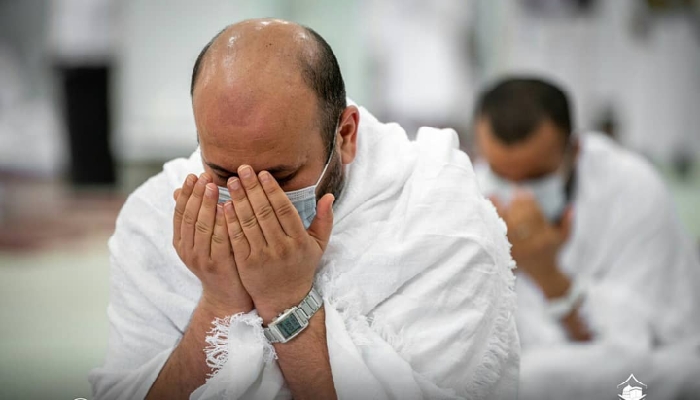
Pilgrims, donning masks and observing social distancing, were brought in buses from neighbouring Mina, state television showed, as Saudi authorities impose measures to prevent a coronavirus outbreak.

They were subject to temperature checks and attended a sermon -- which state media said was translated into 10 languages -- before they set off on the climb to the summit for hours of Koran recitals and prayers to atone for their sins.

The scene was strikingly different to last year's ritual when a sea of pilgrims ascended Mount Arafat, marshalled by tens of thousands of stewards in a bid to prevent any crushes.

After sunset prayers, pilgrims will make their way down Mount Arafat to Muzdalifah, another holy site where they will sleep under the stars to prepare for the final stage of hajj, the symbolic "stoning of the devil".

It takes place on Friday and also marks the beginning of Eid al-Adha, the festival of sacrifice.

The hajj, one of the five pillars of Islam and a must for able-bodied Muslims at least once in their lifetime, is usually one of the world's largest religious gatherings.

But only up to 10,000 people already residing in the kingdom will participate in this year's ritual, compared with 2019's gathering of some 2.5 million from around the world.

"You are not our guests but those of God, the custodian of the two holy mosques (Saudi Arabia's King Salman) and the nation," Hajj Minister Mohammad Benten said in a video released by the media ministry on Wednesday.

Security cordon

A security cordon has been thrown around the holy sites to prevent any security breaches, an interior ministry spokesman said.

Riyadh faced strong criticism in 2015 when some 2,300 worshippers were killed in the deadliest stampede in the gathering's history.

But this year, those risks are greatly reduced by the much smaller crowd.

The pilgrims have all been tested for the virus, and foreign journalists were barred from this year's hajj, usually a huge global media event.

As part of the rites completed over five days in the holy city of Mecca and its surroundings, the pilgrims converged on Mount Arafat after spending the night in Mina.

A district of Mecca, Mina sits in a narrow valley surrounded by rocky mountains, and is transformed each year into a vast encampment for pilgrims.

They began the hajj on Wednesday with their first "tawaf", the circumambulation of the Kaaba, a large structure in Mecca’s Grand Mosque towards which Muslims around the world pray.

The Kaaba is draped in a black cloth embroidered in gold with Koranic verses and known as the kiswa, which is changed each year during the pilgrimage.

Pilgrims were brought inside the mosque in small batches, walking along paths marked on the floor, in sharp contrast to the normal sea of humanity that swirls around the Kaaba during hajj.

Comments

Add new comment

  • Coastaldigest.com reserves the right to delete or block any comments.
  • Coastaldigset.com is not responsible for its readers’ comments.
  • Comments that are abusive, incendiary or irrelevant are strictly prohibited.
  • Please use a genuine email ID and provide your name to avoid reject.