



Haj can be funded by loan, says Saudi scholar

September 15, 2014

Riyadh, Sep 15: Pilgrims can borrow money from the government and banks to perform Haj, said Sheikh Abdullah Al-Mutlaq, a member of the Saudi Council of Senior Scholars.
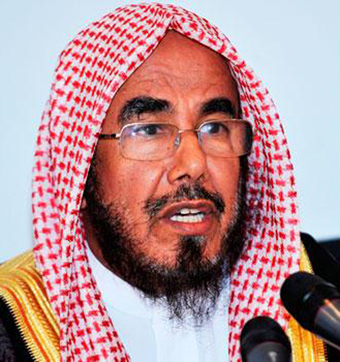
Sheikh-Abdullah-Al-Mutlaq“Debt that will be paid back in monthly installments through salary deductions does not hinder pilgrims from performing Haj,” he said. “Only debt owed to other people must be paid back before embarking on the spiritual journey.”

The Ministry of Haj, meanwhile, made available another 6,000 spots on the low-cost Haj program on Sunday. The ministry introduced a new service that will enable applicants to electronically cancel their reservations via the ministry portal.

Deputy Haj Minister Hussein Al-Sharif urged pilgrims who will no longer be going on Haj to cancel their reservations so that the slots become available for others.

The new deadline for making reservations with the program will be on the first day of Dhul-Hijjah.

Meanwhile, the holy site of Arafat, where more than two million pilgrims stand in prayer at the peak of the annual Haj pilgrimage, will have permanent fireproof tents next year like Mina, said Maj. Gen. Sulaiman Al-Amr, director-general of the Civil Defense Department.

“The fireproof tent project for Arafat will be implemented next year or the year after,” Al-Amr said in comments published on Sunday. He said specialized committees that were set up to conduct a study on the project have recommended its implementation.

The Arafat tents, to be designed like the Haj Terminal of King Abdulaziz International Airport, will have two floors and will accommodate nearly eight million pilgrims. The project is estimated to cost about SR2 billion.

Habeeb Zainul Abideen, undersecretary at the Ministry of Municipal and Rural Affairs, said the project would change the face of Arafat completely. “It will cover an area of eight million square meters,” he said, adding that the double-story tents would increase Arafat’s capacity by 71 percent.

Saud bin Hamdan Al-Dikri, director of projects at the ministry, said the Arafat tents would be fire-resistant with a minimum height of 15 meters. The ground floor of these tents will be for common and pedestrian use as well as for first aid, food, maintenance and cleaning services. “The project will eliminate the risk of fire hazards posed by cotton tents currently in use,” he added.

Some domestic Haj service firms, meanwhile, said they are planning to sign contracts with specialist companies to set up 100-percent heat-resistant German-made tents in Arafat. Some groups have invited bids for the purpose.

Ali Muqallid, manager of a company that supplies European tents, said his company rents high quality fire-resistant to Haj service firms.

He said the Civil Defense has no objections on erecting the tents in Arafat so long as they comply with the safety regulations. Specialized companies set up 400,000 meters of tents for Tawafa organizations and domestic Haj service firms in Arafat during the last Haj season, one source said.

Comments

Add new comment

  • Coastaldigest.com reserves the right to delete or block any comments.
  • Coastaldigset.com is not responsible for its readers’ comments.
  • Comments that are abusive, incendiary or irrelevant are strictly prohibited.
  • Please use a genuine email ID and provide your name to avoid reject.
Agencies
March 23,2020

Riyadh, Mar 23: King Salman on Sunday issued an order imposing a curfew across Saudi Arabia from Monday evening to control the spread of the COVID-19 disease.

A royal court statement carried by the Saudi Press Agency (SPA) said the curfew will start at 7 p.m. until 6 a.m. every day for 21 days from the evening of 28 Rajab 1441 in the Hijri calendar, equivalent to March 23, 2020 in the Gregorian calendar.

King Salman's order followed an announcement by the Health Ministry of 119 new coronavirus cases on Sunday, raising the total number in the Kingdom to 511.

The order enjoins citizens and residents alike to stay in their homes during the curfew hours for their own safety.

The statement said the Ministry of Interior will undertake the necessary measures to implement the curfew, and all civil and military authorities are ordered to cooperate fully.

Exclusions

A subsequent statement issued by the Ministry of Interior and carried by SPA said those excluded from the curfew are workers from the following vital industries and government services:

• Food sector (points of sale) such as catering and supermarkets And poultry and vegetable shops, meat, bakeries, food factories and laboratories;

• Health sector, such as pharmacies and the like, medical clinics (dispensaries), hospitals, laboratories, factories, factories and materials and medical devices;

• Media sector in its various means;

• Transportation sector, such as those transporting goods, parcels, customs clearance, warehouses, warehouses, logistics services, supply chains for the health sector, the food sector, and port operations;

• E-commerce activities such as those working in the electronic procurement applications for the excluded activities and those working in the delivery applications of the excluded activities;

• Accommodation services activities such as hotels and furnished apartments;

• Energy sector such as gas stations and emergency services for the electric company;

• Financial services and insurance sector, such as direct accidents (Najm), urgent health insurance services (approvals), and other insurance services;

• Telecom sector as Internet and communication network operators;

• Water sector, such as the water company emergency services and home drinking water delivery service (graying).

Additional exclusions

The Interior Ministry statement also said movement during the curfew time will be allowed for security, military and health cars, government regulatory services vehicles, and activity vehicles excluded in the vital industries and services mentioned above. 

Delivery services through smart device applications (express delivery services) during the curfew will be allowed for food and drug needs and other essential goods and services that are excluded and delivered to homes. Excluded activities can be known by calling the toll-free number in all regions of the Kingdom 999, except for the Makkah Al-Mukarramah region, which is called at 911.

Muezzins will be allowed to access mosques to lift the call to prayer at the time of the curfew.

Workers in diplomatic missions and international organizations and the like residing in the Diplomatic Quarter will be allowed to move during the curfew period to and from their business headquarters in the neighborhood.

Comments

Add new comment

  • Coastaldigest.com reserves the right to delete or block any comments.
  • Coastaldigset.com is not responsible for its readers’ comments.
  • Comments that are abusive, incendiary or irrelevant are strictly prohibited.
  • Please use a genuine email ID and provide your name to avoid reject.
Arab News
March 21,2020

Jeddah, Mar 21: Saudi government ministers on Friday announced a war chest of more than SR120 billion ($32 billion) to fight the “unprecedented” health and economic challenges facing the country as a result of the killer coronavirus pandemic.

During a press conference in Riyadh, finance minister and acting minister of economy and planning, Mohammed Al-Jadaan, unveiled a SR70 billion stimulus package to support the private sector, especially small- and medium-sized enterprises (SMEs) and businesses worst-hit by the virus outbreak.

And the Saudi Arabian Monetary Authority (SAMA) has also sidelined SR50 billion to help the Kingdom’s banking sector, financial institutions and SMEs.

Al-Jadaan said the government had introduced tough measures to protect the country’s citizens while immediately putting in place a financial safety net. He added that the Kingdom was moving decisively to address the global COVID-19 disease crisis and cushion the financial and economic impact of the outbreak on the country.

The SR70 billion package of initiatives revealed by the minister will include exemptions and postponement of some government dues to help provide liquidity for private-sector companies.

Minister of Health Dr. Tawfig Al-Rabiah noted the raft of precautionary measures that had been introduced by the Kingdom in cooperation with the private sector and government agencies to combat the spread of the coronavirus, highlighting the important contribution of the data communication services sector.

He reassured the Saudi public that the Kingdom would continue to do whatever was required to tackle the crisis.

“This pandemic has a lot of challenges. It’s difficult to make presumptions at this moment as we’ve seen; many developed countries did not expect the rate of transmission of this virus.

“We see that the reality of the situation is different from what many expected. The virus is still being studied and though we know the means of transmission, it is transmitted at a very fast rate, having spread to many countries faster than expected.

“We see that many countries have not taken the strong precautionary measures from the beginning of the crisis which led to the vast spread of the virus in these countries,” Al-Rabiah said.

He pointed out that social distancing would help slow the spread.

Al-Jadaan said the Saudi government had the financial and economic capacity to deal with the situation. “We have large reserves and large investments, but we do not want to withdraw from the reserves more than what was already announced in the budget. We do not want to liquidate any of the government’s investments so we will borrow.

“We have approval from the government after the finance committee raised its recommendations to increase the proportion of the domestic product borrowing from 30 percent to 50 percent. We do not expect to exceed 50 percent from now until the end of 2022,” he added.

The government would use all the tools available to it to finance the private sector, especially SMEs, and ensure its ongoing stability.

The finance minister said that at this stage it was difficult to predict the economic impact of the pandemic on the private sector, but he emphasized that international coordination, most notably through G20 countries and health organizations, was ongoing.

On recorded cases of the COVID-19 disease in the Kingdom, Al-Rabiah said: “Many of the confirmed cases are without symptoms, this is due to the precautionary measures being considered.

“As soon as a case is confirmed, we contact and examine anyone who was in direct contact with the patient. This epidemiological investigation, is conducted on a large scale to investigate any case that was in contact with the patient.”

Al-Jadaan also announced the formation of a committee made up of the ministers of finance, economy and planning, commerce, and industry and mineral resources, along with the vice chairman of the board of the Saudi National Development Fund, and its governor.

The committee will be responsible for identifying and reviewing incentives, facilities, and other initiatives led by the fund.

Committees had also been established, said Al-Jadaan, to study the impact and repercussions of the coronavirus crisis on all sectors and regions, and look at ways of overcoming them through subsidies or stimulus packages.

Comments

Add new comment

  • Coastaldigest.com reserves the right to delete or block any comments.
  • Coastaldigset.com is not responsible for its readers’ comments.
  • Comments that are abusive, incendiary or irrelevant are strictly prohibited.
  • Please use a genuine email ID and provide your name to avoid reject.
News Network
May 4,2020

Dubai, May 4: An Indian salesman in the UAE has won a whopping 10 million dirhams at an Abu Dhabi draw, a media report said.

Dileep Kumar Ellikkottil Parameswaran, from Kerala’s Thrissur, works with an auto spare parts company in Ajman and earns 5,000 dirhams (USD 1,361) a month, Gulf News reported on Sunday.

Parameswaran, who won the 10 million dirhams (USD 2.7 million) prize at the Big Ticket draw in Abu Dhabi, will spend a big part of the money to repay a loan of 700,000 dirhams (USD 190,574 ), according to the report.

He said that a good part of the prize money will be spent on the education of his two children.

Parameswaran, who has been a resident of the UAE for 17 years, lives in Ajman along with his family.

Big Ticket is the largest and longest-running monthly raffle draw for cash prizes and dream luxury cars in Abu Dhabi.

A live monthly draw is organized at the Abu Dhabi International Airport on 3rd of each month.

Tickets are sold for 500 dirhams (USD 136).

Comments

Add new comment

  • Coastaldigest.com reserves the right to delete or block any comments.
  • Coastaldigset.com is not responsible for its readers’ comments.
  • Comments that are abusive, incendiary or irrelevant are strictly prohibited.
  • Please use a genuine email ID and provide your name to avoid reject.