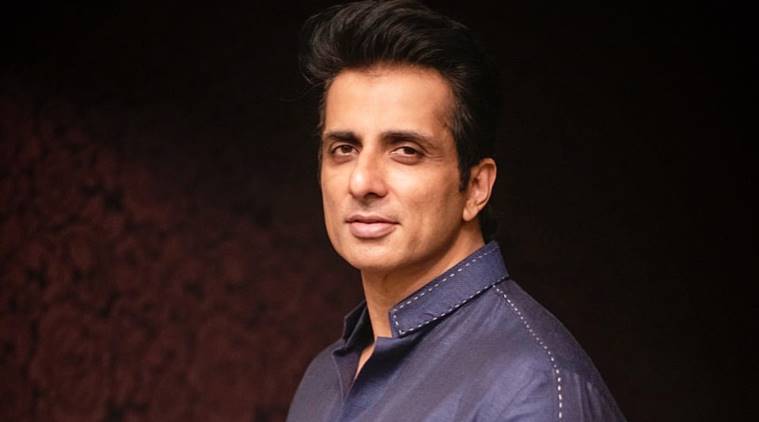
Hardik Patel wants fans to look at Sunny Leone in same light as Sridevi, Madhuri Dixit

Agencies
June 11, 2018

Indore, Jun 11: Sunny Leone has found a supporter in Patidar quota leader Hardik Patel who today said she deserved respect, irrespective of her past, like any other Bollywoodactress.

"Why can't we view Sunny Leone as an actress on screen independent of her old image? What's the problem if we look at her the way we look at actresses Nargis, Sridevi, or Madhuri Dixit. If our thinking is such that we still want to see Sunny Leone on the basis of her old image (as a porn star), then this country can never change," Patel said while responding to a query on his views on the actress during a press conference here.

Patel had reportedly spoken in favour of the actress in the past as well.

He was in the city to announce a 'yatra' he would be embarking on next month across Madhya Pradesh to create "awareness" among voters.

The quota leader said Leone deserves respect as a film actress.

Responding to a query, Patel said the BJP was "greedy" for power.

He expressed apprehension that no elections would be held in the country after 2019 if Narendra Modi becomes Prime Minister again.

When asked about the basis of his apprehension, Patel said, "The way the BJP leader B S Yeddyurappa was given the opportunity by Karnataka governor to form government despite lacking numbers, it appears that preparations are on to discard the Constitution in the country."

Comments

Kumar
 - 
Monday, 11 Jun 2018

I was watching and enjoying with no difference. She is HARD WORKING. 

Add new comment

  • Coastaldigest.com reserves the right to delete or block any comments.
  • Coastaldigset.com is not responsible for its readers’ comments.
  • Comments that are abusive, incendiary or irrelevant are strictly prohibited.
  • Please use a genuine email ID and provide your name to avoid reject.
News Network
January 13,2020

Jan 13: For the first time in years, the government of India’s Prime Minister Narendra Modi is playing defense. Protests have sprung up across the country against an amendment to India’s laws — which came into effect on Friday — that makes it easier for members of some religions to become citizens of India. The government claims this is simply an attempt to protect religious minorities in the Muslim-majority countries that border India; but protesters see it as the first step toward a formal repudiation of India’s constitutionally guaranteed secularism — and one that must be resisted.

Modi was re-elected prime minister last year with an enhanced majority; his hold over the country’s politics is absolute. The formal opposition is weak, discredited and disorganized. Yet, somehow, the anti-Citizenship Act protests have taken hold. No political party is behind them; they are generally arranged by student unions, neighborhood associations and the like.

Yet this aspect of their character is precisely what will worry Modi and his right-hand man, Home Minister Amit Shah. They know how to mock and delegitimize opposition parties with ruthless efficiency. Yet creating a narrative that paints large, flag-waving crowds as traitors is not quite that easy.

For that is how these protests look: large groups of young people, many carrying witty signs and the national flag. They meet and read the preamble to India’s Constitution, into which the promise of secularism was written in the 1970’s.

They carry photographs of the Constitution’s drafter, the Columbia University-trained economist and lawyer B. R. Ambedkar. These are not the mobs the government wanted. They hoped for angry Muslims rampaging through the streets of India’s cities, whom they could point to and say: “See? We must protect you from them.” But, in spite of sometimes brutal repression, the protests have largely been nonviolent.

One, in Shaheen Bagh in a Muslim-dominated sector of New Delhi, began simply as a set of local women in a square, armed with hot tea and blankets against the chill Delhi winter. It has now become the focal point of a very different sort of resistance than what the government expected. Nothing could cure the delusions of India’s Hindu middle class, trained to see India’s Muslims as dangerous threats, as effectively as a group of otherwise clearly apolitical women sipping sweet tea and sharing their fears and food with anyone who will listen.

Modi was re-elected less than a year ago; what could have changed in India since then? Not much, I suspect, in most places that voted for him and his party — particularly the vast rural hinterland of northern India. But urban India was also possibly never quite as content as electoral results suggested. India’s growth dipped below 5% in recent quarters; demand has crashed, and uncertainty about the future is widespread. Worse, the government’s response to the protests was clearly ill-judged. University campuses were attacked, in one case by the police and later by masked men almost certainly connected to the ruling party.

Protesters were harassed and detained with little cause. The courts seemed uninterested. And, slowly, anger began to grow on social media — not just on Twitter, but also on Instagram, previously the preserve of pretty bowls of salad. Instagram is the one social medium over which Modi’s party does not have a stranglehold; and it is where these protests, with their photogenic signs and flags, have found a natural home. As a result, people across urban India who would never previously have gone to a demonstration or a political rally have been slowly politicized.

India is, in fact, becoming more like a normal democracy. “Normal,” that is, for the 2020’s. Liberal democracies across the world are politically divided, often between more liberal urban centers and coasts, and angrier, “left-behind” hinterlands. Modi’s political secret was that he was that rare populist who could unite both the hopeful cities and the resentful countryside. Yet this once magic formula seems to have become ineffective. Five of India’s six largest cities are not ruled by Modi’s Bharatiya Janata Party in any case — the financial hub of Mumbai changed hands recently. The BJP has set its sights on winning state elections in Delhi in a few weeks. Which way the capital’s voters will go is uncertain. But that itself is revealing — last year, Modi swept all seven parliamentary seats in Delhi.

In the end, the Citizenship Amendment Act is now law, the BJP might manage to win Delhi, and the protests might die down as the days get unmanageably hot and state repression increases. But urban India has put Modi on notice. His days of being India’s unifier are over: From now on, like all the other populists, he will have to keep one eye on the streets of his country’s cities.


Comments

Add new comment

  • Coastaldigest.com reserves the right to delete or block any comments.
  • Coastaldigset.com is not responsible for its readers’ comments.
  • Comments that are abusive, incendiary or irrelevant are strictly prohibited.
  • Please use a genuine email ID and provide your name to avoid reject.
Agencies
March 1,2020

Washington, Mar 1: Beginning April 1, Indians wishing to immigrate to America will now have to pay an additional $50,000 for the EB-5 or the US investor visa, a media report said.

Although, this additional tax would impact all visa categories, it will predominantly create a barrier for people investing in the EB-5 visa programme, the American Bazaar daily said in the report on Friday.

In 2019, the EB-5 investor visa programme, for the first time since the 1990's, increased the minimum investment amount to $900,000.

With this increase in minimum investment, the new 5 per cent additional tax would mean that applicants would have to pay the extra $50,000, when they move money to an escrow account in the US to fulfil their application criterion.

"The changes to the tax on remittances is a reminder to Indians to carefully plan their tax position before making the move to the US," the American Bazaar quoted Mark Davies, Global Chairman, Davies & Associates LLC, as saying.

"People seeking to emigrate who do not wish to pay this tax at source and rather account for it later may wish to move their money ahead of the new rules coming into effect.

"It is possible to pre-emptively move money into an escrow account in the US until such a time as they are ready to proceed with emigration process," he added.

Comments

Add new comment

  • Coastaldigest.com reserves the right to delete or block any comments.
  • Coastaldigset.com is not responsible for its readers’ comments.
  • Comments that are abusive, incendiary or irrelevant are strictly prohibited.
  • Please use a genuine email ID and provide your name to avoid reject.
Agencies
July 30,2020

New Delhi, Jul 30: On his 47th birthday on Thursday, actor Sonu Sood announced three lakh jobs for migrant labourers on the job portal 'Pravasi Rojgar' that he had launched earlier this month.

The 'Dabangg' actor who has launched several initiatives for helping migrant labourers of the country made the announcement about the additional three lakh jobs on his Instagram account.

Sood posted two flyers of the employment application and shared that the jobs came with additional benefits like PF and ESI.

"On my birthday a small initiative from my side...3 lakh jobs tied up for Pravasirojgar.com. All these will provide good wages, PF, ESI, and other benefits," he wrote in the caption.

He further went on to thank the organisations that had partnered with him for the initiative.
"Thank you AEPC, CITI, Trident, Quesscorp, Amazon, Sodex, Urban Co, Portea, and all others for creating these opportunities with me. #AbIndiaBanegaKamyaab @pravasirojgar," he wrote.

Hailed as the 'messiah' of migrant labourers, Sood has helped hundreds of thousands of migrants to reach their native places amid the coronavirus induced lockdown when many like them were walking back to their homes.

Besides labourers, he has also helped students and other people stranded in different parts of the country amid the lockdown. 

Comments

Add new comment

  • Coastaldigest.com reserves the right to delete or block any comments.
  • Coastaldigset.com is not responsible for its readers’ comments.
  • Comments that are abusive, incendiary or irrelevant are strictly prohibited.
  • Please use a genuine email ID and provide your name to avoid reject.