Hardik Patel wants fans to look at Sunny Leone in same light as Sridevi, Madhuri Dixit

Agencies
June 11, 2018

Indore, Jun 11: Sunny Leone has found a supporter in Patidar quota leader Hardik Patel who today said she deserved respect, irrespective of her past, like any other Bollywoodactress.

"Why can't we view Sunny Leone as an actress on screen independent of her old image? What's the problem if we look at her the way we look at actresses Nargis, Sridevi, or Madhuri Dixit. If our thinking is such that we still want to see Sunny Leone on the basis of her old image (as a porn star), then this country can never change," Patel said while responding to a query on his views on the actress during a press conference here.

Patel had reportedly spoken in favour of the actress in the past as well.

He was in the city to announce a 'yatra' he would be embarking on next month across Madhya Pradesh to create "awareness" among voters.

The quota leader said Leone deserves respect as a film actress.

Responding to a query, Patel said the BJP was "greedy" for power.

He expressed apprehension that no elections would be held in the country after 2019 if Narendra Modi becomes Prime Minister again.

When asked about the basis of his apprehension, Patel said, "The way the BJP leader B S Yeddyurappa was given the opportunity by Karnataka governor to form government despite lacking numbers, it appears that preparations are on to discard the Constitution in the country."

Comments

Kumar
 - 
Monday, 11 Jun 2018

I was watching and enjoying with no difference. She is HARD WORKING. 

Add new comment

  • Coastaldigest.com reserves the right to delete or block any comments.
  • Coastaldigset.com is not responsible for its readers’ comments.
  • Comments that are abusive, incendiary or irrelevant are strictly prohibited.
  • Please use a genuine email ID and provide your name to avoid reject.
News Network
May 7,2020

United Nations, May 7: An average of 80,000 COVID-19 cases were reported each day in April to the World Health Organization, the top UN health agency has said, noting that South Asian nations like India and Bangladesh are seeing a spike in the infections while the numbers are declining in regions such as Western Europe.

WHO Director-General Tedros Adhanom Ghebreyesus said on Wednesday that countries must also be able to manage any risk of the disease being imported into their territories, and communities should be fully educated to adjust to what will be a "new norm".

He said as the countries press forward in the common fight against COVID-19, they should also lay the groundwork for resilient health systems globally.

"More than 3.5 million cases of COVID-19 and almost 250,000 deaths have now been reported to the WHO. Since the beginning of April, an average of around 80,000 new cases have been reported to the WHO every day," Ghebreyesus said in Geneva yesterday.

Asserting that the virus cases were not just numbers, he said: "every single case is a mother, a father, a son, a daughter, a brother, sister or friend".

He said while the numbers are declining in Western Europe, more cases are being reported every day from Eastern Europe, Africa, South-East Asia, the Eastern Mediterranean and the Americas. Even within regions and within countries, there are divergent trends, the agency added.

While some countries are reporting an increase in COVID-19 cases over time, many have seen caseloads rise because they have ramped up testing, the WHO official said.

"We've also seen in Europe and Western Europe a fundamental decrease in the number of cases, but we have seen an associated increase in the number of cases reported in places like the Russian Federation. Southeast, the Western Pacific areas are relatively on the downward trend like Korea and others, but then we do see in South Asia, in places like Bangladesh, in India, some trends towards increase.

"So it's very difficult to say that any particular region is improving or (not improving). There are individual countries within each region that are having difficulties getting on top of this disease and I am particularly concerned about those countries that have (an) ongoing humanitarian crisis," WHO's Executive Director Michael Ryan said.

The death toll due to COVID-19 in India rose to 1,783 while the number of cases climbed to 52,952 on Thursday, registering an increase of 89 deaths and 3,561 cases in the last 24 hours, the Union Health Ministry said.

The number of active COVID-19 cases stood at 35,902 while 15,266 people have recovered, it said.

Noting that while seeing an increase in the number of cases is not good in terms of transmission, WHO's Emerging Diseases and Zoonoses Unit head Maria Van Kerkhove said: "but I don't want to equate that with something (being) wrong".

"I want to equate that with countries are working very hard to increase their ability to find the virus, to find people with the virus, to have testing in place to identify who has COVID-19, and putting into place what they need to do to care for those patients," Kerkhove said.

With more countries considering easing restrictions implemented to curb the spread of the coronavirus, the WHO has again reminded the authorities of the need to maintain vigilance.

"The risk of returning to lockdown remains very real if countries do not manage the transition extremely carefully, and in a phased approach," Ghebreyesus said.

He urged countries to consider the UN agency's six criteria for lifting stay-at-home measures.

That advice includes ensuring surveillance is strong, cases are declining and transmission is controlled. Health systems also must be able to detect, isolate, test and treat cases, and to trace all contacts.

Additionally, the risk of outbreak in settings such as health facilities and nursing homes needs to be minimised, while schools, workplaces and other public locations should have preventive measures in place.

"The COVID-19 pandemic will eventually recede, but there can be no going back to business as usual. We cannot continue to rush to fund panic but let preparedness go by the wayside," he said.

He said the crisis has highlighted the importance of strong national health systems as the foundation of global health security: not only against pandemics but also against the multitude of health threats that people across the world face every day.

"If we learn anything from COVID-19, it must be that investing in health now will save lives later," Ghebreyesus said.

While the world currently spends around USD 7.5 trillion on health annually, the WHO believes the best investments are in promoting health and preventing disease.

"Prevention is not only better than cure, it's cheaper, and the smartest thing to do," he said.

The deadly coronavirus, which originated from the Chinese city of Wuhan in December last year, has infected over 3.7 million people and killed 263,831 people globally, according to a tally by Johns Hopkins University.


Comments

Add new comment

  • Coastaldigest.com reserves the right to delete or block any comments.
  • Coastaldigset.com is not responsible for its readers’ comments.
  • Comments that are abusive, incendiary or irrelevant are strictly prohibited.
  • Please use a genuine email ID and provide your name to avoid reject.
Agencies
July 29,2020

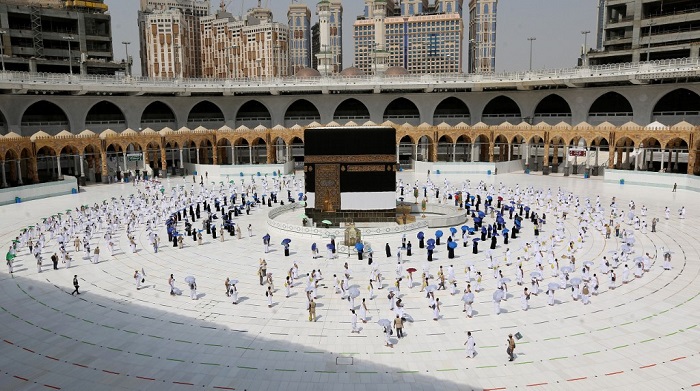
Dubai, Jul 29: Muslim pilgrims on Wednesday begin the annual Haj, downsized this year as the Saudi hosts strive to prevent a coronavirus outbreak during the five-day pilgrimage.

The Haj, one of the five pillars of Islam and a must for able-bodied Muslims at least once in their lifetime, is usually one of the world's largest religious gatherings.

But this year only up to 10,000 people already residing in the Kingdom will participate in the ritual, a tiny fraction of the 2.5 million pilgrims from around the world that attended last year.

"There are no security-related concerns in this pilgrimage, but (downsizing) is to protect pilgrims from the danger of the pandemic," said Khalid bin Qarar Al Harbi, Saudi Arabia's director of public security.

Pilgrims will be required to wear masks and observe social distancing during a series of religious rites that are completed over five days in the holy city of Makkah and its surroundings in western Saudi Arabia.

Those selected to take part in the Haj were subject to temperature checks and placed in quarantine as they began trickling into Makkah at the weekend.

State media showed health workers sanitising their luggage, and some pilgrims reported being given electronic wristbands to allow authorities to monitor their whereabouts.

Workers, clutching brooms and disinfectant, were seen cleaning the area around the Kaaba, the structure at the centre of the Grand Mosque draped in gold-embroidered cloth towards which Muslims around the world pray.

Haj authorities have cordoned off the Holy Kaaba this year, saying pilgrims will not be allowed to touch it, to limit the chances of infection.

They also reported setting up multiple health facilities, mobile clinics and ambulances to cater to the pilgrims.

Saudi authorities said only around 1,000 pilgrims residing in the Kingdom would be permitted for the Haj. Some 70 per cent of the pilgrims are foreigners residing in the Kingdom, while the rest will be Saudi citizens, authorities said.

All worshippers were required to be tested for coronavirus before arriving in the holy city of Makkah and will also have to quarantine after the pilgrimage as the number of cases in the Kingdom nears 270,000.

They were given elaborate amenity kits that include sterilised pebbles for a stoning ritual, disinfectants, masks, a prayer rug and the Ihram, a seamless white garment worn by pilgrims, according to a Haj ministry programme document.

"I did not expect, among millions of Muslims, to be blessed with approval," Emirati pilgrim Abdullah Al Kathiri said in a video released by the Saudi media ministry.

"It is an indescribable feeling... especially since it is my first pilgrimage."

The Haj ministry said non-Saudi residents of the Kingdom from around 160 countries competed in the online selection process but it did not say how many people applied.

Despite the pandemic, many pilgrims consider it safer to participate in this year's ritual without the usual colossal crowds cramming into tiny religious sites, which make it a logistical nightmare and a health hazard.

Comments

Add new comment

  • Coastaldigest.com reserves the right to delete or block any comments.
  • Coastaldigset.com is not responsible for its readers’ comments.
  • Comments that are abusive, incendiary or irrelevant are strictly prohibited.
  • Please use a genuine email ID and provide your name to avoid reject.
News Network
June 3,2020

New Delhi, Jun 3: Over 1 lakh scanned copies of Indians' national IDs, including Aadhaar, PAN card and passport, have been put on dark web for sale, cyber intelligence firm Cyble said on Wednesday.

The leaked data seems to have originated from a third party and not from the government system, according to a report by Cyble.

"We came across a non-reputed actor who is currently selling over 1 lakh Indian National IDs on the dark net. With such a low reputation, ideally, we would have skipped this; however, the samples shared by the actor intrigued our interest -- and also the volume. The actor is alleged to have access to over 1 lakh IDs from different places in India," Cyble said.

The personal data leaked by cyber criminals leads to various nefarious activities such as identity thefts, scams, and corporate espionage. Many criminals use the personal details in the IDs to win trust of the people over a phone call for fraudulent activities.

Cyber criminals leak personal data of 2.9 cr job-seeking Indians on dark web for free

The Cyble researchers acquired around 1,000 IDs from the seller and confirmed that the scanned IDs belong to Indians.

"Preliminary analysis suggests that the data originated from a third party, and no indication or artefact is indicating that it came from a government system. At this point, Cyble researchers are still investigating this further -- we are hoping to share an update soon," Cyble said.

The scanned ID documents indicate that the data may have been leaked from a company's data base in the segment where they have to comply with 'Know Your Customer' (KYC) norms.

"Cyble researchers have also learned about a surge in KYC and banking scams -- leaks such as this are often used by scammers to target individuals, especially elderlies," Cyble said.

The cyber intelligence firm has recommended people to refrain from sharing personal information especially financial information over phone, e-mail or SMS.

"Regularly monitor your financial transaction, if you notice any suspicious transaction, contact your bank immediately," the company said.

In May, Cyble showed two instances where personal data of 7.65 crore Indians have been put on sale in the dark web. In one instance, the seller claimed to have sourced data of 4.75 crore Indians from online directory Truecaller and in other, the seller claimed to have sourced from job websites.

Truecaller, however, had denied the claim of breach in its database.

Comments

Add new comment

  • Coastaldigest.com reserves the right to delete or block any comments.
  • Coastaldigset.com is not responsible for its readers’ comments.
  • Comments that are abusive, incendiary or irrelevant are strictly prohibited.
  • Please use a genuine email ID and provide your name to avoid reject.