Harish Poojary murder: Another Bajrang Dal activist nabbed from Gujarat

[email protected] (CD Network)
January 20, 2016

Mangaluru, Jan 20: A local youth, said to be a Bajrang Dal activist, wanted in the murder case of Harish Poojary has been arrested by the Dakshina Kannada district police in Gujarat.

terrorRaviraj, one of the four accused involved in the killing of Harish Poojary on November 12, 2015 in Bantwal taluk, had left the coastal district after police came to known the fact that the murder was committed by Bajrang Dal activists.

On November 19, the police had managed to arrest Bajrang Dal leader and rowdy-sheeter Bhuvith Shetty (25) and his associate Achyuta (28), near Mani village in Bantwal taluk. On November 30 the cops had arrested another accused Mithun Poojary (27) of Goltamajalu, near Bantwal.

However, the police had failed to trace Raviraj, the fourth accused, who was living in his uncle Ramsh at Vastrapur in Ahmedabad district of Gujarat. On January 18 a team of Police from Bantwal rural police station visited Ahmedabad and arrested him.

Circle inspector Belliyappa, under the guidance of SP Sharanappa and ASP Rahul Kumar, led the team of police comprising Sub Inspector Rakshat, ASI Ramesh and constables Jagadish and Raja to nab the culprit.

It could be recalled here that Harish Poojary and his friend Sameeullah were attacked by the miscreants with lethal weapons at Manihalli in Bantwal taluk hours after Sangh Parivar activists tried to disrupt peace by pelting stones at SDPI protesters in BC Road. Harish died soon after the attack and Sameeullah is still recuperating at a hospital.

A day after killing Harish Poojary, the district unit of Bajrang Dal had imposed bandh alleging that he was killed by Muslim groups.

Also Read: Bajrang Dal rowdy Bhuvith Shetty among two held for murder of Harish Poojary

Comments

Brothers
 - 
Wednesday, 20 Jan 2016

Dear RAhul
its an old trick taught to you by cheddis... it is outdated now.. YOU guys are creating and blaming others ... please stop this and fear the one who gave u life.. Dont lie too much.

Brothers
 - 
Wednesday, 20 Jan 2016

Dear Mohammed N
We Muslims never blame the innocent unless it is proven... check history... We dont blame hindus but we blame cheddis the real culprit in bringing unrest in the society.

mohammad.n
 - 
Wednesday, 20 Jan 2016

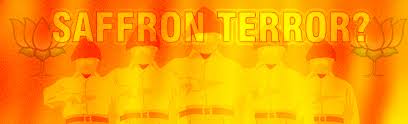
Now am wondering how do the hindus feel when they see some of their people doing crime and whole the community is blamed and called as saffron terrorism. Same as happening when few muslims do some crime and whole community is blamed for it.

Matter of time..

Hyda
 - 
Wednesday, 20 Jan 2016

Some places are safest for terrorists,
ISIS- Syria
RSS- Gujarat
LeT- Pakistan
Mao- Nepal
Bodo- Assam
Taleban- Kandahar
VHP- Kalladka
Bajranga Dal- Pumpwell
Rama Sene- Belgaum
Sanathan Samsthe- Nagpur.

Nishaan
 - 
Wednesday, 20 Jan 2016

Gujarat is the safest heaven on earth for Saffron terrorist.

HONEST
 - 
Wednesday, 20 Jan 2016

All the criminals might be hiding in their safe den in Gujarat... All bajrangis - your own Cheddi leaders will trap U into the hands of authority when their Plans get EXPOSED... So stop acting to the tunes of cheddis... and support people like dalits and others who fight the OPPRESSORS. Dont fall trap to sharan pumpwell who is deceiving many hindus INTO SUCH EVIL TRAPS...
Think and ACT

Shaan
 - 
Wednesday, 20 Jan 2016

What about Prashanth Poojary murderer? Which Terror group?

Sameer
 - 
Wednesday, 20 Jan 2016

Good Job Mangalore Police.. IF you are going on same speed arresting the true culprit then mangalore will be clean city soon.. Put them behind bars without bail!!

Add new comment

  • Coastaldigest.com reserves the right to delete or block any comments.
  • Coastaldigset.com is not responsible for its readers’ comments.
  • Comments that are abusive, incendiary or irrelevant are strictly prohibited.
  • Please use a genuine email ID and provide your name to avoid reject.
News Network
February 12,2020

Mumbai, Feb 12: The Income Tax department's Criminal Investigation wing has identified 2,000 Indian citizens who hold properties in Dubai but had failed to declare it in their IT returns.

In its ongoing crackdown on black money, the agency has identified Indian citizens who purchased properties in Dubai but failed to declare and explain the source of funds used to purchase these properties.

In the past few years, people have used shell companies to route illegal money and buy overseas properties to evade income tax.

However, the tax department has now increased its efforts to track down those involved in major tax evasion cases.

The 2,000 persons and companies identified mainly include businessmen, top professionals, and government officials.

The IT department will initiate action against the accused under the Black Money Act.

Citizens who own properties outside the country but fail to declare the source of funds or income used for the purchase could be prosecuted under the Black Money Act.

Under Section FA (Foreign Assets) of the Income Tax Act, an individual has to declare purchase and ownership of properties, assets, companies owned outside the country while filing the income tax returns annually.

In the recent drive against black money, the IT department identified 2,000 Indian nationals who failed to provide information on the same while filing IT returns.

Of the 2,000 citizens owning properties in Dubai, around 600 could not furnish details regarding purchase details.

Those who haven't been able to explain the source of funds used for the purchase of properties could be prosecuted and their properties can be attached by the agency.

Other than the attachment of the property, they can face a monetary penalty up to 300 per cent of the property value and also face imprisonment under the Black Money Act.

The properties owned by Indians in Dubai raised red flags as this pattern of parking money is used by money launderers, smugglers, underworld gangsters and drug traffickers for making payments.

It is worth mentioning that of the 2,000 citizens identified, most are residing in Mumbai, followed by Kerala and Gujarat.

The clause under section FA (foreign Assets) came into effect in the year 2011-12 and it is mandatory for people owning properties outside India to declare it in their IT returns.

Those identified by IT department could also face action under FEMA (Foreign Exchange Management Act) by the Enforcement Directorate under Section 4.

Recently the Enforcement Directorate (ED) launched a crackdown on black money parked overseas by tracking and identifying immovable assets bought overseas by Indian nationals illegally.

The move is being carried out under rules laid down under Section 4 of FEMA (Foregn Exchange Manipulation Act), 1999. Section 4 of FEMA states that no person resident in India shall acquire, hold, own, possess or transfer any foreign exchange, foreign security or any immovable property situated outside India.

On January 17, the Enforcement Directorate (ED) conducted searches at the residence of a former chief engineer of Brihanmumbai Municipal Corporation (BMC) in connection with an inquiry related to FEMA.

In the raids, the ED officials recovered documents related to the purchase of a property in Dubai in an allegedly illegal manner.

The ex-BMC chief engineer was posted with some of the most crucial wings of the municipal corporation -- the building proposal department and development plan department.

The agency did not disclose the name of the ex-BMC chief engineer but it has been learnt that he had superannuated around seven years ago from the municipal corporation.

ED, in a statement, said incriminating documents with regard to illegal acquisition of a property held in Dubai was recovered during the search operation.

The former BMC chief engineer has stated that he had purchased the property in Dubai at 'Park Island, Bonaire Marsa, Dubai' for Rs 70 lakh in 2012. The property is held jointly in his name, his spouse and son.

The retired BMC officials could not furnish any documents which would help ascertain the value of the property and also could not provide details on how the payments were made to buy the property in Dubai.

The citizens identified by the IT department recently also adopted a similar route to buy property in Delhi. It remains to be seen how the income tax department plans to penalise them.


Comments

Add new comment

  • Coastaldigest.com reserves the right to delete or block any comments.
  • Coastaldigset.com is not responsible for its readers’ comments.
  • Comments that are abusive, incendiary or irrelevant are strictly prohibited.
  • Please use a genuine email ID and provide your name to avoid reject.
News Network
April 29,2020

New Delhi, Apr 29: WhatsApp on Tuesday said it will now allow up to eight people to connect on a group video call as an increasing number of people turn to digital platforms to connect with friends and family amid the COVID-19 pandemic.

The Facebook-owned company said over the last month, people on average are spending over 15 billion minutes talking each day on WhatsApp calls, well above a typical day before the pandemic.

"...we see that people all over the world are turning to voice and video calling on WhatsApp more than ever before. Group calling has been particularly useful and our users have asked to connect with more people at once," WhatsApp said in a blogpost.

Starting Tuesday, the company is doubling the number of participants one can have on a WhatsApp video or voice call from 4 to 8 people at a time, it added.

WhatsApp emphasised that like written messages, all calls on its platform are protected with end-to-end encryption.

"We have built group calling in a way that makes it available for as many users as possible, including people on lower-end devices and slow network conditions," it added.

Also Read: Coronavirus India update: State-wise total number of confirmed cases, deaths

WhatsApp said that to access the new, higher participant limit on WhatsApp calls, all participants in a call need to update to the latest version of WhatsApp available on iPhone or Android.

Video calling tools like Google Meet, Microsoft Teams, Zoom and others have also seen a significant jump in userbase and traffic as people connect while maintaining social distancing amid the coronavirus outbreak.

Last week, Facebook had introduced Messenger Rooms that will soon hold up to 50 people with no time limit.

It had added that the company will also add ways to create rooms from Instagram Direct, WhatsApp and Portal.

Noting that between WhatsApp and Messenger, more than 700 million accounts participate in calls every day, Facebook had said, adding that video calling on Messenger and WhatsApp more than doubled in many countries.

Also, views of Facebook Live and Instagram Live videos have also increased significantly in March, it said.

Comments

Add new comment

  • Coastaldigest.com reserves the right to delete or block any comments.
  • Coastaldigset.com is not responsible for its readers’ comments.
  • Comments that are abusive, incendiary or irrelevant are strictly prohibited.
  • Please use a genuine email ID and provide your name to avoid reject.
News Network
January 29,2020

Newsroom, Jan 29: Karnataka’s capital has earned the unwelcome distinction of global capital of traffic congestion. According to a report by TomTom, the Netherlands-based global provider of navigation, traffic and map products, Bengaluru beat 415 other cities across 57 countries to earn the title of world's most traffic congested city in 2019.

“Bengaluru takes the top spot this year with drivers in the southern Indian city expecting to spend an average of 71% extra travel time stuck in traffic," TomTom said in the ninth edition of its annual Traffic Index.

Three other Indian cities, namely, Mumbai, Pune and New Delhi are also ranked in the 2019 edition of TomTom’s Traffic Index of the world’s most traffic-congested cities. 

The report released on Tuesday ranks cities by the average time added to a trip. TomTom index also includes details on when congestion is heaviest and lightest, how highways compare with surface streets, and how much time drivers wasted waiting for other drivers to get out of their way.

Following closely on the heels of Bengaluru is Manila, Philippines, with the similar 71% traffic congestion. Among the top five worst traffic affected cities are Mumbai and Pune from India at the fourth and fifth place respectively, while Bogota, Colombia is on third spot.

Delhi, the national capital of India is on the 8th spot, while Moscow (Russia), Lima (Peru), Istanbul (Turkey) and Jakarta (Indonesia) are on 6th, 7th, 9th and 10th spot respectively.

Mumbai recorded a 65% traffic congestion with 9th September, 2019 being the worst day. On an average, a Mumbaikar lost 209 hours in traffic congestion. Pune has 59% traffic congestion with 2nd August, 2019 being the worst day. 193 hours are lost due to congestion. Delhi, on the other hand, has 56% traffic congestion. 23rd October, 2019 was the worst day, while 190 hours are lost in traffic congestion.

Interestingly, among all the four Indian cities, Delhi has the most number of cars. Previous studies have concluded that Delhi has the best road conditions among the Metro cities of India.

If you are wondering what exactly the percentages mean, a 53% congestion level in Bangkok, for example, means that a trip will take 53% more time than it would during Bangkok’s baseline uncongested conditions.

TomTom calculates the baseline per city by analyzing free-flow travel times of all vehicles on the entire road network – recorded 24/7, 365 days a year. The report by Dutch navigation and mapping company ranks cities by the average time added to a trip. It also includes details on when congestion is heaviest and lightest, and how much time drivers wasted waiting for other drivers to get out of their way.

Comments

Add new comment

  • Coastaldigest.com reserves the right to delete or block any comments.
  • Coastaldigset.com is not responsible for its readers’ comments.
  • Comments that are abusive, incendiary or irrelevant are strictly prohibited.
  • Please use a genuine email ID and provide your name to avoid reject.