


HC allows women's entry in Haji Ali dargah, order stayed for 6 weeks

August 26, 2016

New Delhi, Aug 26: In a significant judgement, the Bombay High Court today lifted the ban imposed on women from entering the sanctum sanctorum of Haji Ali dargah here, saying it contravenes the fundamental rights of a person.
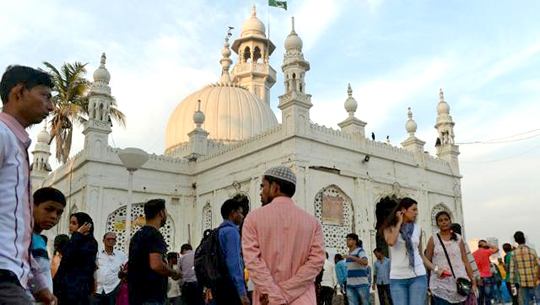
Haji1

The court has, however, stayed its order for six weeks following a plea by Haji Ali Dargah Trust, which wants to challenge it in the Supreme Court.

"The ban imposed on women from entering the Haji Ali dargah is contrary to Articles 14, 15, 19 and 25 of the Constitution of India. Women should be permitted to enter the dargah on par with men," a division bench of Justices V M Kanade and Revati Mohite Dere said.

Under the said Articles, a person is guaranteed equality before law and has the fundamental right to practice any religion he or she wants. They prohibit discrimination on grounds of religion, gender and so on, and provide freedom of conscience and free profession, practice and propagation of religion.

The bench allowed a PIL filed by two women, Zakia Soman and Noorjehan Niaz, challenging the ban on women's entry in the sanctum sanctorum of the dargah.

"The state government and the Haji Ali Dargah Trust will have to take proper steps to ensure safety and security of women entering the dargah," the court said.

The high court had in June this year reserved its verdict on the petition.

The PIL states that gender justice is inherent in Quran and the decision contravenes the Hadith, which proves that there is no prohibition on women visiting graves.

The Maharashtra government had earlier told the court that women should be barred from entering the inner sanctorum of Haji Ali dargah only if it is so enshrined in the Quran.

The ban on women's entry cannot be justified if it is on the basis of an expert's interpretation of the Quran, the then Maharashtra Advocate General Shrihari Aney had argued.

The dargah trust had defended its stand saying that it is referred in Quran that allowing women close proximity to the dargah of a male saint is a grievous sin.

Advocate Shoaib Memon, appearing for the trust had earlier said, "Women are not allowed inside mosques in Saudi Arabia. They are given a separate place to pray. We (trust) have not barred women. It is simply regulated for their safety. The trust not only administers the dargah but also manages the affairs of religion."
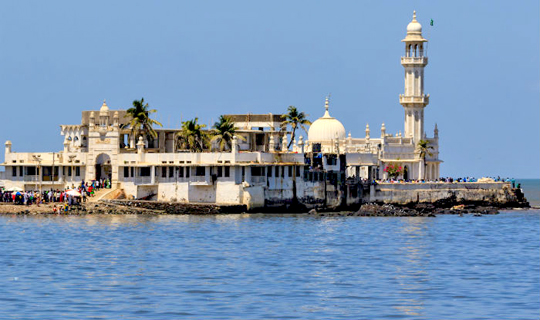

haji2

Comments

Rashid
 - 
Friday, 26 Aug 2016

Building structure on graves is prohibited in Islam, visiting such places by men or women both discouraged... It is a grave sin , invoke on graves...In islam it is permitted to men & women to visit graves of their relatives with proper dress with intention to pray for people of graves is permitted and even praying in masjid also permitted..

Mohammed
 - 
Friday, 26 Aug 2016

As a muslim to visit a dargah and pray is shirkh and I request all my muslim brothers and sisters to refrain from doing so as committing shirkh is the biggest sin in Islam. As for Rony`s comments as muslm`s did not support in independence it is high time you refresh your social studies subject. We all know how many muslim countries are supporting non-muslim brothers and sisters by giving them job in their countries in turn which helps them in survival and is this not much greater support from the muslims. This is Independence to live and survive. People grow up and be thankful for the number of muslim countries who have not objected to non-muslims working in their country and you have the audacity to talk against muslims without thinking once about the millions of non-muslim expats.

mohammad.n
 - 
Friday, 26 Aug 2016

Why HC and SC needed here? Our prophet muhammad already said that no grave must be built high, if u find one then u must level it to the ground. Thats it case closed already 1400+ years ago . Then why waste time of court and people who comment on such news? Check the whole quran and hadees you will never find something called darga in it.

Mohammed
 - 
Friday, 26 Aug 2016

To my non-muslim friends kindly note that in Masjid al haram (Makkah) both men and women pray together and for Ganesh Kamath Muslim women are allowed inside mosques and have a separate covered place from where they can pray behind the Imam. Kindly refrain from posting things which you do not have knowledge of and stick to only praying part of it and not compare it with women are not allowed to drive etc.

Add new comment

  • Coastaldigest.com reserves the right to delete or block any comments.
  • Coastaldigset.com is not responsible for its readers’ comments.
  • Comments that are abusive, incendiary or irrelevant are strictly prohibited.
  • Please use a genuine email ID and provide your name to avoid reject.
coastaldigest.com web desk
July 25,2020

Bengaluru, July 25: A 105-year-old person from Bengaluru’s Basaveshwar Nagar, who was under treatment for covid-19 at a hospital for past five days, breathed his last today. He was a former government account who retired in 1973. He was the oldest known covid-19 patient in the state so far.

Many members of the patient's family are said to be infected and are hospitalised at various facilities. The funeral will be overseen by two uninfected family members.

The patient 74411 died on Saturday morning at around 9 a.m., said Dr Prasanna, Managing Director of Pristine Hospital And Research Centre where the former was admitted.

“The patient was initially doing well when he admitted on July 20. He did not have significant lung changes when he was admitted. However, after three days, his blood pressure started to drop so he was put on oxygen in the ICU. Yesterday morning, with continued deterioration, he was placed on non-invasive ventilator support,” Dr Prasanna said.

“Finally, by last night, his oxygen saturation levels began to plummet abruptly and we had to intubate him for ventilator support. His condition continued to deteriorate, however. The cause of death was respiratory failure and the onset of sepsis,” he added.

Although earmarked for supplies of Remdesivir by the government, the hospital did not receive the drugs. An appeal to Dr K Sudhakar, Minister of Medical Education by the hospital staff resulted in an assurance that the medication would arrive. “However, in the end, we had to source the medication ourselves on Friday,” medical staff said.

Dr Thrilok Chandra, Head, Critical Care Support Unit (CCSU), which oversees the care of critical or vulnerable-aged Covid-19 patients, had said that Patient 74411 had been diagnosed early. “He was identified when the disease was still in the early stages in his body. He only had symptoms of Influenza-Like Illness (ILI), so the symptoms were not severe,” Dr Chandra had said.

“It’s very sad. We were rooting for him to pull through. He had no comorbidities at all. He had been bed-ridden from last year, but he was healthy. His only potential comorbidity was his advanced age,” Dr Prasanna said.

According to government data, 34% of Covid-19 fatalities in India are aged between 60 and 74 years of age. Fourteen per cent are aged above 74.

Comments

Add new comment

  • Coastaldigest.com reserves the right to delete or block any comments.
  • Coastaldigset.com is not responsible for its readers’ comments.
  • Comments that are abusive, incendiary or irrelevant are strictly prohibited.
  • Please use a genuine email ID and provide your name to avoid reject.
News Network
April 2,2020

The current physical distancing guidelines provided by the World Health Organisation (WHO) and by the US Centers for Disease Control and Prevention (CDC) may not be adequate to curb the coronavirus spread, according to a research which says the gas cloud from a cough or sneeze may help virus particles travel up to 8 metres. The research, published in the Journal of the American Medical Association, noted that the the current guidelines issued by the WHO and CDC are based on outdated models from the 1930s of how gas clouds from a cough, sneeze, or exhalation spread.

Study author, MIT associate professor Lydia Bourouiba, warned that droplets of all sizes can travel 23 to 27 feet, or 7-8 metres, carrying the pathogen.

According to Bourouiba, the current guidelines are based on "arbitrary" assumptions of droplet size, "overly simplified", and "may limit the effectiveness of the proposed interventions" against the deadly pandemic.

 She explained that the old guidelines assume droplets to be one of two categories, small or large, taking short-range semi-ballistic trajectories when a person exhales, coughs, or sneezes.

However based on more recent discoveries, the MIT scientist said, sneezes and coughs are made of a puff cloud that carries ambient air, transporting within it clusters of droplets of a wide range of sizes.

Bourouiba warned that this puff cloud, with ambient air entrapped in it, can offer the droplets moisture and warmth that can prevent it from evaporation in the outer environment.

"The locally moist and warm atmosphere within the turbulent gas cloud allows the contained droplets to evade evaporation for much longer than occurs with isolated droplets," she said.

"Under these conditions, the lifetime of a droplet could be considerably extended by a factor of up to 1000, from a fraction of a second to minutes," the researcher explained in the study.

The MIT scientist, who has researched the dynamics of coughs and sneezes for years, added that these droplets settle along the trajectory of a cough or sneeze contaminating surfaces, with their residues staying suspended in the air for hours.

"Even when maximum containment policies were enforced, the rapid international spread of COVID-19 suggests that using arbitrary droplet size cutoffs may not accurately reflect what actually occurs with respiratory emissions, possibly contributing to the ineffectiveness of some procedures used to limit the spread of respiratory disease," Bourouiba wrote in the study

Comments

Add new comment

  • Coastaldigest.com reserves the right to delete or block any comments.
  • Coastaldigset.com is not responsible for its readers’ comments.
  • Comments that are abusive, incendiary or irrelevant are strictly prohibited.
  • Please use a genuine email ID and provide your name to avoid reject.
News Network
May 14,2020

Bengaluru, May 14: Reformed underworld don Muthappa Rai, who was battling cancer for the past year, was said to be in a critical condition at Manipal Hospital in Bengaluru, late Wednesday night. Doctors said he was on life-support at the time of going to press. Rai (68), realtor, entrepreneur and founder of pro-Kannada organisation Jaya Karnataka, had retired from public life after he was diagnosed with cancer. He was part of an ongoing investigation into gangster Ravi Pujari, who was extradited from Senegal recently.

Born in Puttur into a Bunt family, he started out as a bank employee in Bengaluru, and later ran a live band restaurant. In 1994, he was shot in a Bengaluru court by a man dressed as a lawyer, after which he was bedridden for a couple of years.

Rai Moved to Dubai in 1996. He was deported from the UAE to India in 2002, and was arrested in Bengaluru when HT Sangliana was the police commissioner. Both Rai and Pujari had allegedly been associated with underworld don Dawood Ibrahim.

Comments

Add new comment

  • Coastaldigest.com reserves the right to delete or block any comments.
  • Coastaldigset.com is not responsible for its readers’ comments.
  • Comments that are abusive, incendiary or irrelevant are strictly prohibited.
  • Please use a genuine email ID and provide your name to avoid reject.