Kasaragod, Apr 19: Kasaragod, Kerala's COVID-19 hotspot, is the only district in the southern state lacking adequate health infrastructure.
In spite of treating the highest number of COVID-19 patients in the state with meagre infrastructural facilities and even without the support of a medical college in the north Kerala district, no deaths have been reported due to coronavirus.
The state health department views the performance of M Kunhiraman and his team, consisting of Janardhana Naik and Krishna Naik, at the General hospital in Kasaragod as a success story.
"Not only did they control the situation quickly with minimum infrastructure, they also started turning out a large number of negative cases within a few weeks and creditably ensured zero mortality.
This can be showcased as a best global model," Chairman of the Information Education and Communication (IEC) Committee and Project Director Kerala State Aids Control Society, R Ramesh said.
Recalling the ordeal, Janardhana Naik said his first major challenge was the physical examination of a patient with suspected COVID-19.
"Even with the PPE kit, nobody knew how effective they were and it took a whole 30 minutes to wear them properly.
But as time passed, we got accustomed to it," he said.
The traditional method of dealing with a patient involved knowing his or her history, observation and physical examination.
For hundreds of years, the hands-on body approach has been the soul of the doctor-patient relationship -- taking the pulse, tapping on and listening to the chest, feeling lumps.
With the onset of COVID-19 all that has changed.
"In fact, the whole exercise was fraught with grave risks because everything connected with COVID-19 was new.
Doctors have to keep a distance even though the physical examination wearing a Personal Protective Equipment (PPE) is difficult.
Sounds from the body are inaudible, vision is blurred through the smog-covered goggles and a stethoscope seldom has any use," Janardhana Naik said.
It was from March 15 that the hospital started receiving COVID-19 patients, primarily from Dubai.
By the time the first person came, the hospital was ready for him.
Soon, patient numbers began to swell and in a couple of weeks they reached about 91.
From then on, it was teamwork.
Committees were formed for each and every task, including the help desk, IT, treatment, medical board, training, food, waste disposal and data maintenance.
Initially, patients had many misgivings about the hospital.
"Some were disillusioned and even aggressive. Some were not happy with the facilities the hospital had to offer.
But gradually through good treatment and counselling by a psychiatrist, who visited the hospital on alternate days, the confidence and mood of the patients changed and they became friendly with the staff," Naik elaborated.
Counselling was also given to the concerned family members of the patients.
Besides treatment, the medical staff had to spend a considerable amount of time clearing the doubts of patients.
When they got discharged some patients insisted on seeing the faces of the medical staff, who till then were anonymous entities covered from head to toe.
Some even wanted to take selfies with them.
However, the medical team politely turned down their requests and preferred to remain hidden in their work attires.
The mood of the patients also rubbed off on the doctors and hospital staff.
All the physicians and hospital staff are now more confident of dealing with contagious diseases after treating COVID-19 patients.
"Our previous experience of treating H1N1, Chikungunya and Dengue cases helped us a lot.
Words of encouragement from the Health Minister K K Shailaja, Health Principal Secretary Dr Rajan N Khobragade and Health Services Director Dr Sarita R L gave us the impetus to build up confidence.
Moreover, the field health workers did a wonderful job in containing the viral spread," Naik added.
As the number of coronavirus cases rose, the state government on April 5 deputed a 26-member medical team from Thiruvananthapuram to set up a COVID-19 hospital in the district.
They turned a block of the under construction Government Medical College as a hospital-like facility, setting up a 200 bed facility to treat coronavirus patients.



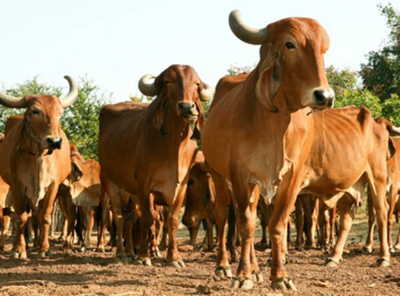 Further, in the order passed on Friday, the High Court directed that prohibitions be imposed on import and export of the cow/calf and sale of beef and beef products be banned – all to be complied within a period of six months.


Comments
In other countries daily news are like :- Constructions.. infrastructure, dams, projects, oil tanks, etc etc..
In India daily news are like Ban Caw slaughter, Ban gow mootra, ban Gau Export, Dalits Beaten, Muslim beaten, Bharath Mata & Pita ki Jai,etc etc.. Wah India badal gaya..
We welcome this move....but modees export corporates will be naraz and this will never happen.....ha ha....let's see how modi govt. Will react...all Go bhakta should adopt on Go mother in their house.....First Go shaalay.....then Sauchaalay..
welcome move.
center always escapes telling this is state matter and continue exporting beef (their mata) to different country. center utilized cow issue as political mileage and played with sentiments of hindus and muslims. all muslim will respect law provided ban means complete ban, including export.
better let them ban cow slaughter in india,
then let them know who is fighting for that
for muslim no issue we will eat goat or chicken ..
Good decision.
Let them ban all beef /buffalo/ calves and all leather business.
Let the Hindu owners of the beef companies shut their business.
Let the Modi govt. manage the crores export business of financial burden.
High Court has taken mind boggling action on this matter...here on India should not export beef.....there are many export company situated in India owned by RSS Hindus...that should be stopped once and for all....and so that make sure you give gou mata respectful five star life.....the huts should be converted in to bunglows....common its Gou Mata man....it deserves it....
Add new comment