


Highest joblessness among Christians, Muslims; least in Hindus, Sikhs'

[email protected] (CD Network)
February 22, 2016

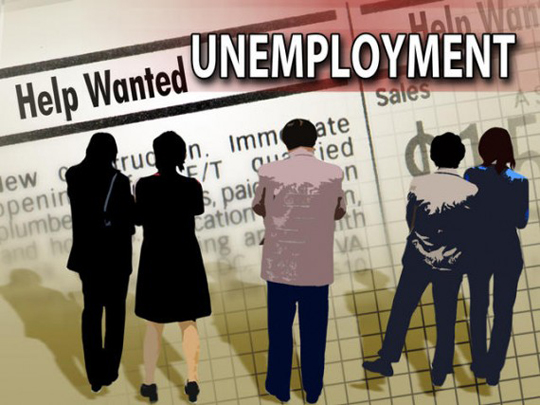
New Delhi, Feb 22: Highest incidence of joblessness was witnessed among Christians in cities as well as in rural area followed by Muslims while Hindus and Sikhs reported least unemployment in urban and rural areas, says a recent government report.
christmuslim

"Among the specific religious groups, unemployment rate in both rural and urban areas was the highest for Christians (4.5 per cent in rural areas and 5.9 per cent in urban areas) and lowest for Sikhs in rural areas (1.3 per cent) and Hindus in urban areas (3.3 per cent)," said a report based on National Sample Survey 68th Round from July 2011 to June 2012. Muslims come second with an unemployment rate of 3.9% in rural and 2.6% in urban areas.

Many view the high unemployment rate among Christians as also a reflection of the higher education levels of community members who are in job market. Christians have the highest percentage of graduates.

According to the study titled 'Employment and Unemployment Situation Among Major Religious Group in India', among the specific religious groups, for males in rural areas, worker population ratio (WPR) was the highest for Sikhs (56.9 per cent) and in urban areas, it was the highest for Hindus (55 per cent).

For females in both rural and urban areas, WPR was the highest for Christians (28.4 per cent in rural areas and 25.2 per cent in urban areas).

In both rural and urban areas for both males and females, WPR was the lowest for Muslims (49.9 per cent for rural males, 15.3 per cent for rural females, 53.2 per cent for urban males and 10.5 per cent for urban females).

It said in terms of specific religious groups, among males in both rural and urban areas, Labour Force Participation Rate (LFPR) was the highest for Sikhs (57.6 per cent in rural areas and 56.8 per cent in urban areas).

For females in both rural and urban areas, LFPR was the highest for Christians (30.4 per cent in rural areas and 27.7 per cent in urban areas).

In both rural and urban areas for both males and females LFPR was the lowest for Muslims (51.1 per cent for rural males, 15.9 per cent for rural females, 55.3 per cent for urban males and 10.9 per cent for urban females).

Among persons of age 15 years and above, proportion of non-literates was the lowest for Christians (14.6 per cent for rural males, 23.7 per cent for rural females, 5.7 per cent for urban males and 9 per cent for urban females).

Proportion of persons of age 15 years and above with educational level secondary and above was the highest for Christians in rural areas for both males and females (36.3 per cent for rural males and 31.1 per cent for rural females) and for females in urban areas (62.7 per cent) whereas for males in urban areas it was the highest among Sikhs (67.6 per cent).

Among persons of age 0-29 years, for major religious groups, current attendance rate in educational institutions was the highest for Christians (58.5 per cent for rural males, 51.7 per cent for rural females, 61.5 per cent for urban males and 56.8 per cent for urban females).

Among persons of age 0-29 years, for major religious groups, current attendance rate in educational institutions was the lowest among Muslims (48.7 per cent for rural males, 42.1 per cent for rural females, 47 per cent for urban males and 46.3 per cent for urban females).

The survey was spread over 12,737 first stage units (7,469 villages and 5,268 urban blocks) covering 1,01,724 households (59,700 in rural areas and 42,024 in urban areas) and enumerating 4,56,999 persons (2,80,763 in rural areas and 1,76,236 in urban areas).

Comments

Fair talker
 - 
Tuesday, 23 Feb 2016

Dear KK Bhat,
Yes there are plenty of Muslims and Christians are jobless.
But they are not vandalizing and doing like Bhajis due of jobless.
You are just telling we love our country, if you are a true lover, study the constitution and respect it where it defends equality to all.

Christians and Muslims are not anti nationals. Patriotism is part of their religion.
You can not be a patriotic citizen until you uphold your constitutional duty and obligations.

SAKEER
 - 
Tuesday, 23 Feb 2016

Mr. Bhat,

Bajarangi are not only jobless but they are anti social criminals and rude. They shall be educated sense of humanity.

Nishaan
 - 
Monday, 22 Feb 2016

jobless have joined Hindutva forces since it's most profitable profession now. e.g. Lynch, Cow extortion, Security contract, Ghar wapsi, Riots, loots, vandalise, superstitous, Yoga, Dhyan etc etc.

KK Bhat
 - 
Monday, 22 Feb 2016

Now anti-nationals should stop calling Bajrang Dal as jobless people. Reality is before you. Christians and Muslims are jobless.

Add new comment

  • Coastaldigest.com reserves the right to delete or block any comments.
  • Coastaldigset.com is not responsible for its readers’ comments.
  • Comments that are abusive, incendiary or irrelevant are strictly prohibited.
  • Please use a genuine email ID and provide your name to avoid reject.
News Network
June 11,2020

New Delhi, Jun 11: The Department of Pharmaceuticals has given its nod for lifting of ban on the export of hydroxychloroquine, Union Minister D V Sadananda Gowda said on Wednesday.

India had banned export of hydroxychloroquine on March 25, with some exceptions, amid views in some quarters that the drug could be used to fight COVID-19. On April 4, it completely banned the exports without any exception.

"Department of Pharmaceuticals has approved the lifting of ban on export of Hydroxychloroquine API as well as formulations. Manufacturers except SEZ/EOU Units have to supply 20 per cent production in the domestic market," the minister of chemicals and fertilisers said in a tweet.

The Directorate General of Foreign Trade (DGFT) has been asked to issue formal notification in this regard, he added.

In another tweet, Gowda said he held discussions with representatives of pharma companies along with some of his ministerial colleagues on the challenges being faced by the industry and on the roadmap to boost exports.

"Had detailed discussion with representatives of pharma companies & association, stakeholder Ministries along with Hon Ministers @piyushGoyal  ji, @HardeepSPuri  ji, & @MansukhMandviya  ji on entire gamut of challenges faced by the industry as well as strategies to boost pharma export," Gowda tweeted.

India exported hydroxychloroquine API (active pharmaceutical ingredient) worth USD 1.22 billion in April-January 2019-20.

During the same period, exports of formulations made from hydroxychloroquine was at USD 5.50 billion.

Comments

Add new comment

  • Coastaldigest.com reserves the right to delete or block any comments.
  • Coastaldigset.com is not responsible for its readers’ comments.
  • Comments that are abusive, incendiary or irrelevant are strictly prohibited.
  • Please use a genuine email ID and provide your name to avoid reject.
coastaldigest.com web desk
July 27,2020

New Delhi, Jul 27: A month after banning 59 Chinese applications, the government of Indian has now reportedly banned 47 more apps of Chinese origin in the country. According to sources, the 47 banned Chinese apps were operating as clones of the earlier banned apps. 

The list of the 47 Chinese applications banned by the Indian government will be released soon.

India has also prepared a list of over 250 Chinese apps, including apps linked to Alibaba, that it will examine for any user privacy or national security violations, government sources said. The list also includes Tencent-backed gaming app PUBG.

Some top gaming Chinese applications are also expected to be banned in the new list that is being drawn up, sources said. The Chinese applications, that are being reviewed, have allegedly been sharing data with the Chinese agencies.

Today's decision follows after a high-profile ban of 59 Chinese apps including TikTok, as border tensions continued in Ladakh after a violent, fatal face-off between the Indian and Chinese armies. The government said these apps were engaged in activities that were prejudicial to the sovereignty, integrity and defence of India.

A government press release announcing the ban stated: "The Ministry of Information Technology, invoking it's power under section 69A of the Information Technology Act read with the relevant provisions of the Information Technology (Procedure and Safeguards for Blocking of Access of Information by Public) Rules 2009 and in view of the emergent nature of threats has decided to block 59 apps since in view of information available they are engaged in activities which is prejudicial to sovereignty and integrity of India, defence of India, security of state and public order".

A day later, Google said it has removed all the banned applications from the Play Store. Following the ban, TikTok refuted the claims that suggest it will pursue legal action against the Indian government for banning the app in India.

Reacting to the 59 apps banned by India, the Chinese Foreign Ministry said the country is "strongly concerned regarding the decision of the Indian government".

“China is strongly concerned, verifying the situation,” Chinese Foreign Ministry spokesperson Zhao Lijian was quoted as saying by news agency ANI.

"We want to stress that the Chinese government always asks Chinese businesses to abide by international and local laws-regulations. The Indian government has a responsibility to uphold the legal rights of international investors including Chinese ones," Zhao Lijian said.

Comments

Add new comment

  • Coastaldigest.com reserves the right to delete or block any comments.
  • Coastaldigset.com is not responsible for its readers’ comments.
  • Comments that are abusive, incendiary or irrelevant are strictly prohibited.
  • Please use a genuine email ID and provide your name to avoid reject.
Ram Puniyani
February 22,2020

This January 2020, it is thirty years since the Kashmiri Pundits’ exodus from the Kashmir valley took place. They had suffered grave injustices, violence and humiliation prior to the migration away from the place of their social and cultural roots in Kashmir Valley. The phenomenon of this exodus had been due to the communalization of militancy in Kashmir in the decade of 1980s. While no ruling Government has applied itself enough to ‘solve’ this uprooting of pundits from their roots, there are communal elements who have been aggressively using ‘what about Kashmiri Pundits?’, every time liberal, human rights defenders talk about the plight of Muslim minority in India. This minority is now facing an overall erosion of their citizenship rights.

Time and over again in the aftermath of communal violence in particular, the human rights groups have been trying to put forward the demands for justice and rehabilitation of the victim minority. Instead of being listened to those particularly from Hindu nationalist combine, as a matter of routine shout back, where were you when Kashmiri Pundits were driven away from the Valley? In a way the tragedy being heaped on one minority is being justified in the name of suffering of Pundits and in the process violence is being normalized. This sounds as if two wrongs make a right, as if the suffering Muslim minority or those who are trying to talk in defense of minority rights have been responsible for the pain of Kashmiri Pundits.

During these three, many political formations have come to power, including BJP, Congress, third front and what have you. To begin with when the exodus took place Kashmir was under President’s rule and V. P. Singh Government was in power at the center. This Government had the external support of BJP at that time. Later BJP led NDA came to power for close to six years from 1998, under the leadership of Atal Bihari Vajpayee. Then from 2014 it is BJP, with Narerda Modi as PM, with BJP brute majority is in power. Other components of NDA are there to enjoy some spoils of power without any say in the policies being pursued by the Government. Modi is having absolute power with Amit Shah occasionally presenting Modi’s viewpoints.

Those blurting, ‘what about Kashmiri Pundits?’ are using it as a mere rhetoric to hide their communal color. The matters of Kashmir are very disturbing and cannot be attributed to be the making of Indian Muslims as it is being projected in an overt and subtle manner. Today, of course the steps taken by the Modi Government, that of abrogation of Article 370, abolition of clause 35 A, downgrading the status of Kashmir from a state to union territory have created a situation where the return of Kashmiri Pundits may have become more difficult, as the local atmosphere is more stifling and the leaders with democratic potential have been slapped with Public Safety Act, where they can be interned for long time without any answerability to the Courts. The internet had been suspended, communication being stifled in an atmosphere where democratic freedoms are curtailed which makes solution of any problem more difficult.

Kashmir has been a vexed issue where the suppression of the clause of autonomy, leading to alienation led to rise of militancy. This was duly supported by Pakistan. The entry of Al Qaeda elements, who having played their role against Russian army in 1980s entered into Kashmir and communalized the situation in Kashmir. The initial Kashmir militancy was on the grounds of Kashmiriyat. Kashmiriyat is not Islam, it is synthesis of teachings of Buddha, values of Vedant and preaching’s of Sufi Islam. The tormenting of Kashmiri Pundits begins with these elements entering Kashmir.

Also the pundits, who have been the integral part of Kashmir Valley, were urged upon by Goodwill mission to stay on, with local Muslims promising to counter the anti Pundit atmosphere. Jagmohan, the Governor, who later became a minister in NDA Government, instead of providing security to the Pundits thought, is fit to provide facilities for their mass migration. He could have intensified counter militancy and protected the vulnerable Pundit community. Why this was not done?

Today, ‘What about Kashmiri Pundits?’ needs to be given a serious thought away from the blame game or using it as a hammer to beat the ‘Muslims of India’ or human rights defenders? The previous NDA regime (2014) had thought of setting up enclosures of Pundits in the Valley. Is that a solution? Solution lies in giving justice to them. There is a need for judicial commission to identify the culprits and legal measures to reassure the Pundit community. Will they like to return if the high handed stifling atmosphere, with large number of military being present in the area? The cultural and religious spaces of Pundits need to be revived and Kashmiryat has to be made the base of any reconciliation process.

Surely, the Al Qaeda type elements do not represent the alienation of local Kashmiris, who need to be drawn into the process of dialogue for a peaceful Kashmir, which is the best guarantee for progress in this ex-state, now a Union territory. Communal amity, the hallmark of Kashmir cannot be brought in by changing the demographic composition by settling outsiders in the Valley. A true introspection is needed for this troubled area. Democracy is the only path for solving the emigration of Pundits and also of large numbers of Muslims, who also had to leave the valley due to the intimidating militancy and presence of armed forces in large numbers. One recalls Times of India report of 5th February 1992 which states that militants killed 1585 people from January 1990 to October 1992 out of which 982 were Muslims and 218 Hindus.

We have been taking a path where democratic norms are being stifled, and the promises of autonomy which were part of treaty of accession being ignored. Can it solve the problem of Pundits?

Comments

Add new comment

  • Coastaldigest.com reserves the right to delete or block any comments.
  • Coastaldigset.com is not responsible for its readers’ comments.
  • Comments that are abusive, incendiary or irrelevant are strictly prohibited.
  • Please use a genuine email ID and provide your name to avoid reject.