


Hindus have no aspiration of dominance; we don’t even kill pests: RSS chief at Chicago WHC

Agencies
September 8, 2018

Chicago, Sept 8: Hindus have no aspiration of dominance and the community will prosper only when it works as a society, RSS chief Mohan Bhagwat has said and urged the community leaders to unite and work for the betterment of the mankind.

Addressing a gathering of some 2,500 delegates attending the second World Hindu Congress here, Bhagwat said one of the key values to bring the whole world into a team is to have controlled ego and learn to accept the consensus.

The second World Hindu Congress marks the commemoration of the 125th anniversary of Swami Vivekananda's historic speech at the Parliament of the World's Religions in 1893 in Chicago.

"If a lion is alone, wild dogs can invade and destroy the lion. We must not forget that. We want to make the world better. We have no aspiration of dominance. Our influence is not a result of conquest or colonisation,” he said.

Bhagwat said a sense of idealism is good and described himself not as "anti-modern", but as "pro-future". He sought to describe Hindu dharma as "ancient and post-modern".

"Hindu society will prosper only when it works as a society," he said at the conference inspired by the Hindu principle 'Sumantrite Suvikrante' or 'Think Collectively, Achieve Valiantly'.

"One of the key values to bring the whole world into a team is to have controlled ego and learn to accept the consensus. For example, Lord Krishna and Yudhishtra never contradicted each other," Bhagwat said.

In this context, he alluded to the war and politics in the Hindu epic Mahabharata and said politics cannot be conducted like a meditation session, and it should be politics.

"To work together, we have to accept the consensus. We are in a position to work together," Bhagwat said.

He urged the conference attendees to discuss and evolve a methodology to implement the idea of working collectively.

He said the Hindu society has the largest number of meritorious persons.

"But they never come together. Coming together of Hindus in itself is a difficult thing," he said.

He noted that Hindus had been suffering for thousands of years because they forgot to practice its basic principles and spiritualism.

"We have to come together," Bhagwat said, noting that all the people need not to register under one umbrella.

He noted that Hindus had been suffering for thousands of years because they forgot to practice its basic principles and spiritualism.

Addressing the congress on the theme drawn from the Mahabharat, 'Think Collectively, Act Valiantly,' Bhagwat highlighted the need for such an action, and how Hindus should work together.

He said in Hindu dharma, even a pest is not killed, but controlled.

"Hindus don’t live to oppose anybody. We even allow the pests to live. There are people who may oppose us. You have to tackle them without harming them," Bhagwat said.

SP Kothari, chair of WHC, said he and many speakers attending the conference received calls and petitions from organisations and individuals to withdraw from the Congress on the ground WHC or some of its organisers are "socially and religiously divisive."

"I categorically reject this supposition," Kothari said.

"I urge them to listen to my talk and reflect on whether it is tainted with hate. I have chosen to disregard those petitions as originating from a lack of complete understanding of the Word Hindu Congress," Kothari said.

"The three goals of WHC are: enlighten, reform and advance. WHC brings enlightenment throughout the world about Hindu community through spirituality, harmony and inclusiveness," he said.

"Hindus must reform and be in the forefront in eliminating social and economic inequality, fostering cooperation among those with ideas and resources, and view commerce as a means to furthering Hindu dharma for a better tomorrow," he said.

Vice-president of the Republic of Suriname, Ashwin Adhin, in his address said, “We as Hindus never forsake our mission. Hindus have always been the missionaries of renunciation and service.”

"Words like peace, harmony and spirituality do not appeal to ordinary people easily and they have to be framed in the right perspective terms so that they become established in people’s mind," Adhin said.

Addressing the “confluence of Hindu leadership who have come to connect, share ideas and inspire one another and impact the common good,” WHC coordinator Abhaya Asthana stated we have gathered to reaffirm the same message of diversity, cooperation and universal acceptance uttered by Swami Vivekananda 125 years ago.

WHC, he stated, is not an event, but rather a community movement. It seeks to encourage Hindus around the world to ascend to the highest levels of excellence.

Speaking at the confrence, actor Anupam Kher said Hinduism is a way of life and one becomes a Hindu by living like one.

"Tolerance was the centerpiece of Vivekananda’s message. Despite being refugees in their own country, Kashmiri Pandits have practiced tolerance for 28 years like nobody ever has," he said.

"As a Hindu, it pains me deeply to see how half knowledge and ignorance are trying to destroy one of the world’s oldest, most peaceful religions,” he said.

Comments

SATYA VISHWASI
 - 
Sunday, 16 Sep 2018

As the name itself indicates - (Rastriya Sullu Sangha )- RSS , Telling lies is in their blood,

Cow-Swami
 - 
Saturday, 8 Sep 2018

The nation wants to know why does RSS not kill pests? 

Bhaktasura
 - 
Saturday, 8 Sep 2018

World Hindu Congress? Next time please rename it as World Hindu BJP! Otherwise tomorrow onward PM Modi may raise slogan of Congress Mukt World instead of Congress Mukt Bhartat. 

Add new comment

  • Coastaldigest.com reserves the right to delete or block any comments.
  • Coastaldigset.com is not responsible for its readers’ comments.
  • Comments that are abusive, incendiary or irrelevant are strictly prohibited.
  • Please use a genuine email ID and provide your name to avoid reject.
Agencies
February 29,2020

Doha, Feb 29: The United States signed a landmark deal with the Taliban on Saturday, laying out a timetable for a full troop withdrawal from Afghanistan within 14 months as it seeks an exit from its longest-ever war.

President Donald Trump urged the Afghan people to embrace the chance for a new future, saying the deal held out the possibility of ending the 18-year conflict.

"If the Taliban and the government of Afghanistan live up to these commitments, we will have a powerful path forward to end the war in Afghanistan and bring our troops home," he said on the eve of the event in Doha.

Secretary of State Mike Pompeo arrived in the Qatari capital to witness the signing of the accord, while Defence Secretary Mark Esper was in Kabul for a separate joint declaration with the Afghan government.

The agreement is expected to lead to a dialogue between the Kabul government and the Taliban that, if successful, could ultimately see the Afghan war wind down.

But the position of the Afghan government, which has been excluded from direct US-Taliban talks, remains unclear and the country is gripped by a fresh political crisis amid contested election results.

The United States and its allies will withdraw all their forces from Afghanistan within 14 months if the Taliban abide by the Doha agreement, Washington and Kabul said in a joint statement.

After an initial reduction of troops to 8,600 within 135 days of Saturday's signing, the US and its partners "will complete the withdrawal of their remaining forces from Afghanistan within 14 months... and will withdraw all their forces from remaining bases", the declaration stated.

The Doha accord was drafted over a tempestuous year of dialogue marked by the abrupt cancellation of the effort by Trump in September.

The signing comes after a week-long, partial truce that has mostly held across Afghanistan, aimed at building confidence between the warring parties and showing the Taliban can control their forces.

NATO Secretary General Jens Stoltenberg heralded the agreement as a "first step to lasting peace".

"The way to peace is long and hard. We have to be prepared for setbacks, spoilers, there is no easy way to peace but this is an important first step," the Norwegian former prime minister told reporters in Kabul.

Since the US-led invasion that ousted the Taliban after the September 11, 2001 attacks, America has spent more than $1 trillion in fighting and rebuilding in Afghanistan.

About 2,400 US soldiers have been killed, along with unknown tens of thousands of Afghan troops, Taliban fighters and Afghan civilians.

The insurgents said they had halted all hostilities Saturday in honour of the agreement.

"Since the deal is being signed today, and our people are happy and celebrating it, we have halted all our military operations across the country," Taliban spokesman Zabihullah Mujahid told AFP.

Close to 30 nations were represented at Saturday's signing in the Qatari capital.

While Kabul will not be represented at the Doha ceremony, set for 1245 GMT, it will send a six-person taskforce to the Qatari capital to make initial contact with the Taliban political office, established in 2013.

Any insurgent pledge to guarantee Afghanistan is never again used by jihadist movements such as Al-Qaeda and the Islamic State group to plot attacks abroad will be key to the deal's viability.

The Taliban's sheltering of Al-Qaeda was the main reason for the US invasion following the 9/11 attacks.

The group, which had risen to power in the 1990s in the chaos of civil war, suffered a swift defeat at the hands of the US and its allies. They retreated before re-emerging to lead a deadly insurgency against the new government in Kabul.

After the NATO combat mission ended in December 2014, the bulk of Western forces withdrew from the country, leaving it in an increasingly precarious position.

While Afghans are eager to see an end to the violence, experts say any prospective peace will depend on the outcome of talks between the Taliban and the Kabul government.

But with President Ashraf Ghani and rival Abdullah Abdullah at loggerheads over contested election results, few expect the pair to present a united front, unlike the Taliban, who would then be in a position to take the upper hand in negotiations.

Comments

Add new comment

  • Coastaldigest.com reserves the right to delete or block any comments.
  • Coastaldigset.com is not responsible for its readers’ comments.
  • Comments that are abusive, incendiary or irrelevant are strictly prohibited.
  • Please use a genuine email ID and provide your name to avoid reject.
Agencies
August 2,2020

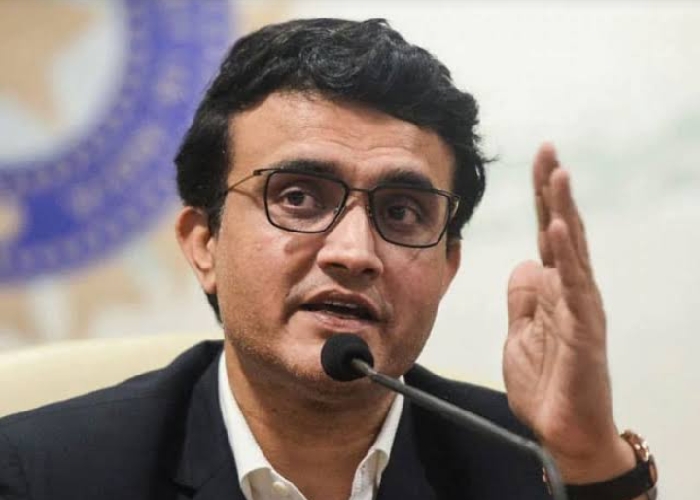
New Delhi, Aug 2: BCCI president Sourav Ganguly on Sunday said the Women's IPL or the Challenger series, as it is better known, is "very much on", ending speculation about the parent body not having a plan for Harmanpreet Kaur and her team.

The men's IPL will be held between September 19 and November 8 or 10 (final date yet to be locked in) in the UAE due to the surge in Covid-19 cases in India. The women's IPL will also be fit in to the schedule, according to the BCCI chief.

"I can confirm to you that the women's IPL is very much on and we do have a plan in place for the national team also," Ganguly told PTI ahead of the IPL Governing Council meeting later on Sunday.

The BCCI president, who is awaiting a Supreme Court verdict on waiver of the cooling-off period to continue in the position, did not divulge details but another senior official privy to the development said that women's Challenger will be held during the last phase of IPL like last year.

"The women's Challenger series is likely to be held between November 1-10 and there could be a camp before that," the source said.

The former India captain also said that the centrally contracted women players will have a camp which has been delayed due to the prevailing situation in the country.

"We couldn't have exposed any of our cricketers -- be it male or female to health risk. It would have been dangerous," Ganguly said.

"The NCA also remained shut because of Covid-19. But we have a plan in place and we will have a camp for women, I can tell you that," he added.

The BCCI's cricket operations team is chalking up a schedule where Indian women are likely to have two full-fledged white-ball series against South Africa and the West Indies before playing the ODI World Cup in New Zealand. 

Comments

Add new comment

  • Coastaldigest.com reserves the right to delete or block any comments.
  • Coastaldigset.com is not responsible for its readers’ comments.
  • Comments that are abusive, incendiary or irrelevant are strictly prohibited.
  • Please use a genuine email ID and provide your name to avoid reject.
News Network
January 13,2020

Jan 13: For the first time in years, the government of India’s Prime Minister Narendra Modi is playing defense. Protests have sprung up across the country against an amendment to India’s laws — which came into effect on Friday — that makes it easier for members of some religions to become citizens of India. The government claims this is simply an attempt to protect religious minorities in the Muslim-majority countries that border India; but protesters see it as the first step toward a formal repudiation of India’s constitutionally guaranteed secularism — and one that must be resisted.

Modi was re-elected prime minister last year with an enhanced majority; his hold over the country’s politics is absolute. The formal opposition is weak, discredited and disorganized. Yet, somehow, the anti-Citizenship Act protests have taken hold. No political party is behind them; they are generally arranged by student unions, neighborhood associations and the like.

Yet this aspect of their character is precisely what will worry Modi and his right-hand man, Home Minister Amit Shah. They know how to mock and delegitimize opposition parties with ruthless efficiency. Yet creating a narrative that paints large, flag-waving crowds as traitors is not quite that easy.

For that is how these protests look: large groups of young people, many carrying witty signs and the national flag. They meet and read the preamble to India’s Constitution, into which the promise of secularism was written in the 1970’s.

They carry photographs of the Constitution’s drafter, the Columbia University-trained economist and lawyer B. R. Ambedkar. These are not the mobs the government wanted. They hoped for angry Muslims rampaging through the streets of India’s cities, whom they could point to and say: “See? We must protect you from them.” But, in spite of sometimes brutal repression, the protests have largely been nonviolent.

One, in Shaheen Bagh in a Muslim-dominated sector of New Delhi, began simply as a set of local women in a square, armed with hot tea and blankets against the chill Delhi winter. It has now become the focal point of a very different sort of resistance than what the government expected. Nothing could cure the delusions of India’s Hindu middle class, trained to see India’s Muslims as dangerous threats, as effectively as a group of otherwise clearly apolitical women sipping sweet tea and sharing their fears and food with anyone who will listen.

Modi was re-elected less than a year ago; what could have changed in India since then? Not much, I suspect, in most places that voted for him and his party — particularly the vast rural hinterland of northern India. But urban India was also possibly never quite as content as electoral results suggested. India’s growth dipped below 5% in recent quarters; demand has crashed, and uncertainty about the future is widespread. Worse, the government’s response to the protests was clearly ill-judged. University campuses were attacked, in one case by the police and later by masked men almost certainly connected to the ruling party.

Protesters were harassed and detained with little cause. The courts seemed uninterested. And, slowly, anger began to grow on social media — not just on Twitter, but also on Instagram, previously the preserve of pretty bowls of salad. Instagram is the one social medium over which Modi’s party does not have a stranglehold; and it is where these protests, with their photogenic signs and flags, have found a natural home. As a result, people across urban India who would never previously have gone to a demonstration or a political rally have been slowly politicized.

India is, in fact, becoming more like a normal democracy. “Normal,” that is, for the 2020’s. Liberal democracies across the world are politically divided, often between more liberal urban centers and coasts, and angrier, “left-behind” hinterlands. Modi’s political secret was that he was that rare populist who could unite both the hopeful cities and the resentful countryside. Yet this once magic formula seems to have become ineffective. Five of India’s six largest cities are not ruled by Modi’s Bharatiya Janata Party in any case — the financial hub of Mumbai changed hands recently. The BJP has set its sights on winning state elections in Delhi in a few weeks. Which way the capital’s voters will go is uncertain. But that itself is revealing — last year, Modi swept all seven parliamentary seats in Delhi.

In the end, the Citizenship Amendment Act is now law, the BJP might manage to win Delhi, and the protests might die down as the days get unmanageably hot and state repression increases. But urban India has put Modi on notice. His days of being India’s unifier are over: From now on, like all the other populists, he will have to keep one eye on the streets of his country’s cities.

Comments

Add new comment

  • Coastaldigest.com reserves the right to delete or block any comments.
  • Coastaldigset.com is not responsible for its readers’ comments.
  • Comments that are abusive, incendiary or irrelevant are strictly prohibited.
  • Please use a genuine email ID and provide your name to avoid reject.