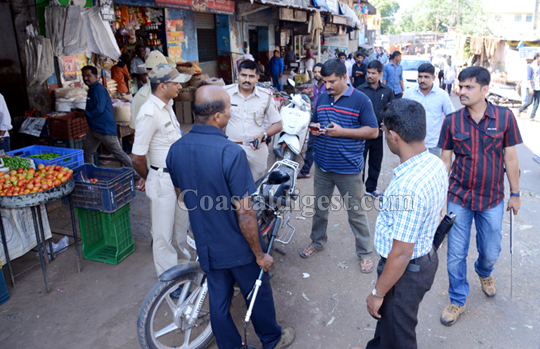
Hoax bomb call on Republic Day creates panic in Mangaluru

[email protected] (CD Network | Chakravarthi)
January 26, 2016

Mangaluru, Jan 26: A teenager was reportedly detained by the Mangaluru city police for allegedly making a hoax call at the police control room, claiming that a bomb was planted by terrorists in the city on Republic Day.
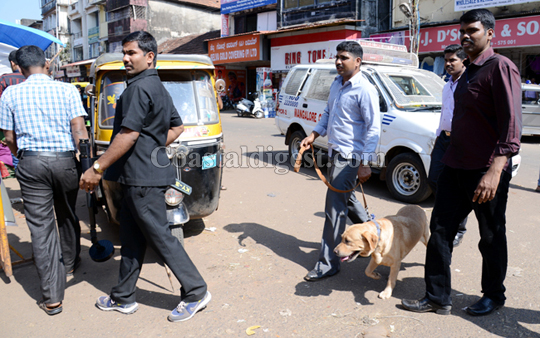
market 3

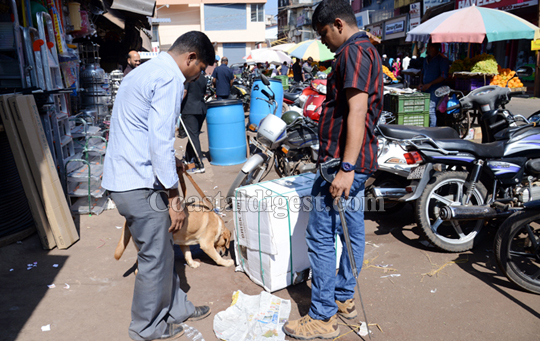
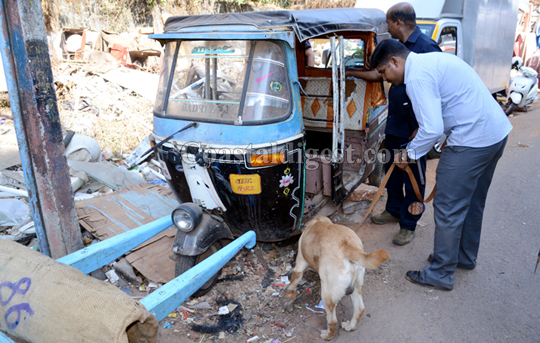
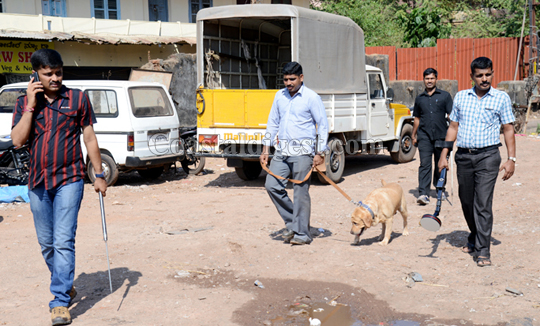
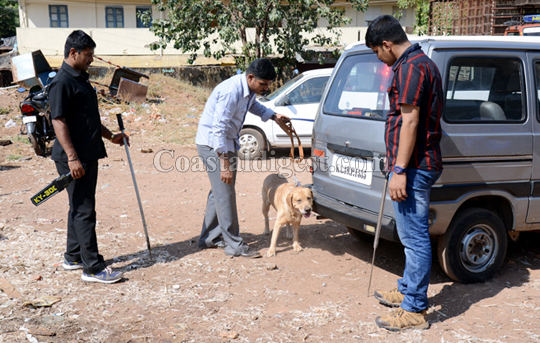
The police control room received the call at about 1 p.m. from a landline number of a shop. The Bomb Detection and Disposal Squad and policemen rushed and sanitised the whole market area. After a search for nearly two hours, the call was found to be a hoax.

Meanwhile, the police team went to the grocery shop in the Kankanady market area from where the call had been made. The owner of the shop told the police that the call was made by a boy from Ullal who had come to deliver eggs.

When confronted, the boy reportedly told the shop owner that he had made the call on a casual note and ran away. The police have traced the boy in Ullal. While the boy claims to be 17, the police are verifying his school records to know whether it was true.

The Mangaluru Police Commissioner M. Chandra Sekhar said a case has been registered against the boy for a non-cognisable offence. As per law, further action against the boy will be taken as per the direction of the jurisdictional court.
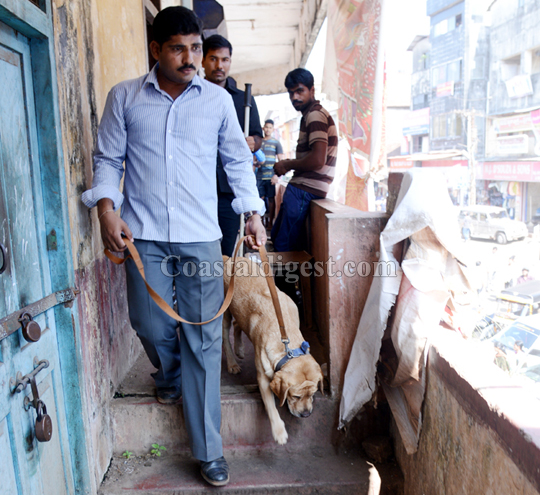
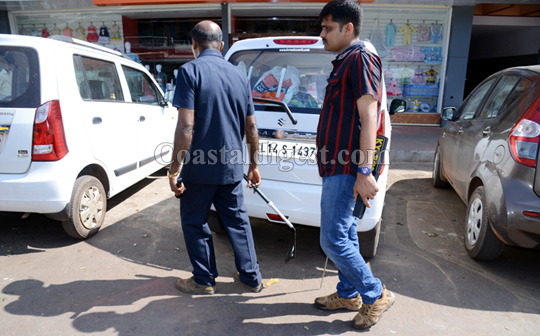
market 1

market 2

market 4

market 5

market 6

market 7

market 8

Comments

rikaz
 - 
Tuesday, 26 Jan 2016

Its very bad, calling police giving them unwanted tensions....at the same time public has to suffer....sever punishment must be given to the guilty...otherwise similar kind of incident would happen now and than....

Add new comment

  • Coastaldigest.com reserves the right to delete or block any comments.
  • Coastaldigset.com is not responsible for its readers’ comments.
  • Comments that are abusive, incendiary or irrelevant are strictly prohibited.
  • Please use a genuine email ID and provide your name to avoid reject.
News Network
April 5,2020

Madikeri, Apr 5: Following the novel Coronavirus and imposition of Lockdown in the country and departure of the migrant labour force to their hometowns, the harvest of Pepper and post-harvest process of Coffee have taken a hit in Kodagu region of Karnataka.

In the Coffee land, most of the workers at these estates are primarily from north Karnataka and neighbouring districts, including Periyapatna and Hunsur taluks in Mysuru District. Local workers are also sourced for the job as the harvest area is large.

The Kodagu district which already faced severe natural calamity during the last two years now added with the COVID-19 outbreak and the subsequent Lockdown, many workers have returned to their home districts, barring a few who have been working in the plantations for many years and reside in the estates themselves.

Comments

Add new comment

  • Coastaldigest.com reserves the right to delete or block any comments.
  • Coastaldigset.com is not responsible for its readers’ comments.
  • Comments that are abusive, incendiary or irrelevant are strictly prohibited.
  • Please use a genuine email ID and provide your name to avoid reject.
News Network
April 26,2020

New Delhi, Apr 26: The Centre will bring back the Indian citizens stranded abroad due to the ban on arrival of international passenger aircraft, only if the respective states they belong to agree to allow them to come back home and make necessary arrangements to quarantine them after their return.

The Ministry of External Affairs (MEA) has started consultations with the State Governments on bringing back the Indians, who got stranded in the United States, United Kingdom, France, Italy, Canada and many other foreign countries due to the ban on arrival of international passenger aircraft to any airport in the country. The decision on facilitating their return to the country would be taken after getting feedback on preparedness of the States and the Union Territory to receive them following all required health precautions, Cabinet Secretary Rajiv Gauba said.

Gauba on Saturday had a video-conference with the Chief Secretaries of all States and Union Territories to review the implementation of the restrictions on travel and transport as well as the lockdown imposed across the country to contain the COVID-19 pandemic.

Though the Government earlier either evacuated or facilitated the return of nearly 28000 Indians from a number of foreign countries affected by the COVID-19 pandemic, it almost stopped doing so after the ban on arrival of international passenger aircraft was enforced on March 23 in the wake of the spurt in the number of COVID-19 cases in India.

Thousands of Indian students, tourists, professionals and others are stranded around the world, including in the countries, where respective governments had imposed lockdowns to contain the pandemic. They have been desperately requesting the government on social media to evacuate them.

Comments

Add new comment

  • Coastaldigest.com reserves the right to delete or block any comments.
  • Coastaldigset.com is not responsible for its readers’ comments.
  • Comments that are abusive, incendiary or irrelevant are strictly prohibited.
  • Please use a genuine email ID and provide your name to avoid reject.
News Network
February 28,2020

Bengaluru, Feb 28: Historian S. Shettar, 85, breathed his last early on February 28 in Bengaluru. He was suffering from respiratory problems and was hospitalised for over a week.

Shettar was known for his multi-disciplinary work, encompassing linguistics, epigraphy, anthropology, the study of religions and art history. He had extensively worked on the Jain practice of ritual death in Karnataka and Asoka edicts. He had studied and compiled early edicts in Kannada and worked extensively on the growth of Kannada language down the ages.

Born in 1935 at Hampasagara, Ballari district, he went on to study at Cambridge University and started his career as a Professor of History at Karnatak University, Dharwad, his alma mater. He later headed the National Museum Institute of the History of Art, Conservation and Museology in 1978 and Indian Council for Historical Research in 1996. He was also a visiting professor at the National Institute of Advanced Studies, Bengaluru.

He was a bilingual historian who wrote in English for most of his career, but started writing in Kannada in later years. In the last two decades, he developed a keen interest in linguistics and wrote multiple books on classical Kannada and Prakrit. His 2007 book “Shangam Tamilagam” is considered a seminal work in the study of the early period of Dravidian languages. It won him Bhasha Samman from Central Sahitya Akademi. He later wrote two works on Halegannada, classical Kannada. His most recent work was “Prakrita Jagadvalaya” in 2018.

Comments

Add new comment

  • Coastaldigest.com reserves the right to delete or block any comments.
  • Coastaldigset.com is not responsible for its readers’ comments.
  • Comments that are abusive, incendiary or irrelevant are strictly prohibited.
  • Please use a genuine email ID and provide your name to avoid reject.