How long will people be fooled with ‘mandir wahi baneyenge’ slogan, Thackeray asks

Agencies
November 23, 2018

Mumbai, Nov 23: Shiv Sena chief Uddhav Thackeray Thursday said the Ram temple issue is raked up before every election and wondered for how long will people be ‘fooled’ with the ‘mandir wahi banayenge’ slogan.

Thackeray said that during his visit to Ayodhya on November 25, he would “seek an answer” as to how many more elections will people be fooled with the slogan.

The Sena chief collected soil from Shivneri fort in Junnar tehsil of Pune district, where Maratha warrior king Chhatrapati Shivaji Maharaj was born. He told reporters that he will carry the soil to Ayodhya during his visit on Sunday.

Thackeray had announced during the Shiv Sena’s Dussehra rally in Mumbai that he will visit Ayodhya on 25 November and “question” Prime Minister Narendra Modi on the issue of the construction of the Ram temple.

“The soil where Chhatrapati Shivaji Maharaj was born carries with it sentiments of all Hindus and collecting these sentiments will speed up the process of the construction of Ram temple,” he said.

“The issue of Ram temple is raked up before every election. I will seek an answer as to for how many more elections will the people be fooled with the slogan Mandir wahi banayenge,” he said.

The slogan is used by Hindutva groups, who aim to build a Ram temple on the site of the demolished Babri Masjid in Ayodhya.

Asked if permissions were granted for his public rally in Ayodhya, Thackeray said his original programme includes visit to the site to seek Lord Ram’s blessings, as announced in the rally.

“Seers there had expressed their desire that I should visit the site, so I will take their blessings and also take part in the evening aarti on the banks of the Sarayu river,” he said.

In a bid to intensify his party’s campaign for the Ram temple in Ayodhya, Thackeray has given a new slogan– ‘Pehle mandir, fir sarkaar’ (first the temple, then the government).

A Sena functionary said a special train has been booked to ferry Shiv Sena members to Ayodhya for Thackeray’s visit.

Women party workers and Yuva Sena cadres have been asked not to come to Ayodhya for want of accommodation, he said.

Comments

zahoor ahmed,K…
 - 
Saturday, 24 Nov 2018

 Jab tak beakoof is desh me rahenge. aap bi kuch kam nahi.

Add new comment

  • Coastaldigest.com reserves the right to delete or block any comments.
  • Coastaldigset.com is not responsible for its readers’ comments.
  • Comments that are abusive, incendiary or irrelevant are strictly prohibited.
  • Please use a genuine email ID and provide your name to avoid reject.
Agencies
June 20,2020

New Delhi, Jun 20: After Prime Minister Narendra Modi said there are no foreign incursions into India, China has once again claimed that Galwan valley of Ladakh union territory is located on the Chinese side of the Line of Actual Control (LAC).

In an official statement on the step-by-step account of the Galwan face-off where 20 Indian soldiers were killed, China's foreign ministry spokesperson Zhao Lijian has said the Galwan valley is located on the Chinese side of the LAC in the west section of the China-India boundary.

"For many years, the Chinese border troops have been patrolling and on duty in this region," Zhao said alleging that since April this year, the Indian border troops have unilaterally and continuously built roads, bridges and other facilities at the LAC in the Galwan Valley.

China has lodged representations and protests on multiple occasions but India has gone even further to cross the LAC and make provocations, Zhao said.

By the early morning of May 6, the Indian border troops, who had crossed the LAC by night and trespassed into China's territory, built fortification and barricades, which impeded the patrol of Chinese border troops, Zhao said adding that they deliberately made provocations in an attempt to unilaterally change the status quo of control and management.

The Chinese border troops, he said, were "forced to take necessary measures to respond to the situation on the ground and strengthen management and control in the border areas."

In order to ease the situation, China and India have stayed in close communication through military and diplomatic channels, he said. "In response to the strong demand of the Chinese side, India agreed to withdraw the personnel who crossed the LAC and demolish the facilities, and so they did.

On June 6, the border troops of both countries held a commander-level meeting and reached consensus on easing the situation. The Indian side, he said, promised that they would not cross the estuary of the Galwan river to patrol and build facilities and the two sides would discuss and decide phased withdrawal of troops through the meetings between commanders on the ground.

"Shockingly, on the evening of June 15, India's front-line troops, in violation of the agreement reached at the commander-level meeting, once again crossed the Line of Actual Control for deliberate provocation when the situation in the Galwan Valley was already easing, and even violently attacked the Chinese officers and soldiers who went there for negotiation, thus triggering fierce physical conflicts and causing casualties."

"The adventurous acts of the Indian army have seriously undermined the stability of the border areas, threatened the lives of Chinese personnel, violated the agreements reached between the two countries on the border issue, and breached the basic norms governing international relations," the spokesperson said.

Beijing, he said, hopes that India will work with China, follow faithfully the important consensus reached between the two leaders, abide by the agreements reached between the two governments, and strengthen communication and coordination on properly managing the current situation through diplomatic and military channels, and jointly uphold peace and stability in the border areas.

Comments

Add new comment

  • Coastaldigest.com reserves the right to delete or block any comments.
  • Coastaldigset.com is not responsible for its readers’ comments.
  • Comments that are abusive, incendiary or irrelevant are strictly prohibited.
  • Please use a genuine email ID and provide your name to avoid reject.
News Network
February 29,2020

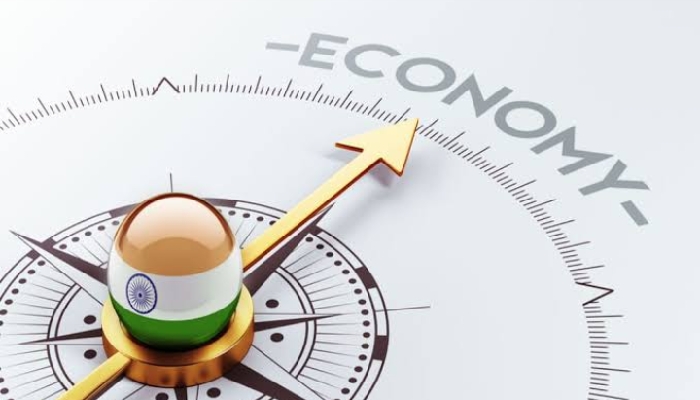
New Delhi, Feb 29: India’s economy expanded at its slowest pace in more than six years in the last three months of 2019, with analysts predicting further deceleration as the global Covid 19 coronavirus outbreak stifles growth in Asia’s third-largest economy.

The gross domestic product (GDP) data released yesterday showed government spending, private investment and exports slowing down, while there is a slight upturn in consumer spending and improvement in rural demand lent support.

The quarterly figure of 4.7% growth matched the consensus in a Reuters poll of analysts but was below a revised - and greatly increased - 5.1% rate for the previous quarter.

The central bank has warned that downside risks to global growth have increased as a result of the coronavirus epidemic, the full effects of which are still unfolding.

Prime minister Narendra Modi’s government has taken several steps to bolster economic growth, including a privatisation push and increased state spending, after cutting corporate tax rates last September.

In its annual budget presented this month, the government estimated that annual economic growth in the financial year to March 31 would be 5%, its lowest for last 11 years.

Modi’s government is targeting a slight recovery in growth to 6% for 2020/21, still far below the level needed to generate jobs for millions of young Indians entering the labour market each month.

The annual GDP figure for the September quarter was ramped up from an earlier estimate of 4.5%, while the April-June reading was similarly lifted to 5.6% from 5%, data released by the Ministry of Statistics showed on Friday.

Capital Investment Drop

In the December quarter, private investment grew 5.9%, up from 5.6% in the previous quarter, while government spending rose by 11.8%, against 13.2% in the previous three months.

However, corporate capital investment contracted by 5.2% after a 4.1% decline in the previous quarter, indicating that interest rate cuts by the central bank have failed to encourage new investment. Manufacturing, meanwhile, contracted by 0.2%.

“It appears growth slowdown is not just cyclical but more entrenched with consumption secularly joining the slowdown bandwagon even as the investment story continues to languish,” said Madhavi Arora of Edelweiss Securities in Mumbai.

Many economists said that the government stimulus could take four to six quarters of time before lifting the economy and the impact of those efforts could be outweighed by the global fallout from the coronavirus epidemic that began in China.

“The coronavirus remains the critical risk as India depends on China for both demand and supply of inputs,” said Abheek Barua, chief economist at HDFC Bank.

Indian shares sank on Friday for a sixth session running, capping their worst week in more than a decade. The NSE Nifty 50 index shed 7.3% over the week, while the Sensex dropped 6.8%, the worst weekly declines since the 2008-09 financial crisis.

Separately, India’s infrastructure output rose 2.2% year on year in January, data showed on Friday.

A spike in inflation to a more than 5-1/2 year high of 7.59% in January is expected to make the RBI hold off from further cuts to interest rates for now, while keeping its monetary stance accommodative.

Comments

Add new comment

  • Coastaldigest.com reserves the right to delete or block any comments.
  • Coastaldigset.com is not responsible for its readers’ comments.
  • Comments that are abusive, incendiary or irrelevant are strictly prohibited.
  • Please use a genuine email ID and provide your name to avoid reject.
Agencies
July 30,2020

Mumbai, Jul 30: Counterfeiting incidents have increased 24 per cent in the country in 2019 over the previous year, creating an over Rs 1 lakh crore hole in the economy, according to a report.

The report also said counterfeiters are having a free run due to the pandemic-driven disruptions to organised supply chains and the resultant spike in consumer demand.

According to the report by ASPA, a self-regulated industry body of anti-counterfeiting and traceability solutions providers, counterfeiting has risen steadily in the last few years, and exploiting the pandemic as a cover for their activities.

Between February and April 2020, over 150 incidents of counterfeiting cases were reported, mostly about fake PPE kits, sanitisers and masks taking advantage of the high demand for these products, it noted.

"There was a 24 per cent increase in counterfeiting in 2019 over 2018, leading to the loss of more than Rs 1 lakh crore to the overall economy," said Nakul Pasricha, president of Authentication Solution Providers Association.

The association works with global authorities like the International Hologram Manufacturers Association, Counterfeit Intelligence Bureau of the Interpol, and domestic industry lobbies like Ficci, he said.

Counterfeiting is a universal issue and is 3.3 per cent of global trade, according to the OECD data, impacting social and economic development across the world.

The report lists the currency, FMCG, alcohol, pharma, documents, agriculture, infrastructure, automotive, tobacco, lifestyle and apparel, as the 10 sectors impacted most by counterfeiting.

Among these, currency, alcohol and FMCG continue to be the top three sectors with the highest counterfeiting in the last two years. The FMCG sector is most vulnerable, as counterfeit incidents rose 63 per cent between 2018 (79) and 2019 when the reported cases jumped to 129.

Within the states, the fakers have a free run in Uttar Pradesh, Bihar, Rajasthan, Madhya Pradesh, Bengal, Punjab, Jharkhand, Delhi, Gujarat, and Uttarakhand, calling for urgent actions to frame anti-counterfeiting policy measures.

According to the report, UP continues to be on top followed by Bihar, Rajasthan, and together these three states represent almost 45 per cent of all counterfeiting reported in the last two years.

What is more alarming is that counterfeiting is not limited to high-end luxury items today, as common everyday items as fake cumin seeds, mustard cooking oil, ghee, hair oils, soaps, baby care vaccines and medicines are aplenty in the markets.

"There is an urgent need for building and nurturing authentication ecosystems in the country with the active involvement and active participation of all stakeholders," said Pasricha.

Comments

Add new comment

  • Coastaldigest.com reserves the right to delete or block any comments.
  • Coastaldigset.com is not responsible for its readers’ comments.
  • Comments that are abusive, incendiary or irrelevant are strictly prohibited.
  • Please use a genuine email ID and provide your name to avoid reject.