'I celebrate eid today' says Kargil war veteran Mohammed Sanaullah after HC grants him bail

Agencies
June 10, 2019

Kamrup, Jun 10: Former army officer and Kargil War veteran Mohammed Sanaullah, who was released from a detention centre in Guwahati on Saturday, was overwhelmed with emotion when he met his elder brother and family members at Kalanikah village today.

Sanaullah said that it was like an "Eid" for him now.

"It is like Eid for me. At the time of Eid I was not present but today I am with my family. I am very happy and I have full faith in justice," said Sanaullah.

He was granted bail on Friday by Gauhati High Court with a condition of Rs 20,000/- bail bond, two local sureties and his biometrics.

The High Court also issued notices to the central government and authorities of the National Register of Citizens (NRC).

Sanaullah was detained by police in May for failing to conform with the rules of NCR, a register of Indian citizens prepared in 1951 which is being updated currently to weed out illegal immigrants from Assam.

Mohammad Sanaullah, 52, who retired as an honorary Lieutenant in the Army was arrested soon after he was summoned by the Assam Police Border Organisation, or the Border Police, in Guwahati on May 28.

Before joining Border Police, Sanaullah served in the Army for 30 years and was designated as a Captain.

He was also conferred a medal by the President of India for his service.

Comments

Well Wisher
 - 
Tuesday, 11 Jun 2019

Very good action by Police. Everyone is equal in front of Law. "It should not be applied only to Muslims, but also to all the bloody killers & goons of present of India"

Add new comment

  • Coastaldigest.com reserves the right to delete or block any comments.
  • Coastaldigset.com is not responsible for its readers’ comments.
  • Comments that are abusive, incendiary or irrelevant are strictly prohibited.
  • Please use a genuine email ID and provide your name to avoid reject.
News Network
February 18,2020

Washington, Feb 18: The upcoming visit of President Donald Trump to India later this month has the potential to usher in a new era of bilateral ties between the two countries, a top American business advocacy group has said.

President Trump will pay a state visit to India on February 24 and 25 at the invitation of Prime Minister Narendra Modi. He would be accompanied by First Lady Melania Trump.

This would be the president's first bilateral visit in the third decade of the 21st century and also the first after his acquittal by the Senate in the impeachment trial.

"I believe President Trump's upcoming visit to India has the potential to usher in a new era of our bilateral ties," Mukesh Aghi, President of the US India Strategic and Partnership Forum (USISPF) said in a statement on Monday.

On the sidelines of the visit, the USISPF, in collaboration with the Federation of Indian Chambers of Commerce and Industry (FICCI) and the ORF, has announced to organise a program entitled "US-India Forum: Partners for Growth".

The full-day discussion will focus on the key pillars defining India and the US' strategic, economic, and cultural partnership over the next decade.

"We have an opportunity before us to make real progress on multiple aspects of the relationship— whether it is upholding peace and security in the Indo-Pacific region; building upon an already strong energy partnership; developing co-production and co-development opportunities in the defense space; or strengthening bilateral trade," Aghi said.

"We look forward to an extremely successful visit and some concrete outcomes from the visit," he said.

The day-long programme on February 25 in New Delhi, will bring together over 500 senior business executives, members of the US-India think tank community and leading figures of the Indian diaspora to set the agenda for this strategic partnership.

Discussions during the day will touch upon areas, including the Indo-Pacific Strategy and Maritime Security; the US-India Defence Partnership, the US-India Energy Partnership, Elevating US-India Trade and Investment and Role of the Indian Diaspora in US-India Relations.

Comments

Add new comment

  • Coastaldigest.com reserves the right to delete or block any comments.
  • Coastaldigset.com is not responsible for its readers’ comments.
  • Comments that are abusive, incendiary or irrelevant are strictly prohibited.
  • Please use a genuine email ID and provide your name to avoid reject.
Agencies
April 24,2020

New Delhi, Apr 24: Congress leader Rahul Gandhi has termed the government decision to freeze Dearness Allowance of Central government employees for a year as "insensitive and inhuman."

The former Congress President in a tweet said: "Lakhs and crores are being spent on the Bullet Train and New Delhi's Central Vista which should have been suspended, but the government has deducted DA of Central government employees and pensioners... It is insensitive and inhuman."

"The tragic part is that by deducting this amount from January 1, 2020 up to 30th June, 2021 for a period of 1.5 years, the government of India proceeds to deduct almost Rs 38 thousand crore from the income of these middle class government employees and pensioners, who rely completely on the pay and pensions that they receive," said Randeep Surjewala, chief spokesperson of Congress.

There are about 50 lakh such serving government employees and about 62 lakh pensioners.

"Even more tragic and objectionable is the fact that the government of India has not even spared our armed forces. The government has deducted Rs 11 thousand crore of the 15 lakh serving armed forces personnel and nearly 26 lakh military pensioners. What is their fault? They are serving the nation in times of all types of crises," said Surjewala.

The Congress alleged that the government did not spare the savings scheme.

Instead of curbing the wasteful expenditure, the government has been constantly hitting at the income of government employees and the middle class, it added.

Comments

Add new comment

  • Coastaldigest.com reserves the right to delete or block any comments.
  • Coastaldigset.com is not responsible for its readers’ comments.
  • Comments that are abusive, incendiary or irrelevant are strictly prohibited.
  • Please use a genuine email ID and provide your name to avoid reject.
Agencies
July 29,2020

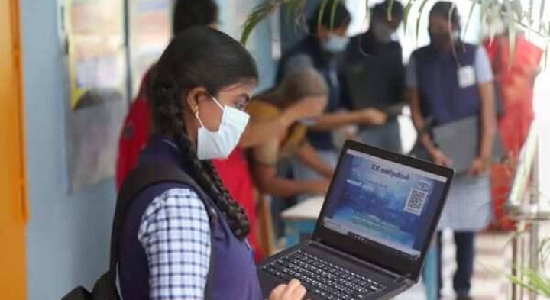
New Delhi, Jul 29: The new National Education Policy (NEP) approved by the Union Cabinet on Wednesday is set to usher in a slew of changes with the vision of creating an education system that contributes directly to transforming the country, providing high-quality education to all, and making India a global knowledge superpower.

The draft of the NEP by a panel headed by former Indian Space Research Organisation (ISRO) chief Kasturirangan and submitted to the Union Human Resource Development Minister Ramesh Pokhriyal when he took charge last year. The new NEP replaces the one formulated in 1986.

Some of the key highlights of the New Education Policy are:-

The policy aims to enable an individual to study one or more specialized areas of interest at a deep level, and also develop character, scientific temper, creativity, spirit of service, and 21st century capabilities across a range of disciplines including sciences, social sciences, arts, humanities, among others.

It identified the major problems facing the higher education system in the country and suggested changes such as moving towards multidisciplinary universities and colleges, with more institutions across India that offer medium of instruction in local/Indian languages, a more multidisciplinary undergraduate education, among others. 

The governance of such institutions by independent boards having academic and administrative autonomy has also been suggested.

Under the suggestions for institutional restructuring and consolidation, it has suggested that by 2040, all higher education institutions (HEIs) shall aim to become multidisciplinary institutions, each of which will aim to have 3,000 or more students, and by 2030 each or near every district in the country there will be at least one HEI.

The aim will be to increase the Gross Enrolment Ratio in HEIs including vocational education from 26.3 per cent (2018) to 50 per cent by 2035.

Single-stream HEIs will be phased out over time, and all will move towards becoming vibrant multidisciplinary institutions or parts of vibrant multidisciplinary HEI clusters.

It also pushes for more holistic and multidisciplinary education to be provided to the students.

Comments

Add new comment

  • Coastaldigest.com reserves the right to delete or block any comments.
  • Coastaldigset.com is not responsible for its readers’ comments.
  • Comments that are abusive, incendiary or irrelevant are strictly prohibited.
  • Please use a genuine email ID and provide your name to avoid reject.