'I celebrate eid today' says Kargil war veteran Mohammed Sanaullah after HC grants him bail

Agencies
June 10, 2019

Kamrup, Jun 10: Former army officer and Kargil War veteran Mohammed Sanaullah, who was released from a detention centre in Guwahati on Saturday, was overwhelmed with emotion when he met his elder brother and family members at Kalanikah village today.

Sanaullah said that it was like an "Eid" for him now.

"It is like Eid for me. At the time of Eid I was not present but today I am with my family. I am very happy and I have full faith in justice," said Sanaullah.

He was granted bail on Friday by Gauhati High Court with a condition of Rs 20,000/- bail bond, two local sureties and his biometrics.

The High Court also issued notices to the central government and authorities of the National Register of Citizens (NRC).

Sanaullah was detained by police in May for failing to conform with the rules of NCR, a register of Indian citizens prepared in 1951 which is being updated currently to weed out illegal immigrants from Assam.

Mohammad Sanaullah, 52, who retired as an honorary Lieutenant in the Army was arrested soon after he was summoned by the Assam Police Border Organisation, or the Border Police, in Guwahati on May 28.

Before joining Border Police, Sanaullah served in the Army for 30 years and was designated as a Captain.

He was also conferred a medal by the President of India for his service.

Comments

Well Wisher
 - 
Tuesday, 11 Jun 2019

Very good action by Police. Everyone is equal in front of Law. "It should not be applied only to Muslims, but also to all the bloody killers & goons of present of India"

Add new comment

  • Coastaldigest.com reserves the right to delete or block any comments.
  • Coastaldigset.com is not responsible for its readers’ comments.
  • Comments that are abusive, incendiary or irrelevant are strictly prohibited.
  • Please use a genuine email ID and provide your name to avoid reject.
coastaldigest.com news network
August 8,2020

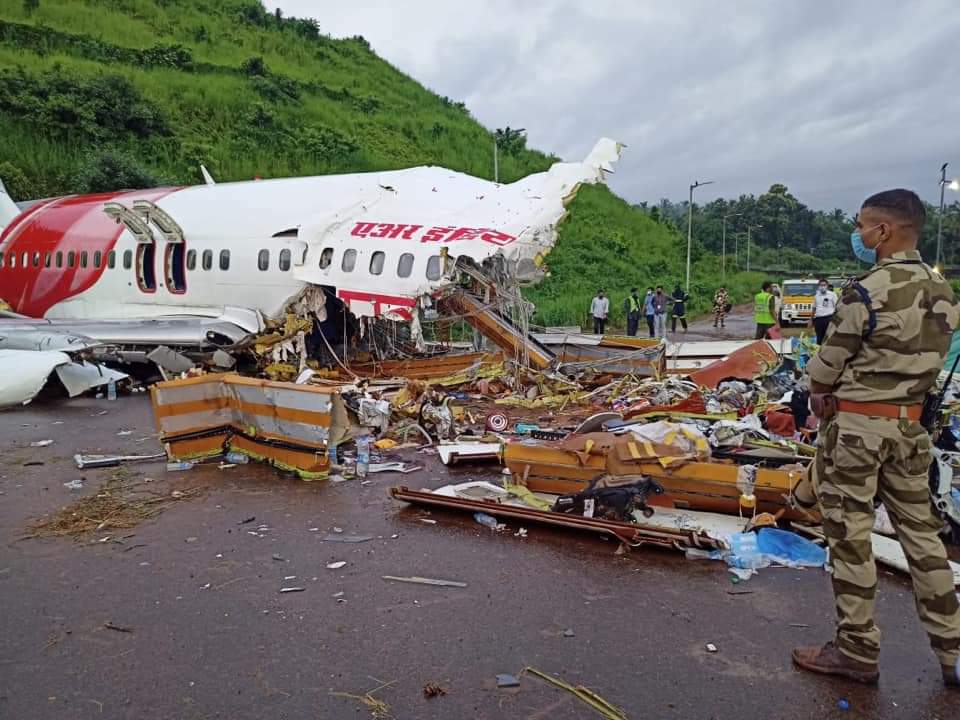
Kozhikode, Aug 8: A tailwind or crosswind could be the reason for the Air India Express flight mishap at Kozhikode international airport in Kerala, according to some aviation experts. 

Team of DGCA and AIE already reached the spot. With the death of the captain and co-pilot in the mishap, the investigation would be focusing mainly on the voice recorders and other technical aspects.

It is learnt that the ill-fated aircraft, IX 1344 with 190 onboard including crew, was initially planning to land on runway-28 of the airport. But later the pilot opted runway-10 which is toward the other direction. Pilots would be taking the decisions on the basis of inputs from ATC.

The questions now doing the rounds are what made the pilot opt runway-10 and whether the tabletop runway lacked adequate safety parameters.

An aviation expert, who didn't want to be quoted, said that Capt Deepak Sathe, who was commandeering the aircraft, was a well-experienced pilot and was also familiar with the terrains. Hence the chances of any error from his part was very unlikely. Hence a fair in-depth probe was required to find the exact cause.

Though the Kozhikode airport has an Instrument Landing System, it was of category-I for which pilot's visibility is very crucial toward a touchdown. Since it is a tabletop airport and rough weather prevailing in the region, the chances of tailwind was also high, said sources.

There had been safety concerns about the airport over quite some time. In 2011 aviation safety consultant captain Mohan Ranganathan reportedly gave a report citing the safety issues, especially the buffer zones at the end of the runway.

However, an AAI officer said that rectification steps were already done by last year by widening the Runway End Safety Area (RESA) from 90 metre to 240 metre. However, the length of the runway had to be reduced to 2,700 metre from 2,850. The AAI was also constantly pressing for increasing the runway length to 3,150 metres. But that was getting delayed due to land acquisition issues pending with the state government.

stm88 info live rtp slot

slot auto scatter hitam

Comments

Add new comment

  • Coastaldigest.com reserves the right to delete or block any comments.
  • Coastaldigset.com is not responsible for its readers’ comments.
  • Comments that are abusive, incendiary or irrelevant are strictly prohibited.
  • Please use a genuine email ID and provide your name to avoid reject.
Agencies
June 7,2020

New Delhi, Jun 7: India registered its highest single-day spike of COVID-19 cases for the fifth consecutive day on Sunday, with 9,971 new infections taking the country's tally to 2,46,628, while the death toll rose to 6,929, according to the Union Health Ministry.

India registered 287 deaths in the 24 hours since Saturday morning.

India had raced past Spain on Saturday to become the fifth worst-hit nation by the COVID-19 pandemic. Now, only the US, Brazil, Russia and the UK are ahead of it.

The number of active COVID-19 cases stands at 1,20,406, according to the Health Ministry.

A total of 1,19,292 people have recovered and one patient has migrated, the Ministry said.

During the last 24 hours, a total of 5,220 COVID-19 patients have been cured, the ministry said.

"Thus, around 48.37 per cent patients have recovered so far," a senior ministry official said.

The tally of confirmed cases includes foreigners.

The Indian Council of Medical Research has further ramped up the testing capacity for detecting the novel coronavirus in infected persons.

The number of government labs has been increased to 531 and private labs to 228, taking the total number of labs to 759.

As many as 1,42,069 samples were tested in the last 24 hours, taking the total number of samples tested till now to 46,66,386.

Deaths in India per lakh population (0.49) are much lower than the world average of 5.17 and are the lowest among countries that have eased lockdown such as Germany (10.35), Italy (55.78), the UK (59.62) and Spain (58.06), as per a WHO situation report cited by the Health Ministry.

Cases in India per lakh population (17.32) are much lower than the world average of 87.74 and are the lowest among countries that have eased lockdown such as Germany (219.93), Italy (387.33), the UK (419.54) and Spain (515.61).

Of the 287 deaths reported since Saturday morning, 120 were from Maharashtra, 53 from Delhi, 29 from Gujarat, 19 from Tamil Nadu, 17 from West Bengal, 15 from Madhya Pradesh, 13 from Rajasthan, 10 from Telangana, three from Jammu and Kashmir, two each from Karnataka, Punjab and Chhattisgarh and one each from Kerala and Bihar.

Of the total 6,929 fatalities, Maharashtra tops the tally with 2,969 deaths, followed by Gujarat with 1,219 deaths, Delhi with 761, Madhya Pradesh with 399, West Bengal with 383, Uttar Pradesh with 257, Tamil Nadu with 251, Rajasthan with 231, Telangana with 123 and Andhra Pradesh with 73 deaths.

The death toll reached 59 in Karnataka and 50 in Punjab.

Jammu and Kashmir has reported 39 fatalities due to the disease, Bihar has 30, Haryana has 24 deaths, Kerala has 15, Uttarakhand has 11, Odisha has eight and Jharkhand has reported seven deaths so far.

Himachal Pradesh and Chandigarh have registered five COVID-19 fatalities each. Assam and Chhattisgarh have recorded four deaths each.

Meghalaya and Ladakh have reported one COVID-19 fatality each, according to the Health Ministry data.

According to the Ministry's website, more than 70 per cent of the deaths are due to comorbidities.

The highest number of confirmed cases in the country are from Maharashtra at 82,968, followed by Tamil Nadu at 30,152, Delhi at 27,654, Gujarat at 19,592, Rajasthan at 10,331, Uttar Pradesh at 9,733 and Madhya Pradesh at 9,228, according to the Health Ministry data updated in the morning.

The number of COVID-19 cases has gone up to 7,738 in West Bengal, 5,213 in Karnataka, 4,915 in Bihar and 4,510 in Andhra Pradesh.

It has risen to 3,952 in Haryana, 3,496 in Telangana, 3,467 in Jammu and Kashmir and 2,781 in Odisha.

Punjab has reported 2,515 coronavirus infections so far, while Assam has 2,397 cases. A total of 1,807 people have been infected with the virus in Kerala and 1,303 in Uttarakhand.

Jharkhand has registered 1,000 cases, Chhattisgarh has 923, Tripura has 747, Himachal Pradesh has 400, Chandigarh has 309 cases, Goa has 267, Manipur has 157, Nagaland has 107, and Puducherry and Ladakh have 99 cases.

Arunachal Pradesh has 47 COVID-19 cases, while Andaman and Nicobar Islands and Meghalaya have registered 33 infections each.

Mizoram has reported 24 cases and Dadar and Nagar Haveli has 19 cases, while Sikkim has reported seven cases till now.

"8,605 cases are being reassigned to states," the Ministry said on its website adding, "our figures are being reconciled with the ICMR."

State-wise distribution is subject to further verification and reconciliation, it added.

Comments

Add new comment

  • Coastaldigest.com reserves the right to delete or block any comments.
  • Coastaldigset.com is not responsible for its readers’ comments.
  • Comments that are abusive, incendiary or irrelevant are strictly prohibited.
  • Please use a genuine email ID and provide your name to avoid reject.
News Network
February 19,2020

New Delhi, Feb 19: India will switch to the world's cleanest petrol and diesel from April 1 as it leapfrogs straight to Euro-VI emission compliant fuels from Euro-IV grades now - a feat achieved in just three years and not seen in any of the large economies around the globe.

India will join the select league of nations using petrol and diesel containing just 10 parts per million of sulphur as it looks to cut vehicular emissions that are said to be one of the reasons for the choking pollution in major cities.

Sanjiv Singh, Chairman of Indian Oil Corp (IOC) - the firm that controls roughly half of the country's fuel market, said almost all refineries began producing ultra-low sulphur BS-VI (equivalent to Euro-VI grade) petrol and diesel by the end of 2019 and oil companies have now undertaken the tedious task of replacing every drop of fuel in the country with the new one.

"We are absolutely on track for supplying BS-VI fuel from April 1. Almost all refineries have begun supplying BS-VI fuel and the same has reached storage depots across the country," he said.

From storage depots, the fuel has started travelling to petrol pumps and in the next few weeks all of them will only have BS-VI grade petrol and diesel, he said. "We are 100 per cent confident that fuel that will flow from nozzles at all the petrol pumps in the country on April 1 will be BS-VI emission compliant fuel."

India adopted Euro-III equivalent (or Bharat Stage-III) fuel with a sulphur content of 350 ppm in 2010 and then took seven years to move to BS-IV that had a sulphur content of 50 ppm. From BS-IV to BS-VI it took just three years.

"It was a conscious decision to leapfrog to BS-VI as first upgrading to BS-V and then shifting to BS-VI would have prolonged the journey to 4 to 6 years. Besides, oil refineries, as well as automobile manufacturers, would have had to make investments twice - first to producing BS-V grade fuel and engines and then BS-VI ones," he said.

State-owned oil refineries spent about Rs 35,000 crore to upgrade plants that could produce ultra-low sulphur fuel. This investment is on top of Rs 60,000 crore they spent on refinery upgrades in the previous switchovers.

BS-VI has a sulphur content of just 10 ppm and emission standards are as good as CNG.

Originally, Delhi and its adjoining towns were to have BS-VI fuel supplies by April 2019 and the rest of the country was to get same supplies from April 2020.

But oil marketing companies switched over to supply of BS-VI grade fuels in the national capital territory of Delhi on April 1, 2018.

The supply of BS-VI fuels was further extended to four contiguous districts of Rajasthan and eight of Uttar Pradesh in the National Capital Region (NCR) on April 1, 2019, together with the city of Agra.

BS-VI grade fuels were made available in 7 districts of Haryana from October 1, 2019.

Singh said the new fuel will result in a reduction in NOx in BS-VI compliant vehicles by 25 per cent in petrol cars and by 70 per cent in diesel cars.

The switchover, he said, is a tedious task as every drop of old, higher-sulphur content fuel has to be flushed out in depots, pipelines and tanks before being replaced by BS-VI.

"We are confident of disruption-free switchover to BS-VI supplies across the country," he said. "What we will be supplying is the best quality available anywhere in the world. You don't have any better fuel that is supplied in any part of the world. Perhaps our BS-VI fuel will be better than equivalent fuel in some parts of the US and Europe."

India adopted a fuel upgradation programme in the early 1990s. Low lead gasoline (petrol) was introduced in 1994 in Delhi, Mumbai, Kolkata and Chennai. On February 1, 2000, unleaded gasoline was mandated nationwide.

Similarly, BS-2000 (Euro-I equivalent, BS-1) vehicle emission norms were introduced for new vehicles from April 2000. BS-II (Euro-II equivalent) emission norms for new cars were introduced in Delhi from 2000 and extended to the other metro cities in 2001.

Benzene limits have been reduced progressively from 5 per cent in 2000 to 1 per cent nationwide. Lead content in gasoline was removed in phases and only unleaded gasoline is being produced and sold from February 1, 2000.

The octane number of gasoline signifies the improved performance of the engine. Loss in octane number due to phasing out of lead was made up by installing new facilities in the refinery and changes in refinery operation. RON (Research Octane Number) of gasoline for BS-2000 spec was increased to 88. This has over time been increased to 91.

Singh said sulphur reduction will reduce Particulate Matter (PM) emissions even in the in-use older generation diesel vehicles.

Comments

Add new comment

  • Coastaldigest.com reserves the right to delete or block any comments.
  • Coastaldigset.com is not responsible for its readers’ comments.
  • Comments that are abusive, incendiary or irrelevant are strictly prohibited.
  • Please use a genuine email ID and provide your name to avoid reject.