


I-T unearths Rs 871 crore scam in Rajkot bank

January 9, 2017

New Delhi, Jan 9: The income tax (I-T) department has detected huge alleged discrepancies in the transactions of a Rajkotbased cooperative bank where Rs 871 crore deposits were made, over 4,500 new accounts opened and more than five dozen accounts having same mobile number initiated, making it one of the biggest cases of black fund generation post November 8.
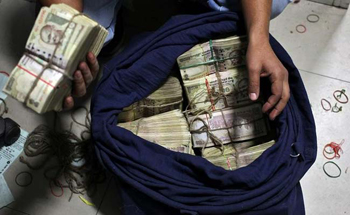
rajkotThe department's Ahmedabad probe wing has now initiated action under tax laws and has sought full details from the bank after it conducted survey operations against it sometime back and found large irregularities.

Officials said the department's investigation till now has found that cash deposits of Rs 871 crore, majorly using the old notes of Rs 500 and Rs 1000, was made in this bank between November 9-December 30 last year while Rs 108 crore was withdrawn during the same period in a highly suspicious manner not commensurate with the bank's activities during the same period in 2015 or at other times.

The sleuths have identified at least 25 high value cash deposits post demonetization where Rs 30 crore monies have been transacted in an alleged suspicious and unsatisfactory manner and in accounts with purported weak KYC norms in place. An I-T analysis report prepared in this regard states that Rs 10 crore funds were deposited in a number of "dormant" accounts post the currency scrap, including in that of a petroleum firm where Rs 2.53 crore was deposited.

What has startled the taxman has been the fact that a total of "4,551 new accounts were opened in the bank post demonetization as against the average 5,000 of such accounts usually opened in the full year while 62 of these were opened using one mobile number." It was detected, they said, that there were blatant discrepancies in the pay-in slips filled to make the deposits as none of them had PAN numbers quoted, many had no signatures of the depositor even as none had any documents to reflect the source of these amounts.

"It was found that the son of bank's ex-director has received Rs 1 crore through cash deposits in 30 bank accounts. All the pay-in slips were filled by the same person. "Also, the mother of the vice-chairman of the bank has received 64 lakh of cash deposits which have ultimately been transferred to a jeweller," the report alleged and added the funds moved through RTGS and other banking transfer channels.

Comments

Skazi
 - 
Monday, 9 Jan 2017

Shaji, even the role of notorious BJP leaders can not be ruled out ....

Let the justice prevail, and INDIA be CLEAN ....

shaji
 - 
Monday, 9 Jan 2017

I hope investigation will lead to involvement of anti social, anti national and terrorist organisation in this huge currency deal.

Add new comment

  • Coastaldigest.com reserves the right to delete or block any comments.
  • Coastaldigset.com is not responsible for its readers’ comments.
  • Comments that are abusive, incendiary or irrelevant are strictly prohibited.
  • Please use a genuine email ID and provide your name to avoid reject.
coastaldigest.com news network
May 29,2020

Mangaluru, May 29: Several non-resident Kannadigas from various Gulf countries including Kingdom of Saudi Arabia on Thursday, May 28, interacted with Dakshina Kannada MP Nalin Kumar Kateel through a video conference and urged him to allow the Kannadigas stranded in the Middle East to return by facilitating the operation of repatriation flights.

The development comes amidst reports that lack of preparedness on parts of the local authorities in Karnataka compelling the Centre to delay the operation of flights from Middle East to Mangaluru and Bengaluru airports.

“We have never forgotten you. We will take necessary steps for your safe return to the homeland as soon as possible,” assured Mr Kateel after paying heed to the complaints of non-resident Kannadigas.

The video conference was organised by Ravi Shetty, ex president of Kannada Sangha Qatar.

Praveen Kumar Shetty, president, Karnataka NRI Forum of UAE, Sarvottam Shetty of UAE Karnataka Sangha, Avikshit Rai, Ravi Shetty, former president of Qatar Kannada Sangha, Santosh Shetty of Riyadh Karnataka NRI Forum, Zakariya Jokatte, president of Dammam Karnataka NRI Forum, Mohammad Mansoor, president of Bahrain Indian Overseas Congress, NS Shetty Kuwait, Pradeep Shetty of Kannada Sangha Bahrain, Karunakar Rao, Shashidhar Shetty Oman, Rajesh of Kuwait Kannada Sangha, Ramesh Bhandari, M E Muloor and Sunil Kulkarni among others participated in the video conference.

Comments

Add new comment

  • Coastaldigest.com reserves the right to delete or block any comments.
  • Coastaldigset.com is not responsible for its readers’ comments.
  • Comments that are abusive, incendiary or irrelevant are strictly prohibited.
  • Please use a genuine email ID and provide your name to avoid reject.
News Network
March 8,2020

Bengaluru, Mar 8: The economic slowdown in the country had a cascading effect on Karnataka, as its growth rate for outgoing fiscal 2019-20 is projected to be 6.8 per cent against 7.8 per cent in the last fiscal (2018-19), a senior official said on Saturday.

"The Gross State Domestic Product (GSDP) is estimated to be 1 per cent less at 6.8 per cent for this fiscal from 7.8 per cent in the last fiscal due to slowdown in manufacturing (industry) and services sectors," an official of the state finance department told media.

Though the agriculture sector has revived from 1.6 per dent in the drought-hit last fiscal (2018-19) to register 3.9 per cent this fiscal, growth rates of industries and services will be 4.8 per cent and 7.9 per cent for 2019-20 against 5.6 per cent and 9.8 per cent respectively in 2018-19.

"The GSDP is projected to grow at 6.3 per cent in the ensuing fiscal of 2020-21 due to continued slowdown in the national economy," the official hinted.

According to the state's economic survey for 2019-20, the farm sector grew more than double to 3.9 per cent from 1.6 per cent a year ago due to increase in the production of foodgrains, dairy products and fish catch.

Foodgrain production across the state rose to 136 lakh tonnes from 128 lakh tonnes a year ago, the survey revealed.

"In line with the national Gross Domestic Product (GDP) growth rate decline, Karnataka's GSDP has declined from a high of 13.3 per cent in 2016-17 to a low of 6.8 per cent in 2019-20.

"The GSDP has declined from a double-digit growth of 10.8 per cent in 2017-18 to 7.8 per cent in 2018-19 and 6.8 per cent in 2019-20," the survey pointed out.

The survey has adopted the all-India growth rate for the services sector growth in the state, which reflects the impact of slowdown in the key sector.

At current prices, the southern state's GSDP is expected to be Rs 16,99,115 crore (budget estimates) with a 10 per cent growth rate in the next fiscal (2020-21).

"Real estate, professional services and ownership of dwellings contributed 35.31 per cent to the GSDP in 2019-20, followed by manufacturing with 15.32 per cent, trade and repair services 9.51 per cent and crops 7.44 per cent," said the survey findings.

Per capital income in the state at current prices is estimated to be Rs 2,31,246 in 2019-20, an increase of 8.8 per cent from Rs 2,12,477 in 2018-19.

"The per capita income in the state is 58.4 per cent more than that of all-India rate at Rs 1,35,050 in this fiscal," the survey added.

Comments

Add new comment

  • Coastaldigest.com reserves the right to delete or block any comments.
  • Coastaldigset.com is not responsible for its readers’ comments.
  • Comments that are abusive, incendiary or irrelevant are strictly prohibited.
  • Please use a genuine email ID and provide your name to avoid reject.
Agencies
June 30,2020

Washington, Jun 30: Researchers in China have discovered a new type of swine flu that is capable of triggering a pandemic, according to a study published Monday in the US science journal PNAS.

Named G4, it is genetically descended from the H1N1 strain that caused a pandemic in 2009.

It possesses "all the essential hallmarks of being highly adapted to infect humans," say the authors, scientists at Chinese universities and China's Center for Disease Control and Prevention.

The researchers then carried out various experiments including on ferrets, which are widely used in flu studies because they experience similar symptoms to humans -- principally fever, coughing and sneezing. 

G4 was observed to be highly infectious, replicating in human cells and causing more serious symptoms in ferrets than other viruses.

Tests also showed that any immunity humans gain from exposure to seasonal flu does not provide protection from G4.

According to blood tests which showed up antibodies created by exposure to the virus, 10.4 percent of swine workers had already been infected.

The tests showed that as many as 4.4 percent of the general population also appeared to have been exposed.

The virus has therefore already passed from animals to humans but there is no evidence yet that it can be passed from human to human -- the scientists' main worry.

"It is of concern that human infection of G4 virus will further human adaptation and increase the risk of a human pandemic," the researchers wrote.

The authors called for urgent measures to monitor people working with pigs.

"The work comes as a salutary reminder that we are constantly at risk of new emergence of zoonotic pathogens and that farmed animals, with which humans have greater contact than with wildlife, may act as the source for important pandemic viruses," said James Wood, head of the department of veterinary medicine at Cambridge University.

A zoonotic infection is caused by a pathogen that has jumped from a non-human animal into a human.

Comments

Add new comment

  • Coastaldigest.com reserves the right to delete or block any comments.
  • Coastaldigset.com is not responsible for its readers’ comments.
  • Comments that are abusive, incendiary or irrelevant are strictly prohibited.
  • Please use a genuine email ID and provide your name to avoid reject.