


IAS 2nd topper Kashmir's Khan turned failure into opportunity

May 10, 2016

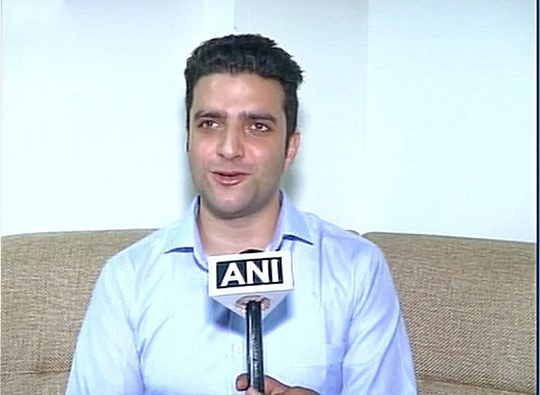
Srinagar, May 10: He saw an opportunity in failure and today Athar Aamir-ul-Shafi Khan is all smiles after securing second rank in the prestigious civil services examination, 2015.
ias copy

23-year-old Khan made it to the coveted Indian Administrative Service (IAS) in his second attempt.

"I had appeared last year but my ranking was down and, therefore, I was offered Indian Railway Traffic Service (IRTS). I joined but IAS was my first love and I planned to to do both -- join the training and appear again."

Hailing from Devipora-Mattan village in Anantnag district, 60 km south of Srinagar, Khan, son of a school teacher, says he became interested in joining IAS after Shah Faesal from the Kashmir Valley topped civil services examination in 2009.

"I did not have a great exposure to coaching classes but I was confident that I can do it. Extensive reading and complete dedication made me realise my dream," he said.

Besides this, he said, he always wanted to be of use to the society by being "with the people" and doing something "for the people".

Khan, who did his 11th and 12th from prestigious Tyndale Biscoe School in Srinagar, said he had made it to the IIT but did not join as he was offered a B-Tech course when he wanted to pursue BE. "This also acted as a catalyst for me to appear for the civil services and I qualified last year.

"I met Mr Shah Faesal and took his advice on whether I should join the services. We had a long discussion and after that we arrived at a conclusion that I should join as well as appear again.

"So here I am....happy at the decision. I have already given IAS as my first choice and Jammu and Kashmir as my cadre preference. I believe that there is a lot of scope for me to do something for my people in the state," says Khan, who is at present undergoing training at Lucknow for IRTS.

Meanwhile, an elated Mohammed Shafi Khan, who teaches economics at the Government Higher Secondary school in Anantnag, has a steady stream of visitors coming to congratulate him on his son's success.

"I am a proud father today. The best moment in a father's life is when he is known by his children and today my son has given me this happiness," an excited Khan Sr said.

Expressing the hope that his son's success will inspire the young generation to try and make it big in life and not let failure overwhelm them, Khan said, "It gives me immense pleasure that my son did it against all odds. He was undergoing training at Lucknow for his IRTS and simultaneously he was preparing for the civil services exam again.

"His hard work has paid rich dividends. Allah has listened to our prayers," he said.

Comments

Aslam Sheikh
 - 
Wednesday, 11 May 2016

Congrats brother, May Allah bless you!!

Add new comment

  • Coastaldigest.com reserves the right to delete or block any comments.
  • Coastaldigset.com is not responsible for its readers’ comments.
  • Comments that are abusive, incendiary or irrelevant are strictly prohibited.
  • Please use a genuine email ID and provide your name to avoid reject.
coastaldigest.com web desk
July 6,2020

Wayanad, Jul 6: DM Education and Research Foundation (DMERF), headed by Dr Azad Moopen, has come forward to handover DM WIMS Medical College, Nursing and Pharmacy Colleges and its associated institutions in Wayanad to the Kerala Government. 

According to Azad Moopen, Managing Trustee, DMERF, the Kerala Government has been deliberating to set up a medical college in the area over the last 7-8 years to address the challenges being faced by the local population due to lack of local availability of advanced healthcare facilities under the government sector. 

The handover by DMERF would address the Government's need. DM WIMS is one of the few NABH accredited medical colleges in the country, he said.

The DM WIMS Medical College and its associated institutions were established by the DMERF Trust 10 years ago to help the backward community of the district. 

Run in a charitable manner, the medical college has a capacity of 150 seats and has seen two batches of doctors graduate from the institution. With a total built up area of 14 lakh sq feet, it also has a 700-bed super-specialty hospital catering to the local community and helping in training healthcare professionals, a 100-bed specialty hospital, a pharmacy college, and a nursing college.

A new medical college by the government will require substantial investments and minimum of 5 years to become functional. “We think that DM WIMS can cater to the requirement of the government and setting up another medical college might not be required to cater to the existing population,” he said.

Moopen also announced a donation of Rs 250 crore out of the total investment in the institutions to the government to provide treatment to the needy population in the backward, landlocked district and to train good quality doctors from the State.

Comments

Add new comment

  • Coastaldigest.com reserves the right to delete or block any comments.
  • Coastaldigset.com is not responsible for its readers’ comments.
  • Comments that are abusive, incendiary or irrelevant are strictly prohibited.
  • Please use a genuine email ID and provide your name to avoid reject.
Wafa Sultana
April 4,2020

Over the last couple of days when the world was occupied with unifying efforts to fight the deadly Covid19 pandemic, sections of Indian media provided viewers a familiar scapegoat – the Indian Muslims – who are often stereotyped as a community being constantly at loggerheads with the citizenry and the State. Biased media channels were quick to resort to blaming the entire Muslim community for the spread of the disease in the country, thanks to an ill-timed Tablighi Jamaat gathering at its international headquarters in Delhi’s Nizamuddin. Unsurprisingly, the opprobrium was also marked by a sudden spike in WhatsApp forwards of videos with people wearing skullcaps licking spoons and performing Sufi breathing rituals, suggesting some sort of wild conspiracy on the part of the community to spread the virus.  Some media channels were quick to formulate, hypothesize and provide loose definitions of a newly discovered form of Jihad i.e. ‘Corona Jihad ’ thereby vilifying the Islamic faith and its followers.

While the investigation on the culpability of the organizers of the Nizamuddin event is still ongoing, there is enough information to suggest that the meeting was held before any lockdown was in force, and the problem began when there was no way of getting people out once the curfew was announced. Be that as it may, there is little doubt that organizing a meet of such a scale when there is a global pandemic smacks of gross misjudgment, and definitely the organizers should be held accountable if laws or public orders were defied. Attendees who attempt to defy quarantine measures must be dealt with strictly. However, what is alarming is that the focus and narrative have now shifted from the unfortunate event at Nizamuddin to the Tablighi Jamaat itself.

For those not familiar with the Tablighi Jamaat, the organization was founded in 1926 in Mewat by scholar Maulana Mohammad Ilyas. The Jamaat’s main objective was to get Muslim youth to learn and practice pristine Islam shorn of external influences. This is achieved through individuals dedicating time for moral and spiritual upliftment secluded from the rest of the world for a brief period of time. There is no formal membership process. More senior and experienced participants typically travel from one mosque to other delivering talks on religious topics, inviting local youth to attend and then volunteer for a spiritual retreat for a fixed number of days to a mosque in a nearby town or village to present the message to their co-religionists. Contrary to ongoing Islamophobic rhetoric, the movement does not actively proselytize. The focus is rather on getting Muslims to learn the teachings and practices of Islam.  This grassroots India-based movement has now grown to almost all countries with substantial Muslim populations. Its annual meets, or ‘ijtemas’ are among the largest Islamic congregations in the world after the annual Haj. One of the reasons for its popularity and wide network in the subcontinent and wordwide is the fact that it has eschewed the need for scholarly intervention, focusing on peer learning of fundamental beliefs and practice rather than high-falutin ideological debates. The Tablighi Jamaat also distinguishes itself from other Islamic movements through its strictly apolitical nature, with a focus on individual self-improvement rather than political mobilization. Hardships and difficulty in the world are expected to be face through ‘sabr’ (patience) and ‘dua’ (supplication),  than through quest for political power or influence. In terms of ideology, it is very much based on mainstream Sunni Islamic principles derived from the Deobandi school.

So, why is all this background important in the current context? While biased media entities have expectedly brought out their Islamophobic paraphernalia out for full display, more neutral commentators have tried to paint the Tablighi Jamaat as a fringe group and have tried to distance it from 'mainstream Muslims'. While the intent is no doubt innocent, this is a trap we must not fall into. This narrative, unfortunately, is also gaining ground due to apathy some Muslims have for the group, accusing it of being “disconnected from the realities of the world”. Unlike other Muslim organizations and movements, the Tablighi Jamat, by virtue of its political indifference, does not boast of high-profile advocates and savvy spokespersons who can defend it in mainstream or social media.  The use of adjectives such as 'outdated' and 'orthodox' by liberal columnists to describe the Jamaat feeds into the malignant attempt to change the narrative from the control of the spread of the pandemic due to the Nizamuddin gathering to 'raison d'etre' of the organization itself.

A large mainstream religious group like the Tablighi Jamaat with nearly a hundred-year history, normally considered to be peaceful, apolitical and minding its own business is now suddenly being villainized owing to unfortunate circumstances. Biased media reactions filled with disgust and hate seem to feed the Indian public conscience with a danngerous misconception - to be a nominal Muslim is okay but being a practicing one is not.  For those committed to the truth and fighting the spread of Islamophobia, the temptation to throw the entire Tablighi Jamaat under the bus must be resisted.

The writer is a lawyer and research scholar at Qatar University. Her research interests include Islamic law and politics.

Comments

zahoorahmed
 - 
Saturday, 4 Apr 2020

great article! provides a great perspective on tableeg jamat

Add new comment

  • Coastaldigest.com reserves the right to delete or block any comments.
  • Coastaldigset.com is not responsible for its readers’ comments.
  • Comments that are abusive, incendiary or irrelevant are strictly prohibited.
  • Please use a genuine email ID and provide your name to avoid reject.
News Network
April 16,2020

Madikeri, Apr 16: A man from Ketumotte in Virajpet, who was cured of COVID-19 and returned to his home, has again been admitted to the hospital, following a complaint of fever, on Wednesday noon.

The man, who voluntarily got admitted to the hospital, is being treated in the isolation ward of the Covid-19 hospital. His throat swab and blood samples have been sent for testing. The report is likely to be out by Thursday morning.

After getting discharged from the hospital on April 7, he was home quarantined. After a week, he developed fever again. The person has not moved out of his house and the people need not fear, said Deputy Commissioner Annies Kanmani Joy.

Comments

Add new comment

  • Coastaldigest.com reserves the right to delete or block any comments.
  • Coastaldigset.com is not responsible for its readers’ comments.
  • Comments that are abusive, incendiary or irrelevant are strictly prohibited.
  • Please use a genuine email ID and provide your name to avoid reject.