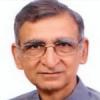
Ilyas Mohammad Thumbay is SDPI candidate in Dakshina Kannada

coastaldigest.com news network
March 17, 2019

Mangaluru, Mar 17: Even as two national parties – Bharatiya Janata Party and Indian National Congress – have been struggling to finalise their candidates for Dakshina Kannada Lok Sabha constituency in 2019 general elections, Social Democratic Party of India has formally announced it candidate. 

Ilyas Mohammad Thumbay, the Karnataka state unit president of SDPI, will contest from Dakshina Kannada. The announcement was made at the SDPI district conference held today at the Nehru Maidan in the city. It could be recalled here that SDPI candidate (Haneef Khan Kodaje) had finished third in Dakshina Kannada in 2014 Lok Sabha polls. 

Speaking on the occasion, SDPI national general secretary Abdul Majeed Kodlipete said that apart from Dakshina Kannada his party will be fielding candidates in Bengaluru, Mysuru-Kodagu and Bidar Lok Sabha constituencies in Karnataka. 

SDPI district president Ataullah Jokatte presided over the meet. SDPI national secretary Alfonso Franco, PFI Karnataka state president Muhammad Saqib and Dalit leader Bhaskar Prasad were present among others.

Comments

Mangalorean
 - 
Tuesday, 19 Mar 2019

All Muslim must Vote for SDPI...we should follow our hindu ppl...how they VOTE only for BJP in mangalore ...if the cadidate is also DOG..if it is hindu then they will vote for it....in similerly we should vote for SDPI if the cadidate is CAT....vote for religion not for this country development...


D'Souza Gaddar man...what is the construbution of your community towards indian independence...you people are slave and licking boots of british...we and our hindu brother fought & die to this country...


the biggest terror is the george W bush


we all know about you people...you always spread division, curription on earth and make people fight and play innocent role...


killing people using modern weapon & black suit with tie doest not make innocent..its also terror attack..


ALL Muslim must VOTE for SDPI, we all know the capacity of congress leader...NAMARD cadidate....if we defeat also we should vote for SDPI....


from where do you get all these infos ? Pls list out the outfit names also so that we can laugh out loudly.its an open challenge for you , prove your allegations if you dare

Wow Kudos to CD team for appraove OP's opinion. Kindly ensure similair opinion about national parties will be reflected as well. Journalism must be people friendly and request CD Editor team not to biased and respected readers opinion. Thanks

abbu
 - 
Monday, 18 Mar 2019

SDPI ZINDABAD............ YES LET CONGRESS SUPPORT SDPI IF THEY R REALLY A SECULAR PARTY........ 

CP D’Souza
 - 
Sunday, 17 Mar 2019

SDPI is political arm of PFI, which allegedly has links with several terror outfits. All those who vote for this fellow are terrorists. 

Kalandar Kudla
 - 
Sunday, 17 Mar 2019

Let Congress – if it is really a secular party – decide not to field candidate from Dakshina Kannada and officially support SDPI as the latter had done in many seats in last Assembly polls. All the shortlisted Cong ticket aspirants are useless, shameless and corrupt people. Let all the peace lovers back SDPI this time. 

Add new comment

  • Coastaldigest.com reserves the right to delete or block any comments.
  • Coastaldigset.com is not responsible for its readers’ comments.
  • Comments that are abusive, incendiary or irrelevant are strictly prohibited.
  • Please use a genuine email ID and provide your name to avoid reject.
News Network
June 18,2020

Mysuru, Jun 18: The Karnataka government's proposal announced on Thursday to hold online classes for students amid concerns over COVID-19 has not gone down well with thousands of tribal students residing in villages across the state.

A team from Karnataka State Commission for Protection of Child Rights (KSCPCR) visited a few tribal hamlets in Mysuru and Kodagu recently and found that the students, unlike their urban counterparts, lack accessibility to not just smartphones and computers, but basic necessities like power supply.

''When such is the situation in the tribal hamlets, how can you expect students to catch up on their studies if classes are held online?'' wondered M L Parashurama Member, KSCPCR, who toured villages like Thithimathi, Beematagere, Devamachchi and Gaddadi in Kodagu's Virajpet taluk, besides Bavali, Balyadi, Machchuru, and Anemone in Mysuru's HD Kote taluk along with Chairperson Antony Sebastian.

Comments

Add new comment

  • Coastaldigest.com reserves the right to delete or block any comments.
  • Coastaldigset.com is not responsible for its readers’ comments.
  • Comments that are abusive, incendiary or irrelevant are strictly prohibited.
  • Please use a genuine email ID and provide your name to avoid reject.
News Network
July 28,2020

Hounde, Jul 28: Coronavirus and its restrictions are pushing already hungry communities over the edge, killing an estimated 10,000 more young children a month as meager farms are cut off from markets and villages are isolated from food and medical aid, the United Nations warned Monday.

In the call to action shared with The Associated Press ahead of publication, four UN agencies warned that growing malnutrition would have long-term consequences, transforming individual tragedies into a generational catastrophe.

Hunger is already stalking Haboue Solange Boue, an infant from Burkina Faso who lost half her former body weight of 5.5 pounds (2.5 kilograms) in just a month. Coronavirus restrictions closed the markets, and her family sold fewer vegetables. Her mother was too malnourished to nurse.

“My child,” Danssanin Lanizou whispered, choking back tears as she unwrapped a blanket to reveal her baby's protruding ribs.

More than 550,000 additional children each month are being struck by what is called wasting, according to the UN — malnutrition that manifests in spindly limbs and distended bellies. Over a year, that's up 6.7 million from last year's total of 47 million. Wasting and stunting can permanently damage children physically and mentally.

“The food security effects of the COVID crisis are going to reflect many years from now,” said Dr. Francesco Branca, the WHO head of nutrition. “There is going to be a societal effect.”

From Latin America to South Asia to sub-Saharan Africa, more poor families than ever are staring down a future without enough food.

In April, World Food Program head David Beasley warned that the coronavirus economy would cause global famines “of biblical proportions” this year. There are different stages of what is known as food insecurity; famine is officially declared when, along with other measures, 30% of the population suffers from wasting.

The World Food Program estimated in February that one Venezuelan in three was already going hungry, as inflation rendered salaries nearly worthless and forced millions to flee abroad. Then the virus arrived.

“Every day we receive a malnourished child,” said Dr. Francisco Nieto, who works in a hospital in the border state of Tachira.

In May, Nieto recalled, after two months of quarantine, 18-month-old twins arrived with bodies bloated from malnutrition. The children's mother was jobless and living with her own mother. She told the doctor she fed them only a simple drink made with boiled bananas.

“Not even a cracker? Some chicken?” he asked.

“Nothing,” the children's grandmother responded. By the time the doctor saw them, it was too late: One boy died eight days later.

The leaders of four international agencies — the World Health Organization, UNICEF, the World Food Program and the Food and Agriculture Organization — have called for at least dollar 2.4 billion immediately to address global hunger.

But even more than lack of money, restrictions on movement have prevented families from seeking treatment, said Victor Aguayo, the head of UNICEF's nutrition program.

“By having schools closed, by having primary health care services disrupted, by having nutritional programs dysfunctional, we are also creating harm,” Aguayo said. He cited as an example the near-global suspension of Vitamin A supplements, which are a crucial way to bolster developing immune systems.

In Afghanistan, movement restrictions prevent families from bringing their malnourished children to hospitals for food and aid just when they need it most. The Indira Gandhi hospital in the capital, Kabul, has seen only three or four malnourished children, said specialist Nematullah Amiri. Last year, there were 10 times as many.

Because the children don't come in, there's no way to know for certain the scale of the problem, but a recent study by Johns Hopkins University indicated an additional 13,000 Afghans younger than 5 could die.

Afghanistan is now in a red zone of hunger, with severe childhood malnutrition spiking from 690,000 in January to 780,000 — a 13% increase, according to UNICEF.

In Yemen, restrictions on movement have blocked aid distribution, along with the stalling of salaries and price hikes. The Arab world's poorest country is suffering further from a fall in remittances and a drop in funding from humanitarian agencies.

Yemen is now on the brink of famine, according to the Famine Early Warning Systems Network, which uses surveys, satellite data and weather mapping to pinpoint places most in need.

Some of the worst hunger still occurs in sub-Saharan Africa. In Sudan, 9.6 million people live from one meal to the next — a 65% increase from the same time last year.

Lockdowns across Sudanese provinces, as around the world, have dried up work and incomes for millions. With inflation hitting 136%, prices for basic goods have more than tripled.

“It has never been easy but now we are starving, eating grass, weeds, just plants from the earth,” said Ibrahim Youssef, director of the Kalma camp for internally displaced people in war-ravaged south Darfur.

Adam Haroun, an official in the Krinding camp in west Darfur, recorded nine deaths linked with malnutrition, otherwise a rare occurrence, over the past two months — five newborns and four older adults, he said.

Before the pandemic and lockdown, the Abdullah family ate three meals a day, sometimes with bread, or they'd add butter to porridge. Now they are down to just one meal of “millet porridge” — water mixed with grain. Zakaria Yehia Abdullah, a farmer now at Krinding, said the hunger is showing “in my children's faces.”

“I don't have the basics I need to survive,” said the 67-year-old, who who hasn't worked the fields since April. “That means the 10 people counting on me can't survive either.”


Comments

Add new comment

  • Coastaldigest.com reserves the right to delete or block any comments.
  • Coastaldigset.com is not responsible for its readers’ comments.
  • Comments that are abusive, incendiary or irrelevant are strictly prohibited.
  • Please use a genuine email ID and provide your name to avoid reject.
Ram Puniyani
July 20,2020

As Covid 19 has created havoc all rounds, the rulers of certain countries are using it to further intensify their set agendas. The democratic freedoms are being curtailed in certain forms, the reaction to which has come in America in the form of a campaign, which is opposing “stifling” cultural climate that is imposing “ideological conformity” and weakening “norms of open debate and toleration of differences”. In India similar intimidations have been intensified. In addition the occasion has been used by the sectarian forces first to link the spread of Corona to Muslim community and now in the name of reducing the burden of curriculum certain chapters on core concepts related to Indian nationalism are being deleted from the text books.

It has been reported that chapters on federalism, citizenship, nationalism, secularism, Human Rights, Legal Aid and Local Self Government and the like are being dropped. Education has been an important area for communal forces and they constantly keep saying that leftists have dominated the curriculum content, it suffers from the impact of Macaulay, Marx and Mohammad and so needs to be Indianized. The first such attempt was done when BJP came to power in 1998 as NDA and had Murli Manohar Joshi as the MHRD minister. He brought the changes which were termed as ‘saffronization of education’. Their focus is more on social science. Some of the highlights of this were introduction of subjects like Astrology and Paurohitya, and chapters defending caste system, nationalism of the type of Hitler was praised.

With defeat of NDA in 2004, the UPA did try to rectify some of these distortions. Again after 2014 the RSS affiliates working in the area of education have been active, interacting with MHRD officials to impress upon them the need to change the curriculum matching with their Hindu nationalist agenda. Its ‘Shiksha Sanskriti Utthan Nyas’ has been asking for removal of English, Urdu words in the texts. It has asked for removal of thoughts of Rabindranath Tagore on Nationalism, extracts of autobiography of M F Husain, references to benevolence of Muslim rulers, references to BJP being Hindu party, apology of Dr. Manmohan Singh for anti Sikh pogrom of 1984, the reference to killings of Gujarat carnage in 2002 among others. This they call as Bhartiykaran of syllabus.

As RSS is a multithreaded hydra one of its pracharak Dinanath Batra has set up ‘Shiksha Bachao Abhiyan Samiti’ which has been pressurizing various publishers to drop the books which are not conforming to their ideology. One recalls their pressuring withdrawal of Wendy Doniger’s ‘The Hindus’, as it does present the ancient India through the concerns of dalits and women. Mr. Batra has already come out with a set of nine books for school curriculum, giving the RSS view of the past and RSS understanding of social sciences. These have already been translated into Gujarati and thousands of the sets of these books are being used in Gujarat Schools.

The present step of deleting parts of curriculum which gives the basics of Indian Nationalism, secularism and human rights is a further step in the same direction. These are the topics which have made the Hindu nationalists uncomfortable during last few years. They have been defaming secularism. They removed it from the preamble of Indian constitution, when they put out an ad on the eve of Republic day in 2015. From last few decades since the Ram Temple movement was brought up, simultaneously the secular ethos of India’s freedom movement and secular values of Indian constitution have been constantly criticized. Many an RSS ideologues and BJP leaders have been asking for change of Indian Constitution for this very reason.

Secularism is part of the concept of Indian nationalism. In the name of religious nationalism, sectarian divisive nationalism they have been attacking various student leaders in particular. When we study Nationalism, the very genesis of Indian nationalism tells us the plurality of our freedom movement with its anti colonial roots. The struggle was for Indian nationalism and so the Muslims and Hindu communalists kept aloof from this great struggle against colonial masters, it was this struggle which built the Indian nation with all its diversity.

Similarly as we have equal rights as citizens the chapters on citizenship are being dropped. Federalism has been the core part of India’s administrative and political structure. As the dictatorial tendencies are becoming stronger, federalism is bound to suffer and that explains the dropping of this subject. Democracy is decentralization of power. Power reaching the lowermost part of the system, the villages and average citizens. This got reflected in Local self Government. The power is distributed among villages, cities, state and center. By removing chapters on federalism and local self government, the indications of the ideology of ruling party are on display.

While we are not dealing with all the portents of the planned omissions, one more aspect that related to dropping of chapter on Human rights needs our attention. The concept of Human rights and dignity are interlinked. This concept of Human rights also has international ramifications. India is signatory to many an UN covenants related to Human rights. The indications are clear that now rights will be for the few elite and ‘duties’ for the large deprived sections will be put on the forefront.

In a way this incidental ‘Corona gifted opportunity’ to the ruling Government is being fully used to enhance the agenda of ruling party in the arena of Educational Curriculum. The part of curriculum with which the ruling party is uncomfortable is being removed. This act of omission does supplement their other acts of commission in changing the shape of educational curriculum, which are reflected in RSS affiliates’ suggestions to MHRD regarding Bhartiyakaran of contents of syllabus. As per this the things like regarding the great epics like Ramayana and Mahabharata as History, the things like India having all the stem cell technology, plastic surgery, aviation science etc. will have a place in the changes planned by communal forces!

Comments

Add new comment

  • Coastaldigest.com reserves the right to delete or block any comments.
  • Coastaldigset.com is not responsible for its readers’ comments.
  • Comments that are abusive, incendiary or irrelevant are strictly prohibited.
  • Please use a genuine email ID and provide your name to avoid reject.