India closing in on Westinghouse deal to build 6 nuclear reactors

December 24, 2015

New Delhi, Dec 24: India expects to seal a contract with Westinghouse Electric Co LLC to build six nuclear reactors in the first half of next year, a senior government official said, in a sign its $150 billion dollar nuclear power programme is getting off the ground.
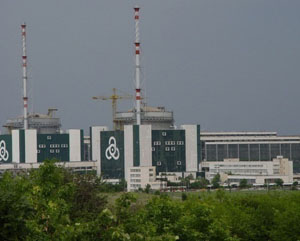
whThe proposed power plant in Prime Minister Narendra Modi's home state of Gujarat will accelerate India's plans to build roughly 60 reactors, which would make it the world's second-biggest nuclear energyMARKET after China.

India wants to dramatically increase its nuclear capacity to 63,000 megawatts (MW) by 2032, from 5,780 MW, as part of a broader push to move away from fossil fuels, cut greenhouse gas emissions and avoid the dangerous effects of climate change.

The United States signed a pact with India in 2008, opening the way for nuclear commerce that had previously been stymied due to New Delhi's nuclear weapons programme and shunning of the global Non-Proliferation Treaty (NPT).

But hopes that reactor makers would get billions of dollars of new business evaporated after India adopted a law in 2010 giving the state-run operator Nuclear Power Corp of India Ltd (NPCIL) the right to seek damages from suppliers in the event of an accident.

Indian officials have been trying to assuage suppliers' concerns, including by setting up an insurance pool with a liability cap of 15 billion Indian rupees ($226.16 million).

A final hurdle - ratification of the International Atomic Energy Agency's Convention on Supplementary Compensation for Nuclear Damage (CSC) - is expected within weeks, the Indian government official said.

The CSC requires signatories to shift liability to the operator and offers access to relief funds.

In a statement, Westinghouse said it expected India would move towards a framework that satisfies the CSC and channels accident liability exclusively to the operator. The statement made no reference to ongoing negotiations.

Shares of Westinghouse's parent, Toshiba Corp, jumped as much as 3.3 percent on Thursday after the news, before slipping back. A Toshiba spokesman declined to comment on the report, but noted that Westinghouse has been confident of winning orders from India.

A deal with Westinghouse could also put pressure on General Electric Co, whose nuclear energy venture with Hitachi was offered a site six years ago to build reactors.

GE has still not decided whether it would move ahead with the plan, the official said, adding that India was keen for a decision from the company soon.

GE Hitachi Nuclear Energy said it had strong interest in India, and that the CSC would be "a sustainable solution to concerns about India's existing domestic nuclear liability law".

India's plans for ramping up nuclear capacity have in the past fallen far short of targets and industry officials say that the aim to lift the share of nuclear power to a quarter of its energy mix, from barely 3 percent now, is very ambitious.

No more technical hurdles

Later this week, India is expected to offer Russia a site in its southern state of Andhra Pradesh to build six reactors, on top of the six it is already expected to build in neighbouring Tamil Nadu, Indian and Russian officials have said.

Separately, India expects Japan, which supplies components used in most reactors, to ratify an agreement some time in the second quarter of 2016 to support its nuclear programme, another senior Indian government source said.

"There are no more technical hurdles in the development of nuclear energy for peaceful purposes," the source said.

French nuclear company Areva, which uses Japanese components, also has a deal to build six reactors in India, although restructuring within that company was likely to delay construction until 2017, the first official said.

French utility EDF agreed earlier this year to buy a majority stake in Areva's reactor business. Areva has been in price negotiations with NPCIL for several months now, officials at the Indian operator told Reuters in November.

Areva did not immediately respond to a request for comment.

Westinghouse deal

Negotiators from Westinghouse and Indian operator NPCIL have held several rounds of talks on the nuclear plant in Mithi Virdi, the government official said.

NPCIL declined to comment on the negotiations. Federal minister for Atomic Energy Jitendra Singh told parliament this month that talks were going on with French and U.S. firms to arrive at project proposals. He offered no details.

But the government source said Westinghouse and NPCIL were negotiating all six reactors in one go, instead of an earlier plan to strike deals for two at a time.

Construction of the roughly 1,100 MW reactors could begin later in 2016, the official, who is close to the negotiations, added.

The idea was to allow the Americans and the French, India's two close partners, to catch up with the Russians in its nuclear sector, the official said.

"This is a train that is moving soon," the official said.

Comments

Add new comment

  • Coastaldigest.com reserves the right to delete or block any comments.
  • Coastaldigset.com is not responsible for its readers’ comments.
  • Comments that are abusive, incendiary or irrelevant are strictly prohibited.
  • Please use a genuine email ID and provide your name to avoid reject.
News Network
July 10,2020

New Delhi, Jul 10: Nepal has banned all Indian news channels, except DD News, for alleged propaganda against the country.

Reports say that Nepal cable operators have stopped getting signals of Indian news channels.

Nepal government spokesperson Yuvaraj Khatiwada said: "We request all not to disseminate news that infringes sovereignty and self-respect of Nepalis. This includes the media of neighbouring countries. We might seek both political and legal remedies."

Earlier, Nepal has amended its map which show some Indian territory as part of it.

Nepal's parliament on June 13 adopted unanimously the Constitution Amendment Bill, paving the way for accommodating the updated political-administrative map, which includes Indian areas of Kalapani, Lipulekh and Limpiyadhura, in its symbol.

Comments

Add new comment

  • Coastaldigest.com reserves the right to delete or block any comments.
  • Coastaldigset.com is not responsible for its readers’ comments.
  • Comments that are abusive, incendiary or irrelevant are strictly prohibited.
  • Please use a genuine email ID and provide your name to avoid reject.
News Network
March 25,2020

India will suspend all domestic flights from midnight Tuesday, the final piece of a nationwide lockdown that threatens Prime Minister Narendra Modi’s attempts to revive an economy already expanding at the slowest pace in more than a decade.

The flight ban compliments a cancellation of all passenger trains through March 31, as authorities try to halt the spread of the coronavirus in the world’s second-most populous country, which has poorly equipped hospitals and inadequate social security. Modi on Monday held a conference call with some of India’s top entrepreneurs and bankers, who urged policymakers to immediately slash interest rates by as much as a full percentage point, transfer cash to the poorest citizens, and suspend loan-repayments.

Over the past three days, state after state has declared curfews and India’s international borders have been shut for most visitors since March 11. India so far has 492 virus cases, including nine deaths. But experts say the country could be on the same trajectory as Italy, where the outbreak quickly escalated, causing hospitals to overflow.
A traveller stands outside a near-empty Delhi Junction Railway Station in Delhi, March 22.

"This is the biggest lockdown in world history,” said Raghu Raman, a former soldier with the Indian Army and founder of the National Intelligence Grid, an umbrella database aimed at countering terrorism. “This strategic pause gives decision-makers more time to arrest the exponential spread of the virus and evaluate trade-offs.”

Controlling the outbreak is crucial for Modi, who remains India’s most popular political leader currently though his economic management has faced criticism. Foreign investors are selling Indian assets at an unprecedented pace and failure to contain deaths and infections could erode some of the prime minister’s personal appeal at home.

Oxford Economics slashed India’s January-March growth forecast to 3%, a number not seen even during the worst of the global financial crisis. The main equity gauge rose about 3% on Tuesday after a record 13.2% plunge Monday, and the rupee stayed near its all-time low.

“A part of the cerebral cortex that senses fear and survival seems to have activated in the minds of investors,” said Umesh Mehta, Mumbai-based head of research at Samco Securities Ltd. “The only relief in this market can come from either policy makers and regulators, or from some positive news that a cure for the pandemic is near.”

Bloomberg Economics estimates Modi’s administration needs at least 1% of gross domestic product -- $30 billion -- to meaningfully respond to the virus outbreak. Meanwhile, the nation’s billionaires are diverting their factories to manufacture medical equipment and pledging to keep paying their staff even as production grinds to a halt. India allowed companies to use their philanthropy funds to prevent the spread of the coronavirus.

Reliance Industries Ltd., controlled by India’s richest man Mukesh Ambani, has helped equip a hospital in Mumbai dedicated to patients of Covid-19, the disease caused by the coronavirus. It will also build quarantine centers and produce 100,000 facemasks a day and other personal protective equipment for health workers. The group’s telecom unit will offer free broadband to enable work-from-home during the lockdown and will pay its lowest paid workers twice a month to protect household incomes.

Ambani joins Mahindra & Mahindra Ltd. Chairman Anand Mahindra and Vedanta Resources Ltd. Chairman Anil Agarwal -- a combined worth of more than $40 billion between the trio -- who have so far made pledges.

Indian companies are responding to Modi’s shutdown call. Maruti Suzuki India Ltd., Tata Motors Ltd., Toyota Kirloskar Motor, Hero MotoCorp., Samsung Electronics Co. and LG Electronics Inc., Mahindra Group, TVS Motor Co., Kia Motors Corp., Renault Nissan Automotive India Private Ltd., and Yamaha Motor India are among companies that have announced factory suspensions.

Policymakers are aware of the risks of such a move. India -- with a record 5.9 trillion rupees of local corporate debt maturing this year -- faces “waves of default” if cash flows aren’t maintained, the government’s principal economic adviser Sanjeev Sanyal said an interview.

Finance Minister Nirmala Sitharaman last week said the government will announce a relief package for coronavirus-affected sectors as soon as possible. The Reserve Bank of India, which is due to review interest rates April 3, announced a 1 trillion rupee cash injection on Monday.

“Let me assure, whatever it takes to keep the cash flow going in the economy will be done,” Sanyal said. “We need to make sure that when we are past the health storm, we still have an economy that has not gotten gridlocked. Because unwinding that would be more difficult.”

Comments

Add new comment

  • Coastaldigest.com reserves the right to delete or block any comments.
  • Coastaldigset.com is not responsible for its readers’ comments.
  • Comments that are abusive, incendiary or irrelevant are strictly prohibited.
  • Please use a genuine email ID and provide your name to avoid reject.
coastaldigest.com news network
July 27,2020

Ayodhya, Jul 27: With days to go for the August 5 "bhoomi pujan" ceremony of the Ram temple in Ayodhya, the mosques adjacent to the demolished Babri Masjid premises are spreading the message of a peaceful coexistence of Hindus and Muslims.

There are eight mosques and two mausoleums located close to the 70-acre Babri Masjid premises mandated by the Supreme Court for a temple of Sri Ram.

Azaan and namaaz are offered in the mosques and the annual "Urs" is held at the mausoleums without any objection from the local Hindus.

The eight mosques located near the upcoming Ram temple premises are Masjid Dorahikuan, Masjid Mali Mandir ke Bagal, Masjid Kaziyana Achchan ke Bagal, Masjid Imambara, Masjid Riyaz ke Bagal, Masjid Badar Paanjitola, Masjid Madaar Shah and Masjid Tehribazar Jogiyon ki.

The two mausoleums are Khanqaahe Muzaffariya and Imambara.

"It is the greatness of Ayodhya that the mosques surrounding the Ram temple are giving a strong message of communal harmony to the rest of the world," Haji Asad Ahmad, the corporator of the Ram Kot ward, said. The Ram temple area is situated in Ahmad's ward.

"Muslims take out the 'juloos' of Barawafaat that goes through the periphery of Ram Janmabhoomi. All religious functions and rituals of Muslims are respected by their fellow citizens," the corporator said.

Asked for a comment on the presence of mosques near the upcoming Ram temple premises, the chief priest of the temple, Acharya Satyendra Das, said, "We had a dispute only with the structure that was connected to the name of (Mughal emperor) Babur. We have never had any issue with the other mosques and mausoleums in Ayodhya. This is a town where Hindus and Muslims live in peace."

"Muslims offer namaaz, we perform our puja. The mosques around us will strengthen Ayodhya's communal harmony and peace will prevail," he added.

Both Hindus and Muslims have accepted the Supreme Court verdict over Ram Janmabhoomi, Das said, adding, "We have no dispute with each other."

Sayyad Akhlaq Ahmad Latifi, the "sajjada nasheen" and "pir" of the 500-year-old Khanqaahe Muzaffariya mausoleum, said Muslims in Ayodhya are performing all religious practices freely.

"We offer prayers five times a day in the mosque at Khanqaah and hold the yearly 'Urs'," he added.

"What a scene would it be -- a grand Ram temple surrounded by small mosques and mausoleums and everyone offering prayers according to their beliefs. That will be representative of the true culture of India," Mahant Yugal Kishore Sharan Shastri, the chief priest of the Sarayu Kunj temple adjacent to the Ram Janmabhoomi premises, said.

Reacting to the presence of mosques and mausoleums near the Ram Janmabhoomi premises, Triloki Nath Pandey, the decree holder of the land as the "first friend of Ram Lalla" as mandated by the Supreme Court, said, "We do not have any objection to either those mosques or any other mosques. We will not trigger a dispute regarding any structure, Ayodhya must live in peace and communal harmony."

Mahant Raju Das, the priest of the Hanumangarhi temple, said, "The presence of the mosques tells the story of Ayodhya's communal harmony. A Ram mandir will be built and there will be no objection to the mosques or religious practices of Muslims."

Comments

Add new comment

  • Coastaldigest.com reserves the right to delete or block any comments.
  • Coastaldigset.com is not responsible for its readers’ comments.
  • Comments that are abusive, incendiary or irrelevant are strictly prohibited.
  • Please use a genuine email ID and provide your name to avoid reject.