India condemns ‘heinous and cowardly’ attack on Afghan Sikhs

Agencies
July 2, 2018

Kabul, Jul 2: India on Sunday condemned as “heinous and cowardly” the terrorist attack on a convoy of Sikhs in Afghanistan that left 20 people dead and said the incident underlined the need for united global fight against international terrorism.

A suicide bomber targeted the convoy on their way to meet Afghanistan’s president in the eastern city of Jalalabad today. Police chief Ghulam Sanaei Stanikzai told Pajhwok Afghan News that the suicide bomber detonated his explosives when the minority community members wanted to enter the governor’s house to meet President Ashraf Ghani, who was visiting the region.

“We strongly condemn the heinous and cowardly terrorist attack in #Jalalabad today evening which resulted in the death of 20 innocent Afghans, including 10 members of the Afghan Sikh Community, and injured more than 20 persons,” the Indian Embassy in Kabul tweeted.

“We convey heartfelt condolences to the families of the victims and pray for early recovery of the injured…The attack again underlines the need for united global fight against international terrorism without discrimination and accountability of those who support terrorists in any manner,” it said.

Some reports said 19 people were killed in the attack and 17 of them were from the minority Sikh and Hindu community. Avtar Singh Khalsa, a longtime leader of the Sikh community who had planned to run in the parliamentary elections set for October, was killed in the attack.

Comments

Ali
 - 
Tuesday, 3 Jul 2018

R.I.P. . . . . 


Islarahell terrorist attack in palestine  over the years and killing innocent childrens


But no condolence from INDIA


Add new comment

  • Coastaldigest.com reserves the right to delete or block any comments.
  • Coastaldigset.com is not responsible for its readers’ comments.
  • Comments that are abusive, incendiary or irrelevant are strictly prohibited.
  • Please use a genuine email ID and provide your name to avoid reject.
Agencies
July 29,2020

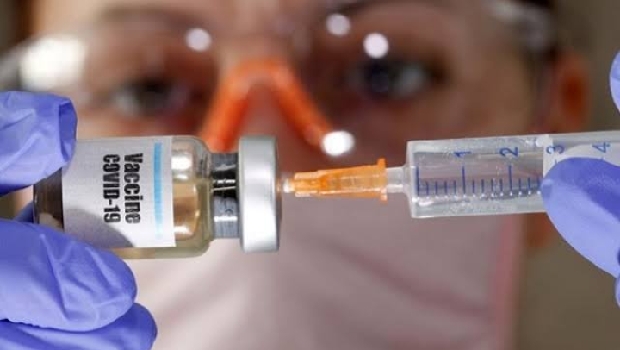
If everything goes as Russia’s expectation, it will be world’s first country to approve a coronavirus vaccine for widespread in the second week of August despite safety and efficacy concerns, according to a report. The adenoviral vector-based vaccine developed by Russian military and government researchers is currently in phase 2 trials.

According to a report from CNN, Russian officials are hoping to get approval for the COVID-19 vaccine developed by the Moscow-based Gamaleya Institute on Agust 10 or even before that. The officials told the outlet that the vaccine will be approved for public use with frontline healthcare workers receiving it first.

“It’s a Sputnik moment,” said Kirill Dmitriev, head of Russia’s sovereign wealth fund, which is financing Russian vaccine research, referring to the successful 1957 launch of the world’s first satellite by the Soviet Union, according to CNN.

“Americans were surprised when they heard Sputnik’s beeping. It’s the same with this vaccine. Russia will have got there first,” he was quoted as saying.

However, Russia is yet to release the scientific data on its coronavirus vaccine trials, hence, questions remain about the safety and efficacy of the vaccine, said the report. The vaccine is in the second phase of testing with developers planning to launch the phase 3 trials sometime after August 3.

Earlier, Interfax reported, citing Health Minister Mikhail Murashko, that the vaccine will be widely used in parallel with phase 3 trials. He said the country plans to vaccinate medics who are at high-risk for COVID-19 next month before clinical trials are completed.

Murashko added that individuals at higher risk of getting infected with the coronavirus such as older people or those with health conditions will also be prioritised for the vaccine, although he did not estimate or reveal when that would happen. The minister added 800 people will be recruited for the phase 3 trials.

Meanwhile, health officials were more cautious considering the fact that human testing of the vaccine is incomplete, and the state registration is expected to begin after August 3, reported The Moscow Times.

On Monday, Moderna and Pfizer announced the commencement of the final phase 3 trials of their candidate vaccines against the SARS-CoV-2 virus, which has so far claimed at least 654,477 lives and infected 16,514,500 people worldwide. 

Researchers will recruit up to 30,000 volunteers in separate trials both backed by the US government. India's first indigenous coronavirus vaccine, COVAXIN, is undergoing phase 1 human clinical trials across the country. More than 150 COVID-19 vaccines are being developed all over the world with at least six candidates already in late-stage clinical trials.

Comments

Add new comment

  • Coastaldigest.com reserves the right to delete or block any comments.
  • Coastaldigset.com is not responsible for its readers’ comments.
  • Comments that are abusive, incendiary or irrelevant are strictly prohibited.
  • Please use a genuine email ID and provide your name to avoid reject.
Agencies
April 14,2020

The US Commission on International Religious Freedom (USCIRF) has reprimanded the Imran Khan government for denying food aid to Hindus and Christians in Pakistan amid the coronavirus pandemic and warned that it will trigger an additional crisis due to religious discrimination.

The USCIRF is an independent federal government entity set up by the US Congress to monitor and report on religious freedom in the world.

Pakistan continues to be in the tier one of the USCIRF list of the countries whose record on religious freedom remains abysmal.

In a statement issue on Monday, the USCIRF said it was troubled by the reports of food aid being denied to Hindus and Christians in Pakistan amid pandemic.

Citing one of the examples of religious discrimination, the USCIRF said that in Karachi, the Saylani Welfare International Trust, a non-government organization set up to help the homeless and seasonal workers, has been refusing food aid to Hindus and Christians and providing it only Muslims.

Describing such actions "reprehensible", the USCIRF commissioner Anurima Bhargava said: "As COVID-19 continues to spread, vulnerable communities within Pakistan are fighting hunger and to keep their families safe and healthy. Food aid must not be denied because of one's faith."
One of the USCIRF commissioners, Johnnie Moore warned that if the Khan government continued with such policies, Pakistan would add an additional crisis.

"In a recent address by Prime Minister Khan to the international community, he highlighted that the challenge facing governments in the developing world is to save people from dying of hunger while also trying to halt the spread of COVID-19. This is a monumental task laying before many countries.

"Prime Minister Khan's government has the opportunity to lead the way but they must not leave religious minorities behind. Otherwise, they may add on top of it all one more crisis, created by religious discrimination and inter-communal strife."

The organization which makes foreign policy recommendations to the US President, the Secretary of State, and Congress, urged the Pakistani government to ensure that food aid from distributing organizations is shared equally with Hindus, Christians, and other religions minorities.

Last year, in its annual report, the USCIRF had noted that Hindus and Christians in Pakistan "face continued threats to their security and are subjected to various forms of harassment and social exclusion".

Comments

Add new comment

  • Coastaldigest.com reserves the right to delete or block any comments.
  • Coastaldigset.com is not responsible for its readers’ comments.
  • Comments that are abusive, incendiary or irrelevant are strictly prohibited.
  • Please use a genuine email ID and provide your name to avoid reject.
Agencies
July 30,2020

Mumbai, Jul 30: Counterfeiting incidents have increased 24 per cent in the country in 2019 over the previous year, creating an over Rs 1 lakh crore hole in the economy, according to a report.

The report also said counterfeiters are having a free run due to the pandemic-driven disruptions to organised supply chains and the resultant spike in consumer demand.

According to the report by ASPA, a self-regulated industry body of anti-counterfeiting and traceability solutions providers, counterfeiting has risen steadily in the last few years, and exploiting the pandemic as a cover for their activities.

Between February and April 2020, over 150 incidents of counterfeiting cases were reported, mostly about fake PPE kits, sanitisers and masks taking advantage of the high demand for these products, it noted.

"There was a 24 per cent increase in counterfeiting in 2019 over 2018, leading to the loss of more than Rs 1 lakh crore to the overall economy," said Nakul Pasricha, president of Authentication Solution Providers Association.

The association works with global authorities like the International Hologram Manufacturers Association, Counterfeit Intelligence Bureau of the Interpol, and domestic industry lobbies like Ficci, he said.

Counterfeiting is a universal issue and is 3.3 per cent of global trade, according to the OECD data, impacting social and economic development across the world.

The report lists the currency, FMCG, alcohol, pharma, documents, agriculture, infrastructure, automotive, tobacco, lifestyle and apparel, as the 10 sectors impacted most by counterfeiting.

Among these, currency, alcohol and FMCG continue to be the top three sectors with the highest counterfeiting in the last two years. The FMCG sector is most vulnerable, as counterfeit incidents rose 63 per cent between 2018 (79) and 2019 when the reported cases jumped to 129.

Within the states, the fakers have a free run in Uttar Pradesh, Bihar, Rajasthan, Madhya Pradesh, Bengal, Punjab, Jharkhand, Delhi, Gujarat, and Uttarakhand, calling for urgent actions to frame anti-counterfeiting policy measures.

According to the report, UP continues to be on top followed by Bihar, Rajasthan, and together these three states represent almost 45 per cent of all counterfeiting reported in the last two years.

What is more alarming is that counterfeiting is not limited to high-end luxury items today, as common everyday items as fake cumin seeds, mustard cooking oil, ghee, hair oils, soaps, baby care vaccines and medicines are aplenty in the markets.

"There is an urgent need for building and nurturing authentication ecosystems in the country with the active involvement and active participation of all stakeholders," said Pasricha.

Comments

Add new comment

  • Coastaldigest.com reserves the right to delete or block any comments.
  • Coastaldigset.com is not responsible for its readers’ comments.
  • Comments that are abusive, incendiary or irrelevant are strictly prohibited.
  • Please use a genuine email ID and provide your name to avoid reject.