India condemns ‘heinous and cowardly’ attack on Afghan Sikhs

Agencies
July 2, 2018

Kabul, Jul 2: India on Sunday condemned as “heinous and cowardly” the terrorist attack on a convoy of Sikhs in Afghanistan that left 20 people dead and said the incident underlined the need for united global fight against international terrorism.

A suicide bomber targeted the convoy on their way to meet Afghanistan’s president in the eastern city of Jalalabad today. Police chief Ghulam Sanaei Stanikzai told Pajhwok Afghan News that the suicide bomber detonated his explosives when the minority community members wanted to enter the governor’s house to meet President Ashraf Ghani, who was visiting the region.

“We strongly condemn the heinous and cowardly terrorist attack in #Jalalabad today evening which resulted in the death of 20 innocent Afghans, including 10 members of the Afghan Sikh Community, and injured more than 20 persons,” the Indian Embassy in Kabul tweeted.

“We convey heartfelt condolences to the families of the victims and pray for early recovery of the injured…The attack again underlines the need for united global fight against international terrorism without discrimination and accountability of those who support terrorists in any manner,” it said.

Some reports said 19 people were killed in the attack and 17 of them were from the minority Sikh and Hindu community. Avtar Singh Khalsa, a longtime leader of the Sikh community who had planned to run in the parliamentary elections set for October, was killed in the attack.

Comments

Ali
 - 
Tuesday, 3 Jul 2018

R.I.P. . . . . 


Islarahell terrorist attack in palestine  over the years and killing innocent childrens


But no condolence from INDIA


Add new comment

  • Coastaldigest.com reserves the right to delete or block any comments.
  • Coastaldigset.com is not responsible for its readers’ comments.
  • Comments that are abusive, incendiary or irrelevant are strictly prohibited.
  • Please use a genuine email ID and provide your name to avoid reject.
News Network
May 23,2020

Karachi, May 23: Ninety-seven people were killed and two survived when a passenger plane crashed into homes in Pakistan's southern city of Karachi, health officials said Saturday.

The Pakistan International Airlines (PIA) plane had made multiple approaches to land at the city's airport when it came down in a residential area, damaging buildings and sparking a rescue operation that lasted into the night.

All passengers and crew had been accounted for and the bodies of those killed had been recovered from the crash site, the Sindh Health Ministry said, adding that 19 had been identified.

A local hospital earlier reported it had received the bodies of people killed on the ground.

The site remained cordoned off on Saturday morning.

The crash sent plumes of smoke were into the air as rescue workers and residents searched the debris for people and as firefighters tried to extinguish the flames.

An AFP reporter witnessed charred bodies being loaded into ambulances.

PIA said the plane lost contact with air traffic control just after 2:30 pm (0930 GMT) travelling from Lahore to Karachi.

The disaster comes as Pakistanis prepare to celebrate the end of Ramadan and the beginning of Eid al-Fitr, with many travelling back to their homes in cities and villages.

Comments

Add new comment

  • Coastaldigest.com reserves the right to delete or block any comments.
  • Coastaldigset.com is not responsible for its readers’ comments.
  • Comments that are abusive, incendiary or irrelevant are strictly prohibited.
  • Please use a genuine email ID and provide your name to avoid reject.
Agencies
July 29,2020

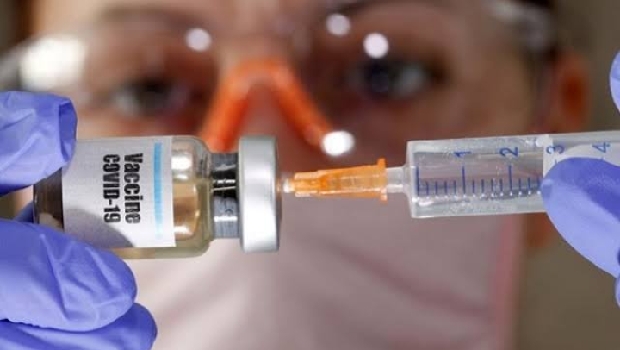
If everything goes as Russia’s expectation, it will be world’s first country to approve a coronavirus vaccine for widespread in the second week of August despite safety and efficacy concerns, according to a report. The adenoviral vector-based vaccine developed by Russian military and government researchers is currently in phase 2 trials.

According to a report from CNN, Russian officials are hoping to get approval for the COVID-19 vaccine developed by the Moscow-based Gamaleya Institute on Agust 10 or even before that. The officials told the outlet that the vaccine will be approved for public use with frontline healthcare workers receiving it first.

“It’s a Sputnik moment,” said Kirill Dmitriev, head of Russia’s sovereign wealth fund, which is financing Russian vaccine research, referring to the successful 1957 launch of the world’s first satellite by the Soviet Union, according to CNN.

“Americans were surprised when they heard Sputnik’s beeping. It’s the same with this vaccine. Russia will have got there first,” he was quoted as saying.

However, Russia is yet to release the scientific data on its coronavirus vaccine trials, hence, questions remain about the safety and efficacy of the vaccine, said the report. The vaccine is in the second phase of testing with developers planning to launch the phase 3 trials sometime after August 3.

Earlier, Interfax reported, citing Health Minister Mikhail Murashko, that the vaccine will be widely used in parallel with phase 3 trials. He said the country plans to vaccinate medics who are at high-risk for COVID-19 next month before clinical trials are completed.

Murashko added that individuals at higher risk of getting infected with the coronavirus such as older people or those with health conditions will also be prioritised for the vaccine, although he did not estimate or reveal when that would happen. The minister added 800 people will be recruited for the phase 3 trials.

Meanwhile, health officials were more cautious considering the fact that human testing of the vaccine is incomplete, and the state registration is expected to begin after August 3, reported The Moscow Times.

On Monday, Moderna and Pfizer announced the commencement of the final phase 3 trials of their candidate vaccines against the SARS-CoV-2 virus, which has so far claimed at least 654,477 lives and infected 16,514,500 people worldwide. 

Researchers will recruit up to 30,000 volunteers in separate trials both backed by the US government. India's first indigenous coronavirus vaccine, COVAXIN, is undergoing phase 1 human clinical trials across the country. More than 150 COVID-19 vaccines are being developed all over the world with at least six candidates already in late-stage clinical trials.

Comments

Add new comment

  • Coastaldigest.com reserves the right to delete or block any comments.
  • Coastaldigset.com is not responsible for its readers’ comments.
  • Comments that are abusive, incendiary or irrelevant are strictly prohibited.
  • Please use a genuine email ID and provide your name to avoid reject.
News Network
April 2,2020

United Nations, Apr 2: The global economy could shrink by up to one per cent in 2020 due to the coronavirus pandemic, a reversal from the previous forecast of 2.5 per cent growth, the UN has said, warning that it may contract even further if restrictions on the economic activities are extended without adequate fiscal responses.

The analysis by the UN Department of Economic and Social Affairs (DESA) said the COVID-19 pandemic is disrupting global supply chains and international trade. With nearly 100 countries closing national borders during the past month, the movement of people and tourism flows have come to a screeching halt.

"Millions of workers in these countries are facing the bleak prospect of losing their jobs. Governments are considering and rolling out large stimulus packages to avert a sharp downturn of their economies which could potentially plunge the global economy into a deep recession. In the worst-case scenario, the world economy could contract by 0.9 per cent in 2020," the DESA said, adding that the world economy had contracted by 1.7 per cent during the global financial crisis in 2009.

It added that the contraction could be even higher if governments fail to provide income support and help boost consumer spending.

The analysis noted that before the outbreak of the COVID-19, world output was expected to expand at a modest pace of 2.5 per cent in 2020, as reported in the World Economic Situation and Prospects 2020.

Taking into account rapidly changing economic conditions, the UN DESA's World Economic Forecasting Model has estimated best and worst-case scenarios for global growth in 2020.

In the best-case scenario with moderate declines in private consumption, investment and exports and offsetting increases in government spending in the G-7 countries and China global growth would fall to 1.2 per cent in 2020.

"In the worst-case scenario, the global output would contract by 0.9 per cent instead of growing by 2.5 per cent in 2020," it said, adding that the scenario is based on demand-side shocks of different magnitudes to China, Japan, South Korea, the US and the EU, as well as an oil price decline of 50 per cent against our baseline of USD 61 per barrel.

The severity of the economic impact will largely depend on two factors - the duration of restrictions on the movement of people and economic activities in major economies; and the actual size and efficacy of fiscal responses to the crisis.

A well-designed fiscal stimulus package, prioritising health spending to contain the spread of the virus and providing income support to households most affected by the pandemic would help to minimise the likelihood of a deep economic recession, it said.

According to the forecast, lockdowns in Europe and North America are hitting the service sector hard, particularly industries that involve physical interactions such as retail trade, leisure and hospitality, recreation and transportation services. Collectively, such industries account for more than a quarter of all jobs in these economies.

The DESA said as businesses lose revenue, unemployment is likely to increase sharply, transforming a supply-side shock to a wider demand-side shock for the economy.

Against this backdrop, the UN-DESA is joining a chorus of voices across the UN system calling for well-designed fiscal stimulus packages which prioritize health spending and support households most affected by the pandemic.

Urgent and bold policy measures are needed, not only to contain the pandemic and save lives, but also to protect the most vulnerable in our societies from economic ruin and to sustain economic growth and financial stability, Under-Secretary-General for Economic and Social Affairs Liu Zhenmin said.

The analysis also warns that the adverse effects of prolonged economic restrictions in developed economies will soon spill over to developing countries via trade and investment channels.

A sharp decline in consumer spending in the European Union and the United States will reduce imports of consumer goods from developing countries.

Developing countries, particularly those dependent on tourism and commodity exports, face heightened economic risks. Global manufacturing production could contract significantly, and the plummeting number of travellers is likely to hurt the tourism sector in small island developing States, which employs millions of low-skilled workers, it said.

Meanwhile, the decline in commodity-related revenues and a reversal of capital flows are increasing the likelihood of debt distress for many nations. Governments may be forced to curtail public expenditure at a time when they need to ramp up spending to contain the pandemic and support consumption and investment.

UN Chief Economist and Assistant Secretary-General for Economic Development Elliot Harris said the collective goal must be a resilient recovery which puts the planet back on a sustainable track. We must not lose sight how it is affecting the most vulnerable population and what that means for sustainable development, he said.

The alarms raised by UN-DESA echo another report, released on March 31, in which UN experts issued a broad appeal for a large-scale, coordinated, comprehensive multilateral response amounting to at least 10 per cent of global gross domestic product (GDP).

According to estimates by the Johns Hopkins University, confirmed coronavirus cases across the world now stand at over 932,600 and over 42,000 deaths.


Comments

Add new comment

  • Coastaldigest.com reserves the right to delete or block any comments.
  • Coastaldigset.com is not responsible for its readers’ comments.
  • Comments that are abusive, incendiary or irrelevant are strictly prohibited.
  • Please use a genuine email ID and provide your name to avoid reject.