


India offers $1 billion loan for development of Russia’s Far East

Agencies
September 5, 2019

Vladivostok, Sept 5: Prime Minister Narendra Modi on Thursday said India will walk shoulder-to-shoulder with Russia in its development of the Far East and announced a $1 billion line of credit for the development of the resource-rich region.

Addressing the plenary session of the 5th Eastern Economic Forum here, Prime Minister Modi said the friendship between India and Russia was not restricted to governmental interactions in capital cities, but was about people and close business relations.

"India's connection to Russia's Far East go back a long way. India was the first country to open a Consulate in Vladivostok," he said.

"For the development of Far East, India will give line of credit worth $1 billion. My government has actively engaged East Asia as part of its 'Act East' policy. I firmly believe that today's announcement will add a new dimension to the economic diplomacy of the two countries," Modi said at a packed house here.

The Prime Minister, in the presence of Russian President Vladimir Putin, also unveiled the "Act Far East" policy to boost India's engagement with Russia's Far East region.

"Let us deepen the bond between India and Russia even further. India is proud of the achievements of the Indian diaspora. I am sure here in the Russian Far East too the Indian diaspora will make an active contribution towards the region's progress," Modi said.

"India is a proud and active participant in the various activities of the Eastern Economic Forum. Participation has come from top levels of government and industry," he said.

Indian firms have invested over $7 billion in taking stake in Russian oil and gas fields. India ventured into Russia when its flagship overseas firm ONGC Videsh in 2001 acquired a 20 per cent stake in Sakhalin-1 oil and gas field in Far East Russia.

OVL later bought Imperial Energy, which has fields in Siberia, as also stakes in Vankor oilfield in eastern Siberia.

IOC and its partners have picked up 29.9 per cent stake in a separate Taas-Yuryakh oilfield in East Siberia.

Russian oil firm Rosneft in 2017 bought Essar Oil, which operates in Vadinar oil refinery in Gujarat and some 5,500 petrol pumps, for $12.9 billion.

Modi appreciated the vision of Putin for the welfare for Russia's Far East, saying the President has opened up investment opportunities for India in the region.

"By declaring the development of the Russian Far East a 'national priority for the 21st century', President Putin has taken a holistic approach towards improving everything ranging from economy, education, health to sports, culture or communication," he said.

Prime Minister Modi also emphasised on India's commitment to become a five trillion dollar economy by 2024.

Modi, who arrived in Russia on a two-day visit on Wednesday, is the first Indian prime minister to visit to the Russian Far East Region.

He arrived here to participate in the 20th India-Russia annual summit with President Putin and the fifth meeting of the Eastern Economic Forum (EEF).

The forum focuses on development of business and investment opportunities in the Russian Far East Region, and presents enormous potential for developing close and mutually beneficial cooperation between India and Russia in the region.

Comments

Well Wisher
 - 
Thursday, 5 Sep 2019

LOL. Naave muluguttiruvaaga yaake beku maaraya inthaha saahasa.

Add new comment

  • Coastaldigest.com reserves the right to delete or block any comments.
  • Coastaldigset.com is not responsible for its readers’ comments.
  • Comments that are abusive, incendiary or irrelevant are strictly prohibited.
  • Please use a genuine email ID and provide your name to avoid reject.
News Network
July 27,2020

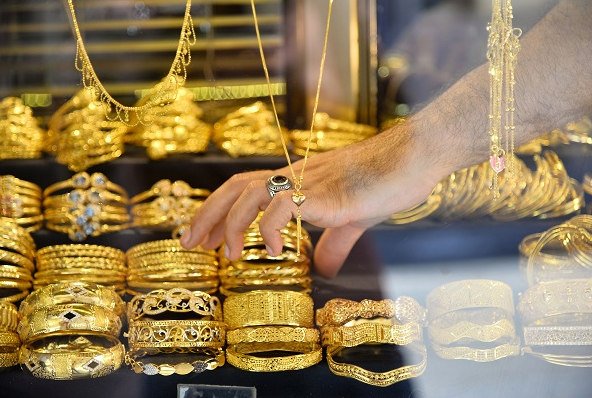
Tokyo, Jul 27: Gold hit an all-time high on Monday as tit-for-tat consulate closures in China and the United States rattled investors, boosting the allure of safe-haven assets, although sentiment was mixed with tech gains supporting some Asian stocks.

MSCI's ex-Japan Asia-Pacific index rose 1.3 percent as Taiwan's TSMC, Asia's third-largest company by market capitalisation, rose almost 10 percent.

The chipmaker's gains boosted other tech stocks in the region and came after rival Intel signalled it may give up manufacturing its own components due to delays in new 7-nanometer chip technology.

Also soothing sentiment, Chinese shares eked out gains after big falls late last week, with CSI300 index rising 0.5 percent.

S&P500 futures were last up 0.4 percent in choppy trade while Japan's Nikkei fell 0.5 percent, resuming trade after a long weekend and catching up with falls in global shares late last week.

Global shares had lost steam last week after Washington ordered China's consulate in Houston to close, prompting Beijing to react in kind by closing the US consulate in Chengdu.

US Secretary of State Mike Pompeo took fresh aim at China last week, saying Washington and its allies must use "more creative and assertive ways" to press the Chinese Communist Party to change its ways.

"US President (Donald) Trump used to say China's President Xi Jinping is a great leader. But now Pompeo's wording is becoming so aggressive that markets are starting to worry about further escalation," said Norihiro Fujito, chief investment strategist at Mitsubishi Securities.

Gold rose 1.0 percent to a record high of $1,920.9 per ounce, surpassing a peak touched in September 2011, as Sino-US tensions boosted the allure of safe-haven assets, especially those not tied to any specific country.

The yellow metal is also helped by aggressive monetary easing adopted by many central banks around the world since the pandemic plunged the global economy into a recession.

Some investors fret such an unprecedented level of money-printing could eventually lead to inflation.

MORE STIMULUS

Hopes of a quick US economic recovery are fading as coronavirus infections showed few signs of slowing.

That means the economy could capitulate without fresh support from the government, with some of earlier steps such as enhanced jobless benefits due to expire this month.

Investors hope US Congress will agree on a deal before its summer recess but there are some sticking points including the size of the stimulus and enhanced unemployment benefits.

US Treasury Secretary Steve Mnuchin said the package will contain extended unemployment benefits with 70 percent "wage replacement".

Democrats, who control the House of Representatives, want enhanced benefits of $600 per week to be extended and look to much bigger stimulus compared with the Republicans' $1 trillion plan.

Investors are looking to corporate earnings from around the world for hints on the pace of recovery in the global economy.

"It looks like rising coronavirus cases are starting to slow down recovery in many countries," said Masahiro Ichikawa, senior strategist at Sumitomo Mitsui DS Asset Management.

Concerns about the US economic outlook started to weigh on the dollar, reversing its inverse correlation with the economic well-being over the past few months.

The dollar index dropped 0.3 percent to its lowest level in nearly two years.

The euro gained 0.3 percent to $1.1693, hitting a 22-month high of $1.16590 as sentiment on the common currency improved after European leaders reached a deal on a recovery fund in a major step towards more fiscal co-operation.

Against the yen, the dollar slipped 0.5 percent to 105.605 yen, a four-month low while the British pound hit a 4 1/2-month high of $1.2832.

Oil prices dipped on worries about the worsening Sino-US relations.

Brent futures fell 0.46 percent to $43.14 per barrel while US crude futures lost 0.44 percent to $41.11.

Comments

Add new comment

  • Coastaldigest.com reserves the right to delete or block any comments.
  • Coastaldigset.com is not responsible for its readers’ comments.
  • Comments that are abusive, incendiary or irrelevant are strictly prohibited.
  • Please use a genuine email ID and provide your name to avoid reject.
News Network
January 22,2020

Jan 22: India's ranking in the latest global Democracy Index has dropped 10 places to the 51st spot out of 167 owing to violent protests and threats to civil liberties challenging freedoms across the country.

Prime Minister Narendra Modi's government has been criticized by rights groups and western governments after shutting off the internet and mobile phone networks and detaining opposition politicians in Kashmir.

Modi’s government has also responded harshly to ongoing protests against a controversial, religion-based citizenship law. Muslims have said their neighborhoods have been targeted, while the central government has attempted to ban protests and urged TV news channels not to broadcast “anti-national” content. Some leaders in Modi’s ruling party called for “revenge” against protesters. India’s score in 2019 was its worst ranking since the EIU’s records began in 2006, and has fallen gradually since Modi was elected in 2014.

The Economist Intelligence Unit’s 2019 Democracy Index, which provides an annual comparative analysis of political systems across 165 countries and two territories, said the past year was the bleakest for democracies since the research firm began compiling the list in 2006.

“The 2019 result is even worse than that recorded in 2010, in the wake of the global economic and financial crisis,” the research group said in releasing the report on Wednesday.

The average global score slipped to 5.44 out of a possible 10 -- from 5.48 in 2018 -- driven mainly by “sharp regressions” in Latin America, Sub-Saharan Africa, the Middle East and North Africa. Apart from coup-prone Thailand, which improved its score after holding an election last year, there were also notable declines in Asia after a tumultuous period of protests and new measures restricting freedom across the region’s democracies.

Asia Declines

Hong Kong, meanwhile, fell three places to rank 75th out of 167 as more than seven months of violent and disruptive protests rocked the Asian financial hub. An aggressive police response early in the unrest, when protests were mostly peaceful, led to a “marked decline in confidence in government -- the main factor behind the decline in the territory’s score in our 2019 index,” the group said.

In Singapore, which ranked alongside Hong Kong at 75th, a new “fake news” law led to a deteriorating score on civil liberties.

“The government claims that the law was enacted simply to prevent the dissemination of false news, but it threatens freedom of expression in Singapore, as it can be used to curtail political debate and silence critics of the government,” EIU analysts said.

China’s score fell to just 2.26 in the EIU’s ranking, placing it near the bottom of the list at 153, as discrimination against minorities, repression and surveillance of the population intensified. Still, in China “the majority of the population is unconvinced that democracy would benefit the economy, and support for democratic ideals is absent,” the EIU said.

Comments

Add new comment

  • Coastaldigest.com reserves the right to delete or block any comments.
  • Coastaldigset.com is not responsible for its readers’ comments.
  • Comments that are abusive, incendiary or irrelevant are strictly prohibited.
  • Please use a genuine email ID and provide your name to avoid reject.
News Network
May 1,2020

Washington, May 1:The novel coronavirus, that has killed over 230,000 people globally so far and has shattered economies, emerged from a virology lab in the Wuhan city of China, US President Donald Trump claimed Thursday with a high degree of confidence.

"Yes, I have. Yes, I have," Trump told reporters at the East Room of the White House when asked if he has seen anything at this point that gives him a high degree of confidence that the Wuhan Institute of Virology is where the virus originated.

The president, however, refuse to provide any details, except for saying that investigations are on and it would be out soon.

Asked what gave him a high degree of confidence that the virus originated from the Wuhan Institute of Virology, he said, "I can't tell you that. I'm not allowed to tell you that."

The president, however, did not hold his Chinese counterpart Xi Jinping responsible for this. "I don't want to say that, I don't want to say that, but certainly it could have been stopped. It came out of China and it could have been stopped and I wish they had stopped it and so does the whole world wish they had stopped it."

Reiterating that this is something that could have been contained at Wuhan ground zero, he said that China could have contained it. "They were either unable to, or they chose not to. And the world has suffered greatly."

One of two things happened, he reasoned. "They either didn't do it and you know they couldn't do it from a competent standpoint or they let it spread and I would say probably it got out of control."

"But there's another case that how come they stopped all of the planes and all of the traffic from going into China, but they didn't stop the planes and the traffic from coming into the United States and from coming into all over Europe," he said, citing the example of Italy, the hardest-hit European country.

"This country (the US) is very lucky and I'm very lucky that I put the ban on China, as you know, very early on. In January, we put the ban on China and that was a very early day. That wasn't a late day, that was an early day. Then, we later put the ban on in Europe," he said.

Before holding them accountable, Trump said he wants to find out what happened. "I think we'll be able to get a very good -- a very powerful definition of exactly what happened. We're working on it strongly now and I think it's going to be very powerful," he said.

"But they could have stopped it. They are a very brilliant nation, scientifically and otherwise. It got loose, let's say, and they could have capped it. They could have stopped it, but they didn't. And they stopped the planes from going to China, but they didn't stop them from going to the rest of the world. What was that all about?” he asked.

"We should have the answer to that in the not-too-distant future and that will determine a lot how I feel about China," Trump said.

When asked if President Xi misled him, Trump said, "Something happened. I don't say misleading or not. I'll let you know that. I mean, I'll be able to give you that answer at some point in the hopefully not-too-distant future."

The entire world has suffered as a result of this, he said.

"We have had tremendous death and tremendous sorrow, sadness, and nobody's ever seen anything like it. So, have most of the countries of the world. They've suffered tremendously. It's something that is going to have to be dealt with. We'll have to see," said the president.

Comments

Add new comment

  • Coastaldigest.com reserves the right to delete or block any comments.
  • Coastaldigset.com is not responsible for its readers’ comments.
  • Comments that are abusive, incendiary or irrelevant are strictly prohibited.
  • Please use a genuine email ID and provide your name to avoid reject.