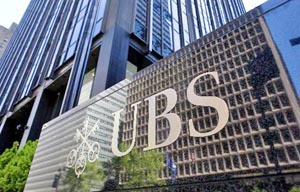
India, Switzerland deny sharing 'black money' details

June 23, 2014

New Delhi/Zurich, June 23: Switzerland has not shared any information or given assurance on sharing details about Indian account holders in Swiss banks, where a major portion of India's "black money" is suspected to be stashed, governments of both countries said Monday.Swiss bank

"We have not received any official communication from Swiss authorities so far about sharing bank account details of Indians (who have) deposited unaccounted money there," India's Finance Minister Arun Jaitley told reporters outside his North Block office here.

The finance minister was reacting on a media report that said Swiss authorities have prepared a list of names of Indian account holders and will share it with the Indian government.

Jaitley said there is no official communication so far, and the Indian authorities will send a request to Swiss authorities for sharing the information.

"Our communication will be sent today itself," Jaitley said.

The Switzerland government also rubbished the report.

"Since a high-level Swiss delegation met with its India counterparts in New Delhi in February 2014, no further official meeting has taken place.

There is no new development to be reported," the Swiss finance ministry said in a statement.

However, it said Switzerland looks forward to working together with the new Indian government in its fight against tax evasion.

"Switzerland is committed to resolving any open question with India and trusts that India shares its understanding that any solution can only be found within the established national and international legal frameworks," the Swiss finance ministry said.

The new Indian government headed by Prime Minister Narendra Modi has formed a Special Investigation Team (SIT) to probe the black money. The 11-member SIT is headed by former Supreme Court judge M.B. Shah.

Jaitley said the Indian government looks forwardto work closely with Swiss authorities on the issue of black money.

"We are today writing ourselves to the Swiss authorities with whom the ministry has been in touch, so that details with regard to whatever information the authorities have can be expedited and the cooperation between the Swiss authorities and the government of India can bring fruitful results," Jaitley said.

Comments

Add new comment

  • Coastaldigest.com reserves the right to delete or block any comments.
  • Coastaldigset.com is not responsible for its readers’ comments.
  • Comments that are abusive, incendiary or irrelevant are strictly prohibited.
  • Please use a genuine email ID and provide your name to avoid reject.
Agencies
January 15,2020

New Delhi, Jan 15: A Delhi court on Wednesday granted bail to Bhim Army chief Chandrashekhar Azad in connection with the Daryaganj violence case.

The court has ordered him not to hold any protest in Delhi till February 16th.

While hearing the case, the Judge had asked Azad's counsel to read out some of his social media posts.

Advocate Mehmood Pracha, representing Azad, had on Tuesday said that the petitioner was sent to jail without any evidence in connection with anti-CAA protests in Delhi's Darya Ganj area last year.

"I think the court's comments should become a precedent for the country. The Public Prosecutor at the behest of police tried to make this a communal issue. We told the court that the government has a problem with Azad because he made the CAA-NPR-NRC an issue for everyone. 
The Court also sought evidence," Pracha told ANI after Delhi's Tis Hazari court deferred the bail plea of Azad till today.

On Wednesday, the court pulled up the Delhi Police for failing to show any evidence against Azad.

Azad was arrested on December 21 last year after he led a march from Jama Masjid against the Citizenship (Amendment) Act. He was sent to judicial custody till January 18 at Tihar jail.

The Bhim Army chief was charged with rioting, unlawful assembly and inciting the mob to indulge in violence after vandalism in Delhi's Daryaganj area.

Comments

Add new comment

  • Coastaldigest.com reserves the right to delete or block any comments.
  • Coastaldigset.com is not responsible for its readers’ comments.
  • Comments that are abusive, incendiary or irrelevant are strictly prohibited.
  • Please use a genuine email ID and provide your name to avoid reject.
News Network
June 17,2020

New Delhi, 17: Tensions on the Indo-China border have spiked to the highest since 1962 after over 20 troops, including an Indian commanding officer, were killed in the face-off in Galwan valley that has seen a six-week long standoff underway with the Peoples Liberation Army.

The Army said that the soldiers – including the Commanding Officer of 16 Bihar regiment in charge of the area – died while a `de-escalation process’ was underway. Sources said that this death toll could rise up as some soldiers are currently not accounted for after PLA troops attacked with spiked sticks and stones in the Galwan valley.

Chinese side also has casualties but the number is still not known. The Indian death toll is perhaps the worst single day loss in decades and has come at a time when thousands of troops are forward deployed in Eastern Ladakh.

ET was the first to report on May 12 about a massive troop build up in the Galwan valley, which is an old flashpoint that had seen action in the 1962 war as well.

There have been reports of casualties on the Chinese side in the clash but numbers are currently not available. Worryingly, information from the ground suggests that several Indian soldiers, including four officers, are missing and could have been taken captive by a vastly larger Chinese force. Their status is still not known.

“During the de-escalation process underway in the Galwan Valley, a violent face-off took place yesterday night with casualties. The loss of lives on the Indian side includes an officer and two soldiers. Senior military officials of the two sides are currently meeting at the venue to defuse the situation,” an Indian Army statement reads.

The Ministry of External Affairs said that the clash occurred when the Chinese side violated the LAC. “On the late-evening and night of 15th June, 2020 a violent face-off happened as a result of an attempt by the Chinese side to unilaterally change the status quo there. Both sides suffered casualties that could have been avoided had the agreement at the higher level been scrupulously followed by the Chinese side,” a statement reads.

The loss of the Commanding Officer is especially devastating and he had been directly involved in de-escalation talks with the Chinese side, including one hours before the clash took place. Sources said that the talks on Monday morning had led to an agreement for Chinese forces to withdraw from Indian territory as part of the disengagement.

According to one version, the CO had gone to the standoff point with a party of 50 men to check if the Chinese had retreated as promised. As the Indian side proceeded to demolish and burn illegal Chinese structures on its side of the LAC, including an observation post constructed on the South bank of the river, a fresh stand off took place as a large force of Chinese troops returned back.

Sources said that a Chinese force in excess of 250 quickly assembled near Patrol Point 14 and were physically stopped by Indian soldiers from entering Indian territory. Soldiers from both sides did not use firearms but the Chinese soldiers carried spiked sticks to attack.

Given the terrain of the region, a part of the standoff and clash took place in the middle of the Galwan river that is currently flowing at full spate, leading to high casualties as injured soldiers got swept away. Indian soldiers have to cross the Galwan river at atleast five points to reach PP 14, which marks the LAC.

Chinese media reports on Tuesday quoted the spokesperson from its Western Theatre Command as laying claim over the Galwan valley region and blaming the Indian side for the clash. Reports quoted Col Zhang Shuili as saying that India has violated the consensus made during Army commander level talks.

As reported, Galwan river area has a painful history with China, with Peoples Liberation Army (PLA) soldiers surrounding a freshly set up Indian Army post in July 1962, in what would be one of the early triggers to the Sino-Indian war. At an Army post that was overrun at Galwan, 33 Indian soldiers were killed and several dozen taken captive in 1962.

In the past, the Doklam crisis in 2017 saw tensions building up along the Pangong Tso lake as well with soldiers engaging in a fight with sticks and stones. However, the Eastern Ladakh standoff is of a much more serious nature, with over 6000 Chinese troops lined up with tanks and artillery, faced off with a larger Indian forces. Troop build up has also been reported across the borders in Himachal Pradesh, Uttarakhand, Sikkim and Arunachal.


Comments

Add new comment

  • Coastaldigest.com reserves the right to delete or block any comments.
  • Coastaldigset.com is not responsible for its readers’ comments.
  • Comments that are abusive, incendiary or irrelevant are strictly prohibited.
  • Please use a genuine email ID and provide your name to avoid reject.
Agencies
July 23,2020

Expressing concern over the ban imposed on TikTok by the government of India, Facebook CEO Mark Zuckerberg has reportedly called the development in the south Asian country “worrisome”.

TikTok was amongst the 59 Chinese apps that were banned in India but why it hogs the maximum limelight because TikTok had the second-largest user base in India with over 200 million users.

As per The Verge writer Casey Newton, Zuckerberg was worried about TikTok’s India ban. Although it soon cashed into the opportunity and released a TikTok clone “Reels”, the government’s reason behind banning the app in India wasn’t received well by Mark Zuckerberg. 

He had said that if India can ban a platform with over 200 million users in India without citing concrete reasons, it can also ban Facebook if something goes amiss on the security and privacy front.

Why Mark finds it particularly worrisome because Facebook is already involved in a lot tussle with the governments across the world involving national security concerns. 

“Facebook already faces fights around the world from governments on both the left and the right related to issues that fit under the broad umbrella of national security: election interference, influence campaigns, hate speech, and even just plain-old democratic speech. Zuckerberg knows that the leap from banning TikTok on national security grounds to banning Facebook on national security grounds is more of a short hop,” the report by Casey read.

Facebook till now has not faced any kind of issue in India but considering the debacle with the other governments, it is not entirely wrong to worry about its future in India if any national security issue arises. Back in 2016, Facebook’s Free Basics service, which means a free but restricted internet service, was banned in India by the telecom regulators. 

The TRAI had said that the Free Basic services were banned in India because it violated the principles of net neutrality. With Free Basics services, Facebook had planned to bring more unconnected users online. But since 2016, there has been no major tussle between the Indian government and Zuckerberg due to national security issues.

Comments

Add new comment

  • Coastaldigest.com reserves the right to delete or block any comments.
  • Coastaldigset.com is not responsible for its readers’ comments.
  • Comments that are abusive, incendiary or irrelevant are strictly prohibited.
  • Please use a genuine email ID and provide your name to avoid reject.