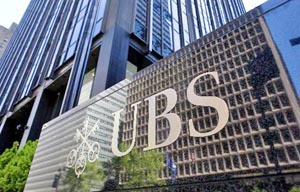
India, Switzerland deny sharing 'black money' details

June 23, 2014

New Delhi/Zurich, June 23: Switzerland has not shared any information or given assurance on sharing details about Indian account holders in Swiss banks, where a major portion of India's "black money" is suspected to be stashed, governments of both countries said Monday.Swiss bank

"We have not received any official communication from Swiss authorities so far about sharing bank account details of Indians (who have) deposited unaccounted money there," India's Finance Minister Arun Jaitley told reporters outside his North Block office here.

The finance minister was reacting on a media report that said Swiss authorities have prepared a list of names of Indian account holders and will share it with the Indian government.

Jaitley said there is no official communication so far, and the Indian authorities will send a request to Swiss authorities for sharing the information.

"Our communication will be sent today itself," Jaitley said.

The Switzerland government also rubbished the report.

"Since a high-level Swiss delegation met with its India counterparts in New Delhi in February 2014, no further official meeting has taken place.

There is no new development to be reported," the Swiss finance ministry said in a statement.

However, it said Switzerland looks forward to working together with the new Indian government in its fight against tax evasion.

"Switzerland is committed to resolving any open question with India and trusts that India shares its understanding that any solution can only be found within the established national and international legal frameworks," the Swiss finance ministry said.

The new Indian government headed by Prime Minister Narendra Modi has formed a Special Investigation Team (SIT) to probe the black money. The 11-member SIT is headed by former Supreme Court judge M.B. Shah.

Jaitley said the Indian government looks forwardto work closely with Swiss authorities on the issue of black money.

"We are today writing ourselves to the Swiss authorities with whom the ministry has been in touch, so that details with regard to whatever information the authorities have can be expedited and the cooperation between the Swiss authorities and the government of India can bring fruitful results," Jaitley said.

Comments

Add new comment

  • Coastaldigest.com reserves the right to delete or block any comments.
  • Coastaldigset.com is not responsible for its readers’ comments.
  • Comments that are abusive, incendiary or irrelevant are strictly prohibited.
  • Please use a genuine email ID and provide your name to avoid reject.
News Network
February 14,2020

New Delhi/Washington, Feb 14: India has offered to partially open up its poultry and dairy markets in a bid for a limited trade deal during US President Donald Trump's first official visit to the country this month, people familiar with the protracted talks say.

India, the world's largest milk-producing nation, has traditionally restricted dairy imports to protect the livelihoods of 80 million rural households involved in the industry.

But Prime Minister Narendra Modi is trying to pull all the stops for the US President's February 24-25 visit, aimed at rebuilding bonds between the world's largest democracies.

In 2019, President Trump suspended India's special trade designation that dated back to 1970s, after PM Modi put price caps on medical devices, such as cardiac stents and knee implants, and introduced new data localization requirements and e-commerce restrictions.

President Trump's trip to India has raised hopes that he would restore some of the country's US trade preferences, in exchange for tariff reductions and other concessions.

The United States is India's second-largest trade partner after China, and bilateral goods and services trade climbed to a record $142.6 billion in 2018. The United States had a $23.2 billion goods trade deficit in 2019 with India, its 9th largest trading partner in goods.

India has offered to allow imports of US chicken legs, turkey and produce such as blueberries and cherries, government sources said, and has offered to cut tariffs on chicken legs from 100 per cent to 25 per cent. US negotiators want that tariff cut to 10 per cent. The Modi government is also offering to allow some access to India's dairy market, but with a 5 per cent tariff and quotas, the sources said. But dairy imports would need a certificate they are not derived from animals that have consumed feeds that include internal organs, blood meal or tissues of ruminants.

New Delhi has also offered to lower its 50 per cent tariffs on very large motorcycles made by Harley-Davidson, a tax that was a particular irritant for President Trump, who has labelled India the "tariff king." The change would be largely symbolic because few such motorcycles are sold in India.

President Trump will be feted in PM Modi's home state of Gujarat, then hold talks in New Delhi and attend a reception that the hosts have promised will be bigger than the one organised for former president Barack Obama in 2015.

But it is far from clear whether India's offers will be enough to satisfy US Trade Representative Robert Lighthizer, who cancelled plans for a trip to India this week. Instead, he has held telephone talks with Commerce Minister Piyush Goyal.

The US dairy industry remained sceptical on Thursday that a viable deal is at hand.

"We're always looking for market access, but in terms of India, as of today I'm not aware of any real progress going on," said Michael Dykes, president of the International Dairy Foods Association and a member of USTR's agricultural trade policy advisory committee.

Mr Dykes said the US dairy industry was looking for access in viable commercial quantities.

A USTR spokesman and India's trade ministry did not respond to requests for comment.

A parliament panel is reviewing a draft data privacy law that imposes stringent controls over cross-border data flows and gives the government powers to seek user data from companies.

It is not clear whether it will be passed, or in what form, but the possibilities have unnerved US companies and could raise compliance requirements for Google, Amazon.com Inc, and Facebook.

The draft law is not part of the trade discussions, Indian officials say, because the issue is too difficult to resolve at the same time.

"The privacy and localization piece will be raised independently and in concert with the trade discussions," said a Washington-based source with knowledge of the US administration's thinking.

President Trump on Tuesday was non-committal about sealing a trade deal before his visit. "If we can make the right deal, we'll do it," he told reporters.

Two US sources said progress had been made on proposed alterations to the medical device price caps. India's new import tariffs on medical devices, walnuts, toys, electronics and other products on February 1 surprised US negotiators, however.

The new tariffs were aimed at China, which also makes medical devices, according to an Indian government source. "We have to protect our market and our companies," the source said.


Comments

Add new comment

  • Coastaldigest.com reserves the right to delete or block any comments.
  • Coastaldigset.com is not responsible for its readers’ comments.
  • Comments that are abusive, incendiary or irrelevant are strictly prohibited.
  • Please use a genuine email ID and provide your name to avoid reject.
News Network
June 23,2020

New Delhi, Jun 23: In an unexpected development, the pump price of diesel is all set to surpass the petrol price in the capital, making it the most expensive transport fuel for the first time in a long time.

Globally, diesel is priced slightly above petrol prices due to the very nature of the product that has a higher cost of production. But in India, due to the lopsided taxation structure, diesel attracts lesser of the tax between the two auto fuels keeping its prices lower than petrol for last several years.

Diesel is currently priced at Rs 79.40 a litre in the Capital, just 36 paise short of petrol price that is being retailed at Rs 79.76 a litre. Going by the trend of price movement in the two products for the last few days where diesel prices have consistently increased by 50-60 paise per litre while the daily increase in petrol prices have fallen to just 20 paise on Tuesday, it is set to surpass petrol prices in next few days.

"Diesel price movement is sharper in international market and if oil companies follow the global price trend, diesel prices will surpass that of petrol later this week. It will be after many years that this would happen and is expected to sustain for some time unless government changes the tax structure of the petroleum products again," said an oil sector expert from one of the big four audit and advisory firms asking not to be named.

Interestingly, even in India the base price of diesel is expensive than petrol. According to the Indian Oil Corporation (IOC), while the base price of petrol in Delhi currently comes to Rs 22.11 per litre, the same for diesel is higher at Rs 22.93 per litre (effective from June 16, 2020). This has been the case for a long time, but retail price of petrol can be higher than diesel due to central and state taxes.

What has now brought diesel prices to a whisker of petrol prices in the capital is the Delhi government's decision early May to increase the Value Added Tax on diesel from 16.75 per cent to 30 per cent and on petrol from 27 per cent to 30 per cent. This increased the retail price of diesel and petrol in Delhi by Rs 7.10 and Rs 1.67 a litre respectively. With Central taxes on the two products already reaching identical levels, the Delhi governments move hastened price parity between petrol and diesel.

Currently, the Central excise on petrol is Rs 32.98 a litre while that on diesel it is Rs 31.83 a litre. The VAT on petrol in Delhi is Rs 17.71 a litre and that on diesel is Rs 17.60 a litre.

While the movement of retail pricing is being seen with a sigh of relief by vehicle owners whose cars run on petrol, those buying the relatively expensive diesel cars are now repenting on their decision. The development is also being seen with caution by automobile companies who have spent millions to ramp up their facilities for diesel run vehicles. The expectation is that demand for such cars will now fall, causing more damage to companies where sales are already impacted due to persistent economic slowdown and now the spread of COVID-19 pandemic.

"The pricing development would push automobile companies to strategies being followed by companies in the western markets where diesel run cars are not sold on fuel pricing differential, but on overall make and quality that puts them ahead of petrol run cars," the expert quoted earlier.

Yes, but for commercial vehicle sector the rising price of diesel had not been welcomed. In fact, the commercial transport sector had time an again threatened strike against the move to raise fuel prices.

With petrol and diesel retail prices closing, the case for adultering fuel has also gone down much to the relief of vehicle owners.

Comments

Add new comment

  • Coastaldigest.com reserves the right to delete or block any comments.
  • Coastaldigset.com is not responsible for its readers’ comments.
  • Comments that are abusive, incendiary or irrelevant are strictly prohibited.
  • Please use a genuine email ID and provide your name to avoid reject.
News Network
April 23,2020

New Delhi, Apr 23: The entire Muslim community cannot be held responsible for one group's "crime", Minority Affairs Minister Mukhtar Abbas Naqvi said on Thursday while reacting to instances of Muslims being blamed for the spurt in COVID-19 cases after Tablighi Jamaat congregation here, and asserted that most of the minority community members have condemned the group's action.

In an interview to news agency, Naqvi also expressed confidence that Muslims will abide by lockdown guidelines during the holy month of Ramzan.

He said across the India, imams, Ulema and Muslim organizations have unanimously decided that during Ramzan (the Islamic holy month), Muslims will not congregate in mosques, religious places and perform all rituals like 'Iftaar' (breaking of fast) and 'taraweeh' (special prayers) at home keeping in mind social distancing norms.

Naqvi said he has spoken with state waqf board officials, social and religious leaders, imams on adherence to the lockdown and social distancing guidelines during the Ramzan month starting Friday or Saturday evening and they have begun creating awareness among the people.

Asked about some people blaming Muslims for the spread of the pandemic after a large number of cases were found linked to the Tablighi Jamaat event at Nizamudddin here, Naqvi said the whole community cannot be held responsible for the "crime" of one organisation or one person.

"Whatever that organisation did, criminal negligence or crime...most Muslims have strongly reacted to it, condemned it and called for action against it. Entire community cannot be held responsible for one person or one organisation's crime," he asserted, adding that this has always been India's culture.

Last week, the Union Health Ministry had said 29.8 per cent of the total COVID-19 cases — 4,291 out of 14,378 COVID-19 infections — in the country were linked to the Tablighi Jamaat congregation in March at the group's headquarters in Delhi following which some sections of the society severely criticised Muslims, and blamed them for the spread of the pandemic in the country.

Naqvi's comments also assume significance in view of the 57-member prominent international Mulim grouping, Organisation of Islamic Cooperation (OIC), asking India to take "urgent steps" to protect the rights of its minority Muslim community and stop the incidents of "Islamophobia" in the country.

Hitting out at the OIC, the minister had said the country is "heaven for Muslims" and those trying to vitiate the atmosphere of prosperity cannot be friends of Indian Muslims.

Naqvi said those targeting Muslims are few isolated people who are trying to spread "misinformation" and "we should be united and isolate such elements".

On the COVID-19 lockdown restrictions during Ramzan, Naqvi said no Muslim wants to stay away from mosques during the holy month, but everyone has resolved to win this battle against coronavirus.

During this month, everyone should pray to God that not only India but also the entire world is freed from this COVID-19 pandemic, he said.

Asked whether Muslims have followed lockdown and social distancing guidelines till now, Naqvi said, "absolutely, the entire country is standing united in this fight against coronavirus."

"When Prime Minister Narendra Modi had appealed to people with folded hands, he had appealed to 130 crore Indians, it was not based on caste or religion. And everybody responded to his appeal and acted on it," he said.

People have faith that whatever Prime Minister Modi does is for the health and safety of the people, Naqvi said.

Asked about the role of the Opposition in the fight against COVID-19 and Congress chief Sonia Gandhi and Rahul Gandhi's suggestions, Naqvi said,"some people have criticized, but that is their habit, we don't take any offence to it."

Comments

Add new comment

  • Coastaldigest.com reserves the right to delete or block any comments.
  • Coastaldigset.com is not responsible for its readers’ comments.
  • Comments that are abusive, incendiary or irrelevant are strictly prohibited.
  • Please use a genuine email ID and provide your name to avoid reject.