


India, Switzerland deny sharing 'black money' details

June 23, 2014

New Delhi/Zurich, June 23: Switzerland has not shared any information or given assurance on sharing details about Indian account holders in Swiss banks, where a major portion of India's "black money" is suspected to be stashed, governments of both countries said Monday.Swiss bank
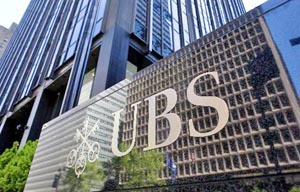
"We have not received any official communication from Swiss authorities so far about sharing bank account details of Indians (who have) deposited unaccounted money there," India's Finance Minister Arun Jaitley told reporters outside his North Block office here.

The finance minister was reacting on a media report that said Swiss authorities have prepared a list of names of Indian account holders and will share it with the Indian government.

Jaitley said there is no official communication so far, and the Indian authorities will send a request to Swiss authorities for sharing the information.

"Our communication will be sent today itself," Jaitley said.

The Switzerland government also rubbished the report.

"Since a high-level Swiss delegation met with its India counterparts in New Delhi in February 2014, no further official meeting has taken place.

There is no new development to be reported," the Swiss finance ministry said in a statement.

However, it said Switzerland looks forward to working together with the new Indian government in its fight against tax evasion.

"Switzerland is committed to resolving any open question with India and trusts that India shares its understanding that any solution can only be found within the established national and international legal frameworks," the Swiss finance ministry said.

The new Indian government headed by Prime Minister Narendra Modi has formed a Special Investigation Team (SIT) to probe the black money. The 11-member SIT is headed by former Supreme Court judge M.B. Shah.

Jaitley said the Indian government looks forwardto work closely with Swiss authorities on the issue of black money.

"We are today writing ourselves to the Swiss authorities with whom the ministry has been in touch, so that details with regard to whatever information the authorities have can be expedited and the cooperation between the Swiss authorities and the government of India can bring fruitful results," Jaitley said.

Comments

Add new comment

  • Coastaldigest.com reserves the right to delete or block any comments.
  • Coastaldigset.com is not responsible for its readers’ comments.
  • Comments that are abusive, incendiary or irrelevant are strictly prohibited.
  • Please use a genuine email ID and provide your name to avoid reject.
News Network
February 2,2020

Feb 2: Prime Minister Narendra Modi’s second budget in seven months disappointed investors who were hoping for big-bang stimulus to revive growth in Asia’s third-largest economy.

The fiscal plan -- delivered by Finance Minister Nirmala Sitharaman on Saturday -- proposed tax cuts for individuals and wider deficit targets but failed to provide specific steps to fix a struggling financial sector, improve infrastructure and create jobs. Stocks slumped as a proposal to scrap the dividend distribution tax for companies failed to impress investors.

"Far from being a game changer, the budget provides little in terms of short-term growth stimulus,” said Priyanka Kishore, head of India and South East Asia economics at Oxford Economics Ltd. in Singapore. “While income tax cuts will provide some relief on the consumption front, the multiplier effect is low and the overall stance of the budget is not expansionary."

India has gone from being the world’s fastest-growing major economy three years ago, expanding at 8%, to posting its weakest performance in more than a decade this fiscal year, estimated at 5%.

While the government has taken a number of steps in recent months to spur growth, they’ve fallen short of spurring demand in the consumption-driven economy. Saturday’s budget just added to the glum sentiment.

Okay Budget

“It’s an okay budget but not firing on all cylinders that the market was hoping for,” said Andrew Holland, chief executive officer at Avendus Capital Alternate Strategies in Mumbai.

The government had limited scope for a large stimulus given a huge shortfall in revenues in the current year. The slippage induced Sitharaman to invoke a never-used provision in fiscal laws, allowing the government to exceed the budget gap by 0.5 percentage points. The result: the deficit for the year ending March was widened to 3.8% of gross domestic product from a planned 3.3%.

On Friday, India’s chief economic adviser Krishnamurthy Subramanian said reviving economic growth was an “urgent priority” and deficit goals could be relaxed to achieve that. The adviser’s Economic Survey estimated growth will rebound to 6%-6.5% in the year starting April.

The fiscal gap will narrow to 3.5% next year, as the government budgeted for gross market borrowing to rise marginally to 7.8 trillion rupees from 7.1 trillion rupees in the current year. A plan to earn 2.1 trillion rupees by selling state-owned assets in the year starting April will also help plug the deficit.

Total spending in the coming fiscal year will increase to 30.4 trillion rupees, representing a 13% increase from the current year’s budget, according to latest data.

Key highlights from the budget:

* Tax on annual income up to 1.25 million rupees pared, with riders

* Dividend distribution tax to be levied on investors, instead of companies

* Farm sector budget raised 28%, transport infrastructure gets 7% more

* Spending on education raised 5%

* Fertilizer subsidy cut 10%

Analysts said the muted spending plan to keep the deficit in check will lead to more downside risks to growth in the coming months.

“It is very doubtful that the increase in expenditure will push demand much,” Chakravarthy Rangarajan, former governor at the Reserve Bank of India told BloombergQuint, adding that achieving next year’s budget deficit goal of 3.5% of GDP was doubtful.

With the government sticking to a conservative fiscal path, the focus will now turn to central bank, which is set to review monetary policy on Feb. 6. Given inflation has surged to a five-year high of 7.35%, the RBI is unlikely to lower interest rates.

What Bloomberg’s Economists Say:

The burden of recovery now falls solely on the Reserve Bank of India. With inflation breaching RBI’s target at present, any rate cuts by the central bank are likely to be delayed and contingent upon inflation falling below the upper end of its 2%-6% target range.

-- Abhishek Gupta, India economist

Governor Shaktikanta Das may instead focus on unconventional policy tools such as the Federal Reserve-style Operation Twist -- buying long-end debt while selling short-tenor bonds -- to keep borrowing costs down.

Comments

Add new comment

  • Coastaldigest.com reserves the right to delete or block any comments.
  • Coastaldigset.com is not responsible for its readers’ comments.
  • Comments that are abusive, incendiary or irrelevant are strictly prohibited.
  • Please use a genuine email ID and provide your name to avoid reject.
News Network
January 7,2020

Mumbai, Jan 7: Against the backdrop of the attack on JNU students, the Shiv Sena on Tuesday hit out at Prime Minister Narendra Modi and Union Home Minister Amit Shah, alleging that what they wanted was happening, and said such "brutal politics" was never seen before in the country.

An editorial in Shiv Sena mouthpiece 'Saamana' further alleged that the BJP wanted to see "Hindu-Muslim riots" over the Citizenship Amendment Act, but that did not happen.

Since the BJP has been cornered over the issue of CAA, several things are happening out of "revenge", it said.

Comparing the attack on Jawaharlal Nehru University (JNU) students to the 26/11 Mumbai terror strikes, the Shiv Sena said: "divisive politics" was dangerous for the country.

It said the Union Home Ministry's decision to file cases against "unknown" attackers at JNU was laughable. "Those who entered JNU with masks are not unknown," it claimed.

On Sunday, a mob of masked young people stormed the Jawaharlal Nehru University (JNU) campus in south Delhi and targeted students in three hostels, unleashing mayhem with sticks, stones and iron rods, hitting inmates and breaking windows, furniture and personal belongings.

Nearly 34 people were injured in the violence.

"The fallout of JNU attack is being seen elsewhere in the country...what Modi and Shah want is happening. The country is in danger. Divisive politics is dangerous for the country," the Uddhav Thackeray-led party said.

Terrorists who attacked Mumbai on November 26, 2008, were also masked and the same was seen at JNU. Such elements need to be exposed, it said.

"Allowing blood stains in universities, colleges and beating up of students and indulging in politics over the burning situation...such brutal politics was never seen before," the Marathi publication said while terming the attack on JNU students as a "blot" on the law and order situation.

Lashing out at Amit Shah, the Sena said he his in Delhi and busy distributing official pamphlets door-to-door to promote the Citizenship Amendment Act.

There is "confusion and unrest" in the country over the new citizenship law, it pointed out.

"The BJP wanted to see Hindu-Muslim riots over the issue, but that did not happen. The nationwide protests are not being done by Muslims alone. Hindus will also be affected due to the new Act," the Shiv Sena said.

It said the BJP has been cornered over the CAA issue.

Since the prevailing situation is "BJP versus the rest", hence "out of revenge", several things are happening, the Marathi daily said, adding that "there is room for doubt if the JNU attack was part of the revenge."

The BJP has condemned the violence and said universities should stay away from politics, it noted.

"Who brought violence and politics in universities in the last five years? Who is implementing the policy of destroying those who don't agree with your ideology by use of power?" it asked.

Without taking any name, the Sena said those who call students opposing the CAA as anti-nationals, are themselves anti-national.

"When Amit Shah accuses Congress leaders Rahul Gandhi and Priyanka Gandhi of inciting violence, he admits that the Gandhi siblings have that much power to create mass awareness against a law brought in by the Centre and bring people to streets," the Sena said.

One cannot say if the Gandhi siblings incited violence, but one thing is sure that the Union Home Minister and his party are forced to distribute pamphlets to "clarify" on the new citizenship law, it said in sarcastic comments.

Comments

Add new comment

  • Coastaldigest.com reserves the right to delete or block any comments.
  • Coastaldigset.com is not responsible for its readers’ comments.
  • Comments that are abusive, incendiary or irrelevant are strictly prohibited.
  • Please use a genuine email ID and provide your name to avoid reject.
News Network
February 1,2020

New Delhi, Feb 1: India on Friday banned the export of personal protection equipment such as masks and clothing amid a global coronavirus outbreak.

It did not give a reason for the ban but it reported its first case of the new coronavirus on Thursday, a woman in Kerala who was a student of Wuhan University in China.

The central Chinese city of Wuhan is the epicentre of the outbreak, and the virus has since spread to more than 9,800 people globally and killed 213 people in China.

Several Indian citizens living in Wuhan will arrive in India by plane on Saturday and be taken to a quarantine centre on the outskirts of the capital New Delhi.

India, the world’s second most heavily populated country after China, has taken measures to ensure that all people arriving from China report to health authorities.

Comments

Add new comment

  • Coastaldigest.com reserves the right to delete or block any comments.
  • Coastaldigset.com is not responsible for its readers’ comments.
  • Comments that are abusive, incendiary or irrelevant are strictly prohibited.
  • Please use a genuine email ID and provide your name to avoid reject.