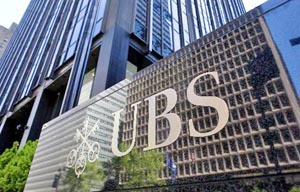
India, Switzerland deny sharing 'black money' details

June 23, 2014

New Delhi/Zurich, June 23: Switzerland has not shared any information or given assurance on sharing details about Indian account holders in Swiss banks, where a major portion of India's "black money" is suspected to be stashed, governments of both countries said Monday.Swiss bank

"We have not received any official communication from Swiss authorities so far about sharing bank account details of Indians (who have) deposited unaccounted money there," India's Finance Minister Arun Jaitley told reporters outside his North Block office here.

The finance minister was reacting on a media report that said Swiss authorities have prepared a list of names of Indian account holders and will share it with the Indian government.

Jaitley said there is no official communication so far, and the Indian authorities will send a request to Swiss authorities for sharing the information.

"Our communication will be sent today itself," Jaitley said.

The Switzerland government also rubbished the report.

"Since a high-level Swiss delegation met with its India counterparts in New Delhi in February 2014, no further official meeting has taken place.

There is no new development to be reported," the Swiss finance ministry said in a statement.

However, it said Switzerland looks forward to working together with the new Indian government in its fight against tax evasion.

"Switzerland is committed to resolving any open question with India and trusts that India shares its understanding that any solution can only be found within the established national and international legal frameworks," the Swiss finance ministry said.

The new Indian government headed by Prime Minister Narendra Modi has formed a Special Investigation Team (SIT) to probe the black money. The 11-member SIT is headed by former Supreme Court judge M.B. Shah.

Jaitley said the Indian government looks forwardto work closely with Swiss authorities on the issue of black money.

"We are today writing ourselves to the Swiss authorities with whom the ministry has been in touch, so that details with regard to whatever information the authorities have can be expedited and the cooperation between the Swiss authorities and the government of India can bring fruitful results," Jaitley said.

Comments

Add new comment

  • Coastaldigest.com reserves the right to delete or block any comments.
  • Coastaldigset.com is not responsible for its readers’ comments.
  • Comments that are abusive, incendiary or irrelevant are strictly prohibited.
  • Please use a genuine email ID and provide your name to avoid reject.
Agencies
July 29,2020

New Delhi, Jul 29: Coronavirus infections in India continue to mount as the country's total case tally crossed the 15-lakh mark.

India added 48,513 fresh cases in 24 hours, taking the total tally to over 15.3 lakh, according to the Health Ministry’s 8 a.m. update on July 29.

Key Figures

Total number of confirmed coronavirus cases: 15,31,669
Active cases: 5,09,447
Cured/discharged/migrated: 9,88,029
Deaths: 34,193
Number of fresh cases in 24 hours: 48,513
One-day recoveries: 35,175
One-day deaths: 768
India’s coronavirus epidemic is growing at the fastest pace in the world, increasing 20% over the last week, according to Bloomberg’s Coronavirus Tracker. Maharashtra, Tamil Nadu, Andhra Pradesh and Karnataka are among the states where the maximum number of daily cares are being reported.

Fresh cases continued to come in at a heightened pace, hovering just below 50,000 for the last six days.

Moderna Inc.’s vaccine candidate against Covid-19 protected against the virus in a trial that inoculated 16 monkeys, an encouraging step on the path to a defense for humans against the pandemic. Pfizer Inc., however, is preparing for the novel coronavirus to endure, leading to long-term demand for a seasonal shot to protect against Covid-19.

“There is a likely scenario that either the vaccine’s immunity will not be lasting forever,” said Chief Executive Officer Albert Bourla in an interview Tuesday, “or that the virus will mutate, or that the virus will find ways to come back again and again.”

Even as the transmission rate of Covid-19 remains high in India, the pace of recovery has risen too. On Wednesday, India reported its third day of over 35,000 recoveries.

Global Update

Flare-ups in virus cases from Hong Kong to Europe are proving difficult for policy makers to wrangle. The U.S. neared 150,000 deaths from Covid-19, even as daily infections slowed in some hard-hit states. China reported 101 new cases, up from 68 a day earlier, with 98 of the total from local infections, mostly in Xinjiang.

Philippine health authorities warned that hospitals and infirmaries risk getting overwhelmed.

Globally, confirmed Covid-19 cases have topped 16.6 million with over 658,000 dead.

Comments

Add new comment

  • Coastaldigest.com reserves the right to delete or block any comments.
  • Coastaldigset.com is not responsible for its readers’ comments.
  • Comments that are abusive, incendiary or irrelevant are strictly prohibited.
  • Please use a genuine email ID and provide your name to avoid reject.
News Network
June 1,2020

Jun 1: Gold prices rose on Monday as riots in major U.S. cities rattled investors already reeling from strained Sino-U.S. relations and boosted demand for the safe-haven metal, with a weaker dollar lending further support.

Spot gold gained 0.8% to $1,739.75 per ounce by 0242 GMT. U.S. gold futures ticked up 0.1% to $1,752.60.

"Concerns about the unrest in the United States at the moment appear to be weighing on market sentiment," said Michael McCarthy, chief strategist at CMC Markets, adding that rising tensions between the world's top two economies provided further support to gold.

Protesters have flooded the streets in the United States over the death of George Floyd in police custody, in a wave of outrage sweeping a politically and racially divided nation.

The closely packed crowds and demonstrators not wearing masks have sparked fears of a resurgence of COVID-19, which has killed more than 101,000 Americans.

In Asia, China's state media and the government of Hong Kong lashed out on Sunday at U.S. President Donald Trump's pledge to end Hong Kong's special status if Beijing imposes new national security laws on the city.

Gold is often used as a safe store of value during times of political and financial uncertainty.

Indicative of sentiment, holdings of SPDR Gold Trust, the world's largest gold-backed exchange-traded fund, rose 0.3% to 1,123.14 tonnes on Friday, a fresh seven-year high.

Further supporting gold's appeal, the dollar index fell 0.4% against its rivals.

Elsewhere, silver jumped 2% to $18.20 per ounce, its highest since Feb. 26, before retreating slightly to trade 1.8% higher at $18.16.

Speculators cut their bullish positions in COMEX gold and increased them in silver contracts in the week to May 26, the U.S. Commodity Futures Trading Commission said on Friday.

Palladium rose 0.7% to $1,958.25 per ounce, while platinum declined 0.3% to $835.56.

Comments

Add new comment

  • Coastaldigest.com reserves the right to delete or block any comments.
  • Coastaldigset.com is not responsible for its readers’ comments.
  • Comments that are abusive, incendiary or irrelevant are strictly prohibited.
  • Please use a genuine email ID and provide your name to avoid reject.
Agencies
May 27,2020

New Delhi, May 27: India’s fourth recession since Independence, first since liberalisation, and perhaps the worst to date is here, according to rating agency, Crisil.

CRISIL sees the Indian economy shrinking 5 per cent in fiscal 2021 (on-year), because of the Covid-19 pandemic. The first quarter will suffer a staggering 25 per cent contraction.

About 10 per cent of gross domestic product (GDP) in real terms could be permanently lost. "So going back to the growth rates seen before the pandemic is unlikely in the next three fiscals", Crisil said.

Crisil has revised its earlier forecast downwards. "Earlier, on April 28, we had slashed our prediction to 1.8 per cent growth from 3.5 per cent growth. Things have only gone downhill since", it said.

While we expect non-agricultural GDP to contract 6 per cent, agriculture could cushion the blow by growing at 2.5 per cent.

In the past 69 years, India has seen a recession only thrice as per available data in fiscals 1958, 1966 and 1980. The reason was the same each time a monsoon shock that hit agriculture, then a sizeable part of the economy.

"The recession staring at us today is different," it added. For one, agriculture could soften the blow this time by growing near its trend rate, assuming a normal monsoon. Two, the pandemic-induced lockdowns have affected most non-agriculture sectors. And three, the global disruption has upended whatever opportunities India had on the exports front.

Economic conditions have slid precipitously since the April-end forecast of 1.8 per cent GDP growth for fiscal 2021 (baseline), Crisil said.

On the lockdown extension, it said that the government has extended the lockdown four times to deal with the rising number of cases, curtailing economic activity severely (lockdown 4.0 is ending on May 31).

The first quarter of this fiscal will be the worst affected. June is unlikely to see major relaxations as the Covid-19 affliction curve is yet to flatten in India.

"Not only will the first quarter be a washout for the non-agricultural economy, services such as education, and travel and tourism among others, could continue to see a big hit in the quarters to come. Jobs and incomes will see extended losses as these sectors are large employers," Crisil said.

CRISIL also foresees economic activity in states with high Covid-19 cases to suffer prolonged disruption as restrictions could continue longer.

A rough estimate based on a sample of eight states, which contribute over half of India's GDP, shows that their 'red zones' (as per lockdown 3.0) contributed 42 per cent to the state GDP on average regardless of the share of such red zones.

On average, the orange zones contribute 46 per cent, while the green zones where activity is allowed to be close to normal contribute only 12 per cent to state GDP.

The economic costs are higher than earlier expectations, according to Crisil. The economic costs now beginning to show up in the hard numbers are far worse than initial expectations.

Industrial production for March fell by over 16%. The purchasing managers indices for the manufacturing and services sectors were at 27.4 and 5.4, respectively, in April, implying extraordinary contraction. That compares with 51.8 and 49.3, respectively, in March.

Exports contracted 60.3 per cent in April, and new telecom subscribers declined 35 per cent, while railway freight movement plunged 35 per cent on-year.

"Indeed, given one of the most stringent lockdowns in the world, April could well be the worst performing month for India this fiscal," it said.

Added to that is the economic package without enough muscle. The government recently announced a Rs 20.9 lakh crore economic relief package to support the economy. The package has some short-term measures to cushion the economy, but sets its sights majorly on reforms, most of which will have payoffs only over the medium term.

"We estimate the fiscal cost of this package at 1.2 per cent of GDP, which is lower than what we had assumed in our earlier estimate (when we foresaw a growth in GDP)," it said.

"We believe a catch-up to the pre-crisis trend level of GDP growth will not be possible in the next three fiscals despite policy support. Under the base case, we estimate a 10 per cent permanent loss to real GDP (from the decadal-trend level), assuming average growth of about 7 per cent between fiscals 2022 and 2024," Crisil said.

Interestingly, after the Global Financial Crisis (GFC), a sharp growth spurt helped catch up with the trend within two years. GDP grew 8.2 per cent on average in the two fiscals following the GFC. Massive fiscal spending, monetary easing and swift global recovery played a role in a V-shaped recovery.

To catch-up would require average GDP growth to surge to 11 per cent over the next three fiscals, something that has never happened before.

The research said that successive lockdowns have a non-linear and multiplicative effect on the economy a two-month lockdown will be more than twice as debilitating as a one-month imposition, as buffers keep eroding.

Partial relaxations continue to be a hindrance to supply chains, transportation and logistics. Hence, unless the entire supply chain is unlocked, the impact of improved economic activity will be subdued.

Therefore, despite the stringency of lockdown easing a tad in the third and the fourth phases, their negative impact on GDP is expected to massively outweigh the benefits from mild fiscal support and low crude oil prices, especially in the April-June quarter. "Consequently, we expect the current quarter's GDP to shrink 25 per cent on-year," it said.

Counting lockdown 4.0, Indians have had 68 days of confinement. S&P Global estimates that one month of lockdown shaves 3 per cent off annual GDP on average across Asia-Pacific.

Since India's lockdown has been the most stringent in Asia, the impact on economic growth will be correspondingly larger.

Google's Community Mobility Reports show a sharp fall in movement of people to places of recreation, retail shops, public transport and workplace travel. While data for May shows some improvement in India, mobility trends are much below the average or baseline, and lower compared with countries such as the US, South Korea, Brazil and Indonesia.


Comments

Add new comment

  • Coastaldigest.com reserves the right to delete or block any comments.
  • Coastaldigset.com is not responsible for its readers’ comments.
  • Comments that are abusive, incendiary or irrelevant are strictly prohibited.
  • Please use a genuine email ID and provide your name to avoid reject.