


India, Switzerland deny sharing 'black money' details

June 23, 2014

New Delhi/Zurich, June 23: Switzerland has not shared any information or given assurance on sharing details about Indian account holders in Swiss banks, where a major portion of India's "black money" is suspected to be stashed, governments of both countries said Monday.Swiss bank
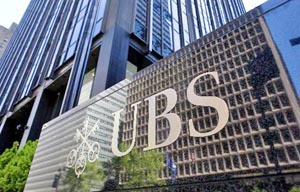
"We have not received any official communication from Swiss authorities so far about sharing bank account details of Indians (who have) deposited unaccounted money there," India's Finance Minister Arun Jaitley told reporters outside his North Block office here.

The finance minister was reacting on a media report that said Swiss authorities have prepared a list of names of Indian account holders and will share it with the Indian government.

Jaitley said there is no official communication so far, and the Indian authorities will send a request to Swiss authorities for sharing the information.

"Our communication will be sent today itself," Jaitley said.

The Switzerland government also rubbished the report.

"Since a high-level Swiss delegation met with its India counterparts in New Delhi in February 2014, no further official meeting has taken place.

There is no new development to be reported," the Swiss finance ministry said in a statement.

However, it said Switzerland looks forward to working together with the new Indian government in its fight against tax evasion.

"Switzerland is committed to resolving any open question with India and trusts that India shares its understanding that any solution can only be found within the established national and international legal frameworks," the Swiss finance ministry said.

The new Indian government headed by Prime Minister Narendra Modi has formed a Special Investigation Team (SIT) to probe the black money. The 11-member SIT is headed by former Supreme Court judge M.B. Shah.

Jaitley said the Indian government looks forwardto work closely with Swiss authorities on the issue of black money.

"We are today writing ourselves to the Swiss authorities with whom the ministry has been in touch, so that details with regard to whatever information the authorities have can be expedited and the cooperation between the Swiss authorities and the government of India can bring fruitful results," Jaitley said.

Comments

Add new comment

  • Coastaldigest.com reserves the right to delete or block any comments.
  • Coastaldigset.com is not responsible for its readers’ comments.
  • Comments that are abusive, incendiary or irrelevant are strictly prohibited.
  • Please use a genuine email ID and provide your name to avoid reject.
News Network
February 22,2020

Feb 22: Prime Minister Narendra Modi is unlikely to accompany US President Donald Trump and his family members during their visit to the Taj Mahal in Agra on Monday, official sources said.

The US President will arrive in Ahmedabad at around noon on February 24 for a less that 36-hour visit to India. He will be accompanied by a high-level delegation including First Lady Melania Trump, the President's daughter Ivanka Trump, son-in-law Jared Kushner and a galaxy of top US officials.

After attending an event at Ahmedabad, the Trumps will travel to Agra on Monday afternoon to visit the Taj Mahal before arriving at the national capital for the main leg of the visit.

When asked about reports that Modi may accompany Trump to Agra, official sources said there was no such plan.

They said the visit to the Taj Mahal in Agra by the US President and his family members will afford them the opportunity to view the historical monument suitably. Therefore, no official engagements or presence of senior dignitaries from the Indian side is envisaged there, the sources said.

Comments

Add new comment

  • Coastaldigest.com reserves the right to delete or block any comments.
  • Coastaldigset.com is not responsible for its readers’ comments.
  • Comments that are abusive, incendiary or irrelevant are strictly prohibited.
  • Please use a genuine email ID and provide your name to avoid reject.
Agencies
July 29,2020

New Delhi, Jul 29: The new National Education Policy (NEP) approved by the Union Cabinet on Wednesday is set to usher in a slew of changes with the vision of creating an education system that contributes directly to transforming the country, providing high-quality education to all, and making India a global knowledge superpower.

The draft of the NEP by a panel headed by former Indian Space Research Organisation (ISRO) chief Kasturirangan and submitted to the Union Human Resource Development Minister Ramesh Pokhriyal when he took charge last year. The new NEP replaces the one formulated in 1986.

Some of the key highlights of the New Education Policy are:-

The policy aims to enable an individual to study one or more specialized areas of interest at a deep level, and also develop character, scientific temper, creativity, spirit of service, and 21st century capabilities across a range of disciplines including sciences, social sciences, arts, humanities, among others.

It identified the major problems facing the higher education system in the country and suggested changes such as moving towards multidisciplinary universities and colleges, with more institutions across India that offer medium of instruction in local/Indian languages, a more multidisciplinary undergraduate education, among others. 

The governance of such institutions by independent boards having academic and administrative autonomy has also been suggested.

Under the suggestions for institutional restructuring and consolidation, it has suggested that by 2040, all higher education institutions (HEIs) shall aim to become multidisciplinary institutions, each of which will aim to have 3,000 or more students, and by 2030 each or near every district in the country there will be at least one HEI.

The aim will be to increase the Gross Enrolment Ratio in HEIs including vocational education from 26.3 per cent (2018) to 50 per cent by 2035.

Single-stream HEIs will be phased out over time, and all will move towards becoming vibrant multidisciplinary institutions or parts of vibrant multidisciplinary HEI clusters.

It also pushes for more holistic and multidisciplinary education to be provided to the students.

Comments

Add new comment

  • Coastaldigest.com reserves the right to delete or block any comments.
  • Coastaldigset.com is not responsible for its readers’ comments.
  • Comments that are abusive, incendiary or irrelevant are strictly prohibited.
  • Please use a genuine email ID and provide your name to avoid reject.
Agencies
May 19,2020

New Delhi, May 19: Former Union Minister P Chidambaram said that as the fourth phase of the nationwide lockdown amid the coronavirus scare began from Monday, his thoughts were with the people of Kashmir who were in a "terrible lockdown within a lockdown."

The senior Congress leader said that at least now, the people in the rest of India will understand that he dubbed the "enormity of the injustice" done to those who were detained in Kashmir and those still under detention" immediately before and after the abrogation of Article 370 of the Indian Constitution on August 5, 2019.

Chidambaram said that former Jammu and Kashmir Chief Minister Mehbooba Mufti was the "worst sufferer" of preventive detention and even courts had shirked their constitutional duty with respect to detainees.

"The worst sufferers are Mehbooba Mufti and her senior party colleagues who are still in custody in a locked-down state in a locked-down country. They are deprived of every human right," he said in a statement.

"I cannot believe that for nearly 10 months, the courts will shirk their constitutional duty to protect the human rights of citizens," he added.

The detention on Mehbooba Mufti under the Public Safety Act (PSA) had been extended for three more months on May 5. Booked under the stringent PSA, she was initially kept at the Hari Niwas guesthouse in Srinagar but later shifted to a Tourism Department hut in the Chashma Shahi area.

She was shifted to her Gupkar Road official residence on April 7.

Besides Mehbooba Mufti, two other former Chief Ministers -- Omar Abdullah and his father Farooq Abdullah -- were also detained under the PSA but later released.

Comments

Add new comment

  • Coastaldigest.com reserves the right to delete or block any comments.
  • Coastaldigset.com is not responsible for its readers’ comments.
  • Comments that are abusive, incendiary or irrelevant are strictly prohibited.
  • Please use a genuine email ID and provide your name to avoid reject.