


India, Switzerland deny sharing 'black money' details

June 23, 2014

New Delhi/Zurich, June 23: Switzerland has not shared any information or given assurance on sharing details about Indian account holders in Swiss banks, where a major portion of India's "black money" is suspected to be stashed, governments of both countries said Monday.Swiss bank
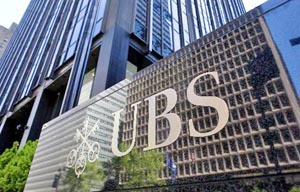
"We have not received any official communication from Swiss authorities so far about sharing bank account details of Indians (who have) deposited unaccounted money there," India's Finance Minister Arun Jaitley told reporters outside his North Block office here.

The finance minister was reacting on a media report that said Swiss authorities have prepared a list of names of Indian account holders and will share it with the Indian government.

Jaitley said there is no official communication so far, and the Indian authorities will send a request to Swiss authorities for sharing the information.

"Our communication will be sent today itself," Jaitley said.

The Switzerland government also rubbished the report.

"Since a high-level Swiss delegation met with its India counterparts in New Delhi in February 2014, no further official meeting has taken place.

There is no new development to be reported," the Swiss finance ministry said in a statement.

However, it said Switzerland looks forward to working together with the new Indian government in its fight against tax evasion.

"Switzerland is committed to resolving any open question with India and trusts that India shares its understanding that any solution can only be found within the established national and international legal frameworks," the Swiss finance ministry said.

The new Indian government headed by Prime Minister Narendra Modi has formed a Special Investigation Team (SIT) to probe the black money. The 11-member SIT is headed by former Supreme Court judge M.B. Shah.

Jaitley said the Indian government looks forwardto work closely with Swiss authorities on the issue of black money.

"We are today writing ourselves to the Swiss authorities with whom the ministry has been in touch, so that details with regard to whatever information the authorities have can be expedited and the cooperation between the Swiss authorities and the government of India can bring fruitful results," Jaitley said.

Comments

Add new comment

  • Coastaldigest.com reserves the right to delete or block any comments.
  • Coastaldigset.com is not responsible for its readers’ comments.
  • Comments that are abusive, incendiary or irrelevant are strictly prohibited.
  • Please use a genuine email ID and provide your name to avoid reject.
News Network
June 18,2020

New Delhi, Jun 18: For the 12th consecutive day, state-run oil marketing companies (OMCs) has increased the price of fuel on Thursday.

The price of petrol is increased by 53 paise a litre while that of diesel by 64 paise a litre.

Petrol and diesel will now cost Rs 77.81/litre and Rs 76.43/litre respectively in Delhi.

Notably, oil marketing companies have been adjusting retail rates in line with costs after an 82-day break from rate revision amidst the COVID-19 pandemic. These firms on June 7 restarted revising prices in line with costs.

Comments

Add new comment

  • Coastaldigest.com reserves the right to delete or block any comments.
  • Coastaldigset.com is not responsible for its readers’ comments.
  • Comments that are abusive, incendiary or irrelevant are strictly prohibited.
  • Please use a genuine email ID and provide your name to avoid reject.
News Network
May 4,2020

Munbai/New Delhi, May 4: India expects bad debts at its banks could double after the coronavirus crisis brought the economy to a sudden halt, a senior government official and four top bankers said.

Indian banks are already grappling with 9.35 trillion rupees ($123 billion) of soured loans, which was equivalent to about 9.1% of their total assets at the end of September 2019.

"There is a considered view in the government that bank non-performing assets (NPAs) could double to 18-20% by the end of the fiscal year, as 20-25% of outstanding loans face a risk of default," the official with direct knowledge of the matter said.

A fresh surge in bad debt could hit credit growth and delay India's recovery from the coronavirus pandemic.

"These are unprecedented times and the way it's going we can expect banks to report double the amount of NPAs from what we've seen in earlier quarters," the finance head of a top public sector bank told Reuters.

The official and bankers declined to be named as they were not officially authorized to discuss the matter with media.

India's finance ministry declined to comment, while the Reserve Bank of India and Indian Banks' Association, the main industry body, did not immediately respond to emails seeking comment.

The Indian economy has ground to a standstill amid a 40-day nationwide lockdown to rein in the spread of coronavirus cases.

The lockdown has now been extended by a further two weeks, but the government has begun to ease some restrictions in districts that are relatively unscathed by the virus.

India has so far recorded nearly 40,000 cases of the coronavirus and more than 1,300 deaths from COVID-19, the respiratory disease caused by the coronavirus.

'RIDING THE TIGER'

Bankers fear it is unlikely that the economy will fully open up before June or July, and loans, especially those to small- and medium-sized businesses which constitute nearly 20% of overall credit, may be among the worst affected.

This is because all 10 of India's largest cities fall in high-risk red zones, where restrictions will remain stringent.

A report by Axis Bank said that these red zones, which contribute significantly to India's economy, account for roughly 83% of the overall loans made by its banks as of December.

One of the sources, an executive director of a public sector bank, said that economic growth had been sluggish and risks had been heightened, even ahead of the coronavirus crisis.

"Now we have this Black Swan event which means without any meaningful government stimulus, the economy will be in tatters for several more quarters," he said.

McKinsey & Co last month forecast India's economy could contract by around 20% in the three months through June, if the lockdown was extended to mid-May, and growth in the fiscal year was likely to fall 2% to 3%.

Bankers say the only way to stem the steep rise in bad loans is if the RBI significantly relaxes bad asset recognition rules.

Banks have asked the central bank to allow all loans to be categorized as NPAs only after 180 days, which is double the current 90-day window.

"The lockdown is like riding the tiger, once we get off it we'll be in a difficult position," a senior private sector banker said.

Comments

Add new comment

  • Coastaldigest.com reserves the right to delete or block any comments.
  • Coastaldigset.com is not responsible for its readers’ comments.
  • Comments that are abusive, incendiary or irrelevant are strictly prohibited.
  • Please use a genuine email ID and provide your name to avoid reject.
News Network
January 22,2020

New Delhi, Jan 22: Delhi Chief Minister Arvind Kejriwal has assets worth Rs 3.4 crore, an increase of Rs 1.3 crore from 2015, according to his election affidavit.

Kejriwal's total assets were worth Rs 2.1 crore in 2015.

The cash and fixed deposits of Kejriwal's wife Sunita Kejriwal increased from Rs 15 lakh in 2015 to Rs 57 lakh in 2020.

A party functionary said Rs 32 lakh worth cash and fixed deposits have been received by Sunita Kejriwal as voluntary retirement benefits while the rest are savings.

The cash and fixed deposits of the chief minister increased from Rs 2.26 lakh in 2015 to Rs 9.65 lakh in 2020.

There was no change in the value of immovable assets of his wife while Kejriwal's immovable assets' worth increased from Rs 92 lakh to Rs 177 lakh.

The party functionaries said increase in Kejriwal's immovable assets' worth is due to the increased valuation of the same asset as in 2015.

Comments

Add new comment

  • Coastaldigest.com reserves the right to delete or block any comments.
  • Coastaldigset.com is not responsible for its readers’ comments.
  • Comments that are abusive, incendiary or irrelevant are strictly prohibited.
  • Please use a genuine email ID and provide your name to avoid reject.