8 patients dead after fire breaks out in Ahmedabad Covid-19 hospital

Agencies
August 6, 2020

Ahmedabad, Aug 6: In a major incident, a fire broke out in a Covid-designated hospital in Ahmedabad killing eight coronavirus patients. The mishap occurred in the wee hours of Thursday.

All the victims were in the ICU ward, where the fire is said to have started. Officials said that they all died on the spot while 41 other patients were shifted to other hospitals following a rescue operation. One paramedic staff of the hospital who tried to douse the fire sustained burn injuries.  

Deputy Chief Minister Nitin Patel, who is also the health minister, said that primary information has revealed that fire was caused by the short circuit in the ICU ward where eight patients were under treatment. 

He said that 41 other patients were shifted to Sardar Vallabhbhai Patel hospital. The incident happened at Shrey Hospital in Navrangpura which is one of the Covid-19 designated hospitals. Over 300 patients have recovered at the hospital in the last two months.

Among the victims were five men and three women. They have been identified as Arif Mansuri, Narendra Shah, Manu Rami, Leelvati Shah, Navneet Shah, Jyoti Sindhi, Manu Rami and Ayesha Tirmizi  

Following the incident, Prime Minister Narendra Modi tweeted, "Saddened by the tragic hospital fire in Ahmedabad. Condolences to the bereaved families. May the injured recover soon. Spoke to CM @vijayrupanibjp Ji and Mayor
@ibijalpatel Ji regarding the situation. Administration is providing all possible assistance to the affected."

Soon after the tweet, Chief Minister Vijay Rupani ordered a probe into the matter to be conducted by Additional Chief Secretary (ACS), Home, Sangeeta Singh and ACS (Urban Development) Mukesh Puri. 

They have been asked to submit a report in three days. Meanwhile, the hospital building has been sealed for further investigation. 

The chief minister has ordered a report within three days.

Comments

Add new comment

  • Coastaldigest.com reserves the right to delete or block any comments.
  • Coastaldigset.com is not responsible for its readers’ comments.
  • Comments that are abusive, incendiary or irrelevant are strictly prohibited.
  • Please use a genuine email ID and provide your name to avoid reject.
News Network
January 27,2020

New Delhi, Jan 27: Remember the story of two friends coming face-to-face with a bear in a forest? One of the two friends climbs the tree to save his life and the other, not knowing how to, lays on the ground, breathless, pretending to be dead.

Well, that lesson turned out to be useful for this man who pretended to be dead when a tiger had both his paws on the man's chest.

Yes, that is right. IFS officer Parveen Kaswan recently shared a video of a man lying under a tiger, with their faces extremely close to each other with the caption, "You want to see how does a narrow escape looks like in case of an encounter with a #tiger. #Tiger was cornered by the crowd. But fortunately, the end was fine for both man and tiger. Sent by a senior."

Another Twitter user shared the full 30-second video in the comments. He also said that the incident occured in Tumsar in Bhandara district, Maharashtra. The spine-chilling clip shows a tiger running freely in the fields trying to avoid people who have surrounded him and are trying to shoo him away.

In his quest to run away, the scared tiger grabs a human. When he sees that people are still approaching him and trying to scare him away, he gets up and runs away for his life. All this while, the man who was captured by the animal lays still on the ground and does not make an attempt to get free.

This is what stuck with Twitter and they are praising the man for his presence of mind.

Comments

Add new comment

  • Coastaldigest.com reserves the right to delete or block any comments.
  • Coastaldigset.com is not responsible for its readers’ comments.
  • Comments that are abusive, incendiary or irrelevant are strictly prohibited.
  • Please use a genuine email ID and provide your name to avoid reject.
News Network
January 24,2020

New Delhi, Jan 24: Although India's Ujjwala programme encouraged adoption of liquefied petroleum gas (LPG) for cooking among the poor, households availing the scheme have not shifted away from using highly polluting fuels like firewood, a study reveals.

The researchers, including those from the University of British Columbia (UBC) in Canada, found that additional incentives to encourage regular use of cooking gas are necessary for a complete transition to clean cooking fuel among poor rural households.

They noted that about 2.9 billion people across Asia, Africa, and Latin America burn solid fuels like firewood to meet their cooking energy needs.

This has significant negative implications for public health, the environment, and societal development, according to the researchers.

Through the Pradhan Mantri Ujjwala Yojana (PMUY), India has provided capital cost subsidies to poor women to adopt a clean-burning cooking fuel or LPG.

The researchers explained that within the first 40 months of the scheme, more than 80 million households obtained LPG stoves.

However, the full benefits of LPG adoption depend on near complete replacement of polluting fuels with LPG, according to a research-based policy brief published in the journal Nature Energy.

The scientists said this cannot be assumed solely on the basis of LPG presence in the household.

"Our research shows that Ujjwala was able to attract new consumers rapidly, but those consumers did not start using LPG on a regular basis," Abhishek Kar, a postdoc at Columbia University in the US, told PTI.

The study analysed LPG sales data for over 25,000 consumers, including PMUY beneficiaries, as well as general rural LPG consumers in Koppal district of Karnataka.

The scientists employed data covering all LPG purchases of PMUY beneficiaries through their first year in the programme.

They also assessed the general rural population's purchases during their first five years as consumers to assess the effect of experience on use.

The findings estimate that an average rural family needs to purchase five 14.2 kilogramme-cylinders annually to meet half of their cooking needs.

However, the study said just seven per cent of PMUY beneficiaries in Koppal purchased five or more cylinders annually, suggesting that the beneficiaries seldom use LPG.

The general (nonPMUY) consumers in this region use on average two times more LPG cylinders than PMUY beneficiaries, the researchers noted.

Yet, only 45 per cent of nonPMUY consumers use five or more cylinders per year -- even after several years of experience with LPG, they said.

The team assessed price and seasonal factors affecting LPG use among the general population over a three-year period.

It found that LPG consumers are sensitive to price and seasonality -- LPG cylinder refill rates are lower in the summer when agricultural activity is limited, and cash is scarce.

"There was no scheme incentives to promote use, except general LPG subsidies which is available to all, including the urban middle class," said Kar, who was a Ph.D. scholar at UBC when the research was published.

"If there is no additional income, what cost would a poor family on an already tight budget cut to pay for an extra expense on a regular basis.

"Ujjwala has started the scheme of 5 kg-cylinder in response, but the impact of that on LPG sales is still publicly unknown," he said.

These findings, the researchers noted, suggest the need for additional measures to promote regular LPG use for all rural populations.

Although the finding come from a single district in Southern India, it may also apply to other areas with similar socio-economic conditions, they said.

A more expansive evaluation of PMUY would help design targeted incentives to transform infrequent users to regular users, according to the researchers.


Comments

Add new comment

  • Coastaldigest.com reserves the right to delete or block any comments.
  • Coastaldigset.com is not responsible for its readers’ comments.
  • Comments that are abusive, incendiary or irrelevant are strictly prohibited.
  • Please use a genuine email ID and provide your name to avoid reject.
Agencies
July 30,2020

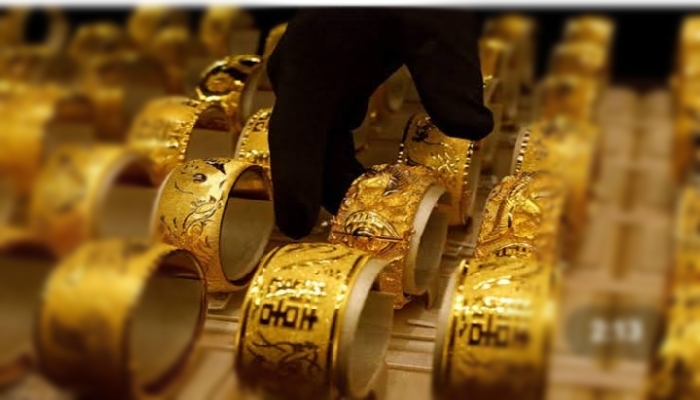
New Delhi, Jul 30: India's gold demand in 2020 is expected to fall to the lowest level in 26 years with domestic bullion prices hitting a record high and as falling disposable incomes could curtail retail purchases, the World Gold Council (WGC) said on Thursday.

Lower demand by the world's second-biggest bullion consumer could limit a rally in global prices, which hit a record high earlier this month, although it could also reduce India's trade deficit and support the ailing rupee.

"Fast rising gold prices could act as headwinds," said Somasundaram PR, the managing director of WGC's Indian operations.

Local gold futures have jumped 35% so far this year after rising a quarter in 2019.

India's gold consumption in the first half of 2020 plunged 56% on-year to 165.6 tonnes. Meanwhile, the coronavirus-triggered lockdown also slashed demand by 70% in the June quarter to 63.7 tonnes, the lowest in more than a decade, the WGC said in a report published on Thursday.

Millions of Indians have lost their jobs or taken a pay cut after the country imposed a lockdown on its 1.3 billion people to curb the spread of the virus that has infected more than 1.5 million Indians.

Consumption is generally high during the June quarter due to weddings and key festivals such as Akshaya Tritiya, but lockdown restrictions kept shoppers indoors this year.

The weak demand in the first half could drag down India's gold consumption in 2020 to the lowest since 1994, when demand stood at 415 tonnes, Somasundaram said, adding that it is still difficult to provide an estimate for full-year demand as the coronavirus crisis is still unfolding.

"Indian demand has previously jumped as much as 300 tonnes in a quarter. Latent demand could come out in the second half," Somasundaram said.

Comments

Add new comment

  • Coastaldigest.com reserves the right to delete or block any comments.
  • Coastaldigset.com is not responsible for its readers’ comments.
  • Comments that are abusive, incendiary or irrelevant are strictly prohibited.
  • Please use a genuine email ID and provide your name to avoid reject.