The unexpected lockdown to prevent spread of covid–19 has caused a serious damage to the lives of Indian expatriates irrespective of laborers and entrepreneurs in Kingdom of Saudi Arabia. Different stories of expatriates' ordeals are emerging from the region.
Abdul Razaq, hailing from Udupi in Karnataka has been running small scale business at Jeddah, Saudi Arabia, based on oil refinery projects of the government. He was undergoing medical treatment for his cancer which is in fist stage. He explaines his ordeals caused by lockdown and stopping the flight facility.
“I was regularly visiting home country for the treatment of cancer. Now I cannot go as international flight service has been stopped. I expect that government will hear problems of expatriates and will arrange facilities to take us back to home”, he said.
Mubeen from Bengaluru was working on temporary basis for a company in Jubail. He had lost his jobs like some of his colleagues due to the lockdown.
“As everything was alright, I had brought my parents recently to Saudi Arabia on a visit visa. Things changed drastically with covid-19 attack. Continuous lockdown caused burden over the company and they removed temporary employees like me to control possible losses” he said.
“Now owner of the flat has been harassing me for the rent. I do not have money either to pay rent or to cover daily family expenses. I do not know what to do further”, he added.
Iqbal from Mangaluru left for Saudi Arabia to help his family. He got a job in a juce centre in Dammam recently. Corona lockdown made his life difficult. He is eager to return his home country.
“I came to Saudi Arbia because of financial difficulties as I had not found any job with good salary there. I thought I can earn well by going to Saudi Arabia. However, here too the salary was not so good. Now juice center is closed due to lockdown and sponsor is giving very small amount of money as salary through which we cannot afford our expenses and our families back in home,” he said.
“Here It is not easy get help of fellow Indians since most of them have their own ordeals. I would like to return home country; there however we can manage to get help of friends and relatives. I am looking forward the help of Indian government to start air facility for stranded NRIs,” he said.
Mohsin from Mysuru is a taxi driver in Dammam, Saudi Arabia. He was earning on commission basis. Now Saudi government banned movement of taxis in the region, which pushed him and his fellow taxi drivers into trouble.
“We were earning commissions daily on the basis of trips. Now we cannot move outside with taxi since it may cause us to pay the fine of SR.10000. How can I manage my expenses and family members in home?”, he asked.
There are cases of pregnant women who have to return India for delivery. Those who brought family here on visit visa will not have insurance. Delivery charges and any kind of medical facilities without insurance in Saudi Arabia is very expensive. Expatriate Indians with such problems are awaiting government's help.
“I had brought my wife on one year visit visa. Now she is pregnant and I have to send her back to home for delivery. If lockdown continues, it is difficult to send back and we have to spend big amounts for delivery without insurance. It is a big burden to me as I work for small salary in a company”, said Yunus from Hyderabad, who is living in Jeddah, Saudi Arabia.
Lockdown is haunting even entrepreneurs in Saudi Arabia. Most of expatriates in the industrial hub of Jubail are doing business based on Saudi Government’s oil refinery projects. Saudi Arabia temporarily stopped most of the projects as part of public health safety measures to maintain social distance.
“We are doing business based on oil refinery projects. Now projects are stopped. We brought around 1100 people on work permit visa on temporary basis. And also, we have around 1200 permanent workers. It is a big burden to provide them with food, accommodation and salary. It may cause a big loss for our company”, said owner of expatriates company, Sheikh Mohammed.
Saudi Arabia had reported first corona virus affected case in March 2, 2020. At the end of March, it was 1600 and now it already corssed 6000. Saudi Health ministry has cautioned the number of affected people may rise 10000 to 200,000 and directed for more precautionary measures. In such case, the Indian expatriates may have to face crisis in the region.
Indian expatriate organizations are demanding for immediate intervention of Indian government to ensure better quarantine facility and treatment of NRIs in Saudi Arabia as the cases are increasing rapidly. The condition of laborers in some of the camps are such that seven to eight people should share a single bed room.
“Normally if there is a flat, it will consist three to four bed rooms. In single bedroom companies will provide three four bunk beds and six to eight people should share the room. In such cases, if a person affected with virus it will spread quickly to others. Thus, Indian government should ensure quarantine facility for NRIs”, says Wasim Rabbani, president of Indian Social Forum, Eastern Region, Saudi Arabia.
President of Karnataka Non Residential Indians, A forum for the NRI organizations of Karnataka, Zakaria Muzain says Indian Government should immediately interfere to bring back those stranded NRIs who wish to return home. Government should intervene to pressure Indian embassy to take the issues of troubled expatriates.
“Government should make special flight arrangement for such NRIs in trouble. It should also arrange quarantine facility for those who return to India. Already there are many Non-Governmental charity organization which have come forward to give their facilities for NRIs”, he said.
NRIs from all categories are looking forward for the help of Indian government. It is important to Indian government to take quick action as the problem is increasing in Saudi Arabia.




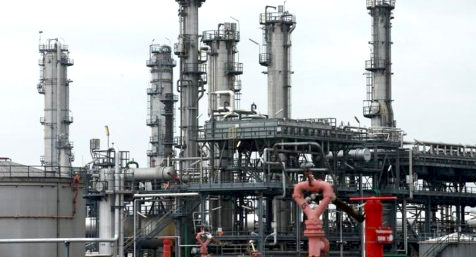 Dharmendra Pradhan told a news conference India is exploring two to three other models for sourcing oil to fill the remainder of the storage.
Comments
Naren
And Viren
Why oil from Islamic nations.......no questions or foolish comments????
Zaroorat padne pe kahee bhi jhukna padega......u can't understand relations between anyone..
Hindu state country world ha ha bla bla bla.....go you saffron's produce some oil for our country....or defend the enemy at borders with chaddi and Lati....foolish fellows..this country is united..if I need it for saffron religion only ..get lost....
Add new comment